

Views: 247 Author: Tianjin Kangli Publish Time: 2026-07-02 Origin: Site


Content Menu
● How to Recline Hospital Chair? A Practical Guide for Patients, Caregivers, and Healthcare Buyers
● What Is a Hospital Recliner?
● How to Recline Hospital Chair Step by Step
● Recline Mechanisms Explained
● Safety Checks Before Reclining
● Why Reclining Matters in Clinical Care
● Expert View from Manufacturing
● Common User Comments and Practical Insights
● Why Choose Tianjin Kangli Medical appliance Co., Ltd.
● FAQ
>> 1. How do you recline a hospital chair safely?
>> 2. Can patients recline the chair by themselves?
>> 3. What is the difference between a hospital recliner and a regular recliner?
>> 4. Why does my hospital chair feel hard to recline?
>> 5. What should international buyers ask an OEM supplier?
>> 6. Is recline angle important in medical settings?
Tianjin Kangli Medical appliance Co., Ltd. is a trusted OEM manufacturer for overseas brands, wholesalers, and producers seeking reliable hospital chair solutions. If you are asking how to recline hospital chair, this guide explains the correct method, safety checks, ergonomic benefits, and what buyers should look for when choosing a professional-grade recliner.
A hospital chair is not just a comfortable seat. In clinical, rehabilitation, and long-term care settings, it supports rest, treatment, transport, and patient dignity. Knowing how to recline it properly helps improve comfort, reduces caregiver strain, and extends product life.
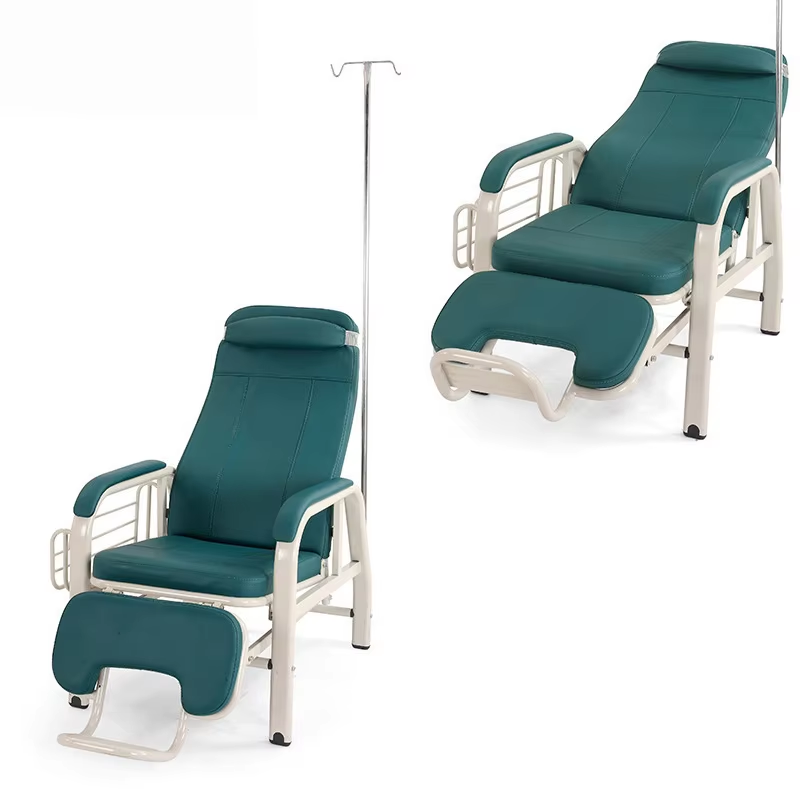
A hospital recliner is a medical seating product designed for patients who need to sit, rest, and recline safely during recovery or treatment. Unlike a standard chair, it often includes a backrest recline mechanism, a legrest or footrest, and durable medical-grade upholstery that is easy to clean.
In many hospitals, nursing homes, dialysis centers, infusion rooms, and rehabilitation facilities, recliners are used for longer sitting periods. That is why the mechanism must be smooth, stable, and intuitive. A well-designed recliner also helps caregivers reposition patients more efficiently.
If you want to know how to recline hospital chair correctly, follow these general steps. Exact operation may vary by model, so always check the manufacturer's instructions first.
1. Confirm the chair is on a flat, stable surface.
Lock the wheels if the chair has casters.
2. Make sure the patient is seated fully back.
The hips should be against the backrest before reclining.
3. Check armrests, trays, and footrests.
Remove or adjust anything that could interfere with movement.
4. Locate the recline control.
This may be a side handle, lever, gas spring control, or manual push-back mechanism.
5. Activate the recline mechanism slowly.
Support the patient as the backrest moves into the desired angle.
6. Stop at the correct position.
Many chairs offer upright, TV, partial recline, and full recline positions.
7. Verify comfort and safety.
Make sure the head, neck, and legs are supported properly.
8. Return to upright carefully.
Release the recline control and guide the chair back to its original position.
A smooth recline should never require force. If the chair feels stuck, jerky, or unstable, it should be inspected before continued use.
Different hospital chairs use different systems, and understanding them helps buyers choose the right product. Some chairs use a manual lever, while others rely on a gas spring or a push-back design. These mechanisms affect how easily staff can adjust the chair and how comfortable the patient feels during repositioning.
This is common in many medical recliners. The caregiver or patient activates a side handle to change the back angle. It is simple, durable, and often preferred for predictable use.
Gas spring systems allow smoother adjustment and better angle control. They are often easier on caregivers because less force is needed. This can be especially useful in high-frequency clinical environments.
Some recliners can be adjusted by shifting body weight and pushing back gently. This design may feel more like a lounge chair, but in medical settings it must still meet stability and hygiene requirements.
Before you recline any hospital chair, safety should come first. This is especially important for elderly patients, post-surgery users, and people with limited mobility.
- Check the weight capacity.
- Lock wheels if the chair moves.
- Confirm the floor is dry and level.
- Keep IV lines, drains, and monitoring cables clear.
- Ensure the patient can tolerate the recline angle.
- Never recline abruptly.
For caregivers, the safest process is always the slowest controlled process. A chair that reclines smoothly reduces the risk of sudden shifts, which can be uncomfortable or hazardous.
Reclining is not only about comfort. It supports pressure redistribution, easier breathing in some patients, and improved relaxation during long treatment sessions. In infusion, dialysis, and recovery areas, the ability to recline helps patients stay in one position longer with less fatigue.
From an operational perspective, good recliners can improve workflow. Staff spend less time struggling with awkward adjustments, and chairs last longer when mechanisms are engineered for repeated use. That is why hospitals and distributors increasingly prefer OEM partners with experience in medical furniture manufacturing.
When sourcing hospital chairs, especially through OEM or private-label programs, buyers should evaluate more than appearance. The most important factors are functional and regulatory.
| Buying factor | Why it matters |
|---|---|
| Recline mechanism | Determines ease of use and caregiver workload |
| Frame strength | Supports safety and long-term durability |
| Upholstery | Affects hygiene, cleaning, and infection control |
| Comfort design | Improves patient experience during long use |
| Wheel locking system | Enhances stability during recline and transfer |
| Certifications | Help ensure quality and international market readiness |
For overseas buyers, a manufacturer's ability to customize dimensions, upholstery, load capacity, and recline function is often a major advantage. Tianjin Kangli Medical appliance Co., Ltd. is positioned for this type of OEM cooperation, especially for brands that need stable production and consistent specification control.
In our experience, the best hospital recliner is not necessarily the most complicated one. It is the chair that combines smooth operation, patient safety, easy cleaning, and durable engineering. In real-world use, hospitals care about whether staff can recline the chair quickly, whether patients feel secure, and whether the chair remains reliable after repeated cycles.
From an industry perspective, chair design should balance ergonomics and maintainability. If a recliner is difficult to clean or difficult to repair, the total cost of ownership rises quickly. That is why medical buyers should ask suppliers about frame material, upholstery performance, reclining cycle durability, and post-sale support.
Users often describe three main expectations in hospital recliners: comfort, ease of operation, and stability. Patients appreciate a chair that feels soft but supportive. Caregivers prefer a control system that is intuitive and does not require excessive force.
A recurring point in user feedback is that chairs with a clear recline handle and stable leg support are easier to use in busy clinical settings. Another common insight is that a chair must move smoothly into the reclined position without producing a harsh mechanical feel. These details may seem small, but they strongly affect patient trust and daily usability.
As a national high-tech enterprise focused on medical device R&D and manufacturing, Tianjin Kangli Medical appliance Co., Ltd. offers OEM services for foreign brands, wholesalers, and manufacturers. For buyers searching for hospital recliner solutions, the key advantage is not only production capacity but also the ability to turn product requirements into stable, scalable manufacturing outcomes.
A strong OEM partner should understand comfort, safety, regulatory expectations, and commercial customization. That is exactly the type of value medical furniture buyers need when building a dependable product line for hospitals, clinics, nursing homes, and rehabilitation centers.
Use the chair's designated lever, handle, or push-back system slowly, keep the patient seated properly, and ensure wheels are locked if applicable.
Some models allow self-recline, but many medical chairs are designed for caregiver-assisted use, especially for frail or post-operative patients.
A hospital recliner is built for medical use, so it usually offers better durability, hygiene, stability, and easier cleaning than a regular household chair.
Possible reasons include a stiff mechanism, poor maintenance, cable interference, or a design that requires more force. It should be inspected before use.
Ask about recline mechanism options, weight capacity, upholstery materials, cleaning resistance, customization, certifications, and production consistency.
Yes. The right angle affects comfort, posture, and patient tolerance during long sitting or treatment sessions.
1. Grace Medy, How To Use Hospital Chair Recliner: [https://www.gracemedy.com/how-to-use-hospital-chair-recliner/]
2. Grace Medy, How to Use a Hospital Recliner Chair: [https://www.gracemedy.com/zh-TW/how-to-use-hospital-chair-recliner/]
3. YouTube, How to use Hospital Recliner Chair?: [https://www.youtube.com/watch?v=t3q5xIVUb6Y]
4. Accio, OEM Medical Devices: Custom Solutions for Healthcare: [https://www.accio.com/supplier/original-equipment-manufacturer-medical-devices]
5. Meddo, OEM/ODM Medical Device Manufacturer: [https://www.meddomedical.com/oem-odm-medical-device/]
6. China Greetmed, OEM Medical Device Supplier: [https://www.china-greetmed.com]
Hot Tags: China, Global, OEM, private label, manufacturers, factory, suppliers, manufacturing company


