
Language

Views: 259 Author: Tianjin Kangli Publish Time: 2026-10-26 Origin: Site


Content Menu
● ABS Medical Trolley with Transparent Drawers vs Standard Drawers: Key Differences
● What Does "ABS Medical Trolley" Actually Mean?
>> Ask for Component-Level Material Details
● When Transparent Medical Trolley Drawers Make Sense
>> Visible Supplies and Restocking Checks
● When Standard Opaque Drawers Are the Better Fit
>> A Consistent Product Appearance
>> Storage Requiring Additional Protection
● Cleaning and Disinfection: Drawer Transparency Is Not a Hygiene Claim
>> Evaluate the Whole Drawer Assembly
>> Verify Chemical Compatibility
● A Practical Sample-Testing Plan for OEM Buyers
>> 1. Test Identification Under Realistic Conditions
>> 2. Check Loaded Drawer Operation
>> 4. Inspect After Agreed Cleaning Cycles
>> 5. Assess the Complete Trolley
● Total Cost of Ownership: Look Beyond the Purchase Price
● Choosing the Right Configuration for Your Target Market
● Why Start Your OEM Discussion with Tianjin Kangli?
>> Are transparent medical trolley drawers better than standard drawers?
>> Are transparent drawers always made from ABS?
>> Do transparent drawers reduce infection risk?
>> Can transparent drawers be used for medication storage?
>> Which drawer type lasts longer?
>> Can an OEM medical trolley combine transparent and opaque drawers?
● Request an OEM Medical Trolley Specification Review
Tianjin Kangli Medical Equipment Co., Ltd. helps international brand owners, wholesalers, and manufacturers approach medical furniture sourcing with a practical OEM mindset. When comparing an ABS Medical Trolley with Transparent Drawers vs Standard Drawers, our starting point is simple: choose the drawer system around the clinical workflow, not appearance alone.
Founded in 1998, Kangli operates a 20,000-square-meter factory with 50+ employees, according to our company profile. For buyers developing a hospital trolley range, we recommend evaluating visibility, cleaning compatibility, storage security, and replacement costs together.
Transparent drawers can make supplies easier to identify. Standard opaque drawers conceal contents and support a uniform appearance. Neither option automatically delivers better hygiene, stronger construction, or safer medication management.
This guide explains the differences and provides a practical framework for discussing your next OEM medical trolley project.
For this comparison, "standard drawers" means opaque drawers. It does not imply a universal specification: drawer materials, dimensions, runners, and locking arrangements vary between manufacturers.
| Buying consideration | Transparent drawers | Standard opaque drawers |
|---|---|---|
| Content visibility | Visible contents may support quick identification | Staff rely on labels and drawer organization |
| Restocking | Visible gaps may help identify shortages | Usually requires opening drawers or checking records |
| Discretion | Packaging and labels may remain visible | Conceals contents from casual view |
| Light exposure | Not a substitute for light-protective storage | Opacity alone does not establish suitable protection |
| Appearance | Shows both organization and clutter | Provides a consistent exterior |
| Maintenance | Scratches or clouding can affect visibility | Surface damage may be less visually distracting |
| Security | Depends on locks and access procedures | Also depends on locks and access procedures |
The most useful distinction is visibility versus concealment. Everything else needs confirmation against the actual trolley specification.
ABS stands for acrylonitrile butadiene styrene. However, an "ABS medical trolley" is not necessarily made entirely from ABS.
A trolley may combine an ABS worktop, metal reinforcement, different drawer polymers, and metal runners. Published commercial specifications illustrate this mixed-material construction.

Do not assume that transparent drawers use the same material as the trolley body. Ask the supplier to identify:
- Worktop and outer-panel materials.
- Drawer-front and drawer-body materials.
- Runner construction.
- Handle and divider materials.
- Caster and brake specifications.
- Approved cleaning products.
This distinction matters because performance belongs to the actual component and material grade—not the general product name.
For OEM buyers, a component-level specification also makes supplier comparisons more meaningful. Two visually similar carts may have different maintenance requirements and replacement arrangements.
Transparent drawers allow staff to view some contents without opening each drawer. This can be useful for frequently replenished consumables such as packaged dressings, gloves, or other suitable supplies.
However, visibility is not the same as reliable stock counting. Overlapping packages, deep drawers, and poor lighting can hide shortages.
My procurement recommendation is to evaluate transparent drawers with the actual products your customers intend to store. An empty showroom trolley tells buyers very little about everyday usability.
Clear drawers may help unfamiliar staff recognize where supplies belong, particularly when combined with consistent layouts and readable labels.
They should complement—not replace—drawer labels, inventory procedures, and staff training.
A transparent drawer filled with mixed products can be harder to navigate than an opaque drawer with a disciplined layout.
Transparent fronts expose both good organization and clutter. For teams maintaining clear minimum-stock levels, that visibility may support routine checks.
The limitation is equally important: visible stock does not confirm expiry dates, package integrity, or clinical suitability. Staff still need to inspect those details directly.
Opaque drawers reduce casual visibility of stored items. This may suit patient-facing areas or workflows where visible packaging creates unnecessary distraction.
Concealment is not security, however. Neither opaque nor transparent drawers prevent unauthorized access without suitable locking and operating procedures.
Avoid treating drawer color as a substitute for a medication-security assessment.
Opaque fronts can support a clean, coordinated exterior across a hospital furniture range.
For distributors and private-label brands, this may matter when matching trolley colors, labels, and other furniture. Nevertheless, appearance should follow functional requirements.
A visually uniform trolley still needs accessible handles, suitable drawer depths, and a manageable loaded weight.
For light-sensitive products, follow the product's storage instructions. Do not assume a clear drawer is suitable, or that an opaque drawer provides validated light protection.
Original packaging, temperature requirements, and access restrictions remain relevant regardless of drawer style.
Neither transparent nor opaque drawers are inherently more hygienic.
Healthcare cleaning guidance emphasizes compatible products, written procedures, and correct use. The practical questions concern surface design, accessibility, and the manufacturer's cleaning instructions.
Inspect the sample for:
- Corners that are difficult to reach.
- Handles with narrow recesses.
- Divider slots that retain debris.
- Runners exposed to spills.
- Labels that lift during cleaning.
- Drawers that are difficult to remove and reinstall.
A smooth drawer front cannot compensate for inaccessible internal surfaces.
Ask for written compatibility information covering the exact drawer material and intended cleaning products.
Check product concentration, application method, contact time, and any rinsing or drying requirements. Material compatibility testing and disinfectant efficacy are different questions; evidence for one does not prove the other.
Avoid broad promises such as "resistant to all hospital disinfectants." Request specific, documented information instead.
For transparent components, include clarity in your acceptance criteria. A drawer that remains mechanically usable but becomes cloudy may no longer deliver its intended visibility benefit.
One useful improvement over a basic feature comparison is a repeatable sample assessment.
Before placing a volume order, agree on test conditions and acceptance criteria with the supplier. The following is a proposed procurement process, not a standardized certification test.
Load both drawer types with the same representative supplies.
Ask intended users to locate selected items under normal room lighting. Record identification time, incorrect selections, and comments about label readability.
Do not publish a percentage improvement unless a documented test supports it.
Evaluate opening effort, closing behavior, divider stability, and access to items at the back.
Confirm the manufacturer's drawer-load limits and test only within the agreed conditions.
Have the responsible team assess drawer removal, internal access, and reassembly. Confirm that the proposed cleaning procedure is practical—not merely theoretically possible.
Use the approved cleaning process and an agreed cycle count. Inspect clarity, discoloration, cracking, handle condition, label adhesion, and runner performance.
A short sample test cannot establish the full service life, but it can identify obvious mismatches.
Check maneuverability, brake operation, handle position, and stability under the supplier's specified loading conditions.
Drawer visibility is only one part of a safe, usable medical cart.
Transparent drawers are not automatically more expensive, and opaque drawers are not automatically more economical. Obtain quotations for equivalent specifications.
A useful ownership-cost model includes:
Purchase price + freight + maintenance + replacement components + downtime-related costs.
For international buyers, replacement logistics deserve particular attention.
Ask whether individual drawer fronts, complete drawers, runners, locks, and casters can be supplied separately. Confirm part numbers, minimum replacement quantities, and expected availability.
A lower initial quotation may be less attractive if a damaged component requires replacing a large assembly.
Also consider product consistency. If your brand supplies multiple facilities, changes in drawer dimensions or fittings can complicate spare-parts management. Agree on how specification changes will be communicated before production.
There is no universal winner in the transparent-versus-opaque drawer comparison.
Use the intended workflow to set priorities:
- Consumable supply carts: evaluate visibility, dividers, and replenishment routines.
- Medication workflows: prioritize authorized access, labeling, and product-specific storage.
- Procedure carts: assess drawer depth, layout consistency, and cleaning access.
- Patient-facing settings: consider discretion alongside usability.
- Emergency applications: assess the complete access system and facility requirements.
A mixed configuration may also be worth discussing: visible storage for appropriate consumables and opaque compartments for items requiring concealment.
Treat this as a design option to confirm with the manufacturer—not an assumed feature of every trolley.
At Tianjin Kangli Medical Equipment Co., Ltd., we position the sourcing conversation around your target market, product requirements, and commercial objectives.
Our company background—established in 1998, a 20,000-square-meter factory, and 50+ employees—provides context for that discussion. Buyers should still verify the specifications and supporting documents relevant to each proposed model.
For an efficient inquiry, prepare:
1. Your destination market and customer segment.
2. Intended trolley application.
3. Preferred transparent, opaque, or mixed drawer layout.
4. Required dimensions and loading conditions.
5. Locking and accessory requirements.
6. Cleaning products used by the end customer.
7. Branding, packaging, and documentation needs.
Request a model-specific quotation, drawings, available customization options, sample arrangements, and applicable compliance documentation.
The goal is not simply to purchase a trolley. It is to establish a repeatable specification your brand can support after delivery.
They are better suited to some visibility-focused workflows, but not universally better. Opaque drawers may suit concealment and consistent appearance. Compare both using the intended supplies, users, and cleaning process.
Do not assume so. "ABS medical trolley" may describe selected body components rather than every part. Request written material identification for the drawer front, drawer body, and other relevant components.
Transparency alone does not establish a lower infection risk. Cleaning access, compatible disinfectants, correct procedures, and staff practice remain essential. Avoid infection-reduction claims without suitable evidence.
Only where the complete arrangement meets the medication's storage instructions and the facility's security requirements. Check light protection, labeling, access control, and other relevant conditions.
There is no reliable answer based on transparency alone. Material grade, construction, loading, handling, and cleaning exposure influence durability. Compare documented specifications and representative samples.
Potentially, depending on the supplier's design and manufacturing options. Confirm compatibility, dimensions, locking arrangements, replacement parts, and minimum order requirements before approving a mixed configuration.
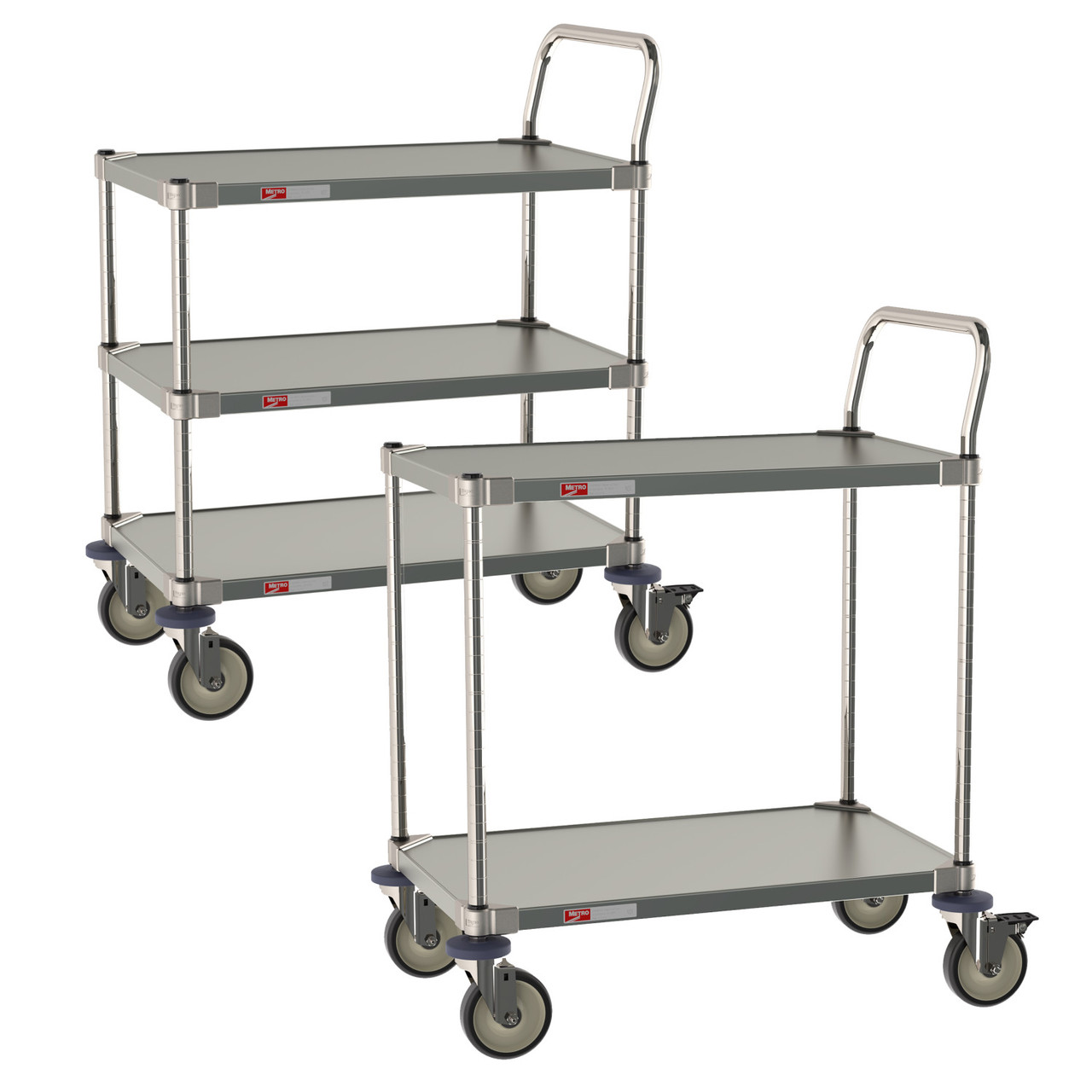
Comparing ABS Medical Trolley with Transparent Drawers vs Standard Drawers should begin with the workflow and end with a verified specification.
Contact Tianjin Kangli Medical Equipment Co., Ltd. to discuss your target market, drawer preferences, and OEM requirements. Request a specification review before finalizing your purchase.
- Website: [https://www.klmedbed.com]
- Email: yukili90@tjkangli.com
- Phone / WhatsApp: +86 136 5207 7555
Hot Tags: China, Global, OEM, private label, manufacturers, factory, suppliers, manufacturing company


