

Views: 321 Author: kangli Publish Time: 2026-10-23 Origin: Site


Content Menu
How to Find a Reliable Hospital Bed Manufacturer in China for Bulk Orders
● 1. Why Choosing the Right Hospital Bed Manufacturer Matters
● 2. Verify Whether the Supplier Is a Real Manufacturer
>> Ask for Evidence, Not Just Claims
● 3. Evaluate the Manufacturer's Hospital Bed Product Range
● 4. Assess Technical Specifications Before Comparing Prices
>> Essential Specifications to Confirm
>> Request a Technical Confirmation Sheet
● 5. Verify Quality Management and Regulatory Documentation
>> ISO 13485 and Quality Management
>> European Union Requirements
>> Hospital Bed Safety Standards
● 6. Request Samples and Verify the Actual Product
>> Hospital Bed Sample Inspection Checklist
>> Establish an Approved Reference Sample
● 7. Use a Weighted Supplier Evaluation Scorecard
>> Example: Supplier Evaluation
● 8. Check OEM and Private-Label Manufacturing Capabilities
>> OEM vs. ODM
>> How Kangli Medical Supports OEM Discussions
● 9. Understand the Real Cost of a Bulk Hospital Bed Order
>> Compare Quotations on the Same Basis
● 10. Reduce Risk Before Confirming a Large Order
>> Five Common Procurement Risks
● 11. Evaluate Long-Term Supply and After-Sales Support
● 12. Why Consider Tianjin Kangli Medical Appliance Co., Ltd.?
>> Our Approach to International Projects
● 13. Request a Hospital Bed Factory Quotation
>> Looking for a Reliable Hospital Bed Manufacturer in China?
● Frequently Asked Questions (FAQ)
>> 1. How can I verify a hospital bed manufacturer in China?
>> 2. Can I order hospital beds directly from a Chinese factory?
>> 3. Can Kangli Medical provide OEM hospital bed manufacturing services?
>> 4. What is the minimum order quantity for wholesale hospital beds?
>> 5. What certifications should I check before importing hospital beds?
>> 6. Should I request a sample before a bulk order?
>> 7. How long does a bulk hospital bed order take to manufacture?
>> 8. How do I request a quotation from Kangli Medical?
A Practical Supplier Verification Guide for Medical Equipment Brands, Importers, Distributors, and Hospital Procurement Teams
Finding a reliable hospital bed manufacturer in China for bulk orders requires more than comparing prices or browsing online catalogs. For international medical equipment brands, wholesalers, distributors, and hospital project contractors, the real challenge is identifying a manufacturing partner that can consistently deliver the right specifications, reliable quality, appropriate documentation, and dependable communication.
A supplier offering the lowest price is not necessarily the most economical choice. Product inconsistencies, missing accessories, shipping delays, or inadequate technical documentation can increase the total cost of procurement.
At Tianjin Kangli Medical Appliance Co., Ltd., we understand these concerns from a hospital furniture manufacturing perspective. Established in 1998, our company specializes in hospital beds, nursing beds, ICU beds, wheelchairs, medical trolleys, and related healthcare furniture.
This guide explains how overseas buyers can evaluate a Chinese hospital bed factory, verify its capabilities, assess product samples, and establish a more predictable bulk purchasing relationship.
Contact Our B2B Team
Email: Yukili90@tjkangli.com
WhatsApp: +86 136 5207 7555
Chat with Kangli Medical on WhatsApp
Website: www.klmedbed.com
Request a Bulk Hospital Bed Quotation Today
Let us discuss your product requirements and explore a suitable manufacturing solution for your next healthcare equipment project.
Hospital beds are functional healthcare products. Their quality depends on structural design, materials, manufacturing consistency, adjustment mechanisms, and appropriate safety controls.
For bulk buyers, even a small product inconsistency can affect many units.
A hospital purchasing 200 electric beds, for example, needs consistent specifications across the shipment. Different control systems, caster types, or accessory configurations may complicate installation, maintenance, and spare-parts management.
A suitable manufacturing partner should be able to explain product specifications, manage changes, support inspection arrangements, and communicate clearly when technical issues arise.
One of the first questions international buyers should ask is whether they are communicating with a manufacturer, a trading company, or a business combining both functions.
These business models are not inherently good or bad. However, buyers seeking OEM customization or long-term production control need to understand who actually manufactures the product.
Business identity: Confirm the registered company name, business address, and relevant manufacturing activities.
Production facilities: Request recent factory photographs, production videos, or a virtual factory tour.
Manufacturing equipment: Ask which processes are performed internally and which are outsourced.
Engineering capability: Determine whether the company can review technical drawings and proposed modifications.
Quality procedures: Ask how incoming components, production processes, and finished products are inspected.
Production responsibility: Clarify which entity is responsible for manufacturing, documentation, warranties, and contractual obligations.
A professional website and product catalog are useful starting points, but they do not establish manufacturing capability by themselves.
Request documentation relevant to your project. For larger orders, consider an independent factory audit.
Buyer insight: A manufacturer that clearly identifies its own production responsibilities and subcontracted processes is easier to evaluate than one that makes broad claims without supporting information.
Different hospital environments require different bed configurations.
A supplier's product range can help buyers assess whether its manufacturing experience matches the intended project.
| Product Category | Typical Purchasing Requirements |
|---|---|
| Manual Hospital Beds | Manual adjustment, side rails, casters, structural durability |
| Electric Hospital Beds | Motors, controls, height adjustment, electrical safety |
| Five-Function Hospital Beds | Advanced positioning, coordinated adjustment functions |
| ICU Hospital Beds | Critical-care positioning, emergency functions, optional advanced features |
| Nursing Beds | Accessibility, patient positioning, long-term care requirements |
| Hospital Furniture | Bedside cabinets, overbed tables, medical trolleys |
When reviewing an ICU hospital bed, for example, do not assume that all models include weighing systems, X-ray compatibility, or CPR functions.
Always verify features against the exact model and approved configuration.
A broad product catalog is valuable only when the manufacturer can provide accurate specifications and explain configuration differences.
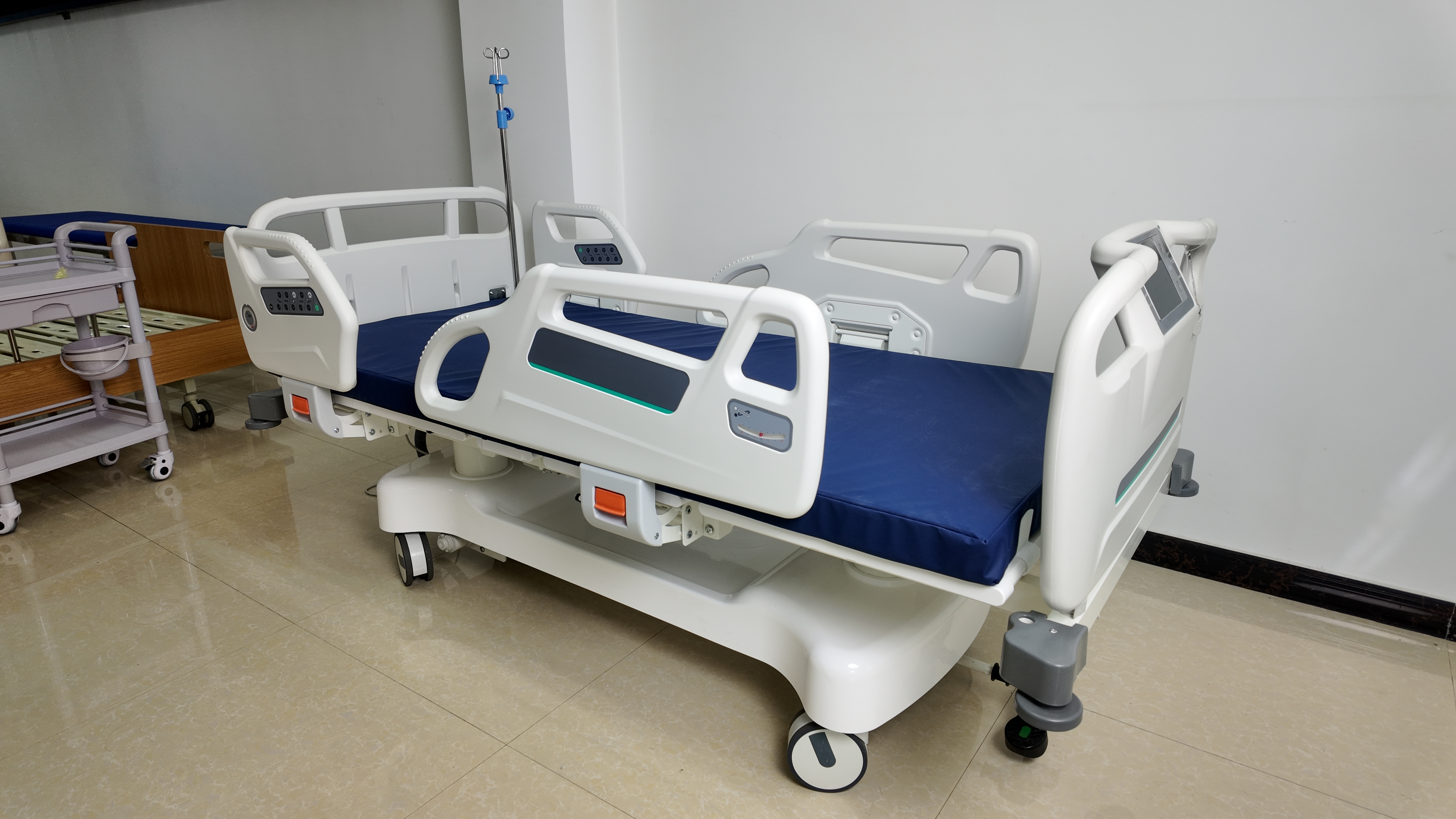
Two hospital beds that look similar may have different technical characteristics.
Before requesting a final quotation, prepare a technical specification sheet.
Overall dimensions and mattress platform size
Adjustment functions and operating ranges
Safe working load and relevant test requirements
Frame and platform materials
Side rail construction and locking mechanisms
Caster diameter and braking system
Motor and control specifications, where applicable
Required accessories
Electrical requirements
Packaging configuration
Destination-market requirements
The specification should distinguish mandatory requirements from optional preferences.
For example, a hospital project may require a specific minimum bed height, while the color of the headboard may be optional.
This distinction allows the manufacturer to propose a suitable configuration without compromising essential requirements.
A useful technical confirmation document should identify the model, revision, approved components, required functions, and any accepted deviations.
For customized products, both parties should approve changes before production.
This reduces misunderstandings between purchasing departments, engineers, and factory production teams.
Medical device procurement requires careful documentation review.
However, buyers should distinguish between quality management certification, product testing, and regulatory market authorization.
ISO 13485:2016 specifies quality management system requirements relevant to medical device organizations.
When a supplier presents an ISO 13485 certificate, verify its validity, issuing certification body, and scope.
A certificate covering one activity or product category should not automatically be interpreted as covering every product sold by the company.
Medical devices placed on the European Union market may be subject to Regulation (EU) 2017/745, known as the Medical Device Regulation.
Applicable obligations depend on the device, intended use, classification, and economic operator responsibilities.
Buyers should verify relevant conformity documentation and should not assume that a general CE claim establishes compliance for every product configuration.
The U.S. Food and Drug Administration regulates medical devices imported into the United States.
Depending on the device and its classification, applicable requirements may include establishment registration, device listing, quality system obligations, labeling, and premarket requirements.
FDA registration or device listing does not mean FDA approval or clearance.
International buyers should confirm market-specific requirements before placing an order.
IEC 60601-2-52 addresses particular basic safety and essential performance requirements for medical beds within its scope.
The applicability of standards and required evidence should be evaluated for the specific product and destination market.
Important: Request model-specific documents rather than accepting certificates unrelated to the proposed hospital bed.
A product sample allows buyers to evaluate manufacturing quality before committing to a larger order.
Sample inspection should be based on an agreed technical specification rather than appearance alone.
| Inspection Item | What to Check |
|---|---|
| Dimensions | Consistency with approved drawings |
| Frame | Structural construction and visible workmanship |
| Side Rails | Operation, locking, approved configuration |
| Casters | Movement, brakes, specified components |
| Adjustment System | Required movements and operating ranges |
| Electrical Components | Approved motors, controls, connections |
| Surface Finish | Coating appearance and visible defects |
| Accessories | Correct items and quantities |
| Labels | Product identification and required information |
| Documentation | Specifications, instructions, relevant records |
After sample approval, record the accepted configuration.
This may include photographs, drawings, component specifications, product revision numbers, and approved accessories.
The resulting reference sample can support subsequent production inspections.
Procurement recommendation: Never assume that sample approval automatically guarantees production consistency. The purchase agreement should require the bulk order to match the approved specifications.
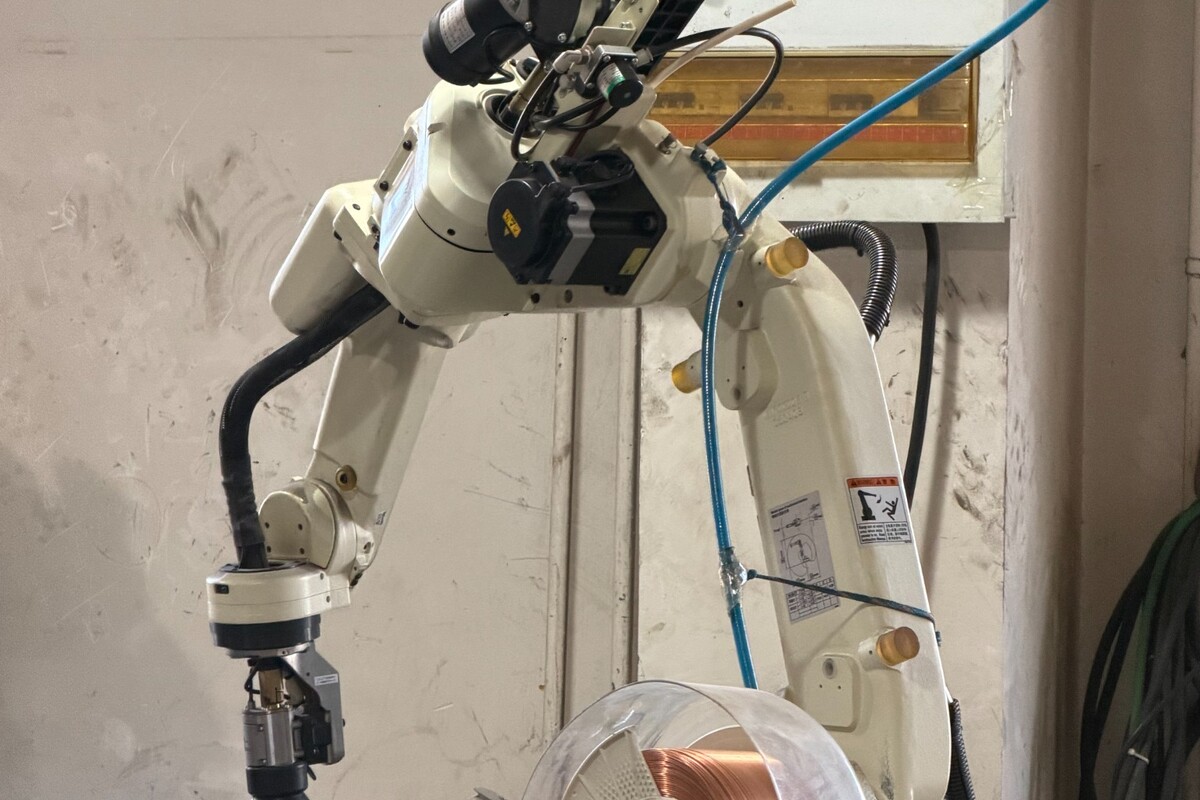
A structured scorecard can make supplier comparisons more objective.
Instead of selecting a factory based on price alone, evaluate several dimensions.
The following is a suggested procurement tool, not an industry-certified rating system.
| Evaluation Area | Suggested Weight |
|---|---|
| Manufacturing capability | 20% |
| Product quality and technical fit | 25% |
| Quality management and documentation | 20% |
| Communication and engineering support | 15% |
| Commercial terms and delivery planning | 10% |
| After-sales and spare-parts support | 10% |
| Total | 100% |
Score each supplier from 1 to 5 in every category.
Calculate the weighted result and compare suppliers using the same evidence requirements.
Suppose a supplier receives the following scores:
Manufacturing capability: 4/5
Product quality: 5/5
Documentation: 4/5
Communication: 4/5
Commercial terms: 3/5
After-sales support: 4/5
Its weighted score would be 83/100.
This hypothetical example illustrates the evaluation method. It is not a score assigned to Kangli Medical or another actual supplier.
Expert recommendation: Treat critical safety and regulatory requirements as mandatory pass/fail criteria. A high overall score should never compensate for failure to meet an essential requirement.

For global medical equipment brands, OEM cooperation often requires more than adding a logo.
Depending on technical feasibility and regulatory requirements, customization may involve:
Product branding and identification
Headboard and footboard colors
Side rail configurations
Electrical component options
Accessories and packaging
Product manuals and labeling
Approved design modifications
OEM generally refers to manufacturing products according to agreed customer requirements or designs.
ODM may involve adapting a manufacturer's existing design for another brand.
Before starting either arrangement, clarify intellectual property ownership, technical responsibilities, approval procedures, and regulatory obligations.
Tianjin Kangli Medical Appliance Co., Ltd. welcomes technical consultations with overseas brands, distributors, and procurement companies.
Our recommended starting point is a review of the target market, required functions, estimated order quantity, customization expectations, and relevant product specifications.
Available options are confirmed according to the individual project.
The quoted unit price is only one component of procurement cost.
Other potential expenses include:
Sample development: Prototype changes, testing, and sample transportation.
Inspection: Factory audits, independent inspections, or additional testing.
Packaging: Protective materials, cartons, labeling, and special packing requirements.
Freight: Inland transportation, ocean or air freight, insurance, and handling.
Importation: Customs duties, taxes, broker fees, and destination charges.
After-sales support: Replacement components, service procedures, and warranty-related costs.
A meaningful comparison requires consistent specifications, quantities, included accessories, packaging assumptions, and delivery terms.
A quotation excluding mattresses and accessories should not be compared directly with one including them.
Likewise, FOB and CIF prices represent different commercial obligations.
Use the applicable Incoterms rules and specify the named place or port.
The best purchasing decision considers total cost, product suitability, and supply reliability—not price alone.
A bulk order should proceed only after technical and commercial uncertainties have been addressed.
1. Unapproved component substitutions
The factory changes motors, casters, or accessories without documented approval.
2. Incomplete technical specifications
The purchase order does not clearly identify required functions or configurations.
3. Unclear inspection criteria
The buyer and manufacturer disagree about acceptable defects.
4. Unrealistic delivery commitments
Production timelines are not aligned with material availability and factory capacity.
5. Inadequate after-sales arrangements
Warranty responsibilities and spare-parts procedures are not clearly defined.
Use approved specifications and revision-controlled documents.
Agree on inspection methods before manufacturing begins.
Document change approval requirements.
Confirm production milestones and shipping responsibilities.
Establish a procedure for handling nonconforming products.
For larger projects, consider milestone inspections rather than relying only on final inspection.
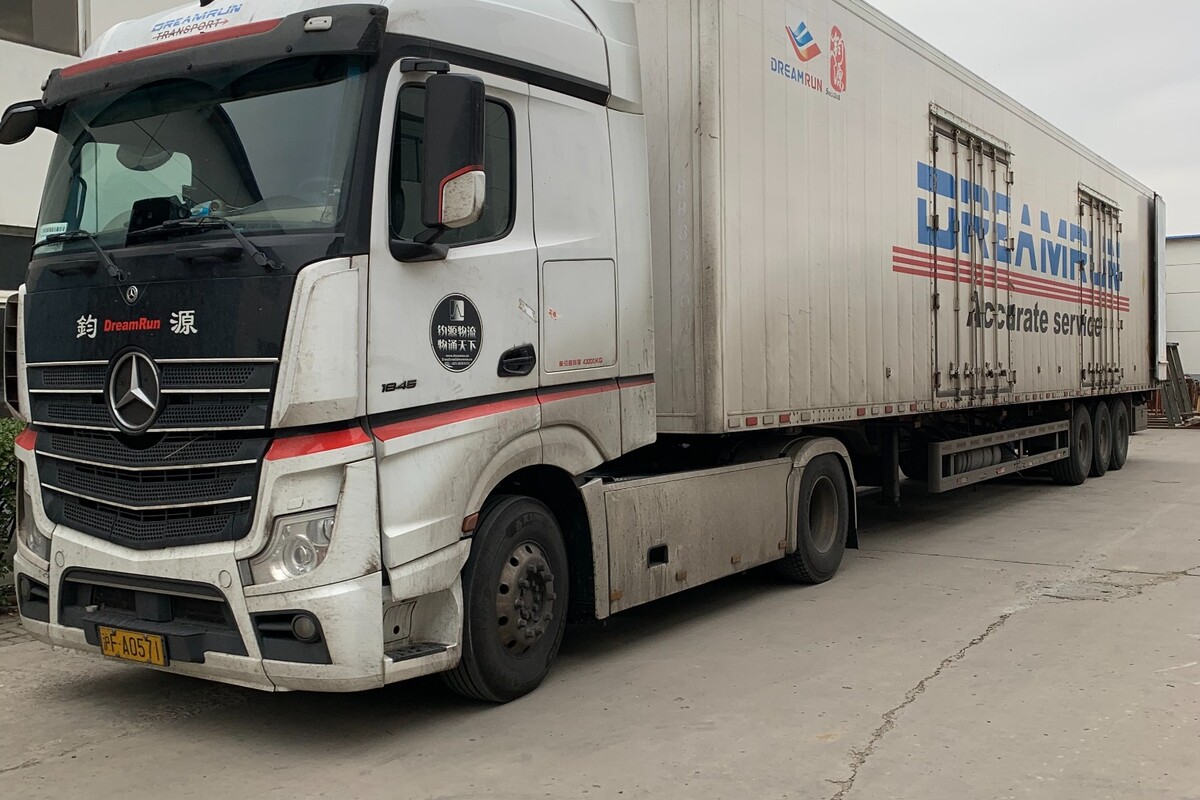
For medical equipment distributors, the supplier relationship continues after delivery.
Replacement components, technical documentation, and consistent configurations are important for maintaining installed equipment.
Before entering a long-term agreement, ask:
How are replacement parts identified?
Can the supplier confirm compatibility with previously supplied models?
What technical support channels are available?
How are warranty claims documented?
What happens when a component is discontinued?
How are product changes communicated to existing customers?
A supplier that can clearly explain these procedures may be easier to work with over multiple purchasing cycles.
Long-term supply reliability is especially important for brands building regional distribution networks.
Tianjin Kangli Medical Appliance Co., Ltd. is a hospital furniture manufacturer based in Tianjin, China.
Established in 1998, the company focuses on the production and supply of medical beds and related hospital equipment.
Our manufacturing facilities cover approximately 20,000 square meters.
Our product portfolio includes:
Manual hospital beds
Electric hospital beds
ICU hospital beds
Nursing beds
Wheelchairs
Medical trolleys
Stainless steel medical furniture
Hospital room accessories
We work with B2B customers seeking product information, bulk purchasing quotations, and manufacturing cooperation.
We recommend beginning with technical confirmation.
Our team can review your target market, purchasing quantity, required functions, proposed customization, and delivery expectations.
This helps establish a clear basis for quotation and subsequent manufacturing discussions.
Buyers are welcome to request relevant product specifications and discuss suitable factory verification arrangements.
Whether you represent a medical equipment brand, wholesale distribution company, hospital procurement organization, or healthcare project contractor, choosing the right manufacturing partner is an important business decision.
Tianjin Kangli Medical Appliance Co., Ltd. welcomes inquiries for standard hospital beds, electric beds, ICU beds, and OEM manufacturing projects.
To receive a more relevant quotation, please provide:
Product category or model
Estimated order quantity
Destination country
Required functions and specifications
OEM or branding requirements
Preferred shipping terms
Expected delivery schedule
Contact Our B2B Team
Email: Yukili90@tjkangli.com
WhatsApp: +86 136 5207 7555
Chat with Kangli Medical on WhatsApp
Website: www.klmedbed.com
Request a Bulk Hospital Bed Quotation Today
Let us discuss your product requirements and explore a suitable manufacturing solution for your next healthcare equipment project.
Verify the company's business identity, production facilities, manufacturing capabilities, product documentation, and quality procedures. Request relevant evidence and consider a factory audit for larger orders.
Yes. Many manufacturers accept international B2B inquiries. Purchasing terms, order quantities, product configurations, and shipping arrangements should be confirmed with the selected supplier.
Kangli Medical welcomes OEM and private-label project inquiries. Available customization options depend on the product, technical requirements, order quantity, and applicable regulations.
Minimum order quantities vary by product and configuration. Contact the manufacturer with your required model and estimated quantity to obtain project-specific information.
Check applicable quality management certificates, product test documentation, conformity documents, and destination-market regulatory requirements. Verify certificate scope and validity rather than relying on marketing claims.
A sample is strongly recommended when evaluating a new supplier or customized configuration. The approved sample and technical specifications can provide a reference for production inspections.
Lead time depends on product complexity, quantity, component availability, customization, and production capacity. Request a confirmed production schedule before placing the order.
Send your product specifications, required quantity, destination country, and customization requirements to Yukili90@tjkangli.com, or contact the B2B team through WhatsApp.
The following authoritative sources support the quality management, regulatory, technical standards, and international procurement principles discussed in this article. The supplier evaluation framework and practical checklists are editorial recommendations.
International Organization for Standardization (ISO). ISO 13485:2016 — Medical Devices: Quality Management Systems.https://www.iso.org/standard/59752.html
European Union. Regulation (EU) 2017/745 on Medical Devices.https://eur-lex.europa.eu/eli/reg/2017/745/oj/eng
U.S. Food and Drug Administration. Importing Medical Devices and Radiation-Emitting Electronic Products into the U.S.https://www.fda.gov/medical-devices/importing-and-exporting-medical-devices/importing-medical-devices-and-radiation-emitting-electronic-products-us
U.S. Food and Drug Administration. Important Reminders About Registration and Listing.https://www.fda.gov/medical-devices/device-registration-and-listing/important-reminders-about-registration-and-listing
International Electrotechnical Commission (IEC). IEC 60601-2-52 — Medical Electrical Equipment: Particular Requirements for Medical Beds.https://webstore.iec.ch/en/search?query=IEC%2060601-2-52
International Chamber of Commerce (ICC). Incoterms Rules.https://icc


