

Views: 111 Author: kangli Publish Time: 2026-10-23 Origin: Site


Content Menu
OEM Hospital Bed Manufacturer in China: A Complete Guide for Global Medical Brands
● 1. Why Global Medical Brands Choose OEM Hospital Bed Manufacturing in China
>> Direct Technical Communication
>> Flexible Product Configuration
>> Coordinated Bulk Production
>> Long-Term Product Development
● 2. Understanding OEM, ODM, and Private Label Hospital Beds
>> OEM Hospital Bed Manufacturing
>> ODM Hospital Bed Development
>> Private Label Hospital Bed Supply
● 3. Which Hospital Beds Can Be Customized?
>> Five-Function Electric Hospital Beds
>> Nursing and Long-Term Care Beds
● 4. How to Choose a Reliable OEM Hospital Bed Manufacturer in China
>> Engineering and Technical Support
>> Communication and After-Sales Support
● 5. How to Start an OEM Hospital Bed Project: A Practical Checklist
>> Essential OEM Project Information
>> Separate Mandatory and Optional Requirements
● 6. From Technical Consultation to Approved Sample
>> Step 1: Review the Technical Specifications
>> Step 2: Confirm Design and Component Changes
>> Step 3: Evaluate the Sample
>> Step 4: Establish an Approved Reference
● 7. Quality Control in OEM Hospital Bed Manufacturing
>> Incoming Component Inspection
>> Hospital Bed Quality Control Checklist
● 8. International Standards and Regulatory Compliance
>> ISO 13485 Quality Management
>> European Union Medical Device Regulation
>> United States FDA Requirements
● 9. OEM Hospital Bed Pricing: What Determines Factory Cost?
>> Standard Configuration vs. Custom Manufacturing
>> Packaging and Transportation
>> Compare Total Procurement Cost
● 10. Protecting Your Brand During OEM Production
>> Confirm Intellectual Property Responsibilities
>> Control Engineering Revisions
>> Establish Component Change Procedures
>> Maintain Product Traceability
● 11. Packaging, Shipment, and International Delivery
● 12. Why Consider Tianjin Kangli Medical Appliance Co., Ltd.?
>> Our Approach to OEM Cooperation
● 13. How to Start an OEM Partnership with Kangli Medical
>> Request an OEM Hospital Bed Quotation
● Frequently Asked Questions (FAQ)
>> 1. What is an OEM hospital bed manufacturer?
>> 2. Can I put my own brand on hospital beds manufactured in China?
>> 3. What is the minimum order quantity for OEM hospital beds?
>> 4. Can Kangli Medical manufacture customized five-function hospital beds?
>> 5. How do I verify the quality of an OEM hospital bed?
>> 6. What certifications are required for importing hospital beds?
>> 7. How long does OEM hospital bed production take?
>> 8. How can I start an OEM partnership with Tianjin Kangli Medical?
An Essential Guide to Custom Hospital Bed Manufacturing, Private Label Solutions, Quality Control, and International Procurement
By Tianjin Kangli Medical Appliance Co., Ltd. | Hospital Bed Manufacturing & OEM Supply Team
Finding a reliable OEM hospital bed manufacturer in China is a strategic decision for international medical equipment brands, wholesalers, importers, and healthcare distributors.
The right manufacturing partner does more than offer competitive prices. It helps translate product requirements into consistent specifications, supports private-label development, coordinates production, and prepares products for international delivery.
For global medical brands, a successful OEM partnership depends on three essential factors: product quality, manufacturing consistency, and clear technical communication.
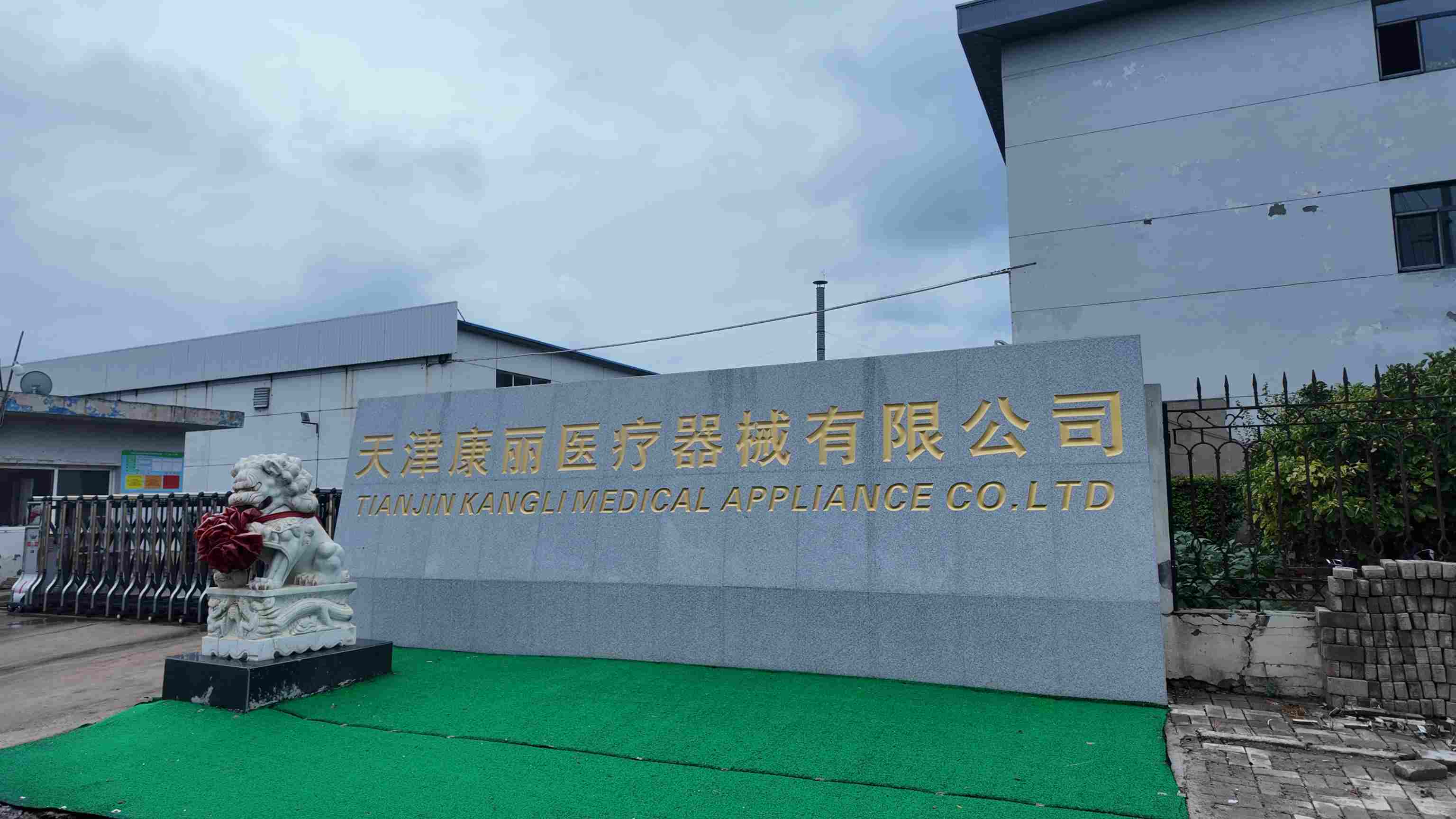
Established in 1998, Tianjin Kangli Medical Appliance Co., Ltd. specializes in hospital beds, nursing beds, ICU beds, wheelchairs, medical trolleys, and related hospital furniture.
This guide explains how to select a Chinese hospital bed manufacturer, evaluate OEM customization options, approve samples, manage quality, and build a sustainable international supply relationship.
Request an OEM Hospital Bed Quotation
Looking for an OEM hospital bed manufacturer in China?
Contact Tianjin Kangli Medical Appliance Co., Ltd. to discuss private-label hospital beds, bulk purchasing, customized configurations, or OEM/ODM opportunities for our five-function medical bed series.
Email: Yukili90@tjkangli.com
WhatsApp: +86 136 5207 7555
Chat with Our B2B Team on WhatsApp
Website: www.klmedbed.com
Let's build excellence together—from technical consultation and sample confirmation to manufacturing coordination and international delivery.
China has an established supply chain for hospital furniture manufacturing, including metal fabrication, mechanical components, medical casters, molded parts, and electrical systems.
For international buyers, working directly with a hospital bed factory in China can provide several advantages.
Factory cooperation allows buyers to discuss product dimensions, adjustment functions, accessories, materials, and design requirements with the manufacturing team.
This can reduce misunderstandings between product specifications and production requirements.
Depending on technical feasibility, manufacturers may offer different bed configurations, colors, accessories, branding options, and packaging solutions.
A direct manufacturing relationship helps buyers coordinate sample approval, purchase orders, production schedules, quality inspections, and shipment arrangements.
For brands planning multiple product generations, a stable manufacturing partner can support consistent specifications and structured product improvements.
Procurement insight: The lowest unit price is not always the lowest total purchasing cost. Product consistency, freight, spare parts, inspection costs, and after-sales responsibilities also affect profitability.
Before selecting a manufacturer, buyers should understand the differences between common manufacturing arrangements.
| Manufacturing Model | Description | Best Suited For |
|---|---|---|
| OEM | Manufacturing according to agreed customer specifications or designs | Established medical brands |
| ODM | Adapting or developing products using manufacturer design capabilities | Brands expanding product lines |
| Private Label | Selling approved products under a customer's brand | Distributors and wholesalers |
| Standard Wholesale | Purchasing existing catalog configurations | Importers and project suppliers |
OEM projects are suitable for buyers requiring defined product specifications, brand identity, and repeatable manufacturing standards.
Depending on the agreement, the customer may provide engineering drawings, functional requirements, labeling designs, or approved component specifications.
ODM projects may involve modifying existing designs or developing new configurations.
Design ownership, testing responsibilities, intellectual property, and regulatory obligations should be clearly documented.
Private-label arrangements may include customized logos, packaging, manuals, and product identification.
Important: Changing a brand label does not automatically remove the manufacturer's or brand owner's regulatory responsibilities.
OEM opportunities depend on the product platform, manufacturing capabilities, technical feasibility, and destination market requirements.
Manual hospital beds are commonly used in general wards, clinics, and healthcare facilities.
Potential customization areas include bed dimensions, head and foot boards, side rails, casters, braking systems, and accessories.
Electric hospital beds use powered adjustment systems to support patient positioning.
Buyers should confirm motor configurations, adjustment ranges, control systems, electrical specifications, and relevant safety requirements.
Five-function beds may provide additional positioning capabilities beyond standard backrest and knee adjustments.
The actual functions depend on the selected model.
Buyers should request a complete technical specification rather than relying only on the product category name.
Advanced ICU beds may include Trendelenburg positioning, emergency CPR functions, integrated weighing, or X-ray-compatible components.
These features are model-dependent and must be confirmed individually.
Nursing beds may prioritize accessibility, height adjustment, patient positioning, and caregiver convenience.
For every category, customization should be evaluated against safety, usability, regulatory requirements, and manufacturing feasibility.
Selecting a manufacturing partner requires more than reviewing product photographs.
International buyers should evaluate five areas.
Ask whether the supplier has the equipment, personnel, and processes required for the proposed product.
Relevant capabilities may include metal fabrication, welding, surface finishing, assembly, and functional inspection.
A qualified supplier should be able to discuss drawings, product specifications, component selections, and technical deviations.
For customized products, confirm how engineering changes are documented and approved.
Request relevant quality management documentation and verify its scope and validity.
ISO 13485:2016 provides a quality management framework for organizations involved in medical devices.
However, ISO 13485 certification does not automatically establish regulatory approval for every hospital bed.
Discuss destination-specific documentation before production.
Requirements may vary according to the product's intended use, regulatory classification, and target market.
Evaluate the supplier's ability to respond to technical questions, provide spare-parts information, and resolve product issues.
Expert recommendation: For significant OEM projects, consider a factory audit or independent inspection before committing to large production volumes.

One common source of procurement delays is an incomplete initial product brief.
A clear technical request helps both buyer and manufacturer evaluate feasibility before quoting.
| Requirement | Information to Provide |
|---|---|
| Product Category | Manual, electric, ICU, or nursing bed |
| Target Market | Destination country or region |
| Order Quantity | Estimated initial and annual volume |
| Product Functions | Required adjustments and features |
| Dimensions | Overall and bed platform dimensions |
| Load Requirements | Required safe working load |
| Materials | Frame, side rails, boards, accessories |
| Electrical System | Motors, controls, voltage, where applicable |
| Branding | Logo, colors, labels, packaging |
| Documentation | Manuals, technical documents, test requirements |
| Delivery | Destination, trade terms, target schedule |
A useful procurement method is to divide requirements into three categories:
Mandatory: Features necessary for clinical use, applicable regulations, or contractual acceptance.
Preferred: Features that improve product positioning or usability.
Optional: Features that may be added depending on budget, feasibility, and production conditions.
This distinction helps prevent unnecessary redesign and quotation delays.
Sample approval is a critical stage in OEM hospital bed manufacturing.
An attractive sample does not necessarily prove that every technical requirement has been met.
The buyer and factory should confirm dimensions, adjustment functions, materials, accessories, and the required configuration.
Any deviations from standard products should be documented.
Where applicable, changes may require additional verification or testing.
Review the sample against agreed specifications.
Inspection areas may include structural construction, adjustment mechanisms, casters, braking systems, side rails, electrical functions, and labeling.
Once accepted, the sample should be associated with a controlled specification or revision.
This approved configuration becomes the reference for subsequent production.
Manufacturing insight: A sample approval process is most effective when supported by written specifications, inspection records, photographs, and clearly identified components.
Hospital beds are products used in healthcare environments. Manufacturing consistency and appropriate safety verification are essential.
Quality control should be considered throughout production rather than only before shipment.
Relevant purchased materials and components should be checked against approved requirements.
These may include steel components, side rails, casters, motors, control systems, and accessories.
Depending on the manufacturing process, inspection may cover welding, structural assembly, surface finishing, mechanical installation, and electrical assembly.
The finished product should be checked against its approved functional requirements.
Examples include adjustment operation, braking function, accessories, and relevant safety-related features.
Before dispatch, confirm product models, quantities, appearance, packaging, labels, and the agreed inspection criteria.
| Inspection Stage | Main Focus |
|---|---|
| Incoming Materials | Approved components and specifications |
| Frame Manufacturing | Dimensions and structural workmanship |
| Surface Finishing | Coating consistency and visible defects |
| Assembly | Correct installation and components |
| Functional Testing | Approved movements and operation |
| Final Inspection | Product identity, appearance, accessories |
| Packaging | Protection, labeling, quantities |
Important: A general factory inspection is not a substitute for required product testing, conformity assessment, or regulatory verification.
International medical brands must consider the legal requirements of the markets in which their products will be sold.
ISO 13485:2016 specifies requirements for quality management systems relevant to medical devices.
Buyers should verify the certificate holder, certification scope, issuing body, and validity.
Medical devices placed on the EU market may fall under Regulation (EU) 2017/745.
Depending on the device and circumstances, manufacturers and other economic operators may have obligations involving technical documentation, conformity assessment, labeling, traceability, and post-market activities.
Hospital beds marketed in the United States may be subject to applicable FDA requirements.
The exact obligations depend on the device classification and regulatory circumstances.
FDA establishment registration or device listing does not constitute FDA approval, clearance, or authorization.
Countries in the Middle East, Africa, Asia, and other regions may have different registration, labeling, testing, and import requirements.
Buyer recommendation: Determine regulatory responsibilities before approving the OEM product design. Product branding, labeling, and modifications can affect those responsibilities.
Hospital bed pricing depends on more than the number of adjustment functions.
Important cost factors include the structural design, materials, mechanical or electrical components, accessories, production volume, customization complexity, and packaging requirements.
An existing configuration may require less engineering work than a new product design.
Customized tooling, specialized components, testing, and documentation may introduce additional costs.
Higher production quantities may allow certain fixed costs to be distributed across more units.
However, pricing should always be based on an actual quotation rather than assumed discounts.
Hospital beds can require substantial shipping space.
Packing method, carton dimensions, container utilization, and destination all affect landed cost.
When reviewing supplier quotations, consider inspection, freight, import charges, spare parts, and after-sales obligations.
A well-defined quotation should state exactly which components and services are included.
For international medical brands, product identity and manufacturing consistency are long-term business assets.
Agreements should clarify ownership and permitted use of drawings, tooling, logos, and other proprietary materials.
Every approved product change should be documented.
For repeat orders, the purchase order should identify the correct product revision.
Unapproved substitution of motors, casters, side rails, or other critical components can create product consistency problems.
The parties should agree on how proposed changes are reviewed.
Depending on applicable requirements, appropriate product identification and production records can support quality investigations and after-sales service.
Practical recommendation: Treat OEM cooperation as a controlled manufacturing relationship, not simply a logo-printing service.
International hospital bed procurement requires careful shipment planning.
Buyers should confirm packaging requirements, delivery terms, product quantities, and required documents before production completion.
Packaging should protect vulnerable components, including headboards, side rails, controls, and accessories.
Confirm packing dimensions, gross weight, carton markings, and handling requirements.
FOB, CIF, and FCA are examples of Incoterms rules used in international trade.
Each has different responsibilities for delivery, transportation, cost allocation, and risk transfer.
The agreed rule should include the applicable Incoterms version and named location.
Common commercial documents include invoices, packing lists, and transport documents.
Additional documentation depends on destination requirements and the purchasing agreement.
For larger projects, consider agreeing on pre-shipment inspection and document approval before goods are released.

Tianjin Kangli Medical Appliance Co., Ltd. is a hospital furniture manufacturer based in Tianjin, China.
Established in 1998, the company operates approximately 20,000 m² of manufacturing facilities and focuses on medical beds and related healthcare furniture.
Our main product categories include:
Manual and electric hospital beds
Five-function medical beds
ICU hospital beds
Nursing and long-term care beds
Wheelchairs
Medical trolleys
Hospital furniture
We work with international buyers seeking factory-direct supply, product configuration discussions, and potential OEM/ODM cooperation.
We recommend starting with a technical consultation to understand your target market, product specifications, estimated order volume, and customization needs.
Our team can then discuss available product platforms, proposed modifications, technical confirmation, sample requirements, production arrangements, and delivery planning.
For international medical brands, we believe clear specifications, realistic manufacturing commitments, and transparent communication are essential to a productive partnership.
Whether you are an established medical equipment brand, a regional wholesaler, or a distributor expanding your hospital furniture range, the first step is to share your project requirements.
We recommend providing your target country, product category, required functions, estimated quantity, and branding preferences.
Our team can review the information and discuss suitable manufacturing options.
Looking for an OEM hospital bed manufacturer in China?
Contact Tianjin Kangli Medical Appliance Co., Ltd. to discuss private-label hospital beds, bulk purchasing, customized configurations, or OEM/ODM opportunities for our five-function medical bed series.
Email: Yukili90@tjkangli.com
WhatsApp: +86 136 5207 7555
Chat with Our B2B Team on WhatsApp
Website: www.klmedbed.com
Let's build excellence together—from technical consultation and sample confirmation to manufacturing coordination and international delivery.
An OEM hospital bed manufacturer produces hospital beds according to agreed specifications or designs for another business. Depending on the arrangement, the products may carry the customer's branding and use approved customized configurations.
Private-label branding may be available depending on the product and agreement. Buyers should confirm logo placement, labeling, packaging, technical documentation, and regulatory responsibilities before production.
Minimum order quantities depend on the product model, customization requirements, component availability, and production arrangements. Contact the factory for project-specific confirmation.
Kangli Medical can review customization requests for its five-function medical bed series. Available configurations, engineering feasibility, testing requirements, and commercial terms must be confirmed for each project.
Review the approved technical specifications, sample, relevant test documentation, inspection criteria, and manufacturing quality controls. Consider independent inspection for larger or higher-risk projects.
Requirements depend on the destination market, intended use, and device classification. Buyers should verify applicable regulatory requirements and relevant documentation before placing an order.
Lead time depends on the approved configuration, quantity, customization complexity, component availability, and production schedule. Request a confirmed delivery plan after technical and commercial approval.
Begin by emailing Yukili90@tjkangli.com or contacting our team via WhatsApp. Share your product specifications, target market, estimated quantity, and customization requirements so we can discuss the next steps.
The following authoritative resources support the quality management, regulatory, international trade, and search-content guidance discussed in this article. Manufacturer background information is provided by Tianjin Kangli Medical Appliance Co., Ltd.
1. International Organization for Standardization (ISO)ISO 13485:2016 — Medical Devices: Quality Management Systems.https://www.iso.org/standard/59752.html
2. European Union — EUR-LexRegulation (EU) 2017/745 on Medical Devices.https://eur-lex.europa.eu/eli/reg/2017/745/oj/eng
3. European Commission — Public HealthMedical Devices: Sector Overview and Regulatory Information.https://health.ec.europa.eu/medical-devices-sector_en
4. U.S. Food and Drug Administration (FDA)Device Registration and Listing: Important Reminders.https://www.fda.gov/medical-devices/device-registration-and-listing/important-reminders-about-registration-and-listing
5. International Chamber of Commerce (ICC)Incoterms Rules for International Trade.https://iccwbo.org/business-solutions/incoterms-rules/
6. Google Search CentralCreating Helpful, Reliable, People-First Content.https://developers.google.com/search/docs/fundamentals/creating-helpful-content
7. Tianjin Kangli Medical Appliance Co., Ltd.Manufacturer Information and Product Portfolio.https://www.klmedbed.com


