

Views: 257 Author: Tianjin Kangli Publish Time: 2026-10-23 Origin: Site


Content Menu
● Hospital Bed Price Comparison: Start With an Equivalent Specification
● Which Hospital Bed Specifications Actually Affect Cost?
>> 1. Adjustment Functions and Bed Architecture
>> 2. Motor, Control Box, and Battery Configuration
>> 3. Frame Construction and Load Capacity
>> 4. Side Rails, Casters, and Braking
>> 5. Mattress and Clinical Accessories
● Safety Documentation: Compare Evidence, Not Labels
● OEM Hospital Bed Pricing: Separate Customization From Unit Cost
● Why Published Hospital Bed Price Ranges Often Mislead
● Compare Total Cost of Ownership, Not Just Purchase Price
>> Illustrative Five-Year Cost Comparison
● A Practical RFQ and Sample-Approval Process
>> Step 1: Define the Use Case
>> Step 2: Separate Mandatory and Optional Features
>> Step 3: Standardize the Commercial Basis
>> Step 4: Evaluate a Representative Sample
>> Step 5: Freeze the Approved Configuration
● Working With Tianjin Kangli Medical Equipment Co., Ltd.
>> 1. What affects hospital bed prices most?
>> 2. Are electric hospital beds always better than manual beds?
>> 3. Does a higher safe working load mean better quality?
>> 4. Should mattresses be included in a hospital bed quotation?
>> 5. How can OEM buyers reduce costs without weakening requirements?
>> 6. What should buyers check in a hospital bed warranty?
At Tianjin Kangli Medical Equipment Co., Ltd., we believe a useful hospital bed price comparison begins with specifications—not the lowest number on a quotation. For overseas brands, wholesalers, and manufacturers, the real question is whether each price covers the same performance, accessories, documentation, and after-sales responsibilities.
Founded in 1998, Kangli is a national high-tech enterprise focused on medical equipment research, development, and manufacturing. With a 20,000-square-meter factory and more than 50 employees, we provide OEM services for international business partners.
Our approach to comparing hospital bed quotations is straightforward: define the intended use, align the configuration, and calculate the cost of ownership. A cheaper bed is not necessarily better value, while a more expensive model is not automatically the right choice.
This guide explains which specifications deserve your attention—and how to avoid paying for features your project does not need.
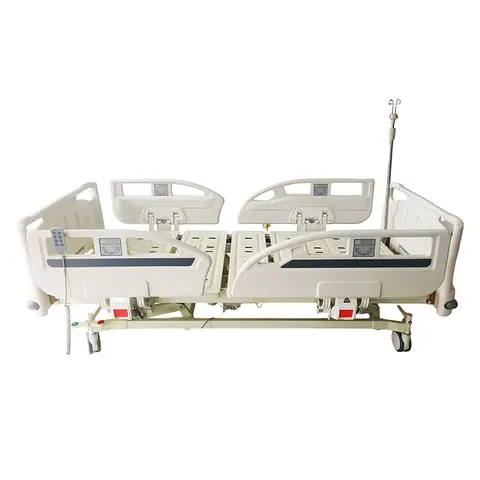
Two products described as "electric hospital beds" can differ substantially.
One quotation may cover backrest and knee adjustment only. Another may include electric height adjustment, central braking, battery backup, and integrated controls. Their prices are not directly comparable.
Before comparing suppliers, establish a common specification:
- Intended environment: general ward, intensive care, rehabilitation, or long-term care.
- Required movements and adjustment ranges.
- Maximum patient weight and safe working load.
- Mattress platform dimensions and overall footprint.
- Side rails, braking system, and controls.
- Mattress, accessories, packaging, and spare parts.
- Destination-market documentation and delivery terms.
I would treat any quotation without these details as preliminary. The first task is to remove ambiguity, not negotiate a discount.
The following table provides a practical starting point. Cost effects are qualitative; actual differences depend on design, order volume, and the agreed configuration.
| Specification | Why it changes cost | What buyers should verify |
|---|---|---|
| Manual or electric operation | Changes drive mechanisms and electrical components | Exact movements and operation method |
| Height adjustment | Adds lifting structures and, where applicable, actuators | Minimum and maximum platform height |
| Load capacity | Influences structural design and component selection | Patient-weight limit and safe working load |
| Motor and control system | Adds actuators, electronics, wiring, and controls | Component models, duty cycle, replacement support |
| Side rails | Vary in materials, mechanisms, and integrated features | Compatibility, locking function, test evidence |
| Casters and braking | Differ in construction and control arrangements | Wheel specifications and braking operation |
| Mattress system | Ranges from basic foam to powered systems | Included type, dimensions, and intended use |
| Clinical functions | May require sensors, mechanisms, or software | Exact functions and acceptance criteria |
| OEM customization | Adds engineering, tooling, and documentation work | One-time charges versus recurring unit costs |
Manual hospital beds use mechanical adjustment systems. Electric models add powered movement, but counting motors alone does not establish value.
Ask which movements are available independently:
- Backrest adjustment.
- Knee-section adjustment.
- Overall height adjustment.
- Trendelenburg and reverse Trendelenburg, where required.
Also distinguish platform height from mattress-top height. A quotation describing a "low bed" is incomplete without the measurement reference and compatible mattress thickness.
For a general ward, additional positioning functions may offer limited value unless the clinical team requires them. For a specialist project, omitting a necessary movement can make a lower-priced bed unsuitable.
An electric hospital bed price includes more than actuators.
The complete system may include a control box, hand controller, nurse controls, wiring, connectors, battery, and locking functions.
Request identifiable component specifications and replacement arrangements. A familiar motor name does not explain the reliability or serviceability of the complete bed.
Where battery backup is specified, define the expected operation under stated conditions. "Includes battery" does not establish how many movements remain available, how charging works, or when replacement is needed.
A stronger-looking frame is not enough to confirm performance.
Materials, geometry, weld quality, joints, lifting mechanisms, and manufacturing consistency all matter. Steel thickness alone is therefore a weak basis for comparing hospital bed quality.
Buyers should also distinguish maximum patient weight from safe working load. These figures are not interchangeable; obtain the manufacturer's definitions and loading assumptions.
For higher-capacity applications, assess the complete system—including actuators, rails, casters, mattress, and transfer requirements—rather than considering the frame in isolation.
These components can look similar in photographs while behaving differently in use.
For rails, compare locking mechanisms, release operation, materials, and compatibility with the mattress and bed platform. Integrated controls can add cost and additional service requirements.
For casters, check diameter, wheel material, steering arrangements, and brake configuration. Central braking may simplify operation, but its value depends on workflow and implementation.
The practical question is not "Which accessory looks more advanced?" It is "Which configuration meets the agreed use case and acceptance tests?"
A bed-frame quotation should not be compared directly with a complete bed-system quotation.
Specify whether the price includes:
- Mattress and cover.
- IV pole and mounting points.
- Drainage-bag hooks.
- Patient lifting pole.
- Extension components.
- Spare controls or other replacement parts.
Mattress dimensions and thickness also affect compatibility with rails. A powered pressure-redistribution mattress is a separate system with its own specifications, maintenance needs, and cost.
Do not assume every mattress upgrade fits every bed.
Safety-related design and verification can affect hospital bed manufacturing cost. However, a higher price or a certification logo does not prove that a specific configuration meets your requirements.
Request documentation identifying the manufacturer, model, tested configuration, applicable standards, and relevant editions.
Adult medical-bed standards include IEC 60601-2-52 and the newer IEC 80601-2-52 framework. Applicable editions, national adoption, and transition arrangements should be checked for the destination market.
Likewise, electrical-safety and electromagnetic-compatibility requirements should be assessed where relevant.
Bed-system compatibility deserves particular attention. The frame, rails, mattress, and accessories interact; changing one component can alter gaps and create entrapment hazards.
A sensible procurement rule is to approve a defined configuration—not an assortment of individually attractive components.
For international brands and distributors, OEM pricing should distinguish cosmetic changes from engineering changes.
Logo application, packaging artwork, and selected colors may involve relatively limited changes. Different dimensions, rail structures, control layouts, or electrical systems can require additional development and verification.
Ask suppliers to separate:
1. Standard bed unit price.
2. Optional accessories.
3. Tooling and engineering charges.
4. Testing and documentation costs.
5. Packaging development.
6. Spare-parts packages.
Also clarify minimum order quantities, artwork approval, revision control, and ownership of custom tooling.
This separation helps buyers understand whether a higher first-order price reflects recurring product cost or a one-time investment.
A broad online price range rarely provides enough detail for a professional buying decision.
It may mix factory quotations with retail prices, manual beds with ICU models, or frame-only offers with complete packages. Taxes, freight, installation, warranties, and local service may also differ.
Instead of treating an advertised range as a benchmark, request configuration-matched quotations with:
- A quotation date and validity period.
- Order quantity and currency.
- Named delivery term and location.
- Itemized inclusions and exclusions.
- Production lead time.
- Warranty scope.
This produces a more defensible hospital bed price comparison than an unsupported "average market price."
The configuration determines what you buy; the ownership plan determines what you spend afterward.
A useful planning model is:
Total ownership cost = acquisition + logistics + installation + maintenance + replacement parts + downtime-related expenses + disposal − residual value.
Use the same evaluation period and assumptions for every supplier. Keep recoverable taxes separate where appropriate, and avoid counting the same expense twice.
The figures below are hypothetical planning inputs—not Kangli quotations or market averages.
| Cost per bed | Option A | Option B |
|---|---|---|
| Purchase price | USD 600 | USD 720 |
| Freight and setup | USD 100 | USD 100 |
| Five-year maintenance allowance | USD 180 | USD 90 |
| Replacement-parts allowance | USD 120 | USD 60 |
| Estimated total | USD 1,000 | USD 970 |
Option B costs USD 120 more initially but USD 30 less under these assumptions.
The lesson is not that expensive beds always save money. It is that maintenance assumptions need evidence: parts prices, service arrangements, warranty exclusions, and realistic replacement expectations.
Run a second scenario with higher repair costs or delayed parts delivery. This shows how sensitive the decision is to uncertain inputs.
A well-written request for quotation makes supplier responses easier to compare.
State the care environment, intended patient population, quantity, destination country, and installation conditions.
Keep safety and essential functions in the mandatory category. Price optional upgrades separately so they do not obscure the base comparison.
Use the same delivery term, named location, packaging assumptions, and accessory list.
Check movement, controls, braking, rail operation, dimensions, labeling, and assembly against the agreed specification.
Include relevant clinical and technical reviewers. A video demonstration can support screening but should not replace required acceptance checks.
Record the bill of materials, drawings, accessories, instructions, packaging, and inspection criteria.
Agree how substitutions and design changes will be approved before mass production.
Kangli provides an OEM discussion starting point for overseas brands, wholesalers, and manufacturers seeking a specification-led quotation.
To request a useful comparison, send your target market, required functions, quantity, dimensions, load requirements, accessories, branding needs, and preferred delivery terms.
Ask for an itemized proposal that separates the standard configuration from optional upgrades and development work. This makes it easier to evaluate both the initial order and future repeat purchases.
Contact Tianjin Kangli Medical Equipment Co., Ltd.:
- Website: [https://www.klmedbed.com]
- Email: yukili90@tjkangli.com
- Phone / WhatsApp: +86 136 5207 7555
Request a specification-matched OEM quotation rather than a price-only offer.
Major drivers include adjustment functions, lifting architecture, electrical systems, load requirements, rails, mattresses, and specialist features. Order quantity, customization, delivery terms, and documentation also affect the final quotation.
No. The appropriate choice depends on patient needs, staffing, adjustment frequency, power availability, and maintenance support. Compare suitability for the intended environment rather than assuming electric operation automatically represents better value.
Not by itself. It describes a loading capability under defined conditions. Overall suitability also depends on stability, controls, rail compatibility, durability evidence, serviceability, and the intended patient population.
They should be explicitly included or excluded. When included, specify dimensions, thickness, construction, cover, and compatibility. Otherwise, two apparently similar quotations may cover substantially different bed systems.
Standardize configurations, remove unnecessary options, consolidate approved components, and plan repeat orders. Preserve required safety performance and verification. Cost reduction should begin with unnecessary complexity—not undocumented substitutions.
Confirm covered components, exclusions, labor responsibility, freight charges, claim evidence, response arrangements, and replacement procedures. Also request spare-parts availability and pricing beyond the warranty period.
Hot Tags: China, Global, OEM, private label, manufacturers, factory, suppliers, manufacturing company


