

Views: 213 Author: kangli Publish Time: 2026-09-30 Origin: Site


Content Menu
● Steel vs. Aluminum Manual Wheelchairs: A Buyer's Guide
>> Steel and Aluminum Wheelchairs at a Glance
● What Makes Steel Manual Wheelchairs a Practical Option?
● What Makes Aluminum Manual Wheelchairs Attractive?
● The Most Important Specs to Compare
>> 5. Wheels, Brakes, and Tires
>> 6. Maintenance and Replacement Parts
● A Practical Sample-Evaluation Checklist
● What Distributors Should Ask a Manufacturer
>> Is an aluminum wheelchair always lighter than a steel wheelchair?
>> Is a steel wheelchair more durable?
>> Which wheelchair is better for frequent vehicle transport?
>> Is a steel wheelchair better for bulk purchasing?
>> What should distributors request from a wheelchair supplier?
>> Can the frame material be customized for OEM orders?
How can I start an OEM partnership with your factory?
We recommend starting with an initial technical consultation to review your design specifications, target market, required functions, quantity, and customization needs.
Please contact our dedicated B2B team by email at Yukili90@tjkangli.com or chat with us directly on WhatsApp: +86 136 5207 7555.
WhatsApp:
Let’s build excellence together. Whether you need a quotation for a large-scale hospital project, want to develop a private-label product, or are exploring OEM/ODM opportunities for our 5-function medical bed series, our team is ready to support you from product selection and technical confirmation to production and delivery.
Visit www.klmedbed.com or contact us via WhatsApp to start your customized manufacturing project today.
Choosing between a steel and aluminum manual wheelchair involves more than comparing frame materials. Weight, intended use, user needs, durability, maintenance, price, and local service all matter.
For international brands, wholesalers, distributors, and rehabilitation-equipment companies, the right choice also affects shipping costs, product positioning, and after-sales support. Steel wheelchairs often offer a lower purchase price and sturdy construction; aluminum wheelchairs are typically lighter and more convenient to lift or transport. Actual performance depends on the complete wheelchair design—not the frame material alone. [intcowheelchair] [chuangenmedical]
Tianjin Kangli Medical Device provides OEM and private-label manufacturing services for overseas brands, wholesalers, distributors, and medical-equipment companies. This guide compares steel and aluminum manual wheelchairs and offers a checklist for evaluating samples and supplier quotations.
> Clinical note: This article is for product-selection and procurement purposes. A qualified healthcare or rehabilitation professional should assess an individual user's seating, posture, mobility, and support needs.

| Consideration | Steel manual wheelchair | Aluminum manual wheelchair |
|---|---|---|
| Weight | Often heavier, depending on construction | Often lighter, depending on alloy and design |
| Purchase cost | Commonly positioned as a cost-conscious option | Often costs more than a comparable basic steel model |
| Transport and lifting | Heavier to lift into a vehicle or store | May be easier to lift, fold, and transport |
| Corrosion | Surface protection and maintenance are important | Generally resists corrosion, but finish and environment still matter |
| Durability | Depends on frame design, welds, finish, and use | Depends on alloy, tube design, welds, and use |
| Best-fit priorities | Budget, institutional use, and straightforward servicing | Portability, easier handling, and lighter product positioning |
These are general tendencies, not guarantees. Buyers should compare complete models, measured weights, test results, warranty terms, and spare-part availability.
Steel is widely used in standard manual wheelchair frames. It can be a good choice when buyers prioritize purchase price, broad availability, and practical servicing.
- Lower initial cost for many standard configurations.
- Robust frame options for institutional or routine use.
- Familiar repair and maintenance for service teams.
- Suitable for bulk purchasing where budget and standardized models are priorities.
Steel wheelchairs can be heavier than comparable aluminum models, which may make loading, lifting, and transport more difficult. The frame's weight depends on more than the material: tube dimensions, cross-bracing, seat width, accessories, and construction all contribute.
Ask the supplier about the frame's protective finish and care instructions. Scratches or coating damage should be assessed and repaired according to the manufacturer's guidance to help protect the underlying metal.
Aluminum alloys are often selected when reducing product weight is a priority. Some wheelchair manufacturers describe aluminum as offering a useful balance of strength and weight, though performance varies with alloy, geometry, and manufacturing quality. [chuangenmedical]
- Lower overall weight in many comparable configurations.
- Easier lifting and transport for caregivers or users who load the chair into a vehicle.
- Good resistance to corrosion in many environments.
- Strong option for portable or lightweight product ranges.
An aluminum frame is not automatically stronger, more durable, or more comfortable than a steel frame. The alloy, tube design, weld quality, fasteners, finish, and quality-control process all matter. Ask for the wheelchair's actual net weight, load rating, test documentation, and warranty—not just a claim that it is "lightweight."
- Purchase budget is a primary constraint.
- The wheelchair will be used mainly in one location.
- Frequent lifting into cars or storage is not expected.
- Local service teams are familiar with the model and its components.
- The buyer wants a practical, standard configuration for bulk supply.
- Portability and lifting effort matter.
- The wheelchair will be folded and transported frequently.
- Buyers are developing a lightweight product range.
- Reduced shipping weight or easier handling is a commercial priority.
- The user or caregiver needs a chair that is simpler to manage.
Do not choose based on material alone. A well-designed steel wheelchair may be a better fit than a poorly specified aluminum model, and vice versa.
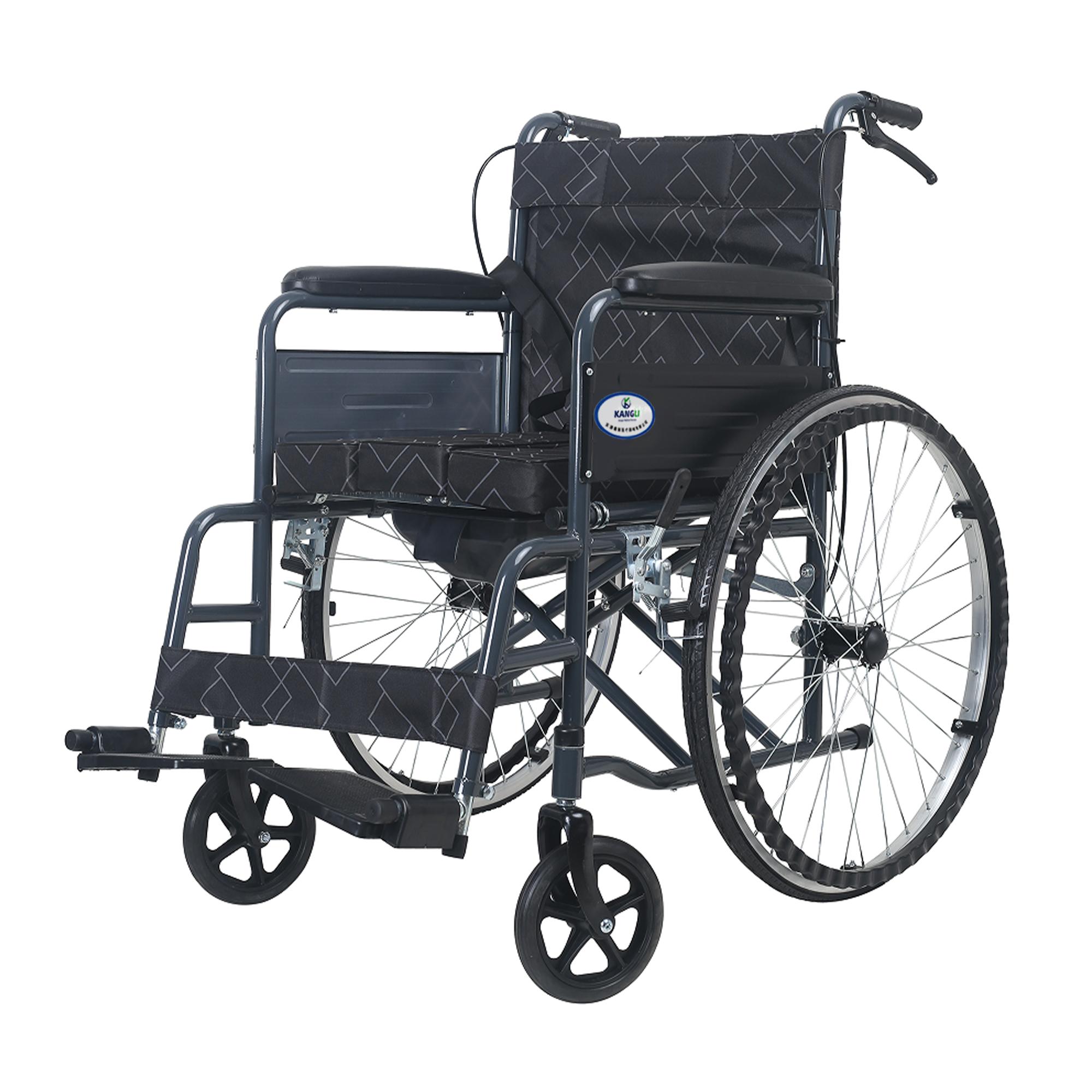
Request the wheelchair's net weight, with a clear note on what is included or excluded—such as footrests, armrests, cushions, and rear wheels. If portability is a priority, check the weight of the heaviest component after folding or disassembly.
Confirm the manufacturer's stated maximum user weight and the conditions under which it applies. Ask for relevant testing documentation and whether the rating changes with different seat widths or configurations.
Check:
- Seat width and depth
- Seat height
- Backrest height
- Armrest height and style
- Footrest adjustment
- Overall chair width
- Folded dimensions
The correct fit is essential for usability. A distributor should avoid recommending a model based only on general weight or height categories.
Ask the supplier to demonstrate:
- Folding and unfolding
- Wheel removal, if applicable
- Footrest removal or swing-away operation
- Folded dimensions
- Whether the chair stands securely when folded
- How to lift it safely
Verify rear-wheel size, tire type, front casters, hand rims, parking brakes, and replacement availability. Ask how the brakes perform on the surfaces where the chair is expected to be used.
Request a parts list with part numbers, compatibility details, and expected lead times. Common items to clarify include tires, tubes, casters, brakes, armrests, footrests, cushions, and upholstery.
Before approving a bulk order or OEM sample:
1. Verify the model and options against the quotation.
2. Measure the seat and overall dimensions.
3. Weigh the complete chair and note what is included.
4. Fold and unfold it several times.
5. Check brakes, wheels, hand rims, and steering.
6. Inspect welds, fasteners, finish, and moving parts.
7. Confirm the chair fits through expected doors and storage spaces.
8. Review the user manual, labels, warranty, and parts list.
9. Record any changes required before mass production.
For OEM projects, keep an approved golden sample, technical drawing, packaging artwork, and inspection checklist. These help suppliers and buyers maintain consistency across production batches.

Use a consistent request for quotation (RFQ) so suppliers can be compared fairly:
- What is the wheelchair's actual weight, and how is it measured?
- What are the frame material and alloy specifications?
- What is the maximum user weight?
- Which dimensions and options are standard?
- What tests and quality documents can you provide?
- What is included in the warranty?
- Which spare parts are available, and what are their lead times?
- Can you provide custom colors, logos, packaging, or manuals?
- What are the minimum order quantity and production lead time?
- How are design or component changes communicated?
For buyers assessing standards, ask suppliers which ISO 7176 wheelchair tests are relevant to the specific model and request supporting documentation. Do not treat a general standards claim as proof that every configuration has been assessed. [topmedi] [anchengwheelchair]
> Visual recommendation: Place a side-by-side product photo after the comparison table. Add a short video showing folding, lifting, brake operation, and wheel removal. Use verified product weights and specifications in any graphic.
Not always. Aluminum models are often lighter, but the complete weight depends on frame design, dimensions, wheels, and accessories. Compare verified model weights.
Material alone cannot determine durability. Frame design, welds, finish, components, maintenance, and use all matter. Compare product-specific testing and warranty information.
A lightweight aluminum model may be easier to lift, but verify its actual weight and folded dimensions. Also consider removable wheels and footrests.
It may be attractive when the priority is lower initial cost, but buyers should compare the complete quotation, service support, spare parts, and expected operating costs.
Request technical specifications, actual weight, load rating, relevant test documents, warranty details, a spare-parts list, packaging specifications, and OEM options.
Customization depends on the manufacturer's product range, engineering capability, minimum order quantity, and tooling requirements. Confirm these details before approving a sample.
The choice between steel and aluminum manual wheelchairs should reflect the intended user, care setting, transport needs, budget, and local service capacity. Steel may suit cost-conscious or stationary use; aluminum may be attractive when lower weight and portability matter. Compare complete product specifications—not material labels alone.
For OEM or wholesale inquiries, contact Tianjin Kangli Medical Device with your target market, preferred frame material, required dimensions, branding needs, and estimated order quantity to request product information and a quotation.
1. [Wheelchair manufacturing materials and ISO 7176 testing overview]
2. [Aluminum wheelchair frame material overview]
3. [Rick Hansen Foundation: Manual wheelchair types and materials]


