

Views: 169 Author: kangli Publish Time: 2026-09-29 Origin: Site


Content Menu
● Hospital Bed Mattress Selection Guide: Size, Thickness, Density and Waterproof Covers
● 1. Start with the Exact Hospital Bed Mattress Size
>> Mattress-to-Bed Fit Checklist
● 2. Choose Mattress Thickness for the Bed and Intended Use
>> Questions to Ask About Thickness
● 3. Understand Foam Density, Firmness, and Construction
How can I start an OEM partnership with your factory?
We recommend starting with an initial technical consultation to review your design specifications, target market, required functions, quantity, and customization needs.
Please contact our dedicated B2B team by email at Yukili90@tjkangli.com or chat with us directly on WhatsApp: +86 136 5207 7555.
WhatsApp:
Let’s build excellence together. Whether you need a quotation for a large-scale hospital project, want to develop a private-label product, or are exploring OEM/ODM opportunities for our 5-function medical bed series, our team is ready to support you from product selection and technical confirmation to production and delivery.
Visit www.klmedbed.com or contact us via WhatsApp to start your customized manufacturing project today.
Choosing a hospital bed mattress involves more than matching a nominal length and width. Buyers must confirm the mattress fits the bed's adjustable platform, supports its intended users, works with the side rails, and has a cover suited to cleaning and infection-control requirements.
For hospitals, nursing facilities, distributors, wholesalers, and international medical brands, mattress specifications also affect patient comfort, pressure redistribution, durability, shipping, and replacement planning. This guide explains how to evaluate hospital bed mattress size, thickness, foam density, construction, and waterproof covers before ordering.
At Tianjin Kangli Medical Device, we provide OEM and private-label manufacturing services for overseas brands, wholesalers, distributors, and medical-equipment companies. Mattress and bed configurations should be confirmed together so that the selected mattress fits and functions with the intended bed model.
> Clinical note: Mattress selection for pressure-injury prevention or treatment should be based on an individual assessment by qualified healthcare professionals. A mattress specification alone does not guarantee a clinical outcome.

Factory Strength Demonstration Video
A mattress must fit the actual mattress platform, not simply a commonly advertised size. Many adult beds use a mattress around 36 × 80 inches (approximately 91 × 203 cm), but sizes differ by bed model, region, and intended user. Bariatric, pediatric, and extended-length beds require other dimensions. [1]
Before ordering, measure or request the bed manufacturer's specifications for:
- Usable platform width and length
- Mattress thickness permitted by the bed
- Section lengths and articulation points
- Corner radius and shape
- Mattress-retention features
- Required clearances around side rails
- Permitted mattress overhang, if any
Do not assume that two beds described as "standard" have identical mattress platforms. Even a small mismatch can cause sliding, gaps, poor support, or interference with the rails.
Ask the bed and mattress suppliers to confirm in writing:
1. The exact mattress model and dimensions.
2. Which bed models it is compatible with.
3. Whether it has been tested on the articulated platform.
4. Whether it remains secure during backrest and knee-section adjustment.
5. Whether the mattress can be used with the selected side rails.
6. Whether straps, retainers, or locating features are required.
---
Hospital bed mattresses are available in different thicknesses. A thicker mattress is not automatically better: it can affect side-rail height, patient transfer, bed articulation, and compatibility with accessories.
Confirm the manufacturer's maximum permitted mattress thickness and verify the resulting rail height above the mattress. The FDA's hospital-bed guidance highlights the importance of evaluating the complete bed system and its openings, including the mattress and rails, to reduce entrapment risks. [2]
- What mattress thickness is approved for this bed?
- Does the bed have a minimum or maximum mattress height?
- How much side rail remains above the mattress?
- Does the mattress flex appropriately when the bed articulates?
- Will a thicker mattress interfere with controls, rails, or accessories?
- Is a different mattress needed for a bariatric or pressure-redistribution configuration?
For procurement, state the mattress thickness as a measurable specification, not an informal preference.
---
Foam density and firmness are different properties. Density describes the amount of material in a given volume and is commonly used as one indicator of foam composition and potential durability. Firmness describes how the foam feels under load. Buyers should not use density alone to predict comfort, support, or clinical suitability.
Request information about:
- Foam type and construction
- Density and test method
- Firmness or indentation-force data, if available
- Number of foam layers
- Reinforced edges
- Expected service conditions
- Cleaning and care instructions
- Warranty and replacement criteria
A mattress may use a single foam layer or a multi-layer design. Some models are designed for general ward use, while others are intended to redistribute pressure or work with powered pressure-redistribution systems. The right construction depends on the bed, intended users, care environment, and clinical requirements.
| Construction | Common procurement consideration |
|---|---|
| Single-layer foam | Simple configuration; assess support, durability, and intended use |
| Multi-layer foam | Different layers may provide different support characteristics; request construction details |
| Pressure-redistribution mattress | Confirm intended use, care instructions, and clinical evaluation requirements |
| Powered air mattress | Check power, controls, alarms, maintenance, and bed compatibility |
Do not accept broad claims such as "high density" or "anti-bedsore" without supporting specifications and clear intended-use information.

A waterproof hospital mattress cover helps protect the mattress core from fluids and supports routine cleaning. But "waterproof" alone does not describe the cover's performance, construction, or maintenance requirements.
Ask about:
- Cover material and coating
- Liquid-barrier performance
- Breathability, if relevant to the product
- Seam construction
- Welded or stitched seams
- Zipper placement and protection
- Chemical-cleaning compatibility
- Disinfectant limitations
- Fire or flammability information, where required
- Repair and replacement options
- Whether the cover is removable
The cover should be compatible with the cleaning agents and procedures used in the destination facility. Ask for written cleaning instructions and confirm whether repeated disinfection affects the coating, seams, or flexibility.
Check:
- Corners for tearing or weak seams
- Zippers for fluid-exposed openings
- The underside for unprotected areas
- The surface for cracks, pinholes, or peeling
- Labels for material and care information
- Whether the cover can be removed and replaced without damaging the core
A cover that is difficult to clean or is damaged may compromise the mattress's serviceability. The manufacturer should explain how staff can inspect and report damage.
---
Some mattresses are designed to redistribute pressure, but no single mattress suits every patient. Selection should reflect the patient's risk assessment, mobility, care plan, and facility protocol.
For buyers, the practical steps are:
- Define the intended use and user group.
- Consult the clinical team on required performance.
- Ask the supplier for the product's intended-use statement.
- Request supporting test information where relevant.
- Confirm compatibility with the bed and cover.
- Avoid unsupported claims about preventing or treating pressure injuries.
A mattress supplier should distinguish its technical features from clinical claims. Procurement documents should use precise, supportable language.
---
Hospital mattresses must flex with the bed's sections. A mattress that is too stiff, too long, or improperly retained may bunch, slide, or interfere with bed movement.
Test the selected mattress with the actual bed configuration:
- Flat position
- Raised backrest
- Raised knee section
- Combined articulated positions
- Side rails raised and lowered
- Bed at minimum and maximum height, if relevant
Check that the mattress:
- Follows the bed's articulation
- Remains positioned on the platform
- Does not obstruct the side rails
- Does not create excessive gaps
- Has suitable edge support for the intended use
- Does not damage the cover during repeated movement
For OEM buyers, approve the bed and mattress as a matched configuration, not as separate catalog items.
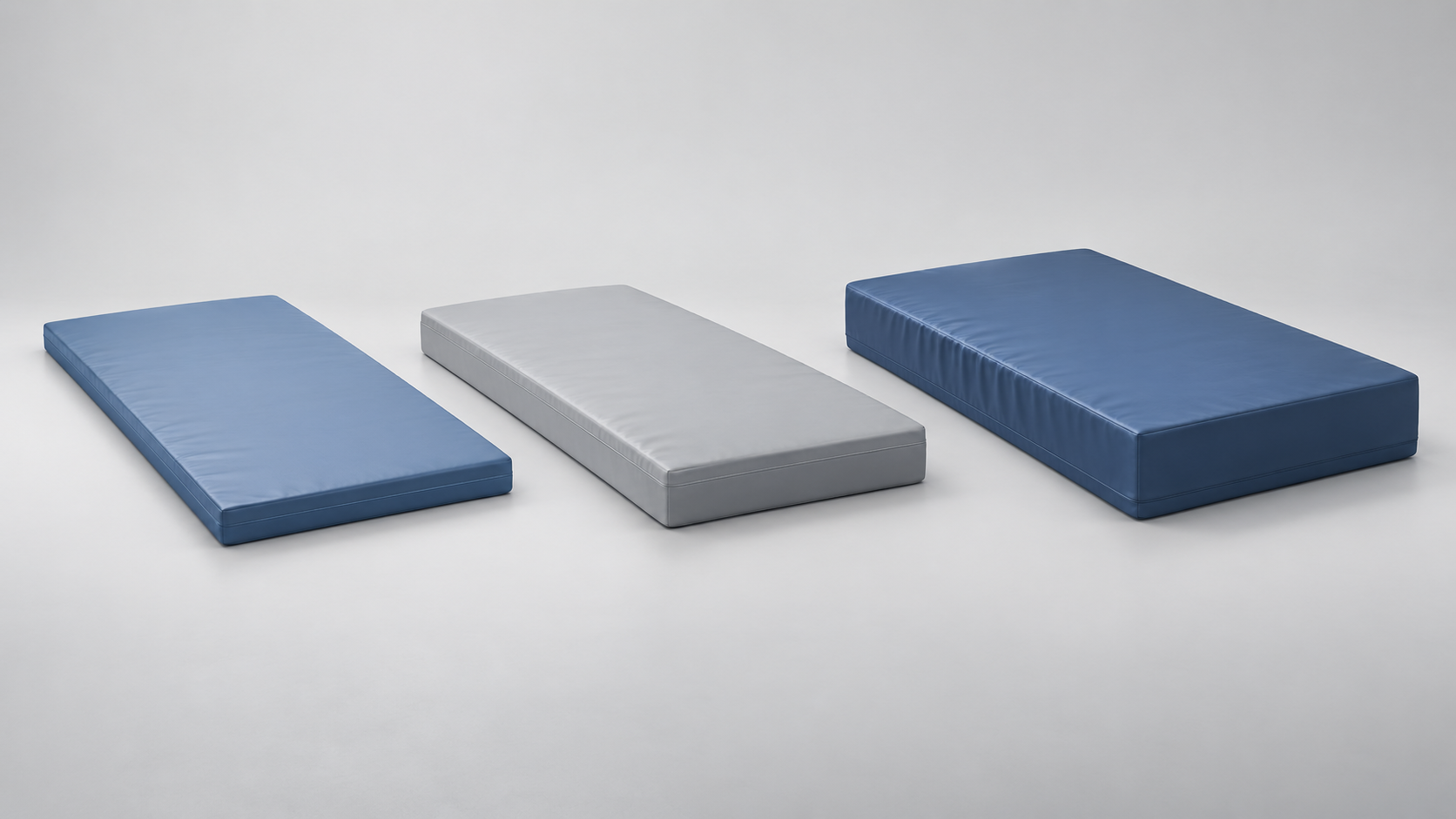
Include these details when requesting quotations:
- Mattress length, width, and thickness
- Dimension tolerances
- Compatible bed model and platform size
- Mattress-retention method
- Side-rail compatibility
- Articulation compatibility
- Core material and construction
- Foam density and measurement method
- Firmness data, if required
- Cover material and liquid-barrier details
- Seam and zipper design
- Cleaning and disinfection instructions
- Intended-use statement
- Sample cost and lead time
- Minimum order quantity
- Branding or private-label options
- Custom dimensions or colors
- Packaging method
- Warranty
- Replacement-cover availability
- Spare-parts or service support
- Inspection and acceptance criteria
Ask each supplier to quote the same specification so that prices can be compared fairly.
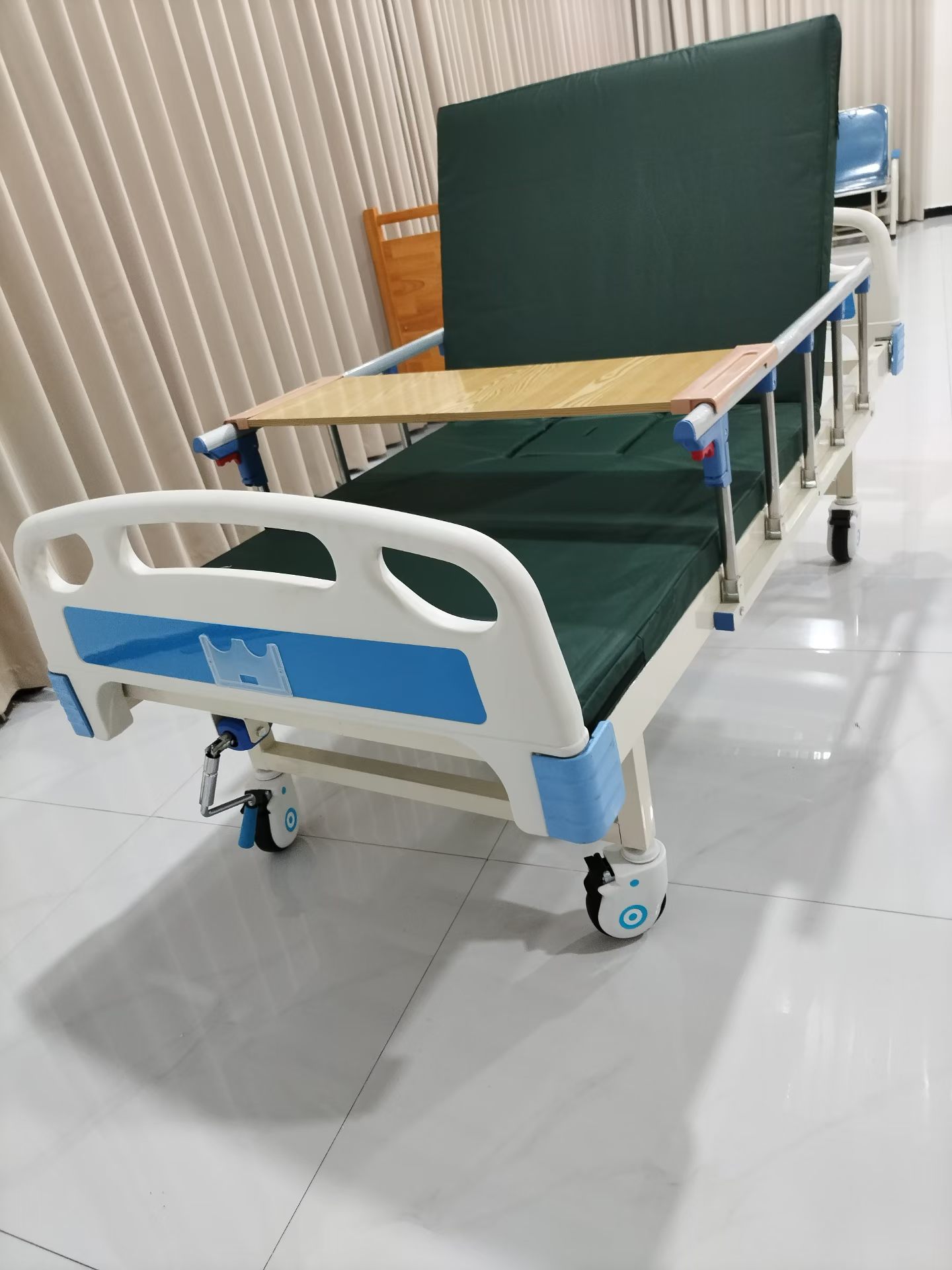
Before a bulk order, request a representative sample and inspect it against the approved specification.
1. Measure length, width, and thickness.
2. Place it on the specified bed platform.
3. Check fit, retention, and edge alignment.
4. Operate the bed through its articulation range.
5. Inspect side-rail clearance and mattress movement.
6. Examine seams, corners, zipper, and underside.
7. Review labels, care instructions, and packaging.
8. Record deviations and agree on corrective actions.
For repeat orders, use an approved golden sample, controlled drawing, specification sheet, and incoming-inspection checklist. This helps maintain consistency across production batches.
---
A commonly used adult size is approximately 36 × 80 inches (91 × 203 cm), but actual dimensions vary by bed model and market. Confirm the platform measurements before ordering. [1]
No. Thickness must match the bed design, side rails, patient-transfer needs, and intended use. Verify the manufacturer's permitted thickness and rail compatibility.
Not necessarily. Density is not the same as firmness or clinical suitability. Request construction details, relevant test information, intended use, and warranty terms.
Confirm the material, seams, zipper protection, cleaning-agent compatibility, inspection procedure, and replacement options. Follow the manufacturer's care instructions.
No. The mattress must fit the platform, flex with its articulated sections, remain secure, and work with the side rails. Confirm compatibility with the bed manufacturer.
Request dimensions, materials, construction, cleaning instructions, compatible bed models, warranty, sample availability, packaging details, and OEM options.
---
The best hospital bed mattress is the one that fits the bed precisely, supports the intended use, works safely with the rails and articulation, and can be cleaned and maintained as required. Confirm size, thickness, construction, cover specifications, and compatibility before placing a bulk order.
For OEM or private-label projects, contact Tianjin Kangli Medical Device with your bed model, target market, mattress dimensions, cover requirements, branding needs, and expected order volume. We can help coordinate bed-and-mattress specifications for your project.
---
1. [Hospital Bed Mattress Measurements Guide] — General sizing reference; always confirm the dimensions of the actual bed model.
2. [U.S. FDA: Hospital Bed System Dimensional and Assessment Guidance to Reduce Entrapment] — Guidance on evaluating bed-system dimensions and entrapment risks.


