

Views: 123 Author: kangli Publish Time: 2026-09-30 Origin: Site


Content Menu
● Manual Wheelchair Bulk Buying Guide: Frame, Seat Width, Weight, and Load Capacity
>> 1. Start with the Intended Users and Market
>> 2. Compare Frame Materials and Construction
>> 3. Choose the Correct Seat Width
>> 4. Compare Product Weight and Folded Dimensions
>> 5. Verify Maximum User Weight and Load Capacity
>> 6. Review Wheels, Brakes, Upholstery, and Adjustability
>> 7. Bulk Procurement Checklist for B2B Buyers
>> 8. OEM Customization for Wheelchair Brands and Distributors
>> 9. Quality Checks Before Shipment
>> 10. Common Bulk-Buying Mistakes
>> FAQ: Manual Wheelchair Bulk Buying
>>> 1. What is the most important specification when buying manual wheelchairs in bulk?
>>> 2. Is an aluminum wheelchair always better than a steel wheelchair?
>>> 3. How should I choose seat width?
>>> 4. Does a heavier wheelchair always have a higher user capacity?
>>> 5. What should a distributor request before placing a large order?
>>> 6. Can a manual wheelchair be customized for an OEM brand?
>>> 7. Why are folded dimensions important?
>> Request an OEM or Bulk Quotation
>> References
How can I start an OEM partnership with your factory?
We recommend starting with an initial technical consultation to review your design specifications, target market, required functions, quantity, and customization needs.
Please contact our dedicated B2B team by email at Yukili90@tjkangli.com or chat with us directly on WhatsApp: +86 136 5207 7555.
WhatsApp:
Let’s build excellence together. Whether you need a quotation for a large-scale hospital project, want to develop a private-label product, or are exploring OEM/ODM opportunities for our 5-function medical bed series, our team is ready to support you from product selection and technical confirmation to production and delivery.
Visit www.klmedbed.com or contact us via WhatsApp to start your customized manufacturing project today.
Buying manual wheelchairs in bulk requires more than comparing unit prices. For overseas brands, distributors, wholesalers, and medical-equipment manufacturers, the right wheelchair specification must balance frame durability, seat fit, product weight, user capacity, maintenance, and shipping efficiency.
A wheelchair that is too narrow may create pressure and discomfort; one that is too wide can make propulsion and access more difficult. Similarly, choosing a frame based only on its material name—or treating maximum user weight as a complete measure of durability—can lead to poor product fit. This guide outlines how to select manual wheelchairs for bulk procurement and OEM projects.
> Important: This is a procurement guide, not an individual seating assessment. Buyers serving users with complex postural or medical needs should consult qualified clinicians or seating professionals.
Before requesting quotations, define the product's intended use:
- Institutional use: hospitals, rehabilitation centers, nursing homes
- Retail or distribution: general-purpose adult wheelchairs
- Homecare: ease of folding, storage, and transport
- Travel or transport: weight, folded dimensions, and handling
- Specialty applications: bariatric, pediatric, or posture-support products
For distributors, segmenting the range can be more useful than sourcing a single "universal" model. A product portfolio might include standard adult, lightweight folding, and higher-capacity models—each with clearly documented specifications.
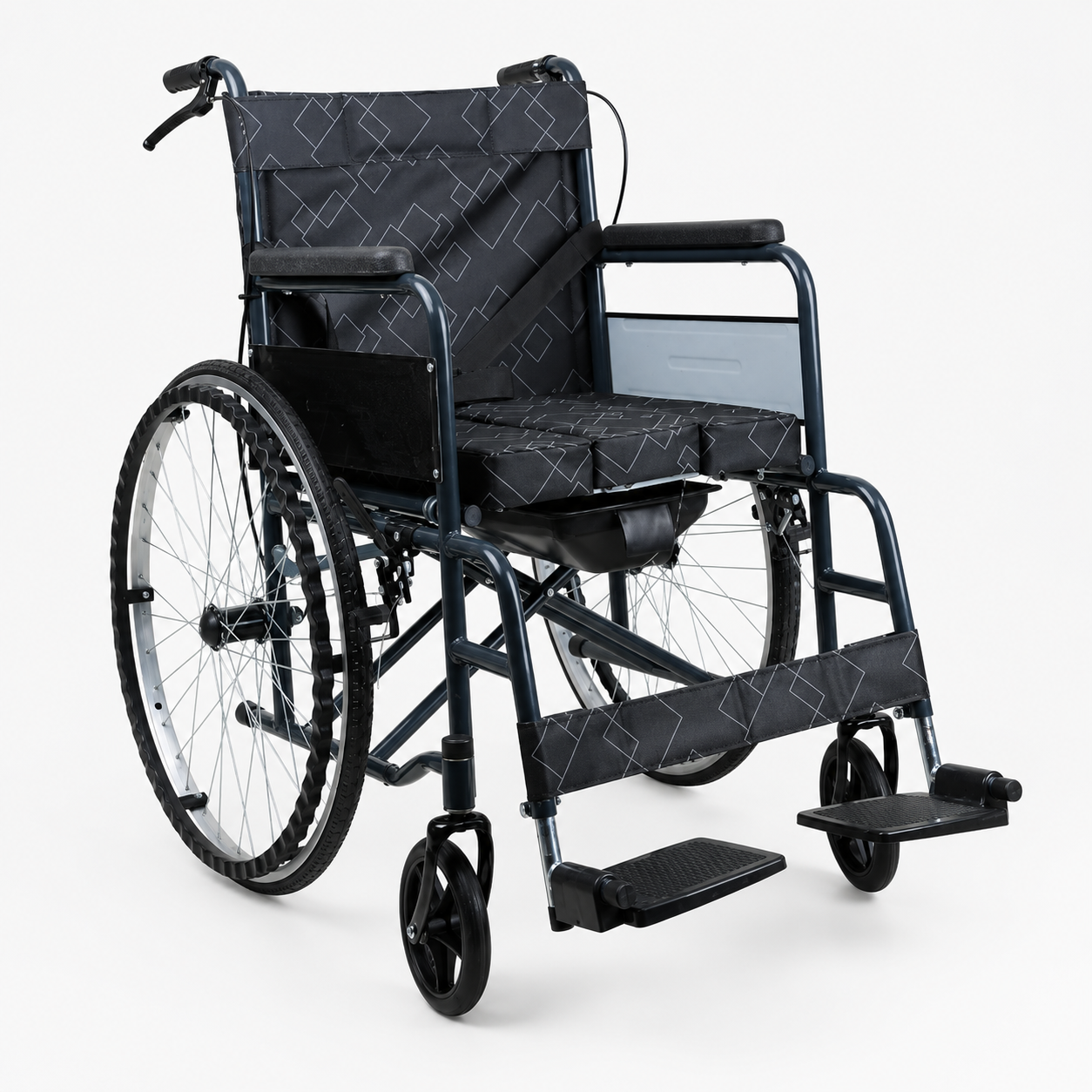
The frame affects weight, handling, durability, repairability, and price. Material alone does not determine quality: tube dimensions, joint design, welding, coating, component selection, and quality control also matter.
| Frame option | Potential strengths | Buyer considerations |
|---|---|---|
| Steel | Robust, widely used, often cost-effective | Usually heavier; inspect coating, welds, and corrosion protection |
| Aluminum alloy | Lower weight than many steel designs; useful for transport and daily handling | Compare alloy, tube design, joints, and stated capacity—not “aluminum” alone |
| Other lightweight materials | May reduce product weight in specialized designs | Often involve different costs, repair needs, and target users |
Ask manufacturers for the frame material and grade where applicable, overall weight, maximum user weight, warranty terms, and relevant test documentation. Some suppliers publish ISO 7176 or ANSI/RESNA statements for particular models; verify that the documentation applies to the exact wheelchair configuration being purchased. [intcowheelchair]
Procurement tip: Request a sample or production-representative unit. Inspect welds, folding joints, cross-braces, footrest mounts, and surface finish rather than relying only on a catalog photo.
Seat width is one of the most important sizing decisions. A basic starting point is to measure the user's seated hip width at the widest point and allow appropriate clearance, but the exact fit should be assessed in context by a qualified professional where necessary. A seat that is too narrow can restrict movement; one that is too wide may reduce positioning support and make the chair harder to propel.
For bulk procurement, define the available seat-width range and the sizes you intend to stock. Do not assume one standard width suits every market or user group. Published product specifications vary; for example, one guide identifies 18 inches as a common adult size, but that should not be treated as a universal fitting rule. [paiseec]
Confirm how the supplier measures seat width:
- Between the inside edges of the seat upholstery, or
- Between the frame tubes or armrests
These are not necessarily the same measurement. Request a dimensioned drawing and clarify whether armrests are fixed, removable, or adjustable.
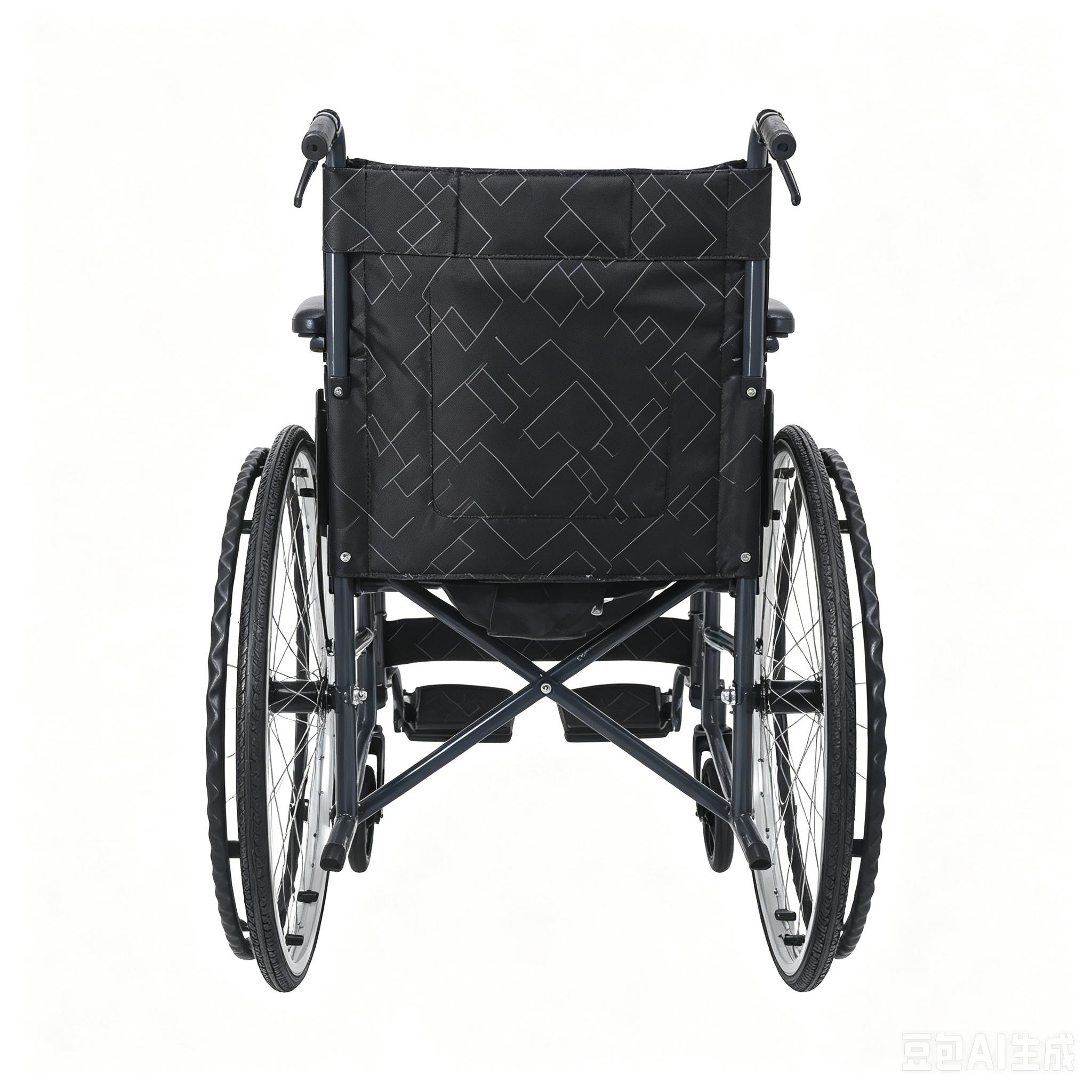
Wheelchair weight affects lifting, loading into vehicles, storage, and caregiver handling. The complete wheelchair weight may differ from the frame weight or shipping weight, so ask what is included in the stated figure.
Request:
- Product weight with standard components
- Weight of removable footrests or armrests
- Folded width, height, and depth
- Carton dimensions and gross weight
- Whether rear wheels are quick-release
- Any tool-free folding or disassembly steps
For products marketed as lightweight, verify the specification on a finished unit. A low weight can be valuable, but buyers should also examine stability, frame rigidity, wheel quality, and the declared user capacity.
Maximum user weight is a model-specific rating. Never infer it from frame material, appearance, or a similar product. Check that the value is clearly stated in the technical specification, user manual, product label, and sales materials.
Ask the supplier:
- What is the model's maximum user weight?
- Does the rating apply to the complete wheelchair and standard configuration?
- Are there restrictions for accessories or certain usage conditions?
- What tests or technical documents support the rating?
- Are higher-capacity models available?
A manufacturer's manual may state a maximum user weight for a specific wheelchair configuration; this illustrates why buyers should check the exact model's documentation rather than rely on generic category claims. [southwestmedical]
For bulk orders, include the capacity requirement in the purchase specification and confirm that the label and manual match the approved model.
These components strongly affect daily use and maintenance.
Wheels and tires
- Confirm rear-wheel diameter and tire type.
- Check caster movement and wheel alignment.
- Ask about replacement availability.
Brakes
- Test both sides for secure engagement.
- Check that brake handles are accessible and do not interfere with transfers.
- Confirm that the chair remains stationary when locked on a suitable level surface.
Upholstery
- Ask about material, cleaning instructions, and replacement parts.
- Inspect seams, attachment points, and tension.
- Confirm color options and consistency for OEM production.
Adjustability and accessories
- Review armrests, footrests, leg rests, seat belt options, cushions, and anti-tippers.
- Confirm that optional parts are compatible with the selected frame and seat width.
- Specify which accessories are included in the quoted price.
Before approving an order, prepare a written specification covering:
1. Intended user group and application
2. Frame material and construction details
3. Seat-width options and measurement method
4. Overall product weight and folded dimensions
5. Maximum user weight for each model
6. Wheel, brake, upholstery, and accessory configuration
7. Color, logo, labels, and user-manual language
8. Applicable market documentation and compliance needs
9. Spare parts, warranty, and after-sales process
10. Packaging, carton markings, and shipping requirements
Then request a quotation based on the same specification from each supplier. This makes pricing comparisons more meaningful and reduces the risk of comparing different configurations.
OEM projects may include:
- Logo printing or labels
- Frame and upholstery color
- Seat-width or component options
- Brand-specific carton design
- Manuals and labels in local languages
- Accessory bundles
- Spare-parts kits
- Private-label product identification
Ask which changes are standard and which require tooling, minimum order quantities, or additional validation. Approve a physical sample or production sample before mass production, especially for color, logo placement, upholstery, and packaging.
A pre-shipment inspection should compare finished products with the approved specification and sample.
Check:
- Correct model, size, and order quantity
- Frame alignment, welds, finish, and folding mechanism
- Seat width and key dimensions
- Brakes, wheels, footrests, and armrests
- Labels, logo, and accessories
- Carton condition, packing, and shipping marks
- User manuals and spare parts
Keep inspection records linked to the order and product model. Standards such as the ISO 7176 series concern wheelchair testing, but buyers should verify the applicable test documents and requirements for their destination market and exact product. [iteh]
- Selecting a frame solely because it is described as steel or aluminum
- Treating seat width as interchangeable across suppliers
- Comparing product weight without checking what is included
- Assuming maximum user weight from appearance or material
- Overlooking folded dimensions and shipping-carton size
- Ordering accessories without confirming compatibility
- Approving a sample that differs from the mass-production specification
- Failing to define spare parts, manuals, and after-sales support
- Frame comparison graphic: Show steel and aluminum construction features without implying that one material is universally superior.
- Seat-width measurement diagram: Illustrate the measurement points and distinguish seat upholstery width from external width.
- Specification table: Compare model, seat width, wheelchair weight, folded size, and maximum user weight.
- Short product video: Demonstrate folding, brake operation, footrest removal, and loading into a vehicle.

There is no single most important specification. Match seat size, maximum user weight, frame design, weight, intended use, and local market requirements to the buyers you serve.
No. Aluminum may reduce weight in some designs, while steel models can suit other price or durability targets. Compare the complete model, its construction, rated capacity, documentation, and service requirements. [intcowheelchair]
Request a dimensioned specification and confirm the supplier's measurement method. For individual users, sizing should be based on proper assessment rather than assuming one standard width fits everyone.
No. Product weight alone does not establish maximum user weight. Verify the rating for the exact model and configuration in the manufacturer's documentation.
Request a detailed specification, sample, quotation with included accessories, applicable test or compliance documents, packaging details, spare-parts information, warranty terms, and pre-shipment inspection criteria.
Customization may include logos, colors, labels, manuals, packaging, and accessory configurations. Availability, minimum order quantities, and lead times depend on the model and manufacturer.
They affect storage, vehicle loading, warehouse space, and shipment planning. Compare folded dimensions alongside product weight and carton size.
Tianjin Kangli Medical Instrument works with international brands, wholesalers, distributors, and manufacturers on OEM medical-equipment projects. To request a suitable manual-wheelchair proposal, provide your target market, seat-width range, frame preference, user-capacity requirement, accessories, branding, and estimated order quantity. A clear specification helps our team recommend a configuration for your product program.
1. [Aluminum Wheelchair vs Steel Wheelchair in 2026: Which One Should You Choose? — INTCO Wheelchair]
2. [How Wide Is a Normal Wheelchair? Complete Sizing Guide]
3. [Quickie Q500M/Q400M General Manual]
4. [ISO/TR 13570:2001 — Guidelines for the application of the ISO 7176 series on wheelchairs]


