

Views: 129 Author: kangli Publish Time: 2026-10-21 Origin: Site


Content Menu
Ordering Hospital Beds from China: From Sample Approval to Shipment
● 1. Why Source Hospital Beds Directly from a Chinese Manufacturer?
● 2. Step One: Define Your Hospital Bed Procurement Requirements
>> Select the Right Hospital Bed Category
>> Prepare a Technical Requirement Sheet
● 3. Step Two: Evaluate the Hospital Bed Manufacturer
>> Questions to Ask a Hospital Bed Factory
>> Why Quality Management Matters
● 4. Step Three: Discuss OEM and Private-Label Customization
>> OEM vs. ODM Hospital Bed Manufacturing
>> How to Start an OEM Partnership with Kangli Medical
● 5. Step Four: Request and Approve a Hospital Bed Sample
>> Hospital Bed Sample Approval Checklist
● 6. Step Five: Confirm the Quotation and Purchase Order
>> Essential Purchase Order Details
● 7. Step Six: Control Quality During Mass Production
>> Incoming Material Inspection
● 8. Step Seven: Understand Medical Device Compliance Requirements
>> Other International Markets
● 9. Step Eight: Conduct a Pre-Shipment Inspection
>> Three Common Pre-Shipment Risks
● 10. Step Nine: Plan Packaging and International Shipment
● 11. Step Ten: Prepare for Delivery and After-Sales Support
>> Recommended Receiving Procedure
>> Spare Parts and Warranty Planning
● 12. Why Work with Tianjin Kangli Medical Appliance Co., Ltd.?
>> Our OEM Cooperation Approach
● 13. Request an OEM Hospital Bed Quotation
>> Build Your Next Hospital Bed Project with Kangli Medical
● Frequently Asked Questions (FAQ)
>> 1. How do I order hospital beds directly from China?
>> 2. Can I customize hospital beds with my own brand?
>> 3. What is the minimum order quantity for OEM hospital beds?
>> 4. How long does hospital bed production take?
>> 5. What documents are needed to import hospital beds?
>> 6. How can I verify the quality of hospital beds before shipment?
>> 7. Can Kangli Medical support five-function electric hospital bed OEM projects?
A Practical OEM Procurement Guide for Hospital Bed Brands, Distributors, and Healthcare Equipment Importers
Ordering hospital beds from China involves much more than comparing factory prices. For international medical equipment brands, wholesalers, and hospital project contractors, a successful purchase requires clear technical specifications, reliable sample approval, controlled manufacturing, appropriate regulatory documentation, and carefully planned international shipping.
Working directly with an experienced hospital bed manufacturer in China can help buyers coordinate product development, private-label customization, quality inspections, and bulk deliveries through one manufacturing partner.
At Tianjin Kangli Medical Appliance Co., Ltd., established in 1998, we understand the importance of matching product configurations with the practical requirements of hospitals and healthcare distributors. This guide explains the essential stages of sourcing manual, electric, and ICU hospital beds from China, from the first technical consultation to final shipment.
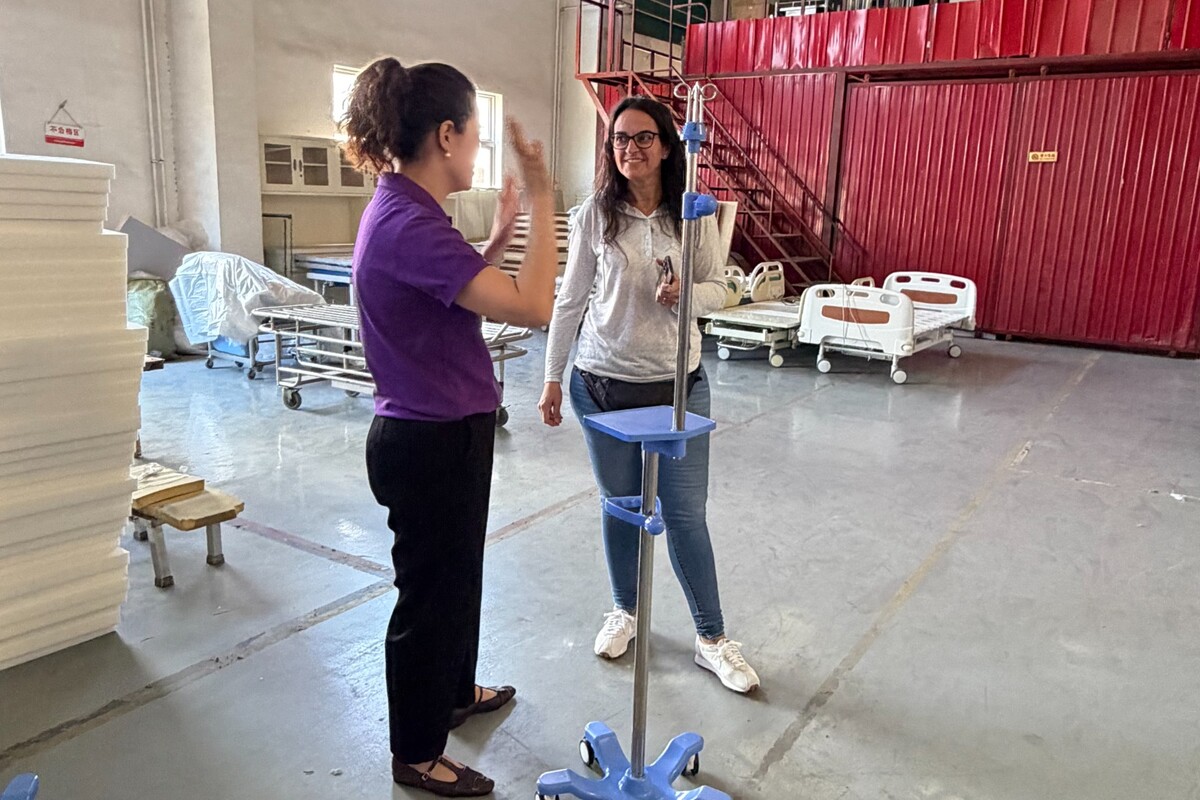
China offers an established manufacturing supply chain for hospital furniture, including steel structures, medical casters, bed adjustment mechanisms, electrical components, and molded accessories.
For international buyers, direct factory cooperation can offer several practical advantages.
More transparent product specifications: Buyers can discuss bed dimensions, functions, accessories, and configuration changes directly with the manufacturing team.
OEM and private-label opportunities: Depending on technical feasibility and regulatory requirements, buyers can explore customized branding, packaging, product configurations, and documentation.
Better coordination for bulk orders: A direct manufacturing relationship can simplify communication between purchasing, engineering, production, inspection, and shipment teams.
Long-term product consistency: Approved technical specifications and controlled component lists help reduce unexpected differences between samples and production orders.
However, a lower initial quotation does not automatically mean a lower total procurement cost. Importers should also evaluate inspection requirements, replacement parts, freight, customs, documentation, and after-sales responsibilities.
Before contacting a hospital bed factory, prepare a clear purchasing specification.
This is especially important for OEM hospital bed manufacturing, where the final configuration may differ from a manufacturer's standard catalog model.
| Hospital Bed Type | Typical Applications | Main Considerations |
|---|---|---|
| Manual Hospital Bed | General wards, clinics | Manual adjustments, frame, side rails |
| Electric Hospital Bed | Hospital wards, patient care | Motor system, controls, height adjustment |
| Five-Function Electric Bed | Advanced patient care | Multiple positioning functions |
| ICU Hospital Bed | Intensive care units | Advanced positioning, emergency functions |
| Nursing Bed | Long-term care facilities | Comfort, accessibility, nursing functions |
Not every bed offers the same features. Functions such as integrated weighing, X-ray compatibility, CPR positioning, or Trendelenburg adjustment must be confirmed for the exact model.
Your purchasing specification should identify:
Required product category and quantity
Overall dimensions and bed platform dimensions
Required adjustment functions
Safe working load requirements
Bed frame and side rail materials
Caster diameter and braking configuration
Electrical requirements, where applicable
Accessories and mattress specifications
Destination country and regulatory requirements
Branding, packaging, and labeling requirements
Expert procurement tip: Separate mandatory requirements from optional preferences. This allows the factory to identify compliant configurations without making unnecessary design changes.
A reliable supplier should demonstrate more than an attractive product catalog.
Before placing an order, buyers should evaluate manufacturing capabilities, technical communication, quality procedures, and documentation.
Can the factory provide detailed product specifications?
Are engineering drawings or configuration documents available for review?
How are product modifications approved?
What inspection records are maintained?
Can the factory identify the components used in the approved sample?
What warranty terms and spare-parts arrangements are available?
Can the supplier provide documentation relevant to the destination market?
For larger projects, consider a factory visit, remote production review, or independent inspection.
ISO 13485:2016 is an internationally recognized quality management system standard for medical devices. It provides a framework for managing processes related to consistent product quality and applicable regulatory requirements.
Buyers should verify the scope, validity, and issuing body of any certificate supplied by a manufacturer.
A quality management certificate does not automatically establish regulatory approval for every product or destination market.

For overseas brands and wholesalers, OEM cooperation can help establish a consistent product identity while using an existing manufacturing platform.
Depending on the product and project requirements, customization may involve:
Brand logos and product labels
Product colors and finishes
Headboard and footboard designs
Side rail configurations
Caster and brake selections
Electrical component options
Packaging artwork
Instruction manuals
Accessories and product identification
OEM manufacturing generally involves producing products according to agreed specifications or designs for a customer's brand.
ODM manufacturing may involve adapting an existing manufacturer-developed product design to a buyer's requirements.
In both arrangements, the parties should clarify design ownership, technical responsibilities, approval procedures, and applicable regulatory obligations.
We recommend beginning with an initial technical consultation.
Our B2B team can review your design specifications, target market, required functions, estimated quantity, and customization needs.
For buyers exploring our five-function medical bed series, we can discuss available product configurations and evaluate proposed modifications.
Start your OEM consultation: Email Yukili90@tjkangli.com or contact us on WhatsApp.
Sample approval is one of the most important stages of international hospital bed procurement.
A sample should not be approved based on appearance alone. The buyer should verify that the product meets the agreed technical requirements.
| Inspection Area | What to Verify |
|---|---|
| Dimensions | Overall size and platform dimensions |
| Adjustment Functions | Required movements and operating ranges |
| Structure | Welds, frame construction, stability |
| Side Rails | Design, locking operation, approved configuration |
| Casters | Size, movement, braking function |
| Electrical System | Motors, controls, connections, where applicable |
| Surface Finish | Coating quality and visible defects |
| Accessories | Correct quantities and compatibility |
| Branding | Logo, labels, colors |
| Documentation | Approved specifications and manuals |
Once the sample has been accepted, establish an approved reference configuration, often called a golden sample.
Record the product model, revision number, photographs, major components, approved specifications, and any accepted deviations.
Both buyer and manufacturer should agree on how this reference will be used during mass production.
Practical recommendation: Do not approve a sample with unresolved technical differences simply to accelerate production. Small deviations can become expensive when repeated across hundreds of units.
After sample approval, the next stage is commercial confirmation.
A professional hospital bed quotation should clearly identify what is included and excluded.
| Item | Required Confirmation |
|---|---|
| Product | Model and approved configuration |
| Quantity | Units per model |
| Price | Unit price, currency, total |
| Trade Terms | Agreed Incoterms rule and named place |
| Lead Time | Confirmed production schedule |
| Packaging | Carton, protective materials, packing method |
| Documentation | Required commercial and technical documents |
| Payment | Agreed payment milestones |
| Inspection | Acceptance criteria and inspection arrangement |
| Warranty | Coverage, exclusions, claim procedure |
The buyer should also confirm whether spare parts, mattresses, IV poles, or other accessories are included.
For an OEM project, the purchase order should reference the approved sample or technical revision.
This prevents confusion when a factory manufactures several variations of the same hospital bed model.

Production quality should not depend entirely on a final inspection.
A more effective approach uses several verification points throughout the manufacturing process.
Check relevant materials and purchased components against approved specifications.
Examples include steel components, casters, side rails, motors, control systems, and accessories.
Monitor important manufacturing stages such as:
Cutting and forming
Welding and structural assembly
Surface finishing
Mechanical assembly
Electrical assembly, where applicable
Functional adjustment checks
Before packaging, verify appearance, dimensions, function, accessories, labeling, and the approved configuration.
Where applicable, inspection should also address electrical safety, stability, mechanical performance, and relevant product test requirements.
Industry insight: A final visual inspection cannot replace appropriate design verification, testing, or documented process controls.
International medical equipment buyers must identify the regulations applicable to their destination market before importing hospital beds.
Requirements vary by country, intended use, product classification, and manufacturer responsibilities.
Medical devices placed on the EU market may be subject to Regulation (EU) 2017/745, commonly known as the Medical Device Regulation (MDR).
Depending on the device and circumstances, obligations may include technical documentation, conformity assessment, risk management, appropriate labeling, and post-market surveillance.
CE marking must be supported by the applicable conformity assessment process.
The U.S. Food and Drug Administration regulates medical devices imported into the United States.
Applicable obligations can include establishment registration, device listing, quality system requirements, labeling, and premarket submissions unless the device is exempt.
FDA establishment registration or device listing does not mean that the FDA has approved the product.
Requirements in the Middle East, Africa, Southeast Asia, and other regions vary by country.
Buyers should confirm the applicable registration, labeling, language, testing, and import documentation requirements with their local regulatory specialists.
Before placing an OEM order, determine which company will hold the relevant regulatory responsibilities.

A pre-shipment inspection helps confirm that the manufactured products correspond to the approved order.
The inspection plan should be agreed before production, including the sampling method, acceptance criteria, and treatment of nonconforming products.
Product identification: Model numbers, quantities, labels, and approved configurations.
Appearance and assembly: Surface finish, visible damage, structural assembly, and accessories.
Functional operation: Required bed adjustments, controls, brakes, and mechanical operation.
Packaging: Carton identification, protection, accessories, and packing integrity.
Documents: Packing list, commercial invoice, and other agreed shipment documents.
Any material discrepancy should be resolved before shipment authorization.
1. Configuration mismatch
The bulk order contains different components from the approved sample.
2. Incomplete accessories
Mattresses, IV poles, controls, or other ordered items are missing.
3. Packaging inconsistency
Carton dimensions, labels, or quantities do not match the packing list.
A documented inspection process makes these issues easier to identify and resolve.
Hospital beds are large products with multiple structural and mechanical components.
Shipping arrangements should therefore be discussed during quotation, not after production is complete.
FOB (Free On Board): Generally used for suitable sea shipments, with responsibilities and risk transfer defined by the agreed named port and Incoterms rule.
CIF (Cost, Insurance and Freight): The seller arranges and pays for specified carriage and insurance to the named destination port, while risk transfers according to the applicable rule.
FCA (Free Carrier): May be appropriate for containerized shipments, depending on the agreed handover arrangements.
The parties should use a clearly identified Incoterms version and named location.
Confirm the following before dispatch:
Product disassembly requirements
Protection of headboards and side rails
Caster and mechanical component protection
Carton identification
Packing dimensions and gross weight
Container loading plan
Required handling instructions
For electric hospital beds, electrical components and controls should receive appropriate protection during transportation.
Common commercial documents include a commercial invoice, packing list, and transport document.
Additional certificates, declarations, or import documents may be required depending on the destination and contractual arrangements.
A successful international order does not end when the container leaves the factory.
Importers should establish a process for receiving, inspecting, and supporting the products after arrival.
Check carton quantities and visible transport damage before unpacking.
Verify product models, accessories, and shipment documents.
Inspect representative units and record any discrepancies.
Follow the manufacturer's instructions for assembly, operation, and maintenance.
For hospital equipment distributors, long-term support is an important purchasing consideration.
Before placing a bulk order, clarify:
Warranty coverage and exclusions
Spare-parts availability
Replacement component identification
Technical support procedures
Complaint reporting and resolution
Responsibilities for damaged or defective goods
Clear after-sales arrangements help distributors manage customer expectations and protect long-term business relationships.
Tianjin Kangli Medical Appliance Co., Ltd. is a China-based hospital furniture manufacturer established in 1998.
With approximately 20,000 m² of manufacturing facilities, we focus on the production and supply of medical hospital beds and related healthcare furniture.
Our product categories include manual hospital beds, electric hospital beds, ICU beds, nursing beds, wheelchairs, medical trolleys, and hospital furniture.
We work with international business customers seeking factory-direct purchasing and product configuration support.
Our recommended process begins with technical communication and continues through configuration confirmation, sample evaluation, commercial agreement, production coordination, and delivery planning.
For international brand owners and distributors, we recognize that consistent product specifications, clear communication, and documented approvals are essential to a sustainable manufacturing partnership.
Whether you are developing a private-label product, sourcing hospital beds for distribution, or preparing a large healthcare procurement project, our team can discuss your requirements and available manufacturing options.
Looking for a reliable hospital bed manufacturer in China?
Whether you need a quotation for a large-scale hospital project, want to develop a private-label medical bed, or are exploring OEM/ODM opportunities for our five-function medical bed series, our team is ready to discuss your requirements.
How can I start an OEM partnership with your factory?
We recommend starting with an initial technical consultation to review your design specifications, target market, required functions, quantity, and customization needs.
Contact Tianjin Kangli Medical Appliance Co., Ltd.
Email: Yukili90@tjkangli.com
WhatsApp: +86 136 5207 7555
Chat with Our B2B Team on WhatsApp
Website: www.klmedbed.com
Request Your OEM Quotation Today
Let's build excellence together—from product selection and technical confirmation to manufacturing coordination and international delivery.
Start by selecting the required bed category, preparing a technical specification sheet, and contacting a qualified manufacturer. Review the quotation, evaluate a sample where appropriate, confirm the purchase order, and agree on inspection and shipping arrangements.
OEM and private-label customization may be available depending on the model, design requirements, order quantity, and applicable regulations. Contact the manufacturer to confirm feasible options before placing an order.
Minimum order quantities depend on the model and customization requirements. Standard configurations and specially developed products may have different production conditions. Contact Kangli Medical for project-specific confirmation.
Production lead time depends on the quantity, approved configuration, component availability, and production schedule. Request a confirmed delivery plan after technical specifications and commercial terms have been agreed.
Requirements depend on the destination country and device classification. Common commercial documents include invoices, packing lists, and transport documents. Additional regulatory documentation may be required.
Use approved specifications, sample comparisons, documented inspection criteria, and functional checks. Independent third-party inspection may also be appropriate for larger orders.
Kangli Medical can discuss OEM requirements for its five-function medical bed series. Available customization, technical feasibility, sample arrangements, and production terms must be confirmed for each project.
The following sources support the regulatory, quality management, and international procurement guidance in this article. Procurement checklists and recommended workflows are practical guidance, not independently verified claims about a specific shipment.
International Organization for Standardization (ISO). ISO 13485:2016 — Medical Devices: Quality Management Systems.https://www.iso.org/iso-13485-medical-devices.html
European Parliament and Council. Regulation (EU) 2017/745 on Medical Devices.https://eur-lex.europa.eu/eli/reg/2017/745/oj/eng
European Commission. Factsheet for Manufacturers of Medical Devices.https://health.ec.europa.eu/document/download/88eff4e3-9763-435e-a3b9-75aadfc8df65_en?filename=md_manufacturers_factsheet_en.pdf
U.S. Food and Drug Administration (FDA). Importing Medical Devices and Radiation-Emitting Electronic Products into the U.S.https://www.fda.gov/medical-devices/importing-and-exporting-medical-devices/importing-medical-devices-and-radiation-emitting-electronic-products-us
U.S. Food and Drug Administration (FDA). How to Register and List.https://www.fda.gov/medical-devices/device-registration-and-listing/how-register-and-list
International Chamber of Commerce (ICC). Incoterms Rules.https://icc


