

Views: 227 Author: Tianjin Kangli Publish Time: 2026-10-19 Origin: Site


Content Menu
● Stainless Steel Medical Trolley vs ABS Trolley for Treatment Rooms: The Quick Comparison
● 1. Choose Around the Treatment Workflow
>> Open Access or Organized Drawers?
>> Match the Trolley to the Room
● 2. Hygiene Depends on Design and Cleaning Compatibility
>> Stainless Steel Is Not Immune to Chemical Damage
>> ABS Requires Product-Specific Verification
● 3. Compare Load Capacity, Stability, and Mobility Together
>> Casters Deserve Their Own Evaluation
● 4. Run a Practical Sample Acceptance Trial
>> Step 1: Create a Representative Load
>> Step 2: Test the Actual Route
>> Step 3: Check Retrieval and Handling
>> Step 4: Evaluate Approved Cleaning
>> Step 5: Document Acceptance Criteria
● 5. Compare Total Ownership Cost, Not Only Purchase Price
● 6. Build a Clear OEM Specification With Kangli
● 7. Which Treatment Trolley Should You Choose?
>> 1. Is stainless steel more hygienic than ABS?
>> 2. Can bleach be used on a stainless steel medical trolley?
>> 3. Are ABS medical trolleys always lighter?
>> 4. Is 304 stainless steel enough for a treatment trolley?
>> 5. Can a treatment trolley be sterilized?
>> 6. What should an overseas OEM buyer request first?
● Discuss Your Treatment-Room Trolley Requirements With Kangli
Tianjin Kangli Medical Equipment Co., Ltd. helps international brands, wholesalers, and manufacturers approach medical equipment sourcing with a practical mindset. When comparing a stainless steel medical trolley vs ABS trolley for treatment rooms, the best starting point is not appearance. It is how the trolley will be loaded, cleaned, moved, and maintained.
Founded in 1998, Kangli is a medical equipment research, development, and manufacturing enterprise with a 20,000-square-meter factory and 50+ employees, according to company-provided information. Our OEM focus is on helping buyers translate operational requirements into a clear manufacturing brief.
Our purchasing recommendation is straightforward: prioritize compatibility between the complete trolley, the treatment workflow, and the facility's cleaning protocol. Stainless steel and ABS can both be appropriate, but neither material automatically makes a trolley safer, cleaner, or more economical.
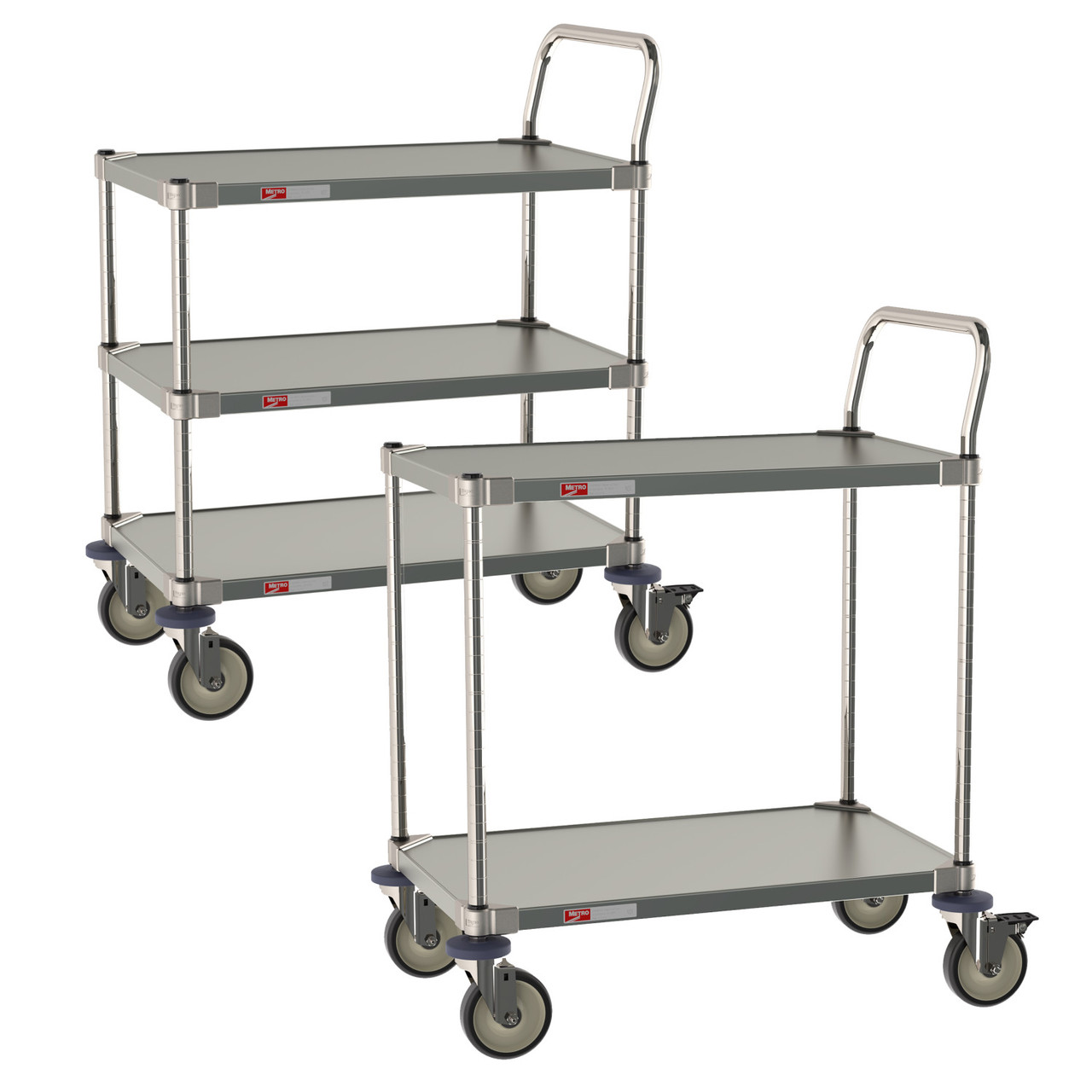
A stainless steel treatment trolley is worth evaluating when buyers prioritize exposed metal construction, shelf access, and mechanical durability. An ABS medical trolley deserves consideration when molded storage, color identification, and compartment organization are important.
However, "ABS trolley" does not necessarily mean an entirely plastic structure. Ask which components are ABS and which are steel, aluminum, or another material.
| Buying consideration | Stainless steel trolley | ABS trolley |
|---|---|---|
| Construction to verify | Steel grade, thickness, welds, joints | Polymer grade, supporting frame, molded components |
| Storage layout | Evaluate open shelves and enclosed options | Evaluate drawers, dividers, and molded compartments |
| Cleaning review | Check joints, welds, underside access, and chemical compatibility | Check handles, seams, drawer interiors, and chemical compatibility |
| Damage inspection | Look for dents, rough edges, pitting, or damaged welds | Look for cracks, distortion, loose inserts, or damaged mounts |
| Mobility | Test the complete trolley under working load | Test the complete trolley under working load |
| Purchasing decision | Verify the specific model, not just the material | Verify the specific model, not just the material |
Use this table to shortlist products, not to replace model-specific documentation and testing.
*Image suggestion: Insert matching front and rear photographs of the actual shortlisted trolleys. Identify frame materials, storage components, handles, and brakes.*
Start by mapping one treatment cycle: preparation, movement, supply retrieval, waste handling, and cleaning.
An open-shelf trolley can make larger items easier to see and retrieve. Enclosed drawers can help organize smaller supplies and reduce visual clutter. However, drawers do not create sterile storage simply because they close.
Ask staff what they need within immediate reach. Then specify:
- Shelf dimensions and usable drawer space.
- Dividers for frequently used consumables.
- Clearance for packaged supplies.
- Positions for approved accessory holders.
- Separation of clean supplies from used items.
A trolley that works in a large procedure room may obstruct a compact outpatient treatment space.
Measure doorways, turning areas, parking locations, and working clearances. Check whether drawers can open fully without blocking movement.
The useful question is not "Which material is best?" It is "Which complete configuration supports this room without creating avoidable handling problems?"
Both stainless steel and appropriately specified plastic components can be used in cleanable equipment. The material name alone does not demonstrate infection-control performance.
CDC guidance emphasizes selecting cleaning products that are compatible with healthcare surfaces and equipment. Procurement should therefore begin with the facility's actual disinfectants and the trolley manufacturer's care instructions—not a general claim that a material is "hospital grade."
Stainless steel can suffer pitting or crevice corrosion under unsuitable chemical exposure. Hypochlorite-based products require particular attention. The British Stainless Steel Association identifies concentration, temperature, and exposure time as important considerations when assessing hypochlorite compatibility.
Request written guidance for the exact trolley finish and cleaning product.
If rinsing is required, it must follow the disinfectant's full labeled contact time and an approved procedure. Do not shorten disinfection to protect a surface.
ABS describes a family of formulations rather than one universal chemical-resistance profile.
Manufacturer care guidance for medical carts illustrates why this matters: approved cleaning agents, dilution limits, abrasive restrictions, and exposure precautions can differ between products. Compatibility guidance for one cart should not be transferred automatically to another.
For either material, ask:
1. Which cleaning products have been assessed?
2. At what concentration and contact time?
3. Were repeated cleaning cycles evaluated?
4. What damage should trigger repair or replacement?
5. Does the guidance cover casters, labels, seals, and drawer components?
A quoted load rating is incomplete without its conditions.
Ask whether the figure refers to total load, individual shelf capacity, drawer capacity, or a stationary test. Also confirm load distribution and whether the rating applies while moving.
A trolley carrying dressings presents a different handling requirement from one carrying equipment and several filled containers.
Heavy items placed high can affect handling. Extended drawers and side-mounted accessories may also change the balance of the assembled trolley.
Request assessment of the intended configuration rather than accepting a rating from a different model.
Neither stainless steel nor ABS guarantees easy movement.
Compare:
- Starting effort with a representative load.
- Steering through narrow turns.
- Movement over actual floor transitions.
- Brake accessibility and holding performance.
- Noise and vibration during routine use.
- Availability of replacement wheels.
From a procurement perspective, a loaded demonstration is more informative than an unloaded showroom push.
A useful improvement over a basic material comparison is a documented trial before placing a larger OEM order.
The following is a proposed buyer acceptance process, not a certification standard.
List the equipment and supplies normally carried. Record dimensions, weights, and storage positions.
Move the sample through doorways, corners, floor transitions, and parking areas. Involve the people who will use and clean it.
Ask users to retrieve common items, operate drawers, engage brakes, and reposition the trolley. Record obstructions and awkward movements.
Follow the agreed cleaning procedure. Review hard-to-reach areas, drying, residue, and visible material changes. An initial trial does not establish long-term chemical resistance.
Use a checklist covering storage, movement, stability, cleanability, and damage. Resolve problems before approving the production specification.
This process turns broad preferences into evidence that an OEM supplier can act on.
There is no universal rule that stainless steel costs more over its lifetime or that ABS always offers the better budget option.
Compare quotations using the same storage configuration, load requirements, accessories, warranty terms, and delivery basis.
A practical ownership-cost model includes:
> Purchase and delivery + cleaning labor + maintenance + replacement parts + downtime + disposal.
Use your own service records and supplier quotations. Do not insert assumed lifespan figures merely to make one material appear superior.
For wholesalers and brand owners, parts continuity also matters. Ask whether replacement casters, handles, drawer components, and locks will remain available, and how substitutions will be controlled.
At Tianjin Kangli Medical Equipment Co., Ltd., we recommend beginning OEM discussions with the treatment-room requirement rather than a photograph alone.
A clear brief helps brands, wholesalers, and manufacturers compare offers on equivalent terms.
Include:
- Target country and intended use.
- Overall dimensions and storage arrangement.
- Required frame and surface materials.
- Shelf, drawer, and total load requirements.
- Caster diameter and brake configuration.
- Disinfectant names and cleaning procedures.
- Accessory positions and mounting requirements.
- Branding, labeling, and packaging needs.
- Sample acceptance criteria.
- Spare-parts and warranty expectations.
Ask which requested features are available, which require development, and which need further testing.
For regulatory documentation, confirm the applicable requirements for the intended market and product configuration. Do not assume that a certificate covering another product automatically covers the selected trolley.
Shortlist stainless steel when your specification emphasizes accessible shelving, verifiable metal construction, and inspection of exposed surfaces and joints.
Shortlist an ABS-based trolley when your priorities include molded compartments, drawer organization, and a layout suited to frequent supply retrieval.
Consider a hybrid design when different components serve different needs. Then verify the complete assembly rather than treating "hybrid" as a performance guarantee.
Most importantly, select the model that passes your workflow, cleaning, load, and maintenance checks. Neither material should win solely because a brochure calls it premium, antibacterial, or maintenance-free.
Not automatically. Hygiene depends on cleanable design, surface condition, compatible products, and consistent cleaning. Research summarized by worldstainless supports the cleanability of stainless steel under tested conditions, but it does not establish that every stainless trolley is superior to every plastic design.
Only according to the trolley manufacturer's instructions and the disinfectant label. Hypochlorite can damage stainless steel under unsuitable conditions. Obtain guidance covering concentration, contact time, and any required aftercare. Never shorten the disinfectant contact time.
No reliable conclusion can be drawn from the material label alone. Overall weight depends on dimensions, supporting frame, drawers, accessories, and casters. Compare documented empty weights, then test movement with the intended working load.
A grade designation alone is insufficient. Assess the cleaning chemicals, environment, fabrication, finish, and intended use. Ask the supplier to explain the selected grade and provide relevant compatibility information. Do not treat either 304 or 316 as corrosion-proof. [bssa.org]
Do not assume so. Surface cleaning and disinfection are different from sterilizing an entire assembly. Casters, adhesives, plastics, and other components may restrict processing options. Use only methods validated and specified for that product.
Request a technical drawing, material breakdown, load specifications, cleaning instructions, sample plan, and commercial quotation. Add destination-market documentation requirements early. This makes comparisons clearer and reduces ambiguity before production.
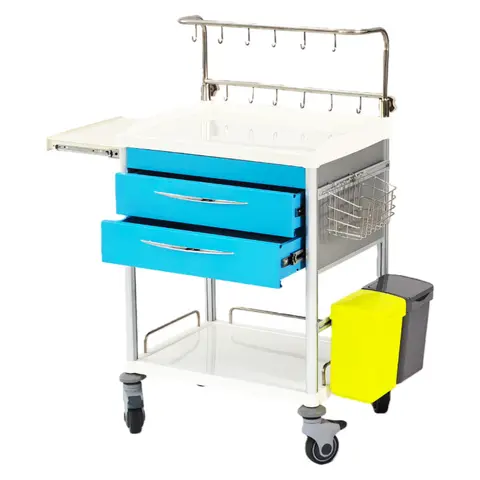
Send Tianjin Kangli Medical Equipment Co., Ltd. your room dimensions, preferred storage layout, expected load, cleaning products, and target market.
Use that information to begin an OEM discussion focused on a verifiable specification—not material claims alone. Confirm available configurations, sample arrangements, documentation, and quotation terms directly with our team.
- Company: Tianjin Kangli Medical Equipment Co., Ltd.
- Website: [https://www.klmedbed.com]
- Email: yukili90@tjkangli.com
- Phone / WhatsApp: +86 136 5207 7555
Hot Tags: China, Global, OEM, private label, manufacturers, factory, suppliers, manufacturing company


