

Views: 258 Author: Tianjin Kangli Publish Time: 2026-10-20 Origin: Site


Content Menu
● Hospital Bed for Short-Term vs Long-Term Care: The Essential Differences
● Short-Term Care Bed Configuration: Prioritize Workflow
>> Choose adjustment functions around actual tasks
>> Buy for cleaning and patient turnover
● Long-Term Care Bed Configuration: Prioritize Daily Usability
>> Match low height with practical transfer height
>> Make controls understandable
>> Balance residential design with care access
● Mattress and Bed Rail Compatibility: Evaluate the Whole System
>> Select the mattress by assessed risk
>> Do not treat rails as a universal safety upgrade
● A Practical Hospital Bed Configuration Matrix for Buyers
● Three Overlooked Checks That Improve Bed Procurement
>> 1. Distinguish safe working load from patient weight
>> 2. Test failure and service scenarios
>> 3. Validate the bed in the actual care environment
● Compare Total Cost of Ownership, Not Just Purchase Price
● OEM Hospital Bed Specifications: What to Send Kangli
● Request a Care-Specific OEM Bed Configuration
>> 1. What is the main difference between short-term and long-term care beds?
>> 2. Is an electric hospital bed always better than a manual bed?
>> 3. Does long-term care always require an alternating-pressure mattress?
>> 4. Are full-length bed rails safer for every patient?
>> 5. Can the same bed serve short-term and long-term care?
>> 6. What should OEM buyers verify before ordering?
Tianjin Kangli Medical Equipment Co., Ltd. supports overseas brands, wholesalers, and manufacturers seeking OEM medical equipment solutions. Founded in 1998, our company operates a 20,000-square-meter factory with more than 50 employees, focusing on medical equipment research, development, and manufacturing.
When buyers ask, "Hospital Bed for Short-Term vs Long-Term Care: Which Configuration Should You Choose?", our recommendation is to start with the patient and care workflow—not the number of motors.
Short-term care often emphasizes rapid adjustment, transfers, cleaning, and bed turnover. Long-term care places greater emphasis on sustained comfort, independence, pressure management, and maintainability. However, a short admission can involve complex needs, while a long-term resident may remain relatively independent.
The deciding factor is configuration: how the bed, mattress, rails, controls, and accessories work together for the intended user.
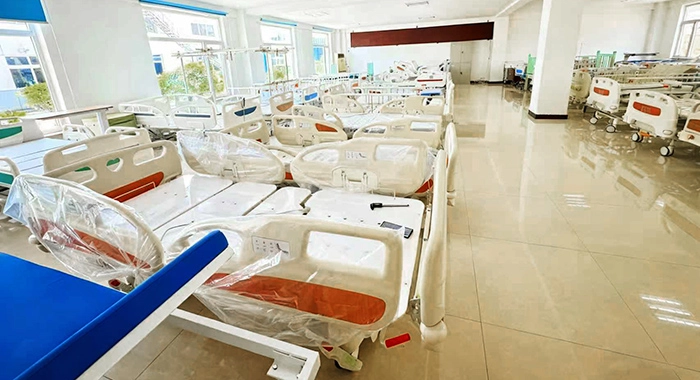
For this guide, short-term care means temporary treatment, recovery, or rehabilitation. Long-term care means continuing support for persistent health conditions, disability, or reduced independence. These are practical purchasing categories, not universal admission-duration definitions.
| Selection factor | Short-term care priorities | Long-term care priorities |
|---|---|---|
| Typical workflow | Admissions, treatment, transfers, discharge | Daily living, repeated assistance, continuing assessment |
| Adjustment | Efficient positioning and caregiver access | Accessible controls and comfortable daily positioning |
| Bed height | Safe transfers and working height | Individualized transfer height and low-position options |
| Mattress | Appropriate to immediate pressure-injury risk | Appropriate to ongoing risk and changing needs |
| Cleaning | Fast, repeatable turnaround | Routine cleaning and durable, compatible surfaces |
| Appearance | Clinical visibility and practical access | Comfort, dignity, and residential appearance where suitable |
| Maintenance | High-use reliability and quick repair | Long-term parts availability and serviceability |
Neither category justifies compromising safety. A basic bed may suit an independent recovery patient, but not someone requiring frequent assisted repositioning.
For a general recovery or rehabilitation setting, assess whether the bed needs:
- Backrest and knee-section adjustment.
- Height adjustment for transfers and care.
- Accessible patient controls.
- Caregiver control lockouts.
- Reliable brakes and maneuverable castors.
- Attachment points for approved accessories.
Electric adjustment deserves consideration when positions change frequently or the patient can safely operate the controls. Manual adjustment may be suitable where adjustments are infrequent and staff can operate the mechanism safely.
Do not assume that "short-term" means a manual bed is sufficient. A patient recovering from major surgery may need more positioning support than an independently mobile long-term resident.
Compare the details that staff encounter every day: joints, rail mechanisms, removable panels, cable routing, and access beneath the mattress platform.
Ask the supplier for validated cleaning and disinfection instructions, including compatible agents and contact times. A finish that looks durable is not proof that it tolerates the disinfectants used by the receiving facility.
For rental distributors, include inspection and reassembly procedures between users. Repeated transport and component replacement make compatibility checks particularly important.
A low-position bed can form part of an individualized fall-risk management plan. However, the lowest possible platform is not automatically the best transfer position.
Residents need a height that supports their assessed transfer method. Caregivers also need an appropriate working height for assistance.
Compare the complete height range and test it with the intended mattress, footwear, wheelchair, and transfer equipment. Platform height alone does not describe the occupied sleeping-surface height.
For a long-term care bed, evaluate whether the user can see, reach, understand, and operate the handset.
Useful questions include:
- Are buttons clearly identified?
- Can the handset be secured within reach?
- Can staff restrict unsuitable movements?
- Are cables protected from moving components?
- Is operation clearly explained to users and caregivers?
A feature only creates value when the intended person can use it safely. More functions can introduce unnecessary complexity.
Wood-look panels and softer styling may suit residential environments. Nevertheless, appearance should not compromise cleaning, inspection, rail operation, or caregiver access.
Ask to inspect a complete sample rather than approving decorative panels in isolation.
A hospital bed frame does not, by itself, prevent pressure injuries.
Mattress selection should consider mobility, skin condition, body size, moisture, existing pressure damage, and the person's ability to reposition. People at high risk may require pressure-redistributing equipment selected through clinical assessment.
A pressure-redistributing mattress does not eliminate the need for an individualized care plan, skin checks, or appropriate repositioning.
For procurement, specify:
- Mattress dimensions and permitted thickness.
- Compatibility with bed articulation.
- Suitable user-weight range.
- Cover cleaning and inspection requirements.
- Approved alternatives and replacement procedures.
Bed rails can create entrapment hazards when incompatible with the bed or mattress. They may also introduce risks for people who attempt to climb over them.
Assess the person, bed, mattress, rails, and accessories together. Reassess after changing a mattress, adding an overlay, or replacing a rail.
Avoid filling unsafe gaps with pillows or bedding. Use compatible components and obtain appropriate technical and clinical advice.
The following matrix provides starting points for specification—not individual clinical prescriptions.
| Care scenario | Configuration to evaluate | Important qualification |
|---|---|---|
| Independent patient recovering at home | Accessible positioning controls, suitable transfer height, compatible mattress | Assess whether assistance is still needed |
| Rehabilitation with repeated transfers | Electric height adjustment, secure brakes, transfer-equipment clearance | Test with actual mobility equipment |
| Resident needing extensive daily assistance | Electric positioning, caregiver controls, serviceable components | Review handling procedures and training |
| Person at increased fall risk | Low-position capability and individualized monitoring plan | Rails and alarms are not substitutes for assessment |
| Person at increased pressure-injury risk | Compatible pressure-redistributing surface | Select through clinical assessment |
| Rental fleet serving mixed users | Clear labeling, inspectable components, replaceable parts | Reassess compatibility at every deployment |
The practical lesson is straightforward: procure for the highest relevant care requirement, not simply the expected length of stay.
Safe working load should not automatically be interpreted as maximum patient weight.
Ask the manufacturer to explain its stated limits and the permitted loading arrangement, including the mattress and accessories. Confirm that the specification covers the intended use and movements.
For bariatric applications, also assess usable width, room access, transport routes, and compatibility with handling equipment. Load capacity alone does not establish suitability.
A showroom demonstration usually shows normal operation. Procurement should also address foreseeable interruptions.
Ask what happens if power is unavailable, a handset fails, or an actuator needs replacement. Confirm which emergency functions, backup arrangements, and manual procedures apply to the specific model.
Request component identification, troubleshooting instructions, and replacement-part availability. Avoid assuming that every electric hospital bed includes battery backup or emergency lowering.
Before a volume order, use a sample to check:
1. Doorway, lift, and corridor access.
2. Clearance for hoists and other equipment.
3. Braking and movement on representative flooring.
4. Mattress fit throughout bed articulation.
5. Handset access and cable routing.
6. Cleaning access and component inspection.
7. Staff understanding of controls and emergency procedures.
Record results against agreed acceptance criteria. A signed specification is more useful than an informal statement that the bed is "hospital grade."
The least expensive bed is not necessarily the least expensive bed to operate.
A useful purchasing model is:
Total ownership cost = purchase + delivery + installation + training + maintenance + replacement parts + downtime + disposal − residual value.
Evaluate both short-term and long-term care beds over the same comparison period. Otherwise, different assumptions can distort the result.
For a rental business, track inspection time, transport damage, refurbishment, and unavailable rental days. For a care facility, include servicing arrangements, component replacement, and staff training.
Do not accept unsupported claims that a configuration reduces falls, pressure injuries, or labor costs by a fixed percentage. Ask for the study method, comparison group, setting, and relevance to your intended users.
Tianjin Kangli Medical Equipment Co., Ltd. provides OEM services for international brands, wholesalers, and manufacturers.
To begin a productive configuration discussion, send us:
- Target country and intended care environment.
- User population and anticipated assistance needs.
- Required adjustments and height range.
- Bed dimensions and load requirements.
- Proposed mattress and rail combination.
- Electrical supply and plug requirements.
- Branding, labeling, packaging, and manual languages.
- Expected order quantity and delivery schedule.
- Required regulatory documentation and test evidence.
- Spare-parts and after-sales expectations.
Compliance should be checked for the exact model, intended use, and destination market. A general factory certificate does not establish that every product configuration meets every market's requirements.
Our preferred purchasing approach is to agree on the specification first, assess the sample second, and confirm production acceptance criteria before placing the volume order.
Looking for a hospital bed for short-term recovery, rehabilitation, nursing facilities, or continuing home care?
Contact Tianjin Kangli Medical Equipment Co., Ltd. with your care scenario, destination market, quantity, and configuration requirements. Request a model-specific proposal covering functions, compatible accessories, documentation, packaging, and service arrangements.
Website: [www.klmedbed.com]
Email: [yukili90@tjkangli.com](mailto:yukili90@tjkangli.com)
Phone / WhatsApp: +86 136 5207 7555
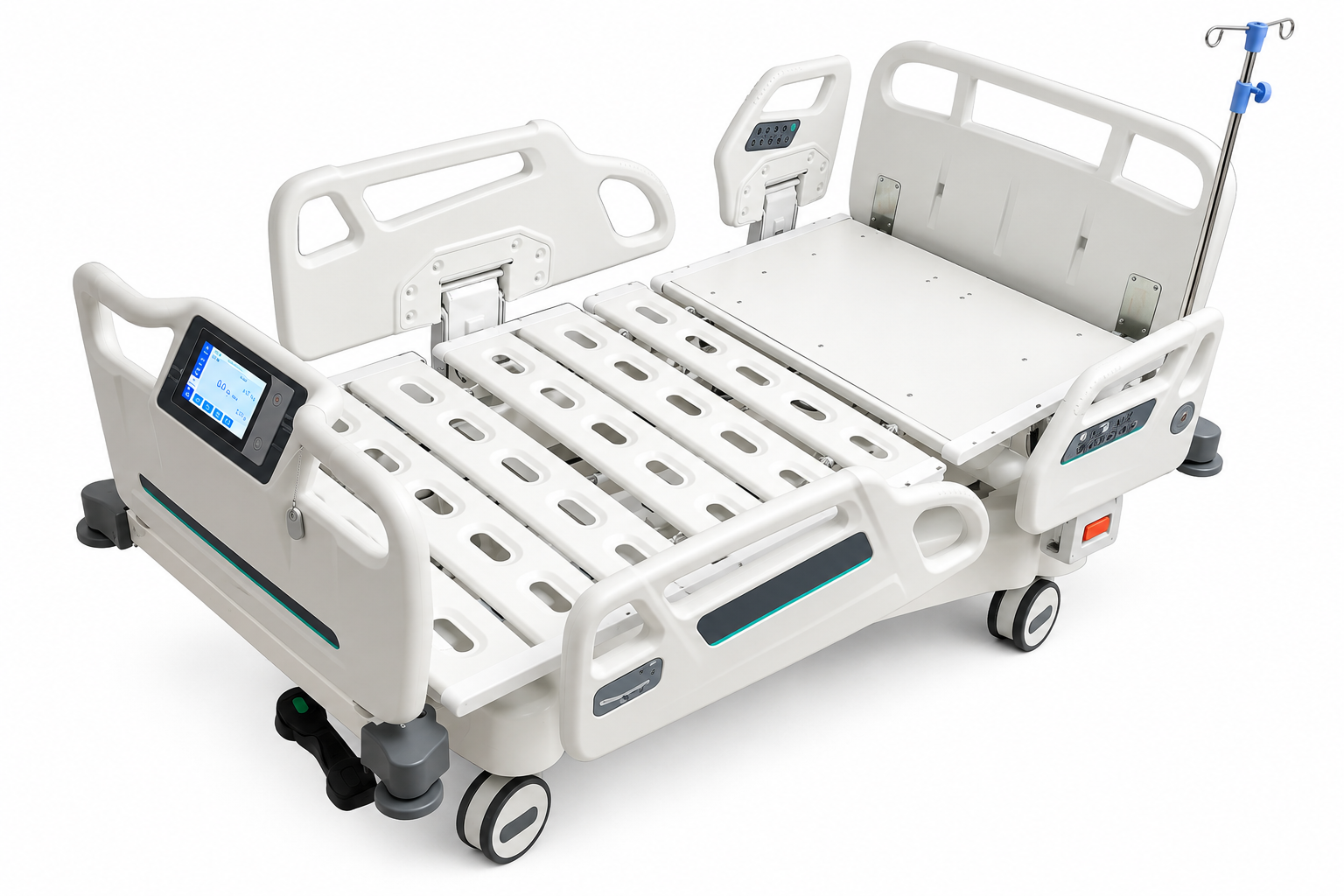
The difference is primarily the intended workflow. Short-term settings often emphasize turnover and transfers. Long-term settings emphasize sustained usability and daily support. Patient needs can overlap.
No. Electric adjustment is worth evaluating for frequent positioning and accessible user control. Manual adjustment may suit less demanding situations. Assess patient needs, staffing, power availability, and maintenance.
No. Select the support surface through clinical risk assessment. Care duration alone does not determine whether an alternating-pressure system is appropriate.
No. Rails require an individualized risk assessment and compatibility checks. Entrapment and climbing-related risks mean that more rail coverage is not automatically safer.
Yes, where its intended use, functions, dimensions, and compatible components meet both settings' requirements. Standardization should not override individual assessment.
Verify the exact specification, model-specific documentation, sample performance, mattress and rail compatibility, labeling, packaging, warranty terms, and replacement-part arrangements.
Hot Tags: China, Global, OEM, private label, manufacturers, factory, suppliers, manufacturing company


