

Views: 270 Author: Tianjin Kangli Publish Time: 2026-10-16 Origin: Site


Content Menu
● Why the Right Wheelchair Choice Matters
● Manual Wheelchair vs Electric Wheelchair: Quick Comparison
● What Is a Manual Wheelchair?
>> When a Manual Wheelchair Is the Better Choice
>> Limitations of Manual Wheelchairs
● What Is an Electric Wheelchair?
>> When an Electric Wheelchair Is the Better Choice
>> Limitations of Electric Wheelchairs
● Expert Insight: Start With the User's Daily Route
● Cost, Maintenance, and Total Ownership
● Safety and Fit: The Factor Buyers Often Overlook
● How Tianjin Kangli Medical Equipment Supports OEM Buyers
● Decision Checklist: Which Wheelchair Should You Choose?
>> 1. Is an electric wheelchair better than a manual wheelchair?
>> 2. Can I use a manual wheelchair outdoors?
>> 3. How long does an electric wheelchair battery last?
>> 4. Do I need a prescription for a wheelchair?
>> 5. What is the main disadvantage of a manual wheelchair?
>> 6. Can an OEM manufacturer customize wheelchairs for my brand?
Choosing between a manual wheelchair and an electric wheelchair is not simply a question of budget. The right choice depends on the user's strength, endurance, living environment, caregiver support, travel needs, and long-term health goals. As a medical-equipment manufacturer serving global OEM brands since 1998, Tianjin Kangli Medical Equipment Co., Ltd. has seen that the best wheelchair is the one that matches the person—not the one with the most features.
This guide compares both options from a practical, user-centered perspective and helps distributors, care providers, families, and end users make a safer, more confident decision.
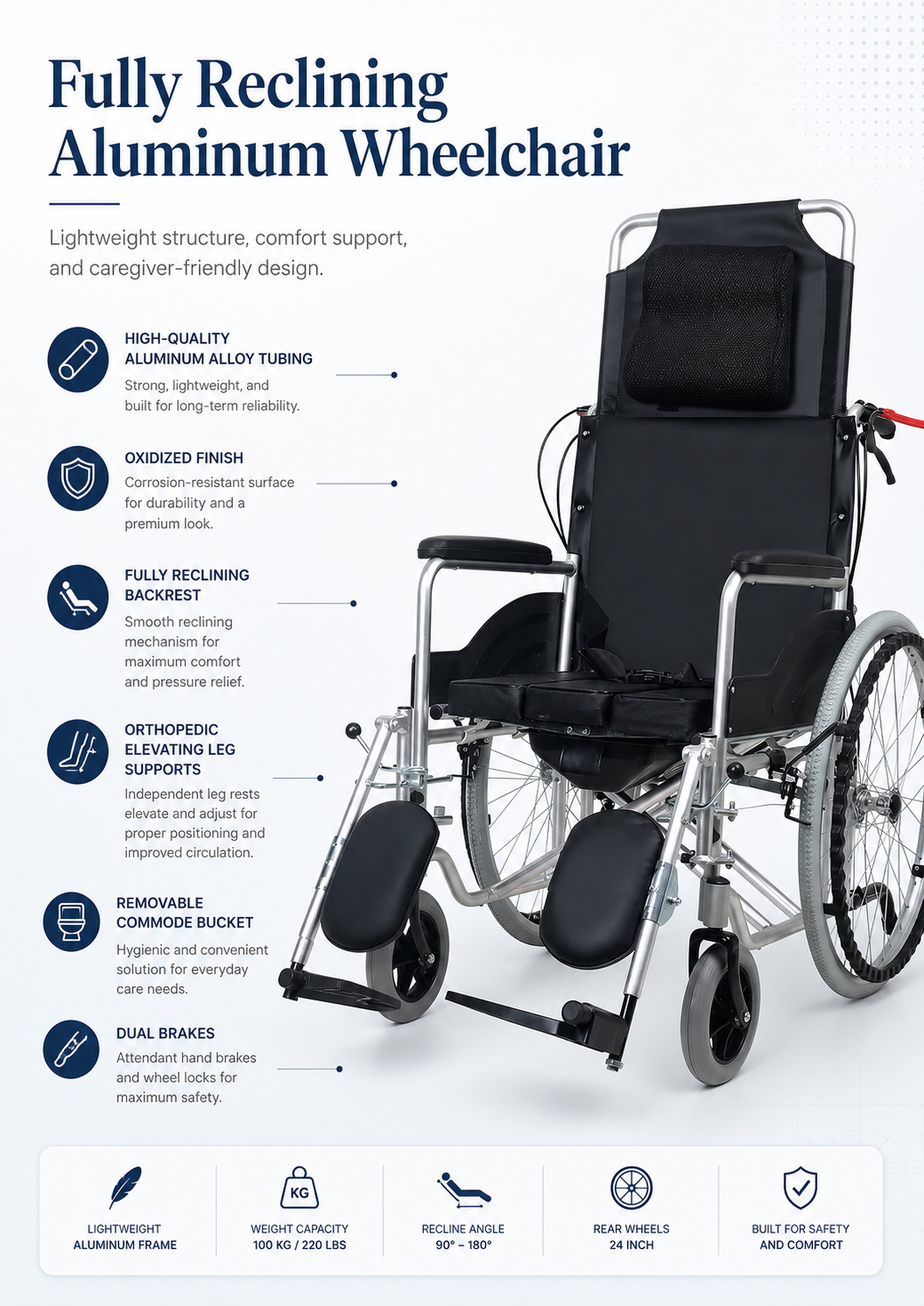
A wheelchair is not just mobility equipment. It affects independence, posture, skin health, daily routines, caregiver workload, and quality of life.
Mobility disability is one of the most common disability types; CDC data indicate that about 1 in 7 U.S. adults reports a mobility disability. At the same time, the World Health Organization emphasizes that wheelchair outcomes improve when selection includes individual assessment, proper fitting, training, and follow-up. [cdc]
Key principle: A wheelchair should support the user's real daily activities—not merely provide a seat with wheels.
| Factor | Manual Wheelchair | Electric Wheelchair |
|---|---|---|
| Best for | Users with upper-body strength, active users, short-term recovery, travel | Users with limited strength, endurance, or ability to self-propel |
| Power source | User or caregiver pushes | Battery-powered motor |
| Weight | Usually lighter and easier to lift | Heavier due to motor, battery, and frame |
| Cost | Lower purchase and maintenance cost | Higher upfront cost; battery and electronics require maintenance |
| Portability | Often folds; easier for cars and travel | Some models fold or disassemble, but many are bulkier |
| Independence | Depends on user strength or caregiver availability | Greater independent mobility for many users |
| Maintenance | Brakes, tires, bearings, frame | Battery, charger, motor, controller, tires, brakes |
| Ideal environment | Smooth indoor floors, hospitals, clinics, airports | Homes, communities, outdoor paths, longer distances |
A manual wheelchair is propelled by the user's arms or pushed by a caregiver. It is commonly chosen for rehabilitation, hospital transport, temporary mobility needs, and users who retain sufficient upper-body function.
Manual wheelchairs are often preferred because they are lightweight, simpler, easier to transport, and generally more affordable. They also provide natural exercise through self-propulsion when the user can safely push the chair.
Choose a manual wheelchair when the user:
- Has adequate arm strength, grip, balance, and endurance.
- Uses the wheelchair mainly indoors or for short distances.
- Needs a chair that is easy to fold and load into a vehicle.
- Has a caregiver available to assist when needed.
- Wants a lower-cost, lower-maintenance mobility solution.
- Is recovering from surgery or injury and may need the chair only temporarily.
Medicare guidance notes that a manual wheelchair may be appropriate when a user has enough upper-body strength—or caregiver support—to self-propel safely.
Manual chairs can become exhausting for users with weak shoulders, limited grip, pain, poor endurance, or uneven outdoor terrain. Long-term self-propulsion may also increase strain on the shoulders and wrists if the chair is poorly fitted.
Important: If a user cannot safely operate a manual wheelchair, forcing that option may reduce independence and increase fall or injury risk.
An electric wheelchair—also called a power wheelchair—uses a rechargeable battery, motor, and joystick or alternative controls. It is designed for users who cannot reliably self-propel a manual wheelchair but can safely operate powered controls.
Electric wheelchairs are especially valuable for users who need to travel longer distances, manage slopes or outdoor surfaces, or maintain independence without relying on a caregiver.
Consider a power wheelchair when the user:
- Cannot self-propel a manual wheelchair safely or consistently.
- Experiences fatigue, pain, weakness, or limited upper-limb function.
- Needs to travel longer distances at home or outdoors.
- Lives in an environment with ramps, longer hallways, or uneven terrain.
- Wants greater independence in daily activities.
- Can safely understand and operate the controls.
Medicare states that power wheelchairs are covered only when medically necessary, generally after a face-to-face examination and written prescription. Its coverage guidance also distinguishes between users who can operate a manual chair and those who cannot, which reinforces the importance of an individual assessment.
Power wheelchairs cost more and require attention to battery health, charging routines, electronics, tires, and service support. They can also be heavier and less convenient for frequent vehicle transport.
Before buying, check:
- Doorway width and turning space at home.
- Ramp slope, elevator access, and outdoor route conditions.
- Battery range required for a typical day.
- Whether the chair can be transported in the user's vehicle.
- Local availability of spare parts and technical service.
In our experience working with healthcare distributors and rehabilitation-product brands, many purchasing mistakes happen because buyers focus on specifications before understanding the user's daily route.
A practical assessment should map a typical day:
1. Wake up and transfer from bed to chair.
2. Move through the home, including bathroom, kitchen, and bedroom doorways.
3. Leave the home, if applicable, and identify ramps, steps, or uneven surfaces.
4. Travel or commute, including car transfer, public transport, or airline travel.
5. Return home, recharge or store the wheelchair, and check caregiver needs.
This "daily-route assessment" often reveals the real decision point. For example, a user who can propel indoors but cannot manage a long community route may benefit from a lightweight manual chair plus a power-assist option, while a user with limited arm function may need a power wheelchair from the start.
The purchase price is only part of the total cost.
| Cost Area | Manual Wheelchair | Electric Wheelchair |
|---|---|---|
| Initial purchase | Generally lower | Generally higher |
| Battery | Not required | Battery replacement and charging costs |
| Repairs | Tires, brakes, casters, bearings | Motor, controller, joystick, battery, tires, brakes |
| Transport | Often easier and cheaper | May require a vehicle lift or larger vehicle |
| Service needs | Lower technical complexity | Requires trained technicians and parts supply |
For B2B buyers, serviceability matters as much as product features. A wheelchair that cannot be repaired locally can quickly become unusable, even if it was technically suitable at purchase. WHO's wheelchair provision guidance highlights the importance of products that can be obtained, maintained, and serviced locally at an affordable cost.
Neither a manual nor an electric wheelchair is automatically safer. Safety depends heavily on fit, posture support, training, and environment.
A properly selected wheelchair should:
- Match the user's weight, height, and body measurements.
- Provide stable seating and appropriate postural support.
- Allow safe transfers on and off the chair.
- Fit through the user's doorways and maneuver in key rooms.
- Include reliable brakes and suitable tires for the environment.
- Come with clear operating instructions and training.
WHO defines an appropriate wheelchair as one that meets the user's needs and environment, provides proper fit and postural support, is safe and durable, and can be maintained and serviced locally.
Practical tip: Before finalizing an order, test the wheelchair in the user's actual home environment whenever possible. A chair that performs well in a showroom may be difficult to use in a narrow apartment or on a steep ramp.
Tianjin Kangli Medical Equipment Co., Ltd. is a national high-tech enterprise specializing in the research, development, and manufacturing of medical equipment. Founded in 1998, the company operates a 20,000-square-meter factory with a team of more than 50 employees.
We provide OEM and ODM services for overseas brands, wholesalers, and manufacturers. Our role is not only to produce wheelchairs, but to help partners develop reliable, market-ready mobility products.
- Customized wheelchair design and configuration.
- OEM branding, packaging, and labeling support.
- Manufacturing capacity supported by a 20,000-square-meter facility.
- Quality-focused production processes for medical mobility products.
- Flexible cooperation for distributors, brand owners, and healthcare suppliers.
- Export-oriented manufacturing experience since 1998.
For buyers comparing manual and electric wheelchair product lines, we recommend building a portfolio around clear user segments: basic transport chairs, self-propelled manual wheelchairs, lightweight travel models, and powered mobility solutions. This approach helps brands serve different clinical, home-care, and retail needs without confusing customers.
Use this checklist before purchasing or recommending a wheelchair.
1. Can the user safely self-propel a manual wheelchair for daily activities?
2. Is a caregiver consistently available to push the chair when needed?
3. Will the wheelchair be used mainly indoors, outdoors, or both?
4. Are doorways, bathrooms, ramps, and vehicle storage compatible with the chair?
5. Does the user have the strength and coordination to operate powered controls safely?
6. Can the family manage charging, battery care, and technical maintenance?
7. Is professional assessment, fitting, and follow-up available?
8. Does the supplier provide spare parts, documentation, and after-sales support?
If most answers point to limited self-propulsion ability, longer travel distances, or caregiver dependence, an electric wheelchair is often the more independence-preserving option. If the user has sufficient strength, needs portability, or requires a lower-cost solution, a manual wheelchair may be the better fit.
There is no universal "better" wheelchair. A manual wheelchair is usually the smarter choice for users with adequate upper-body function, caregivers, travel needs, or short-term rehabilitation requirements. An electric wheelchair is usually better for users who cannot safely self-propel and need dependable powered mobility for daily independence.
The most important step is a personalized assessment. WHO guidance consistently emphasizes assessment, fitting, training, and follow-up as essential parts of effective wheelchair provision. [who]
Need a reliable OEM wheelchair manufacturer? Contact Tianjin Kangli Medical Equipment Co., Ltd. to discuss custom manual or electric wheelchair solutions for your market.
- Email: [yukili90@tjkangli.com](mailto:yukili90@tjkangli.com)
- Phone / WhatsApp: +86 136 5207 7555
- Website: [https://www.klmedbed.com]
Not always. An electric wheelchair is better for users who cannot safely self-propel, while a manual wheelchair is often better for users with sufficient strength, caregivers, or frequent travel needs.
Yes, but choose a model with suitable tires, frame strength, and stability for the terrain. Rough sidewalks, gravel, slopes, and long distances can make manual propulsion tiring.
Battery life depends on battery type, user weight, terrain, speed, temperature, and charging habits. Many users should plan charging around daily use and follow the manufacturer's battery-care instructions.
It depends on your country and funding source. For example, Medicare requires a face-to-face examination and written prescription before covering a power wheelchair or scooter. [medicare]
The main disadvantage is that it requires physical effort from the user or caregiver. This can be difficult for people with limited arm strength, pain, poor endurance, or balance issues.
Yes. Tianjin Kangli Medical Equipment Co., Ltd. provides OEM services for overseas brands, wholesalers, and manufacturers, including customized product configurations, branding, and packaging support.
- CDC — Disability Impacts All of Us: [https://www.cdc.gov/disability-and-health/articles-documents/disability-impacts-all-of-us-infographic.html]
- CDC — Prevalence of Disabilities and Health Care Access: [https://www.cdc.gov/disability-and-health/articles-documents/disabilities-health-care-access.html]
- WHO — Wheelchair Services: [https://www.who.int/teams/health-product-policy-and-standards/assistive-and-medical-technology/assistive-technology/wheelchair-services]
- WHO — Wheelchair Provision Guidelines: [https://www.who.int/publications/i/item/9789240074521]
- WHO — New Wheelchair Provision Guidelines Announcement: [https://www.who.int/news/item/05-06-2023-who-releases-new-wheelchair-provision-guidelines]
- Medicare — Wheelchairs & Scooters: [https://www.medicare.gov/coverage/wheelchairs-scooters]
- Medicare — Coverage of Wheelchairs & Scooters PDF: [https://www.medicare.gov/publications/11046-medicare-coverage-of-wheelchairs-scooters.pdf]
- CMS — Power Wheelchair Coverage Overview: [https://www.cms.gov/files/document/powerwheelchairpdf]
Hot Tags: China, Global, OEM, private label, manufacturers, factory, suppliers, manufacturing company


