

Views: 127 Author: kangli Publish Time: 2026-09-24 Origin: Site


Content Menu
● Drop-Leg Nursing Bed: Cardiac Chair Position, Leg-Lowering Function and Applications
● What Is a Drop-Leg Nursing Bed?
● What Is the Cardiac Chair Position?
>> Why Buyers Should Confirm the Position Geometry
● How the Leg-Lowering Function Works
>> Questions About Leg Movement
● Drop-Leg Nursing Bed vs. Standard Adjustable Bed
● Potential Applications and Care Settings
● Buyer Checklist: What to Specify Before Ordering
>> 1. Bed Articulation and Positions
>
> 3. Controls and Emergency Operation
>> 4. Mattress and Side-Rail Compatibility
>> 5. Materials and Construction
● RFQ Checklist for Distributors and OEM Buyers
● How to Evaluate a Sample Before Bulk Production
● What to Ask a Drop-Leg Bed Manufacturer
● Conclusion: Choose the Function That Fits the Project
>> 1. What does "drop-leg" mean on a nursing bed?
>> 2. Is a drop-leg bed the same as a cardiac chair bed?
>> 3. Can the leg section move independently from the backrest?
>> 4. What should buyers check about the turning or leg-lowering angle?
>> 5. Is the mattress included with a drop-leg nursing bed?
>> 6. What should distributors request for an OEM order?
How can I start an OEM partnership with your factory?
We recommend starting with an initial technical consultation to review your design specifications, target market, required functions, quantity, and customization needs.
Please contact our dedicated B2B team by email at Yukili90@tjkangli.com or chat with us directly on WhatsApp: +86 136 5207 7555.
WhatsApp:
Let’s build excellence together. Whether you need a quotation for a large-scale hospital project, want to develop a private-label product, or are exploring OEM/ODM opportunities for our 5-function medical bed series, our team is ready to support you from product selection and technical confirmation to production and delivery.
Visit www.klmedbed.com or contact us via WhatsApp to start your customized manufacturing project today.
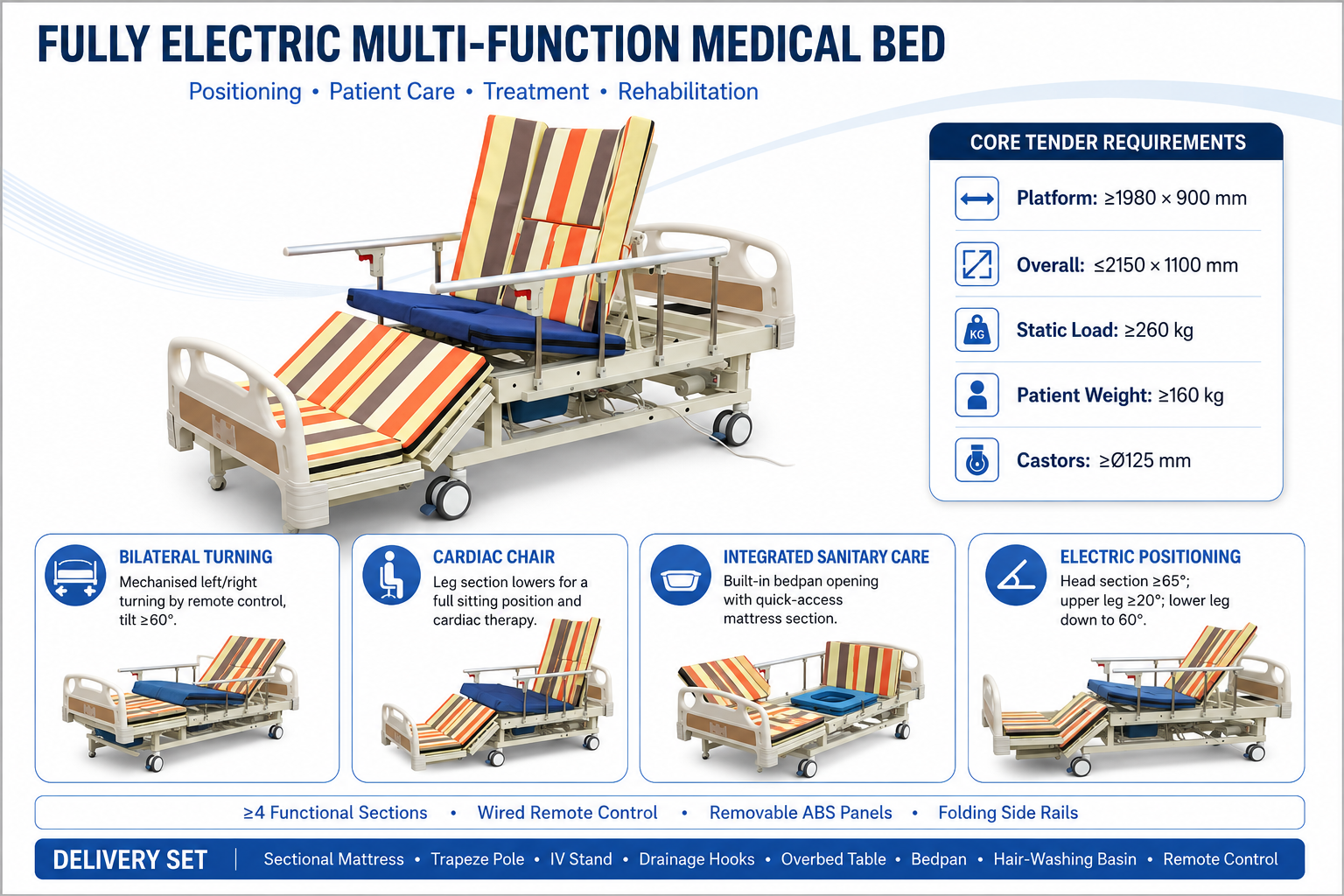
A drop-leg nursing bed is designed to move beyond standard backrest and knee-rest adjustment. Its leg-lowering function can help bring a patient's legs toward a dependent position while the backrest is raised, creating a chair-like posture often called the cardiac chair position.
For hospitals, nursing homes, distributors, wholesalers, and medical-equipment brands, the key purchasing question is not simply whether the bed offers "cardiac chair." Buyers should confirm how the leg section moves, what angles are available, whether the position is stable, and whether the configuration suits the intended care workflow.
Tianjin Kangli Medical Device provides OEM and private-label manufacturing services for overseas brands, distributors, wholesalers, and medical-equipment companies. This guide explains the drop-leg nursing bed's functions, applications, specification checks, and questions to ask before ordering.
> Clinical note: A bed position is not a treatment recommendation. Clinicians should determine whether a position is appropriate for an individual patient and care plan.
---
A drop-leg nursing bed is a nursing or hospital bed with a leg section that can lower or change position independently or in coordination with the backrest. Depending on the model, the bed may support a semi-seated or chair-like posture.
The phrase "drop-leg" is not a universal specification. Manufacturers may use it to describe different mechanisms. Some beds lower the leg platform; others articulate the knee and foot sections separately. Buyers should request drawings and a full movement description.
A model may include:
- Adjustable backrest
- Knee-rest or leg-rest adjustment
- Leg-lowering function
- Cardiac chair or chair-like positioning
- Electric height adjustment
- Trendelenburg and reverse Trendelenburg
- Manual or electric CPR release
- Side rails
- Central-locking or individual-brake casters
- Patient and caregiver controls
Not all features are standard. List each as included, optional, or excluded in the RFQ.
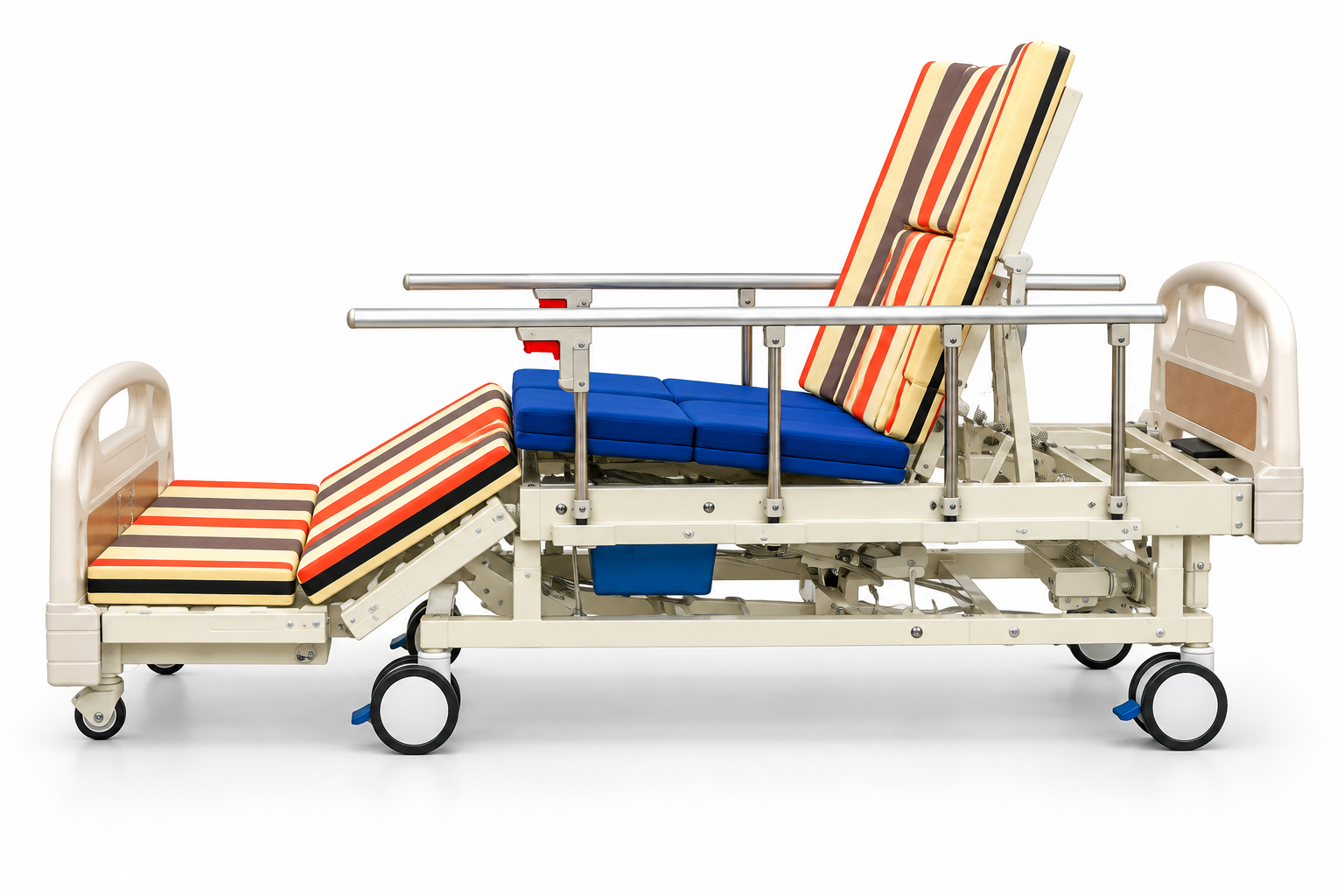
The cardiac chair position generally describes a bed configuration in which the upper body is raised while the lower leg section is lowered or adjusted, bringing the patient into a more seated posture. The exact geometry varies by bed design.
The purpose of the configuration is to provide a supported sitting posture without requiring the patient to transfer to a separate chair. Whether that position is appropriate depends on the patient and clinical instructions.
The label "cardiac chair" alone does not explain:
- Backrest angle
- Knee bend
- Leg-section drop angle
- Footboard position
- Seat-like support area
- Mattress movement or compression
- Stability at the maximum position
- Whether controls operate movements independently
Ask the supplier for an articulation diagram showing each bed section and its movement range. If possible, evaluate the position using the specified mattress and representative accessories.
The leg-lowering function changes the angle or height of the leg platform. Depending on the product, it may be:
1. Manually adjusted with a crank or mechanical release.
2. Electrically controlled by an actuator.
3. Linked to the backrest so both sections move together.
4. Independently controlled so staff can set the leg position separately.
Independent adjustment can offer more configuration flexibility, while linked movement may simplify operation. The appropriate design depends on the care workflow and user requirements.
- Does the leg section lower independently?
- Does it move together with the backrest?
- Is the foot section separately adjustable?
- What is the maximum leg-drop angle?
- Is the movement electric or manual?
- Can caregivers stop movement at any point?
- Does the leg section remain stable under the rated load?
- Are pinch points guarded?
- Can the bed return quickly to a flat position?
- Is a power-failure procedure available?
---
| Feature | Standard adjustable bed | Drop-leg nursing bed |
|---|---|---|
| Backrest adjustment | Common | Common |
| Knee or leg adjustment | Often available | Available, with additional leg-lowering articulation |
| Chair-like position | May be limited | Typically a key design objective |
| Independent leg movement | Model-dependent | Often emphasized |
| Bed mechanism | May be simpler | May require more articulated sections |
| Typical buying priority | General positioning and value | Supported seated posture and leg-section control |
| Specification focus | Backrest, knee-rest, height | Leg drop, articulation geometry, stability, controls |
The product name does not guarantee a particular movement. Compare technical diagrams and test the actual model rather than relying on category labels.
---
Drop-leg nursing beds may be considered for settings where caregivers need a supported seated or semi-seated bed position, subject to the patient's care plan.
Potential settings include:
- General hospital wards
- Rehabilitation facilities
- Nursing homes
- Long-term-care facilities
- Home-care programs with appropriate support
- Recovery and step-down units
They may also be considered when a facility wants a bed to support more than flat and raised-backrest positions. However, a specialized function should be selected only when it fits the intended use and staff training.
A drop-leg bed does not automatically:
- Replace a wheelchair or clinical chair
- Eliminate the need for patient assessment
- Prevent pressure injuries
- Improve circulation or breathing for every patient
- Remove the need for staff supervision
- Guarantee safe transfers
Avoid unsupported medical-benefit claims in marketing materials. Describe the bed's mechanical functions accurately and let qualified clinicians determine appropriate use.

Request:
- Number of mattress-platform sections
- Backrest adjustment range
- Knee-rest adjustment range
- Leg-lowering range
- Whether leg movement is independent or linked
- Cardiac-chair configuration details
- Trendelenburg functions, if included
- Return-to-flat procedure
- Movement speed or adjustment method
Ask for an articulation drawing that shows the bed in flat, raised-backrest, and chair-like positions.
Confirm:
- Safe working load
- Maximum patient weight
- Load rating during adjustment
- Static and dynamic test information
- Stability at maximum articulation
- Whether the stated load includes mattress and accessories
The supplier should explain the test conditions behind its load rating. Do not rely only on terms such as "heavy duty."
For electric models, specify:
- Patient handset
- Caregiver control panel
- Function lockout
- Emergency stop or interruption
- Battery backup
- Functions available during a power failure
- Manual emergency release
- Control labeling and language
For manual models, confirm crank location, operating effort, handle storage, gearbox access, and replacement-part availability.
Check:
- Mattress dimensions and thickness
- Mattress-retention method
- Mattress flexibility during leg lowering
- Side-rail clearance through the full range of motion
- Pinch-point protection
- Accessory clearance
- Cleaning and disinfection compatibility
A mattress that works on a standard bed may not perform identically on an articulated drop-leg platform.
Ask about:
- Frame material and thickness
- Platform construction
- Corrosion protection
- Surface coating
- Weld quality
- Plastic grade
- Ease of cleaning
- Availability of replacement sections
For OEM orders, put materials and surface finishes into the approved technical specification.
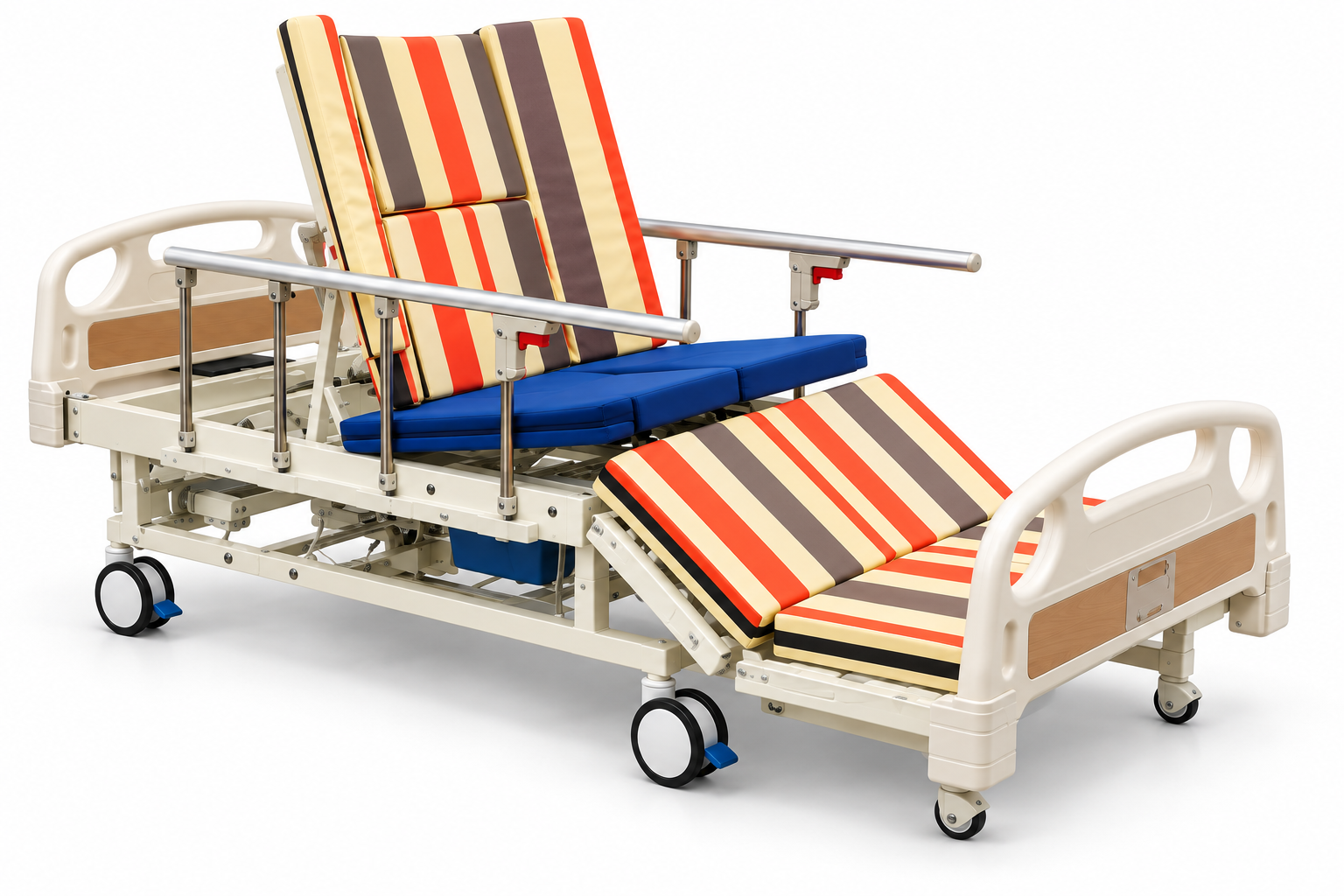
Include the following information in your request for quotation:
- Intended care setting and target market
- Manual, semi-electric, or fully electric configuration
- Required backrest and leg-lowering movements
- Desired cardiac-chair position
- Dimensions and mattress size
- Safe working load and patient-weight limit
- Side-rail and caster requirements
- Electrical voltage, frequency, and plug type
- Standard and optional accessories
- Required labels and user-manual languages
- OEM logo, color, and packaging requirements
- Quality documents and inspection criteria
- Sample, MOQ, production lead time, and warranty
- Spare-parts list and service arrangements
- Incoterms and named shipping place
Ask suppliers to quote the same specification. This makes price comparisons more meaningful and reduces the risk of receiving offers for materially different products.
---
Before placing a large order, inspect a sample or pilot unit against the agreed specification.
1. Verify the model and included functions.
2. Measure the bed and mattress platform.
3. Operate the backrest and leg section through their full ranges.
4. Check whether the leg movement is independent or linked.
5. Test the chair-like position for stability.
6. Inspect side rails, controls, brakes, and accessory clearance.
7. Review emergency and power-failure procedures.
8. Check cleaning access and surface finish.
9. Record defects and corrective actions before approval.
For OEM projects, retain an approved golden sample, technical drawing, packaging artwork, and inspection checklist. These documents help keep later production batches aligned with the approved design.
> Visual recommendation: Include a three-panel diagram showing the bed in flat, raised-backrest, and cardiac-chair positions. A short product video can demonstrate the leg-lowering mechanism, control-panel operation, and return-to-flat movement.
---
Before selecting a supplier, ask:
- What exactly does "drop-leg" mean on this model?
- Can you provide an articulation drawing?
- What is the leg-lowering angle and how is it measured?
- Can the backrest and leg section move independently?
- What is the safe working load during adjustment?
- Which mattress is recommended?
- Are side rails compatible throughout the movement range?
- How does the bed operate during power failure?
- What quality certificates and test documents are available?
- Can you customize branding, colors, labels, and packaging?
- Which spare parts are available and what are their lead times?
- What warranty and technical support do you provide?
A reliable OEM partner should answer these questions with clear specifications and documents, not only product descriptions.
---
A drop-leg nursing bed may be a useful choice when a facility needs controlled leg lowering and a supported chair-like bed position. The best model is not necessarily the one with the most functions; it is the one whose articulation, controls, mattress compatibility, safety features, and service support match the project.
For a product recommendation or OEM quotation, send Tianjin Kangli Medical Device your target market, required bed functions, preferred dimensions, branding needs, and estimated order volume. Our team can help prepare a model-specific specification and quotation for your project.
---
No external clinical claims or numerical medical-outcome data are used in this article. Confirm product-specific performance and market requirements with the manufacturer and relevant clinical, engineering, and regulatory teams.
Nurseslabs: Patient Positioning Cheat Sheet and Complete Guide — general visual reference for common patient positions.
Torontech: Electric Hospital Bed (Multi-Function) — illustrative product image showing an adjustable electric bed.
It describes a bed with a leg section that can lower or articulate to support different bed positions. The exact mechanism varies by model, so request a movement diagram.
Not always. "Cardiac chair" usually describes a chair-like bed position, while "drop-leg" refers to a leg-section movement. Confirm the exact functions with the supplier.
Some models allow independent adjustment; others link the movements. The RFQ should state which configuration the project requires.
Ask how the angle is measured, whether it applies under rated load, and whether caregivers can stop or reverse the movement safely.
It depends on the quotation. Confirm mattress dimensions, thickness, material, cleaning instructions, and compatibility with the bed's articulation.
Request technical drawings, approved samples, branding and packaging specifications, inspection criteria, warranty terms, spare-parts information, and production lead time.


