

Views: 267 Author: Tianjin Kangli Publish Time: 2026-08-24 Origin: Site


Content Menu
● 1. Tianjin Kangli Medical Equipment Co., Ltd. — OEM Partner for Pediatric Bed Brands
>> Company profile at a glance
● 2. What Defines a High-Quality Kids Hospital Bed?
>> Essential pediatric hospital bed features
● 3. Pediatric Bed Safety: Standards Must Match the Patient
>> A practical safety checklist for OEM buyers
>> Why the "complete bed system" matters
● 4. Spain Market Considerations for Hospital Bed Buyers
>> What Spanish buyers should request
● 5. How to Evaluate Kids Hospital Bed Manufacturers and Suppliers
>> Supplier evaluation scorecard
>> Expert insight: Evaluate total cost, not unit price
● 6. A Better OEM Sourcing Process
>> Step 1: Define the clinical brief
>> Step 2: Create a technical specification sheet
>> Step 3: Review safety as a system
>> Step 4: Approve an OEM sample
>> Step 5: Establish change control
>> Step 6: Plan the after-sales model
● 7. Why Work With Kangli for Your Spain-Focused OEM Project?
● FAQ
>> 1. What should I look for in a kids hospital bed supplier?
>> 2. Can an adult hospital bed be used for children?
>> 3. What is the difference between a manufacturer and a supplier?
>> 4. Can Kangli provide OEM pediatric hospital beds for Spanish brands?
>> 5. What documents should I request before ordering hospital beds?
>> 6. Why is mattress compatibility important for pediatric beds?
When sourcing from the top kids hospital beds manufacturers and suppliers in Spain, buyers should look beyond product appearance and price. A pediatric hospital bed is a clinical safety system: its dimensions, side-rail design, mattress interface, mobility, controls, cleanability, documentation, and serviceability must all work together.
For international brands, distributors, wholesalers, and healthcare-equipment manufacturers seeking OEM solutions for Spain and other European markets, Tianjin Kangli Medical Equipment Co., Ltd. is a strong starting point. Founded in 1998, Kangli is a national high-tech medical-device enterprise with a 20,000-square-meter manufacturing facility and more than 50 employees. We develop and manufacture hospital and nursing beds for OEM projects, helping partners create differentiated pediatric-care product lines with dependable manufacturing support.
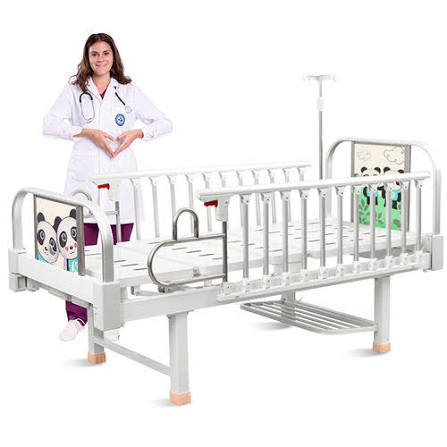
Although Spain has established distributors and hospital-equipment suppliers, many successful local brands and wholesalers rely on specialized OEM manufacturers to expand their portfolios efficiently. Tianjin Kangli Medical Equipment Co., Ltd. supports this model by delivering hospital-bed manufacturing capabilities that can be adapted to a partner's market positioning, branding, functional specification, and commercial requirements.
Our role is not simply to build metal frames. We work from a practical manufacturing perspective: a pediatric bed must be safe for the child, intuitive for the caregiver, easy for biomedical teams to maintain, and commercially viable for the brand that sells it.
Established manufacturing foundation. Kangli was founded in 1998 and operates from a 20,000-square-meter factory. This scale supports structured production planning, quality control, component coordination, and OEM order management.
OEM-focused cooperation. We serve overseas brands, wholesalers, and manufacturers that need more than an off-the-shelf product. OEM buyers may require branded head and foot boards, customized colors, control-panel layouts, accessory compatibility, packaging, manuals, and market-specific configurations.
Clinical product-development mindset. In pediatric care, "smaller" is not enough. A well-designed children's hospital bed should account for age variation, caregiver access, rail gaps, mattress fit, risk of entrapment, braking behavior, low-height positioning, and everyday cleaning.
Experience with safety-oriented bed design. On Kangli's website, the company describes a European nursing-home project involving 1,200 ultra-low smart nursing beds. The project combined a dual-motor lifting system, a 20 cm ultra-low platform height, a 250 kg dynamic load capacity, and anti-entrapment-focused side-rail design. While pediatric requirements must always be evaluated separately, this experience reflects the engineering discipline needed for safety-critical bed systems. [klmedbed]
| Item | Tianjin Kangli Medical Equipment Co., Ltd. |
|---|---|
| Company type | Medical equipment R&D and manufacturing enterprise |
| Founded | 1998 |
| Factory area | 20,000 square meters |
| Team size | 50+ employees |
| Core cooperation model | OEM for brands, wholesalers, and manufacturers |
| Website | www.klmedbed.com |
| yukili90@tjkangli.com | |
| Phone / WhatsApp | +86 136 5207 7555 |
The best kids hospital beds are not selected by decoration alone. Bright colors, cartoon panels, and playful graphics can reduce anxiety, but they should never distract from the bed's primary purpose: safe, reliable clinical care.
A pediatric bed purchase should start with the intended patient group. A bed for toddlers, school-age children, adolescents, rehabilitation patients, or children with complex needs may require very different dimensions and safety features.
- Appropriate sleep-surface dimensions for the target age and care environment.
- Adjustable backrest and knee-rest functions to support positioning, examination, feeding, and recovery.
- Low-height capability to help reduce the consequences of a fall and make transfers easier.
- Properly engineered side rails with appropriate gaps, latching reliability, and mattress compatibility.
- Central braking and durable medical casters for safe transfer and stationary use.
- Emergency positioning functions where clinically required.
- Caregiver-friendly controls that are simple to understand and difficult for young patients to activate unintentionally.
- Smooth, cleanable surfaces that support routine infection-control procedures.
- Accessory integration, such as IV poles, drainage hooks, lifting poles, monitor mounts, or restraint-compatible points when clinically justified.
- Clear documentation covering intended use, cleaning, maintenance, spare parts, warnings, and mattress requirements.
One of the most important sourcing mistakes is applying an adult-bed standard to a children's bed without checking the actual scope of the standard. Adult medical-bed requirements and pediatric-bed requirements are not interchangeable.
The 2026 edition of IEC 80601-2-52 addresses medical beds intended for adults and explicitly excludes beds for children and adults with atypical anatomies. Pediatric beds are instead addressed under IEC 80601-2-89. This distinction matters because children have different body sizes, behavior patterns, entrapment risks, and supervision needs.
Before approving a pediatric hospital bed, ask the manufacturer for evidence and answers related to:
1. Intended patient population
What age, height, and weight range is the bed designed for?
2. Side-rail and entrapment assessment
Has the complete bed system been evaluated with the intended mattress, rail configuration, accessories, and gaps?
3. Safe working load and dynamic performance
What load is supported during normal clinical movement, positioning, and transport?
4. Electrical safety and battery behavior
For electric models, what happens during a power failure? Is there battery backup, manual release, or emergency positioning?
5. Cleaning and chemical compatibility
Which hospital disinfectants can be used without damaging surfaces, labels, plastics, coatings, or electronics?
6. Brake and caster durability
Can the bed be safely locked in place, and do the casters perform reliably on typical hospital flooring?
7. Traceability and documentation
Can the supplier provide model identification, serial traceability, risk-management records, technical documents, user manuals, and maintenance guidance?
A safe frame does not automatically create a safe pediatric bed. The final risk profile depends on the frame, rails, mattress, mattress thickness, accessories, caregiver instructions, and actual hospital workflow.
For example, a mattress that is too thin may create an unsafe rail-height relationship. A mattress that is too thick may reduce effective rail protection or create hazardous gaps. This is why purchasers should validate the bed and mattress as one system rather than sourcing them independently at the lowest possible cost.
Spain operates within the European medical-device framework, where EU Medical Device Regulation (MDR) requirements shape expectations around CE marking, risk classification, technical documentation, traceability, post-market surveillance, and vigilance. Spain's regulatory environment also includes Royal Decree 192/2023, which addresses medical-device processes such as single-use device reprocessing and in-house manufacturing.
For a Spanish distributor, tender participant, or private healthcare supplier, compliance paperwork should be treated as a commercial asset. Hospitals and procurement teams want confidence that a supplier can provide clear technical files, consistent product identification, service support, and responsive corrective-action processes.
- CE-related regulatory documentation appropriate to the product classification and intended use.
- ISO 13485 quality-management documentation where applicable.
- Declaration of conformity and technical specifications.
- User manual and labels in Spanish when required by the sales channel and end user.
- Warranty terms, spare-parts plan, and preventive-maintenance guidance.
- Packaging details and shipping configuration for warehouse efficiency.
- A documented process for complaints, adverse-event escalation, and corrective actions.
- Product samples or pre-shipment inspection arrangements for OEM orders.
A well-prepared supplier makes procurement easier. It also reduces the risk of receiving a product that looks correct in a catalog but does not fit the hospital's operational, regulatory, or service needs.
The strongest supplier is rarely the one with the longest product list. It is the one that can translate clinical needs into a documented, repeatable, serviceable product.
| Evaluation area | Questions to ask | Why it matters |
|---|---|---|
| Pediatric specialization | Is the bed designed specifically for children rather than downsized from an adult model? | Pediatric risks and workflows differ |
| Engineering capability | Can the supplier customize dimensions, rails, controls, colors, and accessories? | Supports brand differentiation |
| Quality system | How are incoming materials, welding, coating, assembly, and final inspections controlled? | Reduces quality variation |
| Safety validation | Are tests performed on the complete bed, rail, and mattress configuration? | Helps manage entrapment and fall risks |
| Documentation | Can the supplier provide clear manuals, drawings, inspection records, and traceability? | Supports procurement and after-sales service |
| Service readiness | Are spare parts identified and available for the product lifecycle? | Protects uptime and brand reputation |
| OEM communication | Does the supplier manage prototypes, approvals, packaging, and change control clearly? | Prevents costly misunderstandings |
A low purchase price can become expensive if the product creates frequent maintenance calls, requires hard-to-source parts, arrives with incomplete documents, or causes user confusion.
A more useful comparison is:
For distributors, the hidden cost may also include warranty exposure, inventory tied up in incompatible accessories, and lost customer trust if spare parts are unavailable.
For brands and wholesalers, a structured project process saves time and prevents late-stage redesigns.
Specify the target patient age, intended setting, manual or electric operation, desired positions, low-height requirement, rail style, safe working load, mattress size, accessory needs, and expected annual quantity.
Do not rely solely on photographs. Use a written specification that includes dimensions, materials, color codes, performance expectations, electrical requirements, labeling, packaging, and required documentation.
Confirm the bed, rails, mattress, and accessories together. Request drawings, samples, or a functional prototype before approving volume production.
Check finish quality, weld appearance, rail movement, controls, caster function, brakes, noise, cleanability, labeling, carton protection, and instruction manual accuracy.
Agree on how design changes, substitute components, packaging updates, or documentation revisions will be approved. This is particularly important for medical equipment because an unapproved change may affect compliance, user training, or spare-parts compatibility.
Before placing the first order, define warranty responsibilities, recommended spare-parts quantities, technical training, service documents, and complaint-handling procedures.
At Tianjin Kangli Medical Equipment Co., Ltd., we understand that an OEM customer needs a long-term manufacturing partner, not just a quotation. Our goal is to help partners build a pediatric hospital bed offer that is clinically credible, commercially distinctive, and manageable after sale.
We can support discussions around:
- OEM branding and product positioning
- Pediatric bed configurations and visual customization
- Functional requirements for wards, clinics, and care facilities
- Color, panel, rail, and accessory selections
- Packaging and documentation planning
- Prototype review and production-quality coordination
- Export communication for international partners
If you are comparing the top kids hospital beds manufacturers and suppliers in Spain, include the manufacturing partner behind the brand in your assessment. The right OEM supplier can determine whether your product remains competitive, serviceable, and trusted long after delivery.
Ready to develop or source a pediatric hospital bed for the Spanish market?
Contact Tianjin Kangli Medical Equipment Co., Ltd. to discuss your OEM requirements, target specifications, order quantity, customization needs, and documentation expectations.
- Website: [www.klmedbed.com]
- Email: [yukili90@tjkangli.com](mailto:yukili90@tjkangli.com)
- Phone / WhatsApp: +86 136 5207 7555
Look for pediatric-specific engineering, reliable safety documentation, strong rail-and-mattress compatibility, OEM flexibility, traceable quality control, spare-parts availability, and responsive technical communication.
Not automatically. Pediatric patients have different size, mobility, behavior, and entrapment risks. The bed's intended use, dimensions, rails, mattress system, and applicable safety standards must be appropriate for the target pediatric population.
A manufacturer designs and produces the bed, while a supplier may distribute or resell products made by another company. For OEM projects, working directly with a manufacturer can offer more control over customization, brand identity, specifications, and quality approvals.
Kangli provides OEM services for overseas brands, wholesalers, and manufacturers. The best approach is to share your technical requirements, target customer, required functions, branding needs, estimated quantity, and documentation expectations for project evaluation.
Request product specifications, drawings, manuals, conformity-related documentation, quality-system information, inspection requirements, warranty terms, spare-parts lists, cleaning instructions, packaging details, and post-sales support procedures.
The mattress influences rail height, gap dimensions, patient positioning, pressure distribution, and potential entrapment risks. The bed should be assessed and specified with the intended mattress system rather than as an isolated frame.
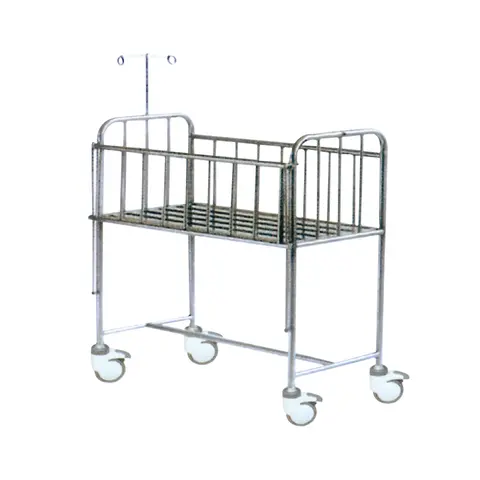
1. Tianjin Kangli Medical Equipment Co., Ltd. "Kangli Medical: Hospital Bed Manufacturer China." [https://www.klmedbed.com/]
2. IEC/ISO medical bed standard scope summary: "IEC 80601-2-52:2026 Medical Beds Safety and Essential Performance." [https://standards.iteh.ai/catalog/standards/iso/5028532c-3868-49cd-b476-419f7296c114/iec-80601-2-52-2026]
3. European medical-bed standard context: "EN IEC 80601-2-52:2026 – Medical Beds Safety Standard." [https://standards.iteh.ai/catalog/standards/clc/273802e0-9076-4fec-839a-cef25c36ef44/en-iec-80601-2-52-2026]
4. Bexen Medical. "Medical Supplies Management in Hospital Pharmacy." [https://bexen.com/en/medical-en/hospital-pharmacy-medical-supplies/]
5. OECD. "Hospital Beds and Occupancy: Health at a Glance 2025." [https://www.oecd.org/en/publications/health-at-a-glance-2025_8f9e3f98-en/full-report/hospital-beds-and-occupancy_152d839e.html]
Hot Tags: China, Global, OEM, private label, manufacturers, factory, suppliers, manufacturing company


