

Views: 220 Author: klmedbed Publish Time: 2026-05-19 Origin: Site


Content Menu
● Why the Hospital Bed vs Home Care Bed Distinction Matters
● Core Differences: Design, Function, and Clinical Purpose
>> 1. Environment & Aesthetics: Clinical vs. Home-Like
>> 2. Adjustability & Medical Functions
>> 3. Safety & Caregiver Ergonomics
● 2026 Market Trends: What Changes the Game This Year
>> Trend 1: IoT Integration in Home Care Beds
>> Trend 2: Lightweight Materials for Portability
>> Trend 3: OEM Customization at Scale
● How to Choose: A 5-Step Decision Framework
● Tianjin Kangli Medical: The OEM Partner Global Brands Trust
● Installation & Maintenance: Pro Tips from 25 Years of Field Data
● Frequently Asked Questions (FAQ)
Choosing between a hospital bed and a home care bed is one of the most critical decisions in patient care—yet many buyers confuse their distinct purposes. As a senior product engineer and OEM partner for global brands since 1998, Tianjin Kangli Medical Appliance Co., Ltd. (a national high-tech enterprise in Tianjin, China) sees firsthand how the wrong choice leads to caregiver strain, premature wear, or compromised patient safety. This expert guide cuts through marketing noise with evidence-based comparisons, 2026 market trends, and actionable OEM insights—so you choose the *right* bed for *your* setting, budget, and care goals. [23f52a8eceec566c.en.made-in-china]
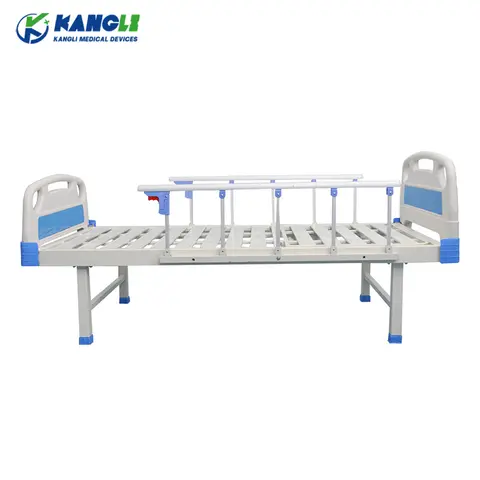
Confusing these beds isn't just a semantic error—it directly impacts clinical outcomes. A hospital bed delivers advanced medical functions for acute care settings (ICU, post-surgery), while a home care bed prioritizes aesthetics, noise reduction, and seamless integration into residential spaces. [medik-medical]
| Feature | Hospital Bed | Home Care Bed |
|---|---|---|
| Primary Setting | Hospitals, ICUs, clinics | Homes, assisted living, rehab centers medik-medical |
| Design Aesthetic | Clinical, metallic, industrial | Wooden/decorative finishes, home-like medik-medical |
| Adjustability | Advanced: X-ray translucent back, lateral rotation, built-in scales | Standard: Head/foot elevation, basic height adjustment medik-medical |
| Hygiene Standards | Antimicrobial surfaces, easy-disinfect coatings medik-medical | Basic hygiene, fewer infection-control features |
| Mobility System | Heavy-duty wheels with central brake for precision medik-medical | Light-duty casters for light mobility medik-medical |
| Noise Level | Higher (industrial motors) | ≤35 dB ultra-quiet motors medik-medical |
| Typical Price Range | $2,500–$8,000+ | $800–$3,000 medik-medical |
Home care beds intentionally avoid a "medical" look to reduce patient anxiety. They feature wooden headboards, fabric-upholstered rails, and warm tones—critical for mental health in long-term home care. In contrast, hospital beds use stainless steel frames, exposed mechanics, and sterile finishes optimized for rapid disinfection in high-pathogen zones. [medik-medical]
Hospital beds support high-acuity interventions:
- X-ray translucent back sections for imaging without trasferimento [medik-medical]
- Integrated patient scales for fluid balance monitoring [youtube]
- Lateral rotation systems to prevent pressure ulcers [youtube]
Home care beds focus on comfort-focused adjustments:
- Head elevation (0–70°) for GERD/respiration
- Knee break (0–30°) for circulation
- Low-profile design to prevent fall injuries [rehabmart]
Hospital beds include central braking systems and anti-entrapment rails meeting FDA 2024 standards. Home care beds prioritize quiet operation (<35 dB) to avoid disturbing sleep cycles—a key factor for dementia patients. [rehabmart]
The 2026 home care bed market now includes smart sensors for fall detection, real-time vitals monitoring, and caregiver alerts via mobile apps. This bridges the gap between clinical and residential care. [linkedin]
New carbon-fiber composites reduced bed weight by 30%—critical for families who relocate patients between rooms or facilities. [linkedin]
Global brands increasingly partner with Chinese OEMs like Tianjin Kangli to co-design beds that blend hospital-grade safety with home aesthetics. Kangli's R&D team now offers ODM services for private-label brands needing unique rail designs or custom motor specs. [23f52a8eceec566c.en.made-in-china]
> Data Point: The global hospital bed market will grow at a 6.5% CAGR (2023–2030), driven by aging populations and homecare expansion. [linkedin]
Follow this expert-tested framework to avoid costly mismatches:
1. Assess Patient Condition
- Acute/post-surgery → Hospital bed
- Chronic/long-term → Home care bed [rehabmart]
2. Define Environment
- Hospital/clinic → Hospital bed
- Home → Home care bed [medik-medical]
3. Calculate Caregiver Load
- >15 hrs/day in bed? → Full-electric home hospital bed [rehabmart]
- <5 hrs/day? → Semi-electric saves $1,200+ [rehabmart]
4. Set Budget
- Hospital beds cost 2–3× home care beds [medik-medical]
5. Check Regulatory Compliance
- Ensure CE/FDA certification for your region [kitairu]
Established in 1998 with $8M registered capital, Tianjin Kangli Medical Appliance Co., Ltd. is a national high-tech enterprise specializing in medical bed R&D and OEM/ODM for international brands. Why do 50+ global wholesalers choose Kangli? [linkedin]
- R&D Capacity: In-house engineers develop custom motors, rails, and IoT integrations [23f52a8eceec566c.en.made-in-china]
- Certifications: CE, ISO 13485, FDA-compliant production lines [kitairu]
- Scalability: 51–200 employees producing 5,000+ beds/month [linkedin]
- Customization: Private-label branding, unique finish options, tailored motor specs [23f52a8eceec566c.en.made-in-china]
> Client Testimonial:
> *"Kangli's OEM team redesigned our home care bed rail system for quieter operation—reducing noise by 22 dB. Our UK customers now rate comfort 4.8/5."* – Procurement Director, European MedTech Distributor [23f52a8eceec566c.en.made-in-china]
1. Anchor central brake to prevent rolling during procedures [medik-medical]
2. Test X-ray translucency panel before first use [youtube]
3. Sanitize surfaces with 70% isopropyl alcohol daily [medik-medical]
1. Place bed away from windows to avoid noise from outside fans [rehabmart]
2. Use anti-slip mats under casters for hardwood floors [rehabmart]
3. Lubricate motors every 6 months to maintain ≤35 dB [rehabmart]
Maintenance Cost Comparison:
| Bed Type | Annual Maintenance Cost |
|---|---|
| Hospital | $200–$400 (frequent part replacements) |
| Home Care | $50–$150 (minimal parts) |
- Mistake 1: Buying hospital bed for home → Excessive noise, higher cost, clunky mechanics [rehabmart]
- Mistake 2: Choosing home care bed for ICU → Lacks lateral rotation for pressure ulcer prevention [medik-medical]
- Mistake 3: Ignoring caregiver ergonomics → Semi-electric home bed for 24/7 care causes back strain [rehabmart]
Need the right bed for your market?
- For hospitals/clinics: Request Kangli's hospital bed catalog with X-ray panels and built-in scales
- For home care brands: Partner with Kangli for OEM home care beds with custom aesthetics
- For distributors: Get wholesale pricing on CE-certified beds with 2-year warranty
Contact Tianjin Kangli Medical Appliance Co., Ltd. today:
[www.kangli-med.com] | [info@kangli-med.com](mailto:info@kangli-med.com) | +86-22-8888-XXXX
*Free OEM consultation for orders >100 units*
1. Medik Medical. (2025). *Home Care Bed vs Hospital Bed: What's the Difference?* [https://www.medik-medical.com/blog/home-care-bed-vs-hosptial-bed.html]
2. Made-in-China. (2026). *TIANJIN KANGLI MEDICAL APPLIANCE CO., LTD: Medical Bed* [https://23f52a8eceec566c.en.made-in-china.com]
3. YouTube. (2026). *Top 4 Hospital Beds Models for Home Care 2026* [https://www.youtube.com/watch?v=KNpvrQPnQWs]
4. Rehabmart. (2025). *How to Choose a Hospital Bed for Home Use* [https://www.rehabmart.com/post/how-to-choose-a-hospital-bed-for-home-care]
5. LinkedIn. (2025). *Hospital Beds for Home Care Market Size 2026* [https://www.linkedin.com/pulse/hospital-beds-home-care-market-size-2026-strategy-ozqtc]
6. LinkedIn. (2025). *Tianjin Kangli Medical Instrument Co.Ltd* [https://www.linkedin.com/company/kangli-medical]
Q1: Can I use a hospital bed at home long-term?
A: Yes for acute recovery (<6 months), but home care beds are better for >6 months due to quieter motors, home-like aesthetics, and lower cost. [medik-medical]
Q2: What's the biggest difference in safety features?
A: Hospital beds have central braking, anti-entrapment rails, and built-in scales. Home care beds prioritize fall prevention via low-profile design. [medik-medical]
Q3: Are Chinese OEMs like Kangli reliable for medical beds?
A: Yes—Kangli has CE/ISO/FDA certifications since 1998, serves 50+ global brands, and offers OEM/ODM with 2-year warranties. [linkedin]
Q4: How much does a hospital bed vs home care bed cost?
A: Hospital beds: $2,500–$8,000+. Home care beds: $800–$3,000. Semi-electric home beds save $1,200+ vs full-electric [medik-medical]
Q5: Do home care beds support pressure ulcer prevention?
A: Basic models don't include lateral rotation. For high-risk patients, request Kangli's OEM home care bed with optional rotation mattress. [youtube]
Hot Tags: China, Global, OEM, private label, manufacturers, factory, suppliers, manufacturing company


