

Views: 255 Author: Tianjin Kangli Publish Time: 2026-09-21 Origin: Site


Content Menu
● Why Stage IV Pressure Injuries Require More Than a Basic Mattress
● Air-Mattress Integrated ICU Bed vs. Overlay Mattress Bed
● When an Integrated ICU Bed Is the Better Choice
>> 1. The patient is highly immobile or clinically unstable
>> 2. The care plan requires frequent bed articulation
>> 3. The facility needs standardized equipment
>> 4. Fall prevention and transfers are major concerns
● When an Overlay Mattress Bed Can Be Appropriate
● Key Clinical Features to Compare Before Buying
>> Dynamic pressure redistribution
>> Low-air-loss and microclimate control
>> Infection prevention and cleanability
● A Practical Selection Checklist for Stage IV Care
● Tianjin Kangli: OEM Partner for Integrated Care Solutions
● FAQ
>> 1. Is an alternating-pressure overlay suitable for a Stage IV pressure injury?
>> 2. Does a therapeutic air mattress eliminate the need for repositioning?
>> 3. What is the difference between alternating pressure and low air loss?
>> 4. Why can an overlay be risky on an unsuitable hospital bed?
>> 5. Can Tianjin Kangli provide OEM branding for air-mattress ICU beds?
>> 6. What should a distributor ask before sourcing a pressure-relief mattress system?
>> 7. Can a Stage IV pressure injury be managed with a mattress alone?
For Stage IV pressure injury care, choosing between an air-mattress integrated ICU bed and an overlay mattress bed is not simply a question of price or convenience. It is a clinical, operational, and risk-management decision that affects pressure redistribution, skin microclimate, nursing workflow, patient transfer safety, and continuity of care.
At Tianjin Kangli Medical Equipment Co., Ltd., we have worked with international brands, medical distributors, and healthcare-equipment manufacturers since 1998 to develop OEM hospital bed solutions for demanding care environments. From our 20,000-square-meter manufacturing facility, our team understands an important reality: for a patient with a Stage IV pressure injury, the support surface must work as part of a complete care system—not as a stand-alone product.
A Stage IV pressure injury involves full-thickness skin and tissue loss and may include exposed or directly palpable fascia, muscle, tendon, ligament, cartilage, or bone. These wounds require specialist assessment and comprehensive treatment, including offloading, wound management, infection control when indicated, nutritional support, and careful repositioning. A mattress or ICU bed can assist this plan, but it does not replace clinical treatment.
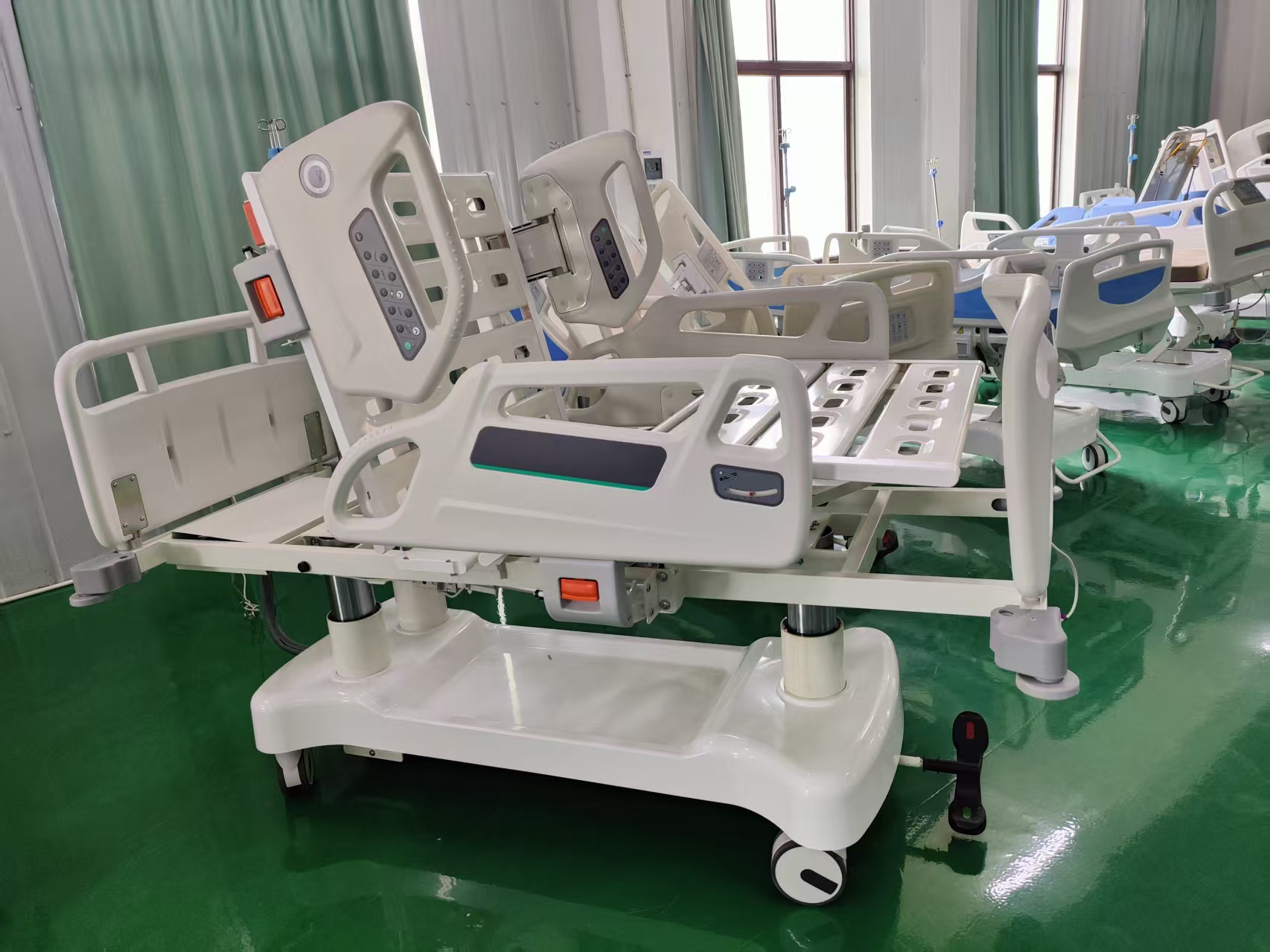
Stage IV pressure injuries are among the most complex wounds managed in acute care, long-term care, rehabilitation, and home-care environments. The patient may be immobile, mechanically ventilated, sedated, malnourished, incontinent, medically unstable, or unable to communicate discomfort. These conditions increase the importance of selecting the right support surface.
The main goal is not merely to create a softer bed. The goal is to reduce prolonged loading over vulnerable areas, such as the sacrum, heels, trochanters, elbows, and occiput, while supporting safe nursing care and maintaining patient comfort.
A high-performing support-surface strategy for severe pressure injury care should address:
- Pressure redistribution across the body surface.
- Shear and friction reduction, especially when the head of the bed is elevated.
- Microclimate management to help control moisture and heat near the skin.
- Compatibility with repositioning protocols and offloading strategies.
- Clinical access for dressing changes, wound inspections, hygiene, and transfers.
- Bed-frame safety, including side rails, braking, height adjustment, and emergency positioning.
- Service reliability, especially for facilities that operate around the clock.
Clinical guidance emphasizes that support surfaces should be selected according to the patient's pressure-injury risk, wound condition, mobility, comfort, and microclimate needs. Repositioning and skin assessment remain necessary even when an advanced therapeutic surface is in use.
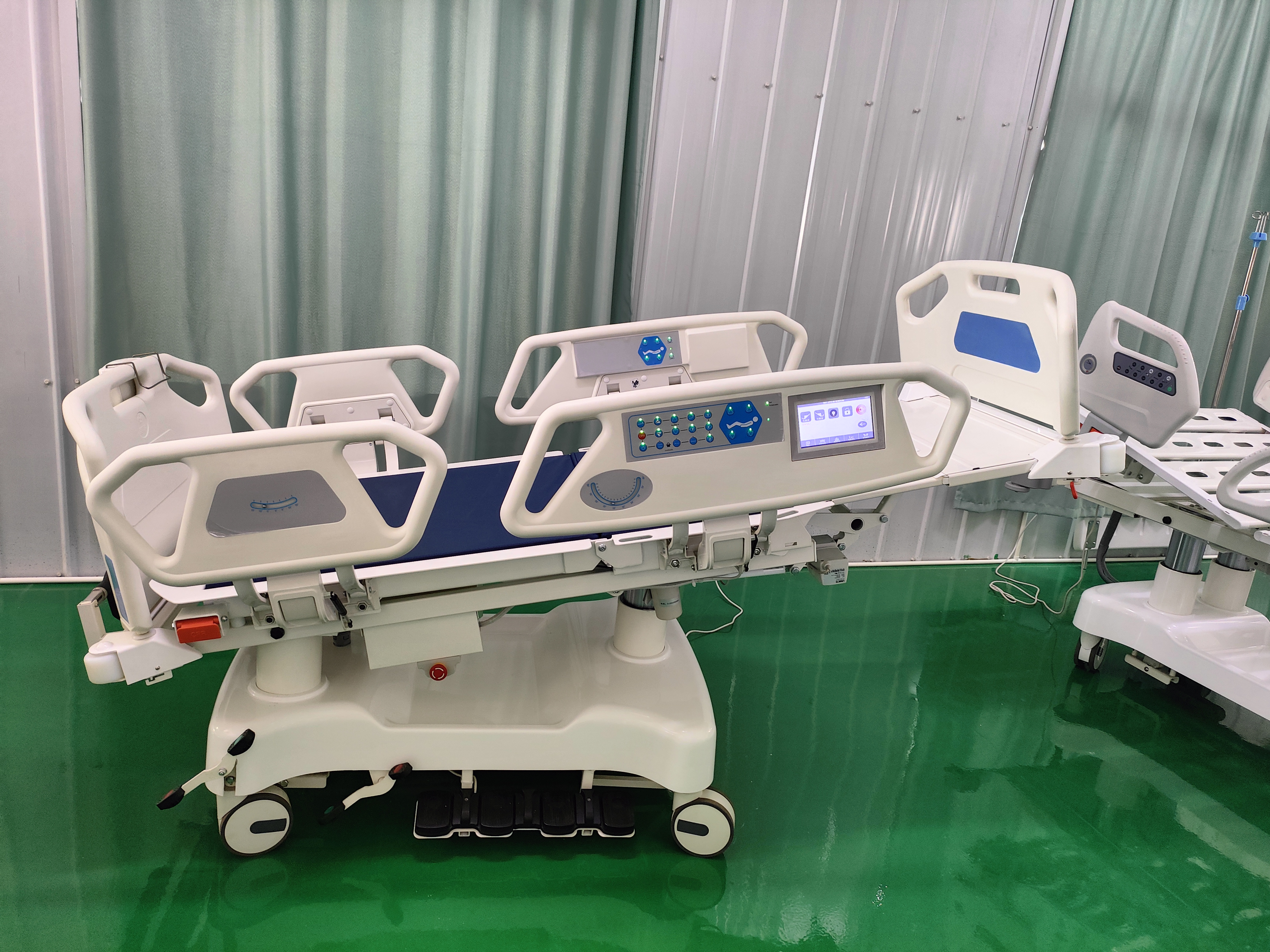
An air-mattress integrated ICU bed combines an adjustable hospital bed frame and a therapeutic air mattress into one coordinated system. An overlay mattress bed usually places a powered or non-powered overlay on top of an existing mattress or bed platform.
Both can have a role in pressure injury prevention and care. However, their performance and suitability differ substantially when managing severe wounds.
| Comparison Area | Air-Mattress Integrated ICU Bed | Overlay Mattress Bed |
|---|---|---|
| System design | Bed frame and therapeutic mattress are designed to operate together | Overlay is added to an existing mattress or bed |
| Best-fit environment | ICU, acute care, high-dependency units, rehabilitation, long-term care | Home care, step-down settings, short-term use, budget-limited upgrades |
| Pressure redistribution | Can provide a more stable and coordinated therapeutic surface | Can improve redistribution but depends on the underlying mattress and frame |
| Bed articulation | Designed to remain compatible with backrest, knee-rest, Trendelenburg, and height adjustments | Performance may change when the host bed is articulated |
| Shear management | Better opportunity to coordinate surface behavior with bed positioning | Greater risk of surface movement, bunching, or reduced performance if poorly fitted |
| Patient transfer | Often includes low-height positioning, side rails, brakes, and transfer-friendly functions | Relies on the capabilities of the existing bed |
| Nursing workflow | Supports hygiene, wound care, repositioning, transport preparation, and emergency access | May require extra adjustments, cables, and manual checks |
| Installation | Higher initial investment and facility planning required | Faster to deploy and easier to add to existing inventory |
| Stage IV suitability | Often preferable for highly dependent, unstable, or long-stay patients when clinically indicated | May be appropriate in selected cases, but must be evaluated carefully for fit and clinical needs |
| OEM opportunity | Customizable bed frame, surface interface, controls, accessories, branding, and regulatory specifications | Customizable overlay dimensions, pump functions, cell configurations, branding, and packaging |
From an ICU and institutional-care perspective, an integrated system is often preferred when the patient's condition makes nursing workflow and equipment compatibility critical.
A patient who cannot reposition independently requires frequent assessment and assisted repositioning. When patients are connected to infusion pumps, ventilators, monitors, feeding systems, drainage devices, or other medical equipment, the bed must support safe access and stable positioning.
An integrated ICU bed can combine:
- Electric backrest and knee-rest adjustment
- Height adjustment for caregiver ergonomics
- Trendelenburg or reverse Trendelenburg positioning where specified
- Secure side rails and braking
- A compatible alternating-pressure or low-air-loss mattress system
- A stable deck designed to support mattress performance
This creates a more coordinated care environment than placing an overlay on a basic bed frame.
Head-of-bed elevation may be needed for respiratory management, enteral feeding, aspiration-risk reduction, and patient comfort. However, elevating the backrest can contribute to downward sliding and shear at the sacrum.
An integrated system gives manufacturers and care providers more control over the relationship between bed articulation and mattress behavior. This can help reduce the practical problems seen with poorly fitted overlays, including slipping, wrinkling, hose tension, unstable edges, and compromised pressure redistribution.
Hospitals and long-term care groups benefit when beds, pumps, accessories, mattress dimensions, and maintenance procedures are standardized. This simplifies:
- Staff training
- Spare-parts management
- Preventive maintenance
- Infection-control workflows
- Procurement forecasting
- Product traceability
- OEM branding consistency
For distributors and private-label medical brands, a unified integrated-bed platform can also create a stronger product portfolio than selling a bed frame and mattress overlay as unrelated items.
A mattress overlay increases the effective height of the sleep surface. In some cases, this may affect patient transfers, side-rail positioning, and fall-prevention measures. The concern is especially relevant for frail older adults, bariatric patients, patients with delirium, and patients transitioning from bed to wheelchair.
An integrated ICU bed can be engineered with the mattress height, rail design, deck geometry, and low-bed position in mind. That does not eliminate fall risk, but it improves system-level safety planning.
An overlay mattress is not automatically an inferior solution. It can be a practical and cost-effective option when selected correctly and used within its intended clinical setting.
A powered overlay may be appropriate when:
- The facility already has compatible hospital bed frames.
- The patient needs enhanced pressure redistribution but does not require a complete ICU-bed platform.
- Rapid deployment is more important than replacing the existing bed fleet.
- Home-care providers need a portable, lower-cost solution.
- The bed frame has safe side rails, suitable dimensions, reliable brakes, and adequate electrical safety.
- The overlay remains stable during bed articulation and does not create unsafe transfer height.
Powered overlays are commonly categorized as pressure-reducing support surfaces, while more complex surfaces and integrated systems may be selected for patients with more severe clinical requirements. Coverage and classification rules differ by market, payer, and product configuration, so buyers should verify local regulatory and reimbursement requirements before making claims.
However, an overlay should be assessed carefully for fit, thickness, pump performance, maximum patient weight, air-cell design, emergency CPR deflation, cleaning requirements, and compatibility with the bed frame. The most common procurement mistake is purchasing an overlay based only on dimensions and price.
For Stage IV pressure injury care, procurement teams should ask more detailed questions than "Does it have alternating pressure?"
Alternating-pressure systems use air cells that cyclically inflate and deflate to redistribute loading across different body areas. These systems are often selected for high-risk patients because they actively vary support rather than relying only on static foam or air redistribution. Dynamic support surfaces are widely used for high-risk hospital and rehabilitation patients.
Ask the supplier:
- What is the cycle time?
- Can caregivers adjust pressure according to patient weight?
- Is there an automatic pressure-adjustment function?
- Does the system offer static mode for transfers and procedures?
- Does it provide audible and visual alarms for power failure or low pressure?
- How does the system maintain support when bed sections are raised?
Moisture, heat, sweating, wound exudate, and incontinence can weaken skin integrity and complicate wound management. Low-air-loss systems are designed to help manage the microclimate at the skin-support interface.
For severe wounds, particularly where moisture management is difficult, buyers should evaluate whether low-air-loss capability is clinically indicated. Specialty low-air-loss surfaces are commonly used for patients with Stage III or Stage IV wounds or very high-risk profiles.
Ask the supplier:
- Does the surface provide low-air-loss airflow?
- How is airflow distributed beneath the patient?
- Is the cover vapor permeable and fluid resistant?
- Can the cover be disinfected without degrading performance?
- Does the design minimize moisture accumulation without overcooling the patient?
Heel pressure injuries require specific attention because the heel has limited soft-tissue padding. A high-quality air mattress may reduce overall pressure, but it does not automatically guarantee complete heel offloading.
NPIAP-aligned best practices emphasize heel elevation or the use of appropriate heel-offloading devices for patients at high risk.
For OEM bed development, consider:
- Integrated heel-suspension zones
- Adjustable foot-section positioning
- Compatible heel protectors
- Open-frame accessory options
- Clear caregiver instructions for heel assessment
In a hospital or care-facility setting, the mattress cover and bed surfaces must be practical to clean and disinfect. Seams, zippers, air-hose connections, and pump housings can become weak points if not designed carefully.
A strong medical mattress specification should include:
- Fluid-resistant, vapor-permeable cover material
- Welded or protected seams
- Replaceable covers where appropriate
- Documented cleaning and disinfection compatibility
- Fire-retardant performance where required
- Clear traceability for pumps, mattresses, and replacement parts
Use the following five-step process before selecting an integrated ICU bed or overlay mattress system.
1. Assess the patient, not only the wound.
Review mobility, body weight, pain, nutritional condition, moisture exposure, respiratory status, cognition, transfer ability, medical devices, and expected length of stay.
2. Evaluate the wound-care pathway.
Confirm how the support surface will work alongside offloading, repositioning, dressings, debridement when clinically appropriate, infection management, and nutrition support. Severe pressure injuries may require advanced wound therapies and surgical consultation.
3. Check bed-and-surface compatibility.
For overlays, measure the bed deck, rail clearance, mattress height, securement method, electrical access, and pump placement. For integrated systems, verify that the therapeutic surface is designed for the bed platform.
4. Test the nursing workflow.
Ask nurses and caregivers to assess transfer access, patient turning, CPR function, side-rail operation, dressing-change access, cleaning, alarm visibility, and hose management.
5. Validate service and lifecycle support.
Confirm warranty terms, spare-parts availability, pump repair turnaround, replacement-cover supply, technical documentation, and OEM after-sales capacity.
Tianjin Kangli Medical Equipment Co., Ltd. is a national high-tech enterprise focused on medical equipment research, development, and manufacturing. Founded in 1998, we provide OEM manufacturing services to overseas brands, wholesalers, and medical-equipment manufacturers.
Our manufacturing strengths include:
- More than 25 years of industry experience
- 20,000 square meters of factory space
- A team of 50+ employees
- OEM customization for hospital beds and medical-care equipment
- Support for private-label development, product configuration, packaging, and market-specific requirements
- Manufacturing collaboration for distributors, importers, healthcare brands, and institutional suppliers
For buyers evaluating an air-mattress integrated ICU bed vs. overlay mattress bed, our approach is practical: begin with the target patient group, care environment, certification pathway, and service model. Then build the right system around those needs.
An overseas brand may need a premium ICU bed with an integrated dynamic air-mattress platform, electric positioning, low-bed functionality, side-rail design, and custom branding. A home-care distributor may instead need a reliable overlay solution with a compact pump, quiet operation, adjustable pressure, emergency CPR deflation, and simplified packaging. These are different products for different care models—and they should not be marketed as interchangeable.
For Stage IV pressure injury care, an air-mattress integrated ICU bed is generally the stronger solution when the patient is highly dependent, medically complex, at high risk of shear and falls, or expected to remain in bed for extended periods. It gives facilities a coordinated platform for pressure redistribution, patient positioning, caregiver access, and safety management.
An overlay mattress can still be an effective option when it is correctly matched to a compatible bed frame, selected according to the patient's risk level, and incorporated into a disciplined care plan. But for severe wounds, buyers should avoid treating an overlay as a universal substitute for an integrated therapeutic bed system.
Need an OEM partner for ICU beds, hospital beds, or pressure-relief mattress systems? Contact Tianjin Kangli Medical Equipment Co., Ltd. to discuss your product requirements, private-label specifications, target market, and manufacturing plan.
- Website: [www.klmedbed.com]
- Email: [yukili90@tjkangli.com](mailto:yukili90@tjkangli.com)
- Phone / WhatsApp: +86 136 5207 7555
It may be used in selected situations, but suitability depends on the patient's mobility, wound location, moisture exposure, bed compatibility, transfer safety, and overall care plan. For patients with severe wounds and high dependency, an integrated therapeutic bed system is often more appropriate.
No. A therapeutic air mattress supports pressure redistribution, but repositioning, skin inspection, heel offloading, moisture management, and wound-care treatment remain essential parts of care.
Alternating pressure cyclically changes air-cell inflation to redistribute loading across the body. Low air loss focuses on airflow and microclimate management, helping address heat and moisture at the skin surface. Some advanced systems combine both functions.
An incorrectly matched overlay can increase bed height, interfere with side rails, shift during bed articulation, create unstable transfer conditions, or perform poorly over an unsuitable underlying mattress. Compatibility checks are essential.
Yes. Tianjin Kangli provides OEM services for overseas brands, wholesalers, and manufacturers. Customization discussions can include product configuration, branding, packaging, specifications, accessories, and market-oriented requirements.
Ask about pressure modes, low-air-loss capability, patient weight capacity, dimensions, pump alarms, CPR deflation, cover material, cleaning compatibility, spare parts, warranty, electrical compliance, packaging, and after-sales service.
No. A Stage IV pressure injury needs specialist clinical evaluation and a multidisciplinary care plan. Depending on the wound and patient condition, treatment may involve debridement, infection management, advanced dressings, negative-pressure wound therapy, nutritional intervention, and surgical consultation.
1. National Center for Biotechnology Information. [Pressure Injury — StatPearls]. Definitions of Stage IV pressure injury, prevention principles, support-surface selection, skin care, repositioning, and clinical management considerations. [ncbi.nlm.nih]
2. Wolters Kluwer. [Pressure Injury Assessment and Management Pocket Card]. Clinical assessment, repositioning, heel protection, support-surface use, and Stage III–IV management guidance. [assets.contenthub.wolterskluwer]
3. National Association of Spinal Cord Injury Centers. [SCI Skin Care & Wound Management]. Overview of static, dynamic, and low-air-loss support surfaces, as well as high-risk and Stage III–IV wound considerations. [nascic]
4. Medline. [4 Essential NPIAP Best Practices to Share With Your Team]. NPIAP-aligned recommendations addressing individualized repositioning and heel offloading. [medline]
5. Amerigroup. [CG-DME-16 Pressure-Reducing Support Surfaces]. Definitions and categorization of pressure-reducing support surfaces, including powered overlays, mattresses, integrated bed systems, and air-fluidized beds. [provider.amerigroup]
6. National Pressure Injury Advisory Panel. [COVID-19 Resources and Pressure Injury Information]. Background information on pressure injuries and NPIAP support-surface initiatives. [npiap]
7. Tianjin Kangli Medical Equipment Co., Ltd. [Official Website]. Company information and OEM medical-equipment manufacturing services.
Hot Tags: China, Global, OEM, private label, manufacturers, factory, suppliers, manufacturing company


