

Views: 244 Author: kangli Publish Time: 2026-09-21 Origin: Site


Content Menu
● OEM Hospital Bed Manufacturing: Logo, Color, Voltage, Accessories, and Packaging Options
● What Does OEM Hospital Bed Manufacturing Include?
>> OEM vs ODM: What Is the Difference?
● Why Overseas Buyers Choose OEM Hospital Bed Suppliers
>> 1. Stronger brand differentiation
>> 2. Better market positioning
>> 3. More efficient product development
>> 4. Consistent repeat orders
● OEM Logo Customization for Hospital Beds
>> Best practice for logo approval
● Hospital Bed Color Customization: More Than a Cosmetic Choice
>> Recommended color approval process
● Voltage, Frequency, and Plug Options for International Markets
>> Key electrical specifications
>> Why voltage customization matters
● Hospital Bed Accessories for OEM Projects
>> Common hospital bed accessories
>> Accessory selection by application
>> Avoiding accessory problems
● OEM Packaging for Hospital Beds: Protection, Cost, and Unboxing
>> Typical packaging components
● A Practical OEM Hospital Bed Development Process
>> Step 1: Define the target market
>> Step 2: Select the base platform
>> Step 3: Prepare a technical specification sheet
>> Step 5: Complete testing and documentation
>> Step 6: Conduct pre-shipment inspection
>> Step 7: Establish after-sales support
● How OEM Buyers Can Control Cost Without Sacrificing Quality
● Recommended Images, Charts, and Video Content
● Why Choose Tianjin Kangli Medical Instrument for OEM Hospital Beds?
● Frequently Asked Questions About OEM Hospital Bed Manufacturing
>> 1. What is the minimum order quantity for OEM hospital beds?
>> 2. Can I customize the hospital bed logo and color?
>> 3. Can the same hospital bed be supplied for different voltage markets?
>> 4. What accessories can be supplied with OEM hospital beds?
>> 5. How should hospital beds be packaged for international shipment?
>> 6. Can I request customized user manuals and labels?
>> 7. How long does OEM hospital-bed development take?
>> 8. What information should I send when requesting an OEM quotation?
>> 300-Character SEO Description
How can I start an OEM partnership with your factory?
We recommend starting with an initial technical consultation to review your design specifications, target market, required functions, quantity, and customization needs.
Please contact our dedicated B2B team by email at Yukili90@tjkangli.com or chat with us directly on WhatsApp: +86 136 5207 7555.
WhatsApp:
Let’s build excellence together. Whether you need a quotation for a large-scale hospital project, want to develop a private-label product, or are exploring OEM/ODM opportunities for our 5-function medical bed series, our team is ready to support you from product selection and technical confirmation to production and delivery.
Visit www.klmedbed.com or contact us via WhatsApp to start your customized manufacturing project today.
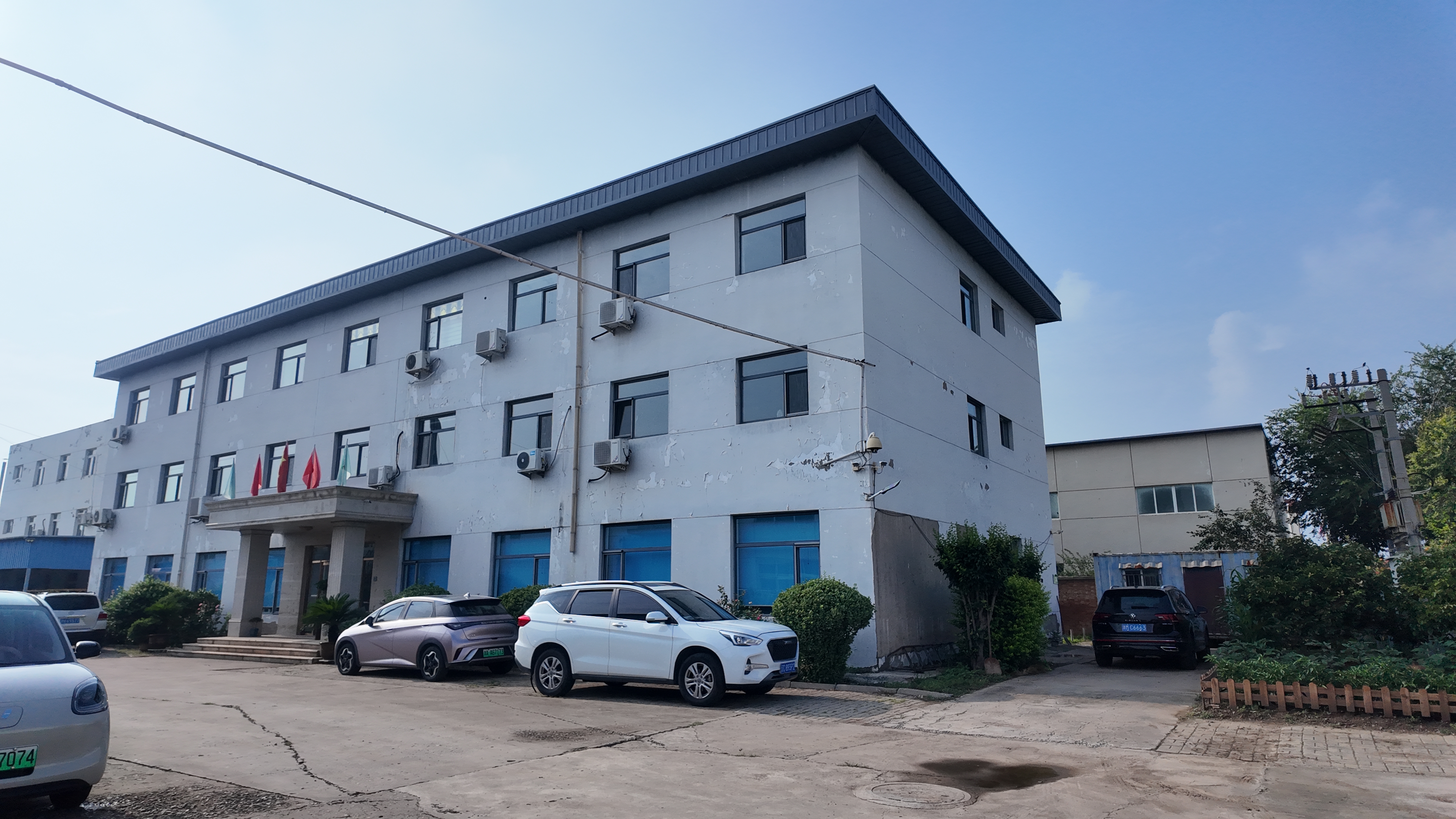
For international medical brands, hospital-equipment distributors, wholesalers, and healthcare manufacturers, OEM hospital bed manufacturing is more than adding a logo to an existing product. A successful OEM program must coordinate brand identity, electrical specifications, accessories, documentation, packaging, quality control, and market requirements from the beginning.
At Tianjin Kangli Medical Instrument, we support overseas partners with customizable hospital beds and medical equipment solutions. Depending on the project, OEM options may include logo placement, product color, voltage and plug configuration, side rails, casters, IV poles, mattress platforms, controllers, accessories, manuals, labels, and export packaging.
This guide explains how to plan an OEM hospital bed project, reduce avoidable delays, and create a product that is commercially differentiated and technically suitable for the target market.
OEM manufacturing means that a supplier produces equipment according to the buyer's brand, technical, design, and packaging requirements.
For hospital beds, OEM customization may cover:
- Brand logo and identification
- Bed frame and ABS panel color
- Electrical voltage and frequency
- Power plug and cable configuration
- Hand controller and nurse control panel
- Side rails and headboard design
- Casters and braking systems
- IV poles and drainage-bag hooks
- Mattress platform and bed dimensions
- Labels, manuals, and warning symbols
- Carton, pallet, and protective packaging
- Inspection documents and shipment records
A strong OEM project begins with a clear technical specification rather than a logo file alone.
| Model | Description | Best for |
|---|---|---|
| OEM | The manufacturer produces a product according to the buyer’s defined specifications and branding | Established brands and distributors |
| ODM | The manufacturer provides an existing design that can be adapted for the buyer | Companies seeking faster market entry |
| Private label | An existing product is sold under the customer’s brand with limited customization | Buyers prioritizing speed and lower development cost |
For most international buyers, a hybrid OEM approach is practical: begin with a proven hospital-bed platform, then customize the visible components, electrical configuration, accessories, documentation, and packaging.

A customized hospital bed can use consistent brand colors, logo placement, control labels, accessories, and packaging. This creates a more professional product line than selling an unbranded standard model.
OEM customization allows a distributor to position the same basic platform for different segments:
- General hospital wards
- Nursing homes
- Rehabilitation centers
- Homecare
- Private clinics
- Long-term care facilities
- Medical-equipment rental companies
A qualified manufacturer can help the buyer avoid unnecessary tooling and engineering costs by using validated structures and existing production processes.
Once the model, color, accessories, and packaging are approved, repeat orders can be produced with greater consistency. This is valuable for distributors building a recognizable product range.
---
Logo customization is one of the most requested OEM options, but the location and method affect both appearance and durability.
- Headboard
- Footboard
- Side rail
- Control panel
- Bed frame
- Mattress platform cover
- Outer carton
- User manual and product label
| Method | Main advantages | Important considerations |
|---|---|---|
| Silk-screen printing | Cost-effective for simple logos | May wear if exposed to aggressive cleaning |
| Laser marking | Precise and durable on suitable materials | Limited color effect |
| Embossing or debossing | Premium integrated appearance | Usually requires tooling |
| Adhesive label | Flexible and economical | Requires suitable adhesive and surface preparation |
| Metal nameplate | Professional and durable | Adds cost and may require additional fixing |
| Molded logo | Highly integrated appearance | Best for larger, long-term production volumes |
Before mass production, the buyer should confirm:
1. Logo artwork in vector format
2. Exact logo dimensions
3. Placement and orientation
4. Color references
5. Surface material
6. Cleaning and abrasion requirements
7. Whether the logo must remain visible after repeated disinfection
For medical equipment, logo design should never obstruct safety labels, operating instructions, emergency symbols, or regulatory information.
---
Color is an important part of medical-brand identity, but it also affects production consistency and maintenance.
- White or warm white
- Light gray
- Blue
- Green
- Beige
- Dark gray
- Custom RAL colors
- Two-tone combinations
ABS bed panels, powder-coated steel frames, aluminum parts, and plastic accessories may not display the same color in exactly the same way. Surface texture, gloss level, lighting, and material composition can influence the final result.
1. Submit the required color reference, such as RAL or Pantone where applicable.
2. Confirm the target gloss level, such as matte, satin, or high gloss.
3. Produce a physical sample.
4. Evaluate the sample under consistent lighting.
5. Approve a signed or documented color standard.
6. Use the approved sample for incoming and final inspection.
For high-volume OEM hospital beds, neutral colors are usually easier to maintain across multiple production batches. Bright or highly specialized colors may require tighter pigment control and can reveal minor variation more easily.
Recommendation: Approve the color on the actual finished component, not only on a computer screen or printed image.

Electrical customization is one of the most important parts of an OEM hospital-bed project. A bed designed for one country may not be suitable for another country without changes to the power system.
The buyer should define:
- Rated voltage
- Frequency
- Plug type
- Power-cord length
- Motor rating
- Control-box configuration
- Battery backup requirements
- Input protection
- Fuse or circuit-protection specifications
- Cable routing and strain relief
Common market requirements may include 100–120 V or 220–240 V systems, as well as 50 Hz or 60 Hz frequency. The exact configuration must be confirmed for the destination market rather than assumed.
Incorrect electrical configuration may cause:
- Motor malfunction
- Overheating
- Controller failure
- Inconsistent lifting performance
- Electrical safety risks
- Shipment rejection
- Delayed certification or installation
The IEC 60601 series is widely used as a reference framework for the safety and essential performance of medical electrical equipment. Applicable requirements depend on the equipment type, intended use, market, and conformity-assessment route. Buyers should confirm the relevant requirements with their compliance specialist or local authority. [standards] [iso]
Before production, confirm:
- Destination country
- Local voltage and frequency
- Plug standard
- Required certifications
- Applicable medical-device classification
- Whether a battery is required
- Emergency lowering requirements
- Electrical diagrams and labels
- User manual language
- Factory inspection and test records
A professional supplier should be able to provide clear electrical documentation for the selected configuration.
---
Accessories influence the product's clinical usefulness, selling price, and after-sales requirements.
- IV pole
- Oxygen-bottle holder
- Drainage-bag hook
- Overbed table
- Bedside cabinet
- Mattress
- Lifting pole
- Patient trapeze
- Bed extension
- Reading light
- Nurse-call interface
- Wall bumper
- Additional control handset
- Battery backup
- Fifth-wheel steering caster
| Application | Common priorities | Suitable accessories |
|---|---|---|
| General hospital ward | Easy cleaning and daily mobility | IV pole, drainage hooks, bedside cabinet |
| Long-term care | Comfort and patient assistance | Lifting pole, overbed table, adjustable backrest |
| Rehabilitation | Transfers and mobility support | Patient trapeze, strong casters, bed extension |
| Homecare | Compactness and simple operation | Lightweight rail system, battery backup, mattress |
| Premium private clinic | Appearance and convenience | Integrated controls, reading light, coordinated furniture |
Accessories should be checked for:
- Load capacity
- Attachment compatibility
- Interference with side rails
- Cleaning requirements
- Storage during transport
- Replacement availability
- Packaging protection
- Compatibility with the bed's electrical system
A low-cost accessory can create expensive after-sales problems if it bends, loosens, becomes difficult to clean, or cannot be replaced locally.
---
Packaging is often treated as an afterthought. In reality, it directly affects damage rates, shipping cost, warehouse handling, and customer satisfaction.
- Protective foam
- Corner guards
- Plastic bags
- Corrugated cartons
- Honeycomb board
- Wooden frames
- Export pallets
- Moisture protection
- Accessory cartons
- Installation labels
- Shipping marks
| Packaging level | Suitable for | Main characteristics |
|---|---|---|
| Standard carton packaging | Short-distance or controlled transport | Lower cost, basic protection |
| Reinforced export carton | International container shipments | Better corner and impact protection |
| Palletized packaging | Warehouse and forklift handling | Faster loading and improved stability |
| Wooden crate or frame | High-value or fragile equipment | Maximum protection, higher cost and weight |
| Customized retail-style packaging | Brand presentation | Strong visual identity, higher design cost |
The packaging design should account for:
- Product weight
- Bed dimensions
- Disassembled components
- Container utilization
- Forklift access
- Moisture and humidity
- Stacking limitations
- Destination-country requirements
- Damage-prone parts such as panels, casters, and controllers
For export shipments, the buyer should confirm whether wood packaging must meet applicable phytosanitary requirements. Packaging markings, documents, and materials should also be reviewed with the freight forwarder.

A structured process reduces misunderstandings and avoids late-stage changes.
Identify:
- Destination country
- End-user environment
- Intended patient type
- Product positioning
- Required certifications
- Expected annual volume
- Target price range
Choose the closest existing model according to:
- Bed dimensions
- Adjustment functions
- Safe working load
- Side-rail design
- Motor configuration
- Controller functions
- Caster system
- Mattress platform
The specification should include:
- Product name and model
- Dimensions
- Materials
- Functions
- Electrical data
- Accessories
- Color
- Logo location
- Packaging method
- Inspection requirements
Request confirmation of:
- Appearance sample
- Color sample
- Logo sample
- Electrical sample
- Accessory sample
- Packaging sample
Depending on the destination market, documentation may include:
- Product specifications
- Risk-management documents
- Electrical test records
- User manual
- Declaration or conformity documents
- Inspection report
- Packing list
- Spare-parts list
- Maintenance instructions
Inspect:
- Product quantity
- Model and configuration
- Logo and color
- Functions
- Electrical operation
- Accessories
- Labels
- Carton condition
- Shipping marks
Agree in advance on:
- Warranty period
- Spare-parts supply
- Troubleshooting procedures
- Remote technical support
- Replacement-part lead time
- Claim-handling process
---
The lowest purchase price does not always produce the lowest total cost. Buyers should evaluate total landed cost, including:
- Product price
- Tooling
- Sample development
- Certification
- Packaging
- Freight volume
- Spare parts
- Warranty claims
- Installation
- After-sales support
- Start with a proven platform instead of developing every part from zero.
- Limit unnecessary color variations during the first production run.
- Standardize accessories across several models.
- Use modular packaging for repeat shipments.
- Confirm electrical specifications early to avoid redesign.
- Request a complete quotation with tooling, testing, packaging, and documentation separated.
- Define acceptable quality limits before mass production.
This approach makes price comparisons more meaningful and helps avoid unexpected charges.
---
To improve user experience and SEO, consider adding the following visual assets:
1. OEM hospital bed customization diagram showing logo, color, voltage, accessories, and packaging.
2. Side-by-side image of standard and customized hospital beds.
3. Voltage and plug configuration chart for major target markets.
4. Packaging structure diagram showing foam, carton, pallet, and accessory placement.
5. Short factory video demonstrating assembly, electrical testing, and final inspection.
6. Accessory compatibility chart for different hospital-bed models.
7. Quality-control checklist image showing the pre-shipment inspection process.
Use descriptive filenames and image ALT text, such as "OEM electric hospital bed with custom logo and accessories."
---
For international buyers, an OEM supplier should offer more than manufacturing capacity. The supplier should also understand product consistency, documentation, communication, and long-term cooperation.
Tianjin Kangli Medical Instrument can support OEM projects with:
- Hospital-bed manufacturing experience
- Logo and appearance customization
- Color and material coordination
- Voltage and plug configuration
- Accessory integration
- Export packaging support
- Sample approval before bulk production
- Quality inspection and technical documents
- Support for brands, wholesalers, and medical-equipment producers
The most effective cooperation begins with a detailed inquiry. Provide the target country, expected quantity, required functions, preferred color, logo file, electrical requirements, accessories, packaging expectations, and delivery schedule.
---
The MOQ depends on the model, degree of customization, logo method, color, tooling requirements, and accessory configuration. A standard platform usually requires less development than a completely new design.
Yes. Common options include printed logos, laser marking, nameplates, embossing, and molded branding. Colors can be customized according to an approved RAL, Pantone, or physical sample.
In many cases, the electrical configuration can be adapted for different markets. Voltage, frequency, plug, motor, controller, and testing requirements must be confirmed before production.
Common accessories include IV poles, drainage hooks, overbed tables, mattresses, lifting poles, oxygen-bottle holders, patient trapezes, batteries, and additional controllers.
Packaging should be selected according to product weight, transport distance, container loading, humidity, handling method, and damage risk. Reinforced cartons, pallets, foam protection, and wooden frames are common options.
Yes. OEM buyers can usually request customized manuals, warning labels, model numbers, cartons, inspection documents, and language versions, subject to technical and regulatory review.
The schedule depends on whether the project uses an existing platform or requires new tooling and engineering. Logo, color, and packaging customization is generally faster than structural redesign or new electrical development.
Provide the destination market, required functions, quantity, voltage, plug type, color, logo, accessories, packaging, certifications, delivery location, and target delivery date.
---
1. [International Electrotechnical Commission — IEC Standards and Medical Electrical Equipment]
2. [ISO — International Standards and Quality Management Resources]
3. [U.S. Food and Drug Administration — Hospital Beds and Bed Safety]
4. [U.S. Food and Drug Administration — Bed Rail Safety and Manufacturer Information]
5. [U.S. FDA — General Hospital Devices and Supplies]
Note: Regulatory obligations differ by destination market and product classification. Buyers should confirm applicable requirements with local regulatory consultants, conformity-assessment bodies, and import authorities.
---
OEM hospital bed manufacturing is a coordinated process involving branding, materials, electrical safety, accessories, packaging, documentation, and quality control. Logo and color create market identity, while voltage and accessories determine practical usability. Packaging protects the product from factory to customer, and a clearly defined inspection process protects both buyer and manufacturer.


