

Views: 132 Author: kangli Publish Time: 2026-10-15 Origin: Site


Content Menu
● Hospital Bed Sample Evaluation: What to Check Before a Bulk Order
>> Why Evaluate a Hospital Bed Sample Before Bulk Production?
● 1. Prepare an Approved Specification Before Testing
● 2. Check Overall Appearance, Finish, and Workmanship
● 3. Measure the Bed and Compare Dimensions
● 4. Test Every Mechanical and Electric Function
● 5. Evaluate the Frame, Joints, and Stability
● 6. Inspect Side Rails and the Mattress as One System
● 7. Verify Casters, Brakes, and Mobility
● 8. Confirm Electrical Configuration and Documentation
● 9. Test Accessories, Assembly, and Serviceability
● 10. Review OEM Branding, Labels, and Manuals
● 11. Evaluate Packaging and Shipping Readiness
● 12. Create a Sample Approval and Corrective-Action Record
● Common Sample-Evaluation Mistakes
● Suggested Visuals for the Article
● FAQ: Hospital Bed Sample Evaluation
>> 1. What should I check first when a hospital bed sample arrives?
>> 2. Should the sample be identical to the bulk-production bed?
>> 3. How many hospital bed functions should I test?
>> 4. Does sample approval confirm regulatory compliance?
>> 5. What if the sample does not match the specification?
>> 6. Should OEM branding be approved on the sample?
>> 7. What records should buyers keep after approval?
● Request an OEM Sample Evaluation
A hospital bed sample evaluation helps international brands, distributors, wholesalers, and medical-equipment manufacturers confirm that a product matches its approved specification before committing to a bulk order. A sample should be checked for more than appearance: buyers need to assess dimensions, materials, mechanical and electrical functions, mattress and rail compatibility, documentation, packaging, and serviceability.
For OEM projects, the sample is also a practical checkpoint for validating customization such as logo placement, color, controls, accessories, labels, and export packaging. This guide provides a structured hospital bed sample inspection checklist to help B2B buyers reduce specification gaps and avoid preventable production or delivery issues.
> Scope note: A sample review is a procurement and quality-control step. It does not replace regulatory approval, clinical assessment, or required conformity testing for the destination market.
How can I start an OEM partnership with your factory?
We recommend starting with an initial technical consultation to review your design specifications, target market, required functions, quantity, and customization needs.
Please contact our dedicated B2B team by email at Yukili90@tjkangli.com or chat with us directly on WhatsApp: +86 136 5207 7555.
WhatsApp:
Let’s build excellence together. Whether you need a quotation for a large-scale hospital project, want to develop a private-label product, or are exploring OEM/ODM opportunities for our 5-function medical bed series, our team is ready to support you from product selection and technical confirmation to production and delivery.
Visit www.klmedbed.com or contact us via WhatsApp to start your customized manufacturing project today.
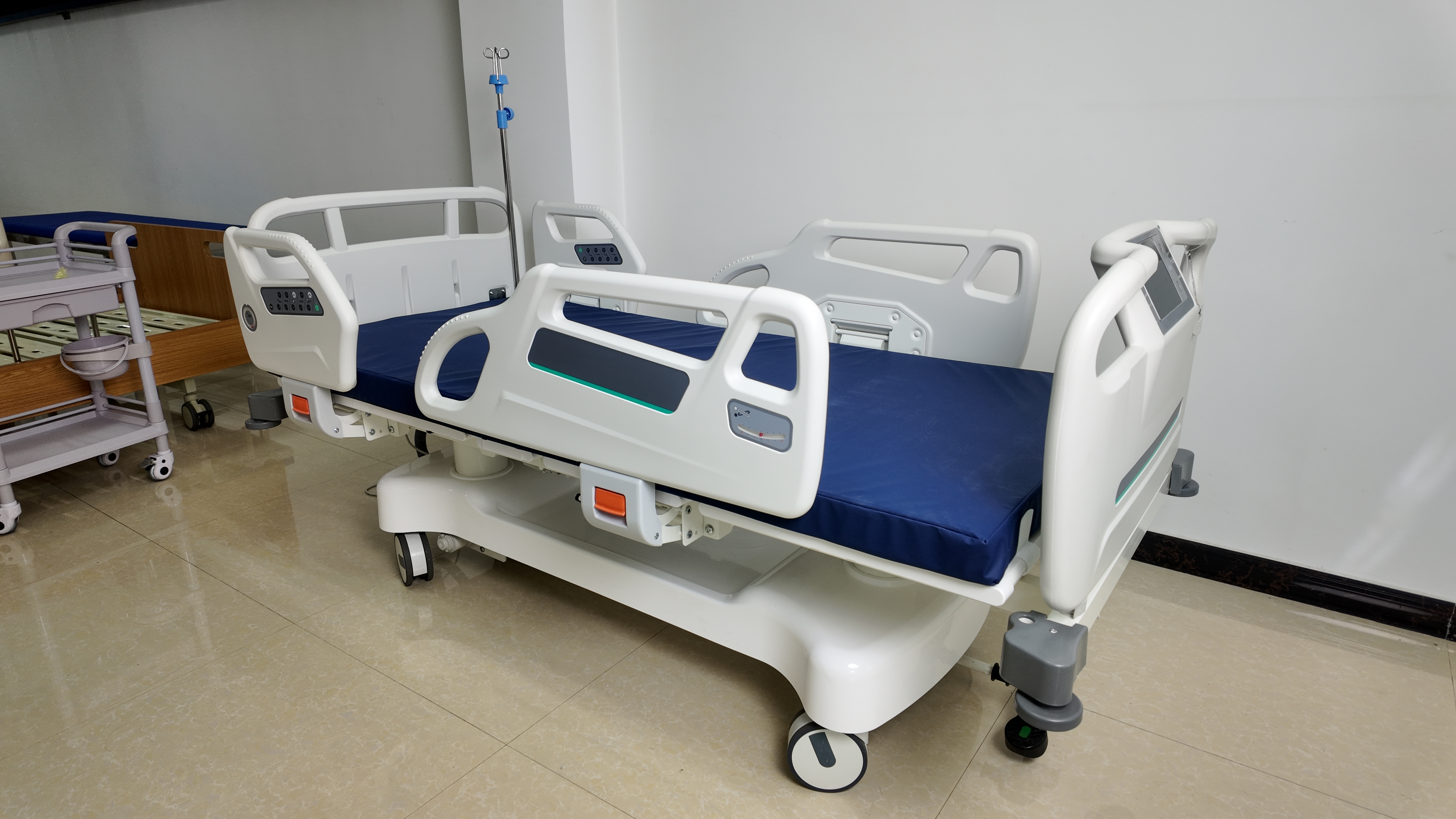
A written quotation and product catalog cannot always show how a finished bed behaves. A sample allows the buyer to verify whether the proposed product matches the intended use and agreed specifications.
Sample evaluation can help buyers:
- Confirm that quoted features are actually present.
- Identify dimensional or configuration differences.
- Test controls, brakes, rails, and adjustment mechanisms.
- Check that the mattress and accessories fit the selected bed.
- Approve OEM branding and colors on finished components.
- Review assembly, cleaning, and maintenance access.
- Establish a clear reference for production and pre-shipment inspection.
A sample is most useful when it represents the same model, materials, accessories, and production method planned for the order. If it differs, document those differences and agree on how they will be resolved.
Before the sample arrives, create a written checklist based on the purchase requirements. Avoid relying on a general catalog description or verbal promises.
Record:
- Product model and revision
- Overall dimensions and mattress-platform size
- Height range and measurement method
- Rated load or safe working load, as specified by the manufacturer
- Manual or electric adjustment functions
- Motor, controller, voltage, frequency, and plug details
- Side-rail type and configuration
- Casters and braking system
- Mattress type, size, and thickness
- Included accessories and spare parts
- Color, logo, labels, and manual language
- Packaging requirements
- Applicable technical and regulatory documents
For each item, mark whether it is required, optional, or not applicable. This keeps the sample review focused and makes supplier comparisons more consistent.
Inspect the sample under good lighting. Compare it with approved drawings, photographs, or a reference sample.
Look for:
- Scratches, dents, cracks, or deformation
- Uneven paint or coating
- Color variation between components
- Sharp edges, burrs, or exposed fasteners
- Loose trims, covers, or panels
- Poorly finished welds
- Misaligned components
- Damaged, missing, or incorrectly positioned labels
- Logo placement and print quality
Cosmetic acceptance criteria should be agreed in advance. Terms such as "good finish" are subjective; photographs, sample panels, or documented defect limits are more useful for bulk production.
OEM tip: Approve colors on actual finished components, not only on screen images or printed color references. Different materials and surface textures can make the same color appear different.
Measure key dimensions and compare them with the approved specification. Use a consistent method and record the measurement conditions.
Common checks include:
- Overall bed length and width
- Mattress-platform dimensions
- Height from floor to platform
- Height from floor to mattress top, with the specified mattress installed
- Side-rail height and length
- Caster diameter
- Clearance beneath the frame
- Folded or disassembled dimensions, if applicable
Ask the supplier to clarify what each dimension represents. For example, platform height and mattress-top height are different measurements. A change in mattress thickness can affect the finished bed height and rail relationship.
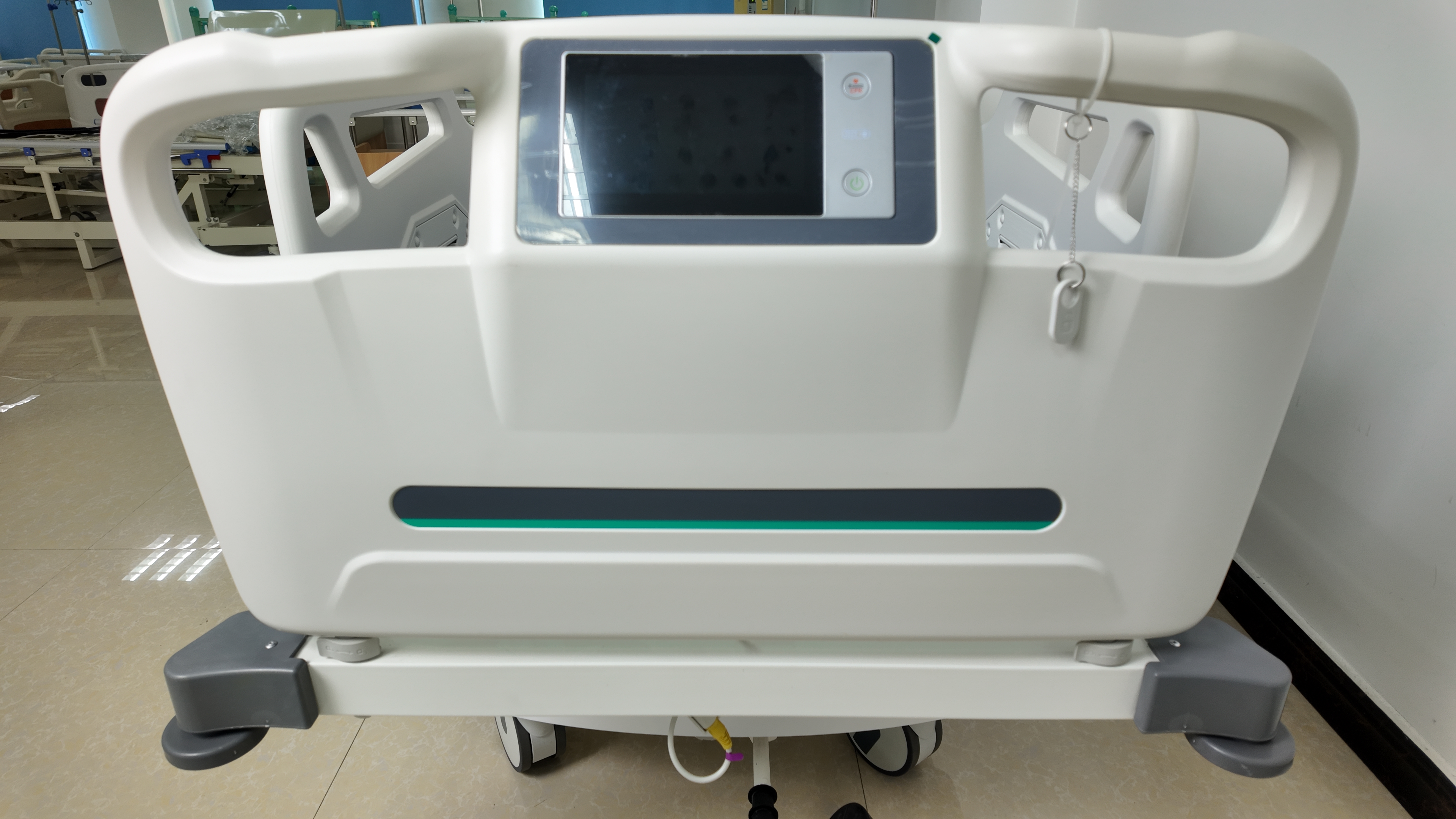
Do not approve a bed because a motor runs or a crank turns. Test each specified movement through its usable range.
Depending on the model, check:
- Backrest adjustment
- Knee or leg-section adjustment
- Overall height adjustment
- Trendelenburg or reverse Trendelenburg, if specified
- Manual crank operation
- Side-rail raising, lowering, and locking
- CPR or emergency-release function, if specified
- Control-panel or handset operation
- Battery operation, if included
For each function, record:
1. Does it move in the correct direction?
2. Is movement smooth and repeatable?
3. Does it reach the specified positions?
4. Is there unusual noise, vibration, or binding?
5. Do controls respond consistently?
6. Are cables protected from pinching or snagging?
7. Does the bed remain stable at the end of travel?
8. Can the mechanism be accessed for service?
Use the manufacturer's instructions when testing. Do not force mechanisms beyond their intended operating range.
The bed frame supports the mattress platform, patient load, adjustment mechanisms, and attached accessories. Inspect the structure in both static and adjusted positions.
Check:
- Frame alignment and levelness
- Weld continuity and finish
- Fastener presence and tightness
- Joint movement and unusual play
- Cross-braces and support points
- Stability during adjustment
- Contact between moving parts
- Caster and actuator mounting points
- Any visible deformation under normal operation
If the supplier provides load ratings or test documentation, check that the documents identify the exact model or applicable product family. Do not infer load capacity from appearance, material, or a similar model.

Side rails should be evaluated with the mattress specified for the project. Confirm that rails move and lock correctly, and review the spaces around the mattress, platform, rail, headboard, and footboard.
FDA guidance recommends individualized assessment when considering bed rails and notes that rails may present hazards, including entrapment or falls, for some users. The bed, rail, mattress, and intended use should therefore be considered together. [FDA: Bed Safety and Bed Rails]
Check:
- Correct rail configuration and orientation
- Secure locking in intended positions
- Smooth release and movement
- No visible damage or sharp edges
- Compatibility with the specified mattress
- Clear documentation for the complete configuration
A sample inspection is not a substitute for required safety evaluation or regulatory testing.
Move the bed on a suitable, level test surface. Check that casters roll and swivel as intended and that brakes hold the bed securely when engaged.
Inspect:
- Caster size and type
- Wheel alignment and free rotation
- Brake engagement and release
- Central locking or directional locking, if fitted
- Attachment to the frame
- Excessive wobble or noise
- Cable clearance during movement
If the bed is intended for a specific facility environment, consider testing it on a representative floor surface. The buyer should specify any special mobility needs, such as narrow corridors or frequent transfers between rooms.

For electric beds, verify that the sample matches the destination-market specification. Check the nameplate and available technical documents for:
- Rated voltage and frequency
- Plug and power-cord configuration
- Motor and control-box identification
- Electrical labels and warnings
- Cable routing and strain relief
- Battery or backup details, if specified
- Instructions for normal and emergency operation
Confirm regulatory and conformity requirements with qualified specialists for the destination market. A supplier's general statement about standards should not be treated as evidence that every version is approved for every country. IEC 60601-2-52 addresses basic safety and essential performance for medical beds within its defined scope; buyers should verify the applicable edition and conformity pathway for their product and market. [FDA Recognized Consensus Standards Database]
Accessories can affect both usability and the final purchase price. Confirm that all quoted items are present and fit the sample.
Possible items include:
- IV pole
- Drainage-bag hooks
- Lifting pole
- Overbed table
- Mattress
- Additional handset
- Battery backup
- Spare casters or other replacement parts
Check that accessories attach securely, do not interfere with rails or controls, and can be removed or cleaned as required. Review assembly instructions and ask whether common service parts can be replaced without specialized tools.
For private-label buyers, use the sample to approve the finished brand presentation.
Confirm:
- Logo artwork, position, size, and orientation
- Color and surface finish
- Product model and identification labels
- Warning and operating labels
- Manual language and version
- Carton markings and shipping labels
- Consistency between product, manual, and packing list
Check that branding does not cover safety information or interfere with required labeling. Retain approved artwork and a dated sample record for repeat orders.
Packaging should protect the bed during the agreed shipment route and support practical unloading and storage.
Inspect or request confirmation of:
- Protective materials around panels, rails, and controls
- Carton strength and closure
- Accessory separation and labeling
- Moisture protection, if required
- Pallet or crate configuration
- Package dimensions and gross weight
- Loading and stacking instructions
- Shipping marks and model identification
If the sample is shipped in a different package from the bulk order, review the production packaging separately before shipment.
A useful sample report records objective findings rather than simply stating "approved" or "rejected."
Include:
| Report field | What to record |
|---|---|
| Product identification | Model, revision, serial or sample number |
| Specification reference | Drawing, purchase specification, approved options |
| Checks performed | Dimensions, functions, appearance, accessories, packaging |
| Result | Pass, fail, or conditional approval |
| Evidence | Photos, measurements, videos, test records |
| Open issues | Description, responsible party, target closure date |
| Approval status | Approved for production, rework required, or resample required |
If a sample fails, agree on the corrective action and decide whether a revised sample is needed. A conditional approval should list each open item and state whether it must be closed before production.
- Testing a sample that is not the quoted model or final configuration
- Measuring the platform without specifying the mattress
- Checking appearance but not operating each function
- Ignoring brakes, rails, accessories, or cable routing
- Accepting undocumented changes after sample approval
- Failing to save photos, measurements, and approval records
- Assuming a sample inspection proves regulatory compliance
- Ordering in bulk before corrective actions are closed
- Annotated inspection photo: Label frame, motors, controls, rails, brakes, and mattress platform.
- Dimension diagram: Show platform height versus mattress-top height.
- Sample approval workflow graphic: Specification → sample → evaluation → corrective action → approval → bulk production.
- Short demonstration video: Show each adjustment, brake operation, rail locking, and accessory installation.
Start by confirming the model, revision, configuration, and included accessories against the purchase specification. Then perform visual, dimensional, functional, and documentation checks.
Ideally, it should be representative of the approved production configuration. Any differences in materials, components, branding, or packaging should be documented and agreed before approval.
Test every function specified for that model, including each motorized or manual adjustment, control, rail mechanism, brake, and emergency feature where applicable.
No. Sample approval is a procurement quality-control step. Buyers should separately confirm required testing, registration, labeling, and conformity documentation for the target market.
Record the discrepancy with measurements or photographs, request corrective action, and determine whether a revised sample is needed. Do not rely on verbal assurances for changes that affect the approved configuration.
Yes. Check logo placement, color, labels, manuals, and carton markings before production. Confirm that branding does not obscure required safety or product information.
Keep the approved specification, drawings, sample photos, inspection report, test results, corrective-action records, and written approval. These become useful references for production and pre-shipment inspection.
- [U.S. FDA — A Guide to Bed Safety: Bed Rails in Hospitals, Nursing Homes, and Home Health Care]
- [U.S. FDA — Recognized Consensus Standards Database: IEC 60601-2-52]
Tianjin Kangli Medical Instrument supports overseas brands, wholesalers, distributors, and manufacturers with hospital-bed OEM projects. Share your target market, bed specification, branding requirements, accessories, and expected order volume to discuss sample preparation and a bulk-order evaluation plan.


