

Views: 136 Author: kangli jh Publish Time: 2026-11-19 Origin: Site


Content Menu
● Fixed Padded or Sling vs. Tension-Adjustable Backrests
● OEM Wheelchair Backrest Specification Checklist
● Which Test Documents Should You Request?
● Four Checks Before You Approve the Sample
>> Can I quote both options on the same wheelchair frame?
>> Will an adjustable backrest change the folding width?
>> Should I request a wipe-clean cover or a breathable textile?
>> Does an adjustable backrest affect MOQ or lead time?
● Request an OEM Backrest Configuration Quote
How can I start an OEM partnership with your factory?
We recommend an initial technical consultation to review your design specifications. Please contact our dedicated B2B team at [Yukili90@tjkangli.com] to discuss your product requirements.
Let’s build excellence together. Whether you need a quote for a large-scale project or want to explore private labeling opportunities for our 5-function medical bed series, we are here to support your success. Click here www.klmedbed.com to connect with our B2B team and start your customized manufacturing journey today.
Choose a fixed padded or sling backrest when a fixed support surface meets the product brief. Specify a tension-adjustable backrest when you want separate sections that can be tightened or loosened. Padding and adjustability are separate choices, and a single backrest can have both.
For an OEM folding manual wheelchair, approve the backrest on the proposed frame before placing a production order. Check how it mounts, whether it folds in the intended configuration, how the upholstery is cleaned, and which parts can be replaced.
A fixed sling is an upholstery panel. A padded version adds cushioning where specified. A tension-adjustable design uses adjustable webbing, typically arranged in sections. An example of a design that combines adjustable straps, foam, and a cover is the Sunrise Medical JAY GO back.
| Buying decision | Fixed padded or sling backrest | Tension-adjustable backrest |
|---|---|---|
| Support surface | Specify the fabric panel, attachment, and any padding. | Specify which strap sections adjust and how they stay in position. |
| Folding and packing | Check the folded chair with the selected upholstery installed. | Check strap ends, closures, and padding for clearance when the chair is folded and packed. |
| Cleaning and service | Request care instructions and a replacement upholstery part number. | Ask which covers, straps, and hardware can be serviced or ordered separately. |
| Quote comparison | Request a baseline quote for the chosen frame and upholstery. | Request a separate quote on the same frame, with sample and production terms. |
If the buyer is also considering a rigid contoured back, ask how its mounting hardware affects folding and whether it must be removed for transport. Mounting and removal are relevant to the Motion Composites comparison of solid and upholstered backs.
Use these eight items in your tech pack or request for quotation. Ask the supplier to fill in the figures and identify any options that require a different frame, part, or sample.
| Specify | What to put in the RFQ |
|---|---|
| 1. Construction and attachment | Backrest type, back-cane spacing and tube diameter, mounting positions, and included sleeves, straps, brackets, or fasteners. |
| 2. Dimensions and fit | Seat widths to cover, finished backrest height and its measurement point, and clearance around push handles and folding hardware. |
| 3. Padding and inner layers | Foam type and thickness if padding is needed, lining requirements, and how the approved sample will be identified. |
| 4. Cover and cleaning | Fabric or cover specification, color, seam and closure details, and whether the cover is removable. Request model-specific care instructions and evidence for any cleaning or material-performance requirement. |
| 5. Tension adjustment | For an adjustable design, list strap count, width, spacing, closure type, and which sections can be adjusted. Agree on how the supplier will check that straps stay in position. |
| 6. Folding and packing | Confirm whether the chair must fold with the backrest installed, the target folded width, and the carton dimensions and units per carton for each option. |
| 7. Branding | Logo position, artwork revision, application method, and sample approval criteria. Check placement on the fitted and folded chair. |
| 8. Replacement parts | Ask for part numbers, compatible models and seat widths, and separate pricing for the covers, straps, hardware, or complete assembly offered as spares. |
For a reference point, Kangli's folding aluminum alloy manual wheelchair lists an Oxford cloth and mesh backrest, a 460 mm seat width, a 460 mm backrest height, and a 300 mm folded width. Ask for the back-cane dimensions and compatibility of your preferred backrest on the exact frame you plan to order. For options such as upholstery and branding, see Kangli's private-label wheelchair customization guide.
Back support and attachments. ISO 16840-3:2022 covers static, impact, and repetitive load strength testing for wheelchair postural support devices and their attachment hardware. The method uses standardized test fixtures. Ask which assembly and mounting parts the report covers, then check fit and folding separately on your wheelchair sample.
Complete wheelchair. If your specification requires strength evidence for the complete chair, ask for the applicable model and configuration. ISO 7176-8:2014 addresses static, impact, and fatigue strength for wheelchairs.
Resistance to ignition. ISO 16840-10:2026 sets requirements and a test method for assessing how relevant postural support components resist ignition from a smouldering cigarette equivalent. For U.S. projects that reference FDA-recognized standards, the FDA recognition entry for ISO 16840-10 lists the 2021 second edition, corrected in January 2022. Confirm which edition your destination market or contract calls for and whether the report covers the proposed cover, foam, and assembly.
If a supplier changes the cover, foam, mounting, or strap design after sample approval, ask it to identify the change and check whether the existing report still covers the revised configuration.
 |  |  |
Fit it to the intended frame. Check the mounting points, dimensions, and clearance around the push handles. On an adjustable sample, review how the straps are set and secured.
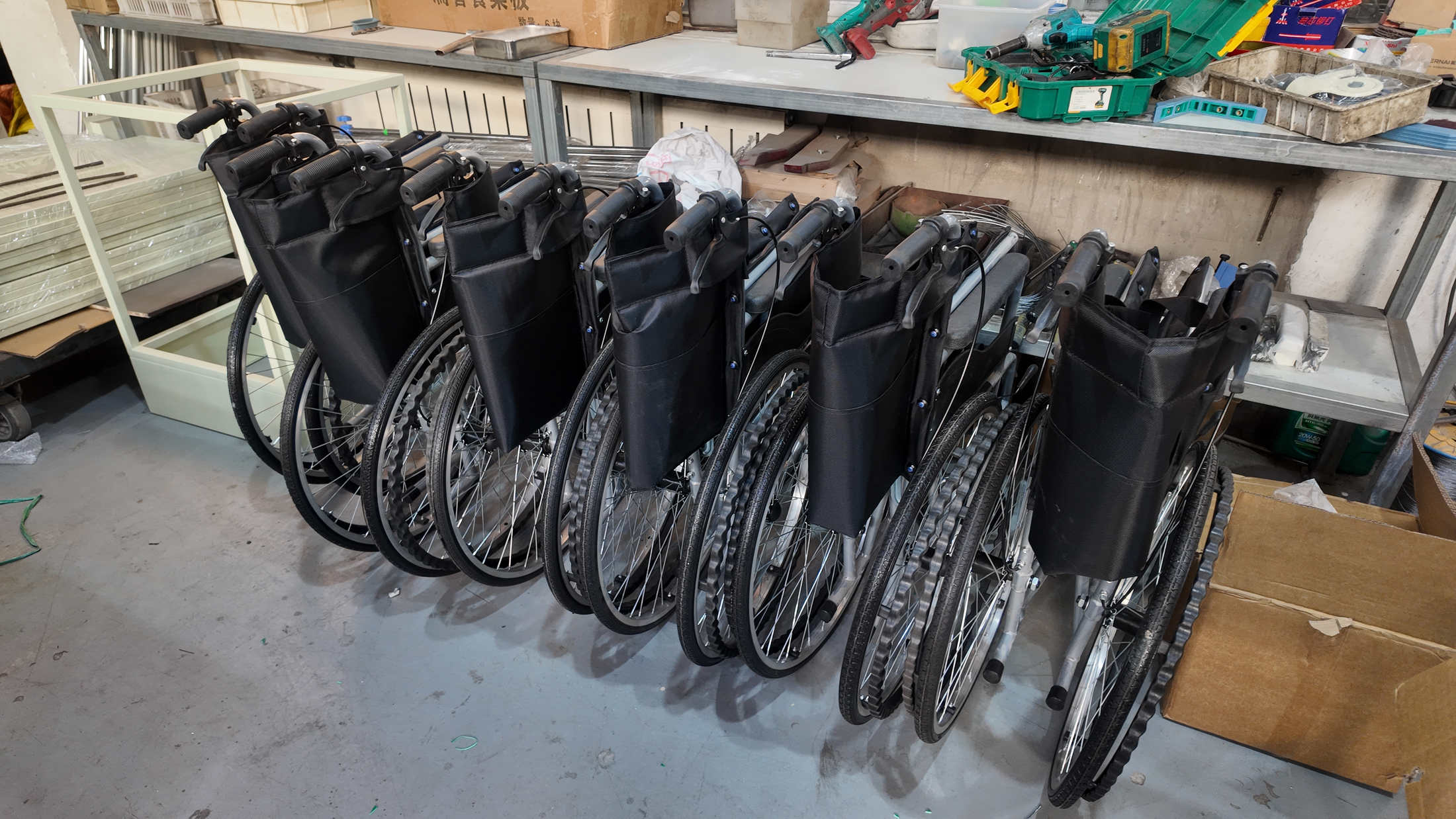
Fold and pack the actual chair. Measure the folded width in the intended shipping configuration. Record whether the backrest stays installed and confirm the outer carton dimensions for each option.
Review the cleaning instructions and spare parts. Confirm the approved care method for the exact cover and ask which parts your service team can order separately.
Record the approved configuration. Save the part numbers, materials, revision, and sample photos. Ask the supplier to flag changes before production so you can review fit, packing, and test evidence again when needed.
Ask the supplier to confirm the back-cane interface and seat-width compatibility for each option first. Then request two quotes on the same frame, order quantity, and delivery terms so you can compare the backrest cost.
The result depends on the frame and the installed straps, sleeves, and padding. Measure both versions when folded and confirm the packed dimensions before you compare freight.
Start with your channel's cleaning routine and the cover characteristics you need. Ask for the exact material and model-specific care instructions. Request evidence for any water-resistance or cleaning-compatibility requirement written into the order.
Ask for a quote by model and backrest configuration. Request the sample cost and timing, production MOQ and lead time, any setup charges, and the availability of replacement parts.
 |  |
Send your model or frame drawing, seat width or size range, preferred backrest, destination market, and estimated order quantity. Include any specific upholstery, folding, cleaning, or test requirements. Ask Kangli to confirm compatible options, available material and test documents, sample terms, and a bulk quote for each feasible configuration.
Sunrise Medical JAY GO backhttps://www.sunrisemedical.com/seating-positioning/jay/wheelchair-backs/go-back
Motion Composites comparison of solid and upholstered backshttps://www.motioncomposites.com/en_intl/community/blog/tips-and-tricks/solid-vs-upholstery-backs
ISO 16840-3:2022https://www.iso.org/standard/79160.html
ISO 7176-8:2014https://www.iso.org/standard/64902.html
ISO 16840-10:2026https://www.iso.org/standard/93531.html
FDA recognition entry for ISO 16840-10https://www.accessdata.fda.gov/scripts/cdrh/cfdocs/cfStandards/detail.cfm?standard__identification_no=43869


