

Views: 236 Author: kangli Publish Time: 2026-11-20 Origin: Site


Content Menu
● What a Hospital Ward Bed Package Quote Should Include
● Define the Ward, User, and Target Market First
● Specify the Bed Configuration, Not Just the Bed Type
● Treat the Mattress and Bed as a Compatible System
● List Bedside Equipment as Separate Quote Lines
● OEM and Private-Label Details to Include in Your RFQ
● How to Compare Hospital Bed Package Quotes Fairly
● A Practical RFQ Template for Bed Packages
● From Quote to Sample: A Simple Review Workflow
>> 1. Confirm the quotation scope
>> 2. Approve the configuration
>> 3. Evaluate representative samples
>> 4. Confirm documents and labeling
>> 5. Freeze the approved specification
● Request a Hospital Bed Package Quote from Tianjin Kangli Medical
>> What should be included in a hospital ward bed package quote?
>> How do I make sure the mattress fits the hospital bed?
>> What information should I provide for an OEM bed package quote?
>> Should I request a sample before placing a bulk order?
>> How can I compare quotes from different hospital bed suppliers?
>> Which standards apply to medical beds?
>> Can bedside cabinets and overbed tables be included in an OEM package?
We recommend an initial technical consultation to review your design specifications. Please contact our dedicated B2B team at [Yukili90@tjkangli.com] to discuss your product requirements.
Requesting a quote for hospital ward bed packages is not simply a matter of asking for a bed price. A complete quotation may need to cover the bed frame, mattress, side rails, bedside cabinet, overbed table, electrical options, spare parts, packaging, documentation, and delivery terms. For overseas medical equipment brands, wholesalers, and manufacturers, defining these details clearly helps suppliers prepare comparable proposals and reduces avoidable changes after sampling.
At Tianjin Kangli Medical Instrument, we support OEM discussions for international partners. In our experience, the most productive quote requests begin with the intended market and use case, then describe the required configuration and commercial assumptions. A short but structured brief gives a manufacturer a better basis for recommending a package, identifying compatibility questions, and estimating production requirements.
This guide explains what to include when requesting a hospital bed package quote, how to compare beds and mattresses as a complete system, and which questions to ask an OEM supplier before moving to samples or production.

The phrase "complete bed package" can mean different things to different suppliers. One quotation may include only a bed and mattress; another may include a bedside cabinet, IV pole, delivery, or assembly. Ask suppliers to itemize the package instead of relying on the package name.
A quote request should distinguish between:
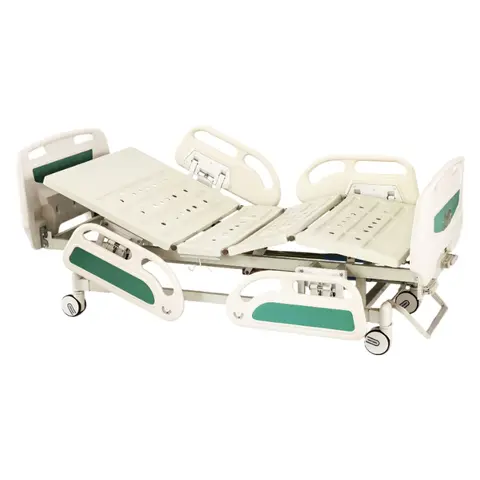
- Core bed: Manual, semi-electric, or fully electric; adjustment functions; safe working load; overall and mattress-platform dimensions.
- Mattress: Type, dimensions, thickness, cover, fire-safety specifications where applicable, cleaning guidance, and compatibility with the bed.
- Bedside equipment: Bedside cabinet, overbed table, IV pole, lifting pole, or other requested items.
- Configuration options: Side rails, handset, castors, brakes, battery backup, finish, and accessories.
- Commercial terms: Minimum order quantity, sample cost, lead time, payment terms, packing, shipping terms, and quote validity.
- Documents and support: Product drawings, instructions, inspection records, applicable conformity documentation, spare-parts information, and warranty terms.
Ask for the price of each line item, plus the price of the complete package. This helps you compare suppliers fairly and adjust the package without requesting a completely new quotation.
Before asking for prices, explain where the package will be used and who it is designed to serve. A general medical ward, rehabilitation unit, long-term-care facility, and home-care channel may need different bed functions and bedside equipment.
Include the following details in your brief:
1. Intended setting: General hospital ward, rehabilitation, long-term care, or another defined environment.
2. User profile: Adult or pediatric use, typical patient needs, and any relevant weight or mobility considerations.
3. Destination market: Country or region where the product will be sold or used.
4. Product positioning: Entry-level, mid-range, premium, or project-specific package.
5. Sales channel: Hospital project, distributor catalog, private-label brand, or wholesale supply.
6. Quantity assumptions: Sample quantity, estimated first order, and likely annual demand, if known.
The destination market matters because product classification, required documentation, labeling, and applicable standards can differ. Do not assume that a supplier's general statement about certification automatically covers every model, accessory, configuration, or market. Ask for documentation relevant to the exact product and intended route to market.
For adult medical beds, IEC 80601-2-52:2026 is the current published edition listed by ISO and IEC. The standard's scope includes adult medical beds, including manual and electrical beds, with or without adjustable functions. Pediatric medical beds are addressed separately by IEC 80601-2-89:2025. Confirm the applicable requirements with your regulatory specialist or conformity-assessment partner for the destination market. [ISO, IEC 80601-2-52:2026] [ISO, IEC 80601-2-89:2025]
"Electric hospital bed" is not a complete specification. Suppliers need to understand which adjustments and features matter for the intended ward and price tier.
Describe the requested bed as specifically as possible:
- Adjustment functions: For example, backrest, knee-rest, and height adjustment, if required.
- Operation: Manual, semi-electric, or fully electric.
- Control system: Handset type, control layout, cable arrangement, and any locking or caregiver-control needs.
- Bed platform: Dimensions, construction, and any requested platform style.
- Mobility: Castor diameter or type where specified, individual or central braking requirements, and transport needs.
- Side rails: Required style, length, adjustment method, and compatibility with the mattress.
- Power: Destination-market voltage and frequency, plug type, cable requirements, and any battery backup request.
- Finish and branding: Color, logo location, labels, and any private-label packaging requirements.
If you do not yet have final specifications, say so. A useful RFQ can ask the supplier to quote a recommended standard configuration and list the assumptions clearly. This is better than leaving details unstated and comparing prices that were calculated on different product configurations.

A mattress should not be selected on price or nominal size alone. Its dimensions and thickness must be suitable for the bed platform and side-rail configuration. Ask the supplier to identify the specific compatible mattress options for the quoted bed and to provide the relevant dimensions and product information.
Include these mattress requirements in the RFQ:
- Mattress length, width, and thickness
- Mattress type and intended use
- Cover material and cleaning instructions
- Any required pressure-redistribution or specialty features
- Mattress weight and handling considerations
- Replacement-cover or replacement-mattress availability
- Written confirmation of compatibility with the exact bed model and rail configuration
Avoid asking for broad clinical claims without asking for supporting evidence and clear intended-use information. If a customer requires a specialty mattress, clarify whether it is part of the package, supplied separately, or selected by a clinical team. Compatibility and use should be evaluated in the context of the complete bed configuration.
A practical comparison table can make supplier responses easier to review:
| Package element | Information to request | Why it matters |
|---|---|---|
| Bed | Model, functions, dimensions, load information | Confirms the core product and intended configuration |
| Mattress | Exact size, thickness, type, cover, compatibility | Helps evaluate fit and package completeness |
| Side rails | Style, dimensions, adjustment, compatibility | Clarifies the supplied configuration |
| Bedside cabinet | Dimensions, materials, drawers, castors | Supports storage and room-layout planning |
| Overbed table | Size, adjustment, base design, load information | Makes the accessory specification comparable |
| Electrical items | Voltage, frequency, plug, handset, battery option | Helps assess destination-market suitability |
| Commercial terms | MOQ, lead time, Incoterms, packing, quote validity | Supports purchasing and landed-cost planning |
"Bedside equipment" can include different products depending on the buyer. Name each item and provide a short specification instead of asking for "standard accessories."
Common items to consider include:
- Bedside cabinet: Dimensions, drawer or cupboard layout, material, finish, and castor requirements.
- Overbed table: Tabletop dimensions, height-adjustment range, base design, and requested surface material.
- IV pole: Fixed or removable design, adjustment range, and attachment method.
- Lifting pole or patient helper: Only if needed for the intended bed and setting.
- Additional accessories: Examples may include drainage-bag holders, mattress retainers, or storage components.
Ask the manufacturer to confirm which accessories are included, which are optional, and which require a separate model or attachment. This makes it easier to identify missing items and calculate the true package price.
For an OEM project, the quotation should address more than the product itself. Tell the manufacturer what needs to be customized and which requirements are still under review.
Add relevant details such as:
- Branding: Logo, label artwork, product name, and language requirements.
- Packaging: Neutral export packaging, branded cartons, manuals, labels, or project-specific packing.
- Product configuration: Which parts are fixed and which are optional across the range.
- Documentation: Requested drawings, manuals, inspection records, declarations, and market-specific documents.
- Quality requirements: Inspection checkpoints, acceptance criteria, and approval process for samples.
- Change control: How changes to materials, components, or specifications will be reviewed and approved.
- Commercial outlook: Estimated order quantity and whether you expect repeat orders or multiple configurations.
Mark each requirement as mandatory, preferred, or open for recommendation. That simple distinction helps the supplier identify where it can propose alternatives without changing essential requirements.
The lowest unit price may not represent the lowest-cost package. One supplier may quote a different mattress, exclude a bedside cabinet, or use different assumptions about packaging and delivery. Normalize the quotes before making a decision.
Use this comparison process:
1. Check the configuration: Confirm each supplier quoted the same bed functions, mattress size, rails, and accessories.
2. Compare line items: Separate the bed, mattress, bedside equipment, spare parts, and packaging costs.
3. Review lead time and MOQ: Confirm production timing and whether the quoted price depends on a minimum quantity.
4. Clarify delivery terms: Identify the named delivery point, shipping responsibility, insurance, and other applicable costs.
5. Review documents: Check that requested documents refer to the actual model and configuration.
6. Assess serviceability: Ask about spare parts, replacement mattresses, manuals, and after-sales support.
7. Record assumptions: Keep a written list of what is included, excluded, or pending confirmation.
Copy and complete this outline before contacting suppliers:
Project and market
- Company and contact:
- Destination country or region:
- Intended setting:
- Buyer type: brand owner, distributor, wholesaler, manufacturer, or project purchaser:
- Target product tier:
Bed and mattress
- Bed type and required adjustment functions:
- Bed dimensions or preferred mattress-platform size:
- Side-rail requirements:
- Mattress type, dimensions, and thickness:
- Electrical requirements:
- Requested optional features:
Bedside equipment
- Bedside cabinet specification:
- Overbed table specification:
- Other accessories:
- Required quantities for each item:
OEM and commercial
- Logo and private-label requirements:
- Packaging and language requirements:
- Sample quantity and estimated order quantity:
- Requested delivery term and destination:
- Target delivery schedule:
- Required documents:
- Questions or specifications still open:
Ask the supplier to return an itemized quotation, identify any assumptions, and state which questions must be resolved before sample approval.
A quote is the start of configuration control, not the end of product review. Before approving a production order, align the quoted specification with the sample, documentation, and purchase order.
Review model numbers, accessory list, mattress details, quantities, packaging, and delivery assumptions. Request written clarification for any vague wording.
Ask for product drawings or a configuration sheet where appropriate. Confirm that the bed, mattress, rails, and bedside equipment match the intended package.
Check the visible finish, assembly, controls, adjustment functions, mobility, and accessory fit against the agreed requirements. Record any deviations and agree on corrective actions.
Check that manuals, product labels, packaging artwork, and required market documentation are consistent with the approved configuration. Regulatory review should be based on the destination market and the exact product.
Attach the final specification and approved sample details to the purchase documentation. Define how future changes will be proposed, reviewed, and authorized.
This workflow is especially useful for OEM and private-label programs, where a small change to a component, label, or accessory may affect the buyer's catalog, instructions, or approval process.
A useful quote request gives both sides a shared picture of the product: what the bed includes, which mattress fits it, what bedside equipment is required, where it will be used, and how it will be branded and supplied.
Tianjin Kangli Medical Instrument works with overseas brands, wholesalers, and manufacturers on OEM discussions for medical equipment. To start a project conversation, send your destination market, intended setting, preferred bed functions, mattress requirements, bedside-equipment list, branding needs, estimated quantity, and required documents.
Contact Tianjin Kangli Medical Instrument to discuss your hospital ward bed package and request an itemized OEM quotation.
Ask for a separate price and specification for the bed, mattress, side rails, bedside cabinet, overbed table, requested accessories, packaging, and any other services. Confirm what is included in the complete package total.
Request the exact mattress dimensions and thickness, and ask the supplier to confirm compatibility with the quoted bed model and rail configuration. Do not rely only on a general description such as "standard hospital mattress."
Provide the destination market, intended use, bed functions, mattress requirements, bedside equipment, branding and packaging needs, quantity estimate, delivery basis, and requested documentation.
For many OEM projects, a representative sample or configuration review is a useful step before production approval. Agree in advance on the sample scope, evaluation criteria, and how any changes will be recorded.
Compare quotes only after aligning the product configuration, mattress, included accessories, quantity, packaging, delivery terms, documentation, and lead time. Request itemized prices and written assumptions.
The applicable requirements depend on bed type, intended users, product configuration, and destination market. ISO lists IEC 80601-2-52:2026 for adult medical beds and IEC 80601-2-89:2025 for pediatric medical beds; consult a qualified regulatory specialist to determine the requirements for your specific product and market.
They can be requested as separate quote lines. Provide the desired dimensions, materials, functions, finish, and branding needs so the supplier can quote the items clearly and confirm package compatibility.
2. [IEC Webstore — IEC 80601-2-52:2026]
4. [IEC Webstore — IEC 80601-2-89:2025]


