
Views: 1369 Author: kangli Publish Time: 2026-08-21 Origin: Site


Content Menu
● What Is the Difference Between a Hospital Bed Manufacturer and a Trading Company?
>> Medical Equipment Trading Company
● Hospital Bed Manufacturer vs. Trading Company: B2B Comparison
● Why Direct Cooperation With a Hospital Bed Manufacturer Matters
>> 1. Better Control Over Product Quality
>> 2. More Effective Customization
● The Cost Advantage of Buying Directly From a Factory
>> Total Cost of Ownership May Include:
>> Why the Lowest Quote Can Be Risky
● Production Transparency and Quality Assurance
● Regulatory Documentation: Manufacturer or Trading Company?
● Lead Times, Product Consistency, and Repeat Orders
>> Why Manufacturing Control Improves Supply Stability
>> Recommended B2B Process for Repeat Orders
● Customization Case: Grey Bedhead and Market Positioning
● When Should You Choose a Trading Company?
● When Should You Choose a Hospital Bed Manufacturer?
● A 7-Step Supplier Verification Process
>> Step 1: Verify the Legal Company Name
>> Step 2: Confirm the Factory Address
>> Step 3: Review the Product Specification
>> Step 5: Conduct Quality Inspection
>> Step 6: Clarify Commercial Terms
>> Step 7: Establish a Long-Term Quality Agreement
● Why Consider Tianjin Kangli Medical Instrument Co., Ltd.?
● Visual Content Recommendations
>> Factory and Production Image
>> Manufacturer vs. Trading Company Infographic
>> Hospital Bed Quality Inspection
>> Custom Grey Bedhead Product Image
>> 1. Is Tianjin Kangli a hospital bed manufacturer or a trading company?
>> 2. What is the main advantage of buying directly from a manufacturer?
>> 3. Are hospital beds from trading companies always lower quality?
>> 4. Can Tianjin Kangli customize hospital beds?
>> 5. Why is ISO 13485 important for medical-equipment suppliers?
>> 6. What information should I include in an RFQ?
>> 7. Should B2B buyers order a sample first?
>> 8. Which is better for a hospital project: a manufacturer or a trading company?
When hospitals, nursing homes, distributors, and medical-equipment importers source hospital beds internationally, they often face an important question: Should you work directly with a hospital bed manufacturer or buy through a trading company?
For buyers comparing suppliers, the difference affects more than the purchase price. It can influence product quality, customization, lead times, technical support, spare-parts availability, regulatory documentation, and long-term supply stability.
As a professional hospital bed manufacturer in China, Tianjin Kangli Medical Instrument Co., Ltd. provides medical beds, electric hospital beds, manual hospital beds, patient transfer equipment, medical trolleys, cabinets, wheelchairs, and other hospital furniture for healthcare projects and distributors. Public supplier profiles identify Tianjin Kangli as a medical-equipment manufacturer with a product range covering manual and electric medical beds and related hospital furniture.
This guide explains the key differences between a hospital bed factory and a trading company, and why direct cooperation with a manufacturer may be the better B2B purchasing strategy.
How can I start an OEM partnership with your factory?
We recommend an initial technical consultation to review your design specifications. Please contact our dedicated B2B team at [Yukili90@tjkangli.com] to discuss your product requirements.
Let’s build excellence together. Whether you need a quote for a large-scale project or want to explore private labeling opportunities for our 5-function medical bed series, we are here to support your success. Click here www.klmedbed.com to connect with our B2B team and start your customized manufacturing journey today.
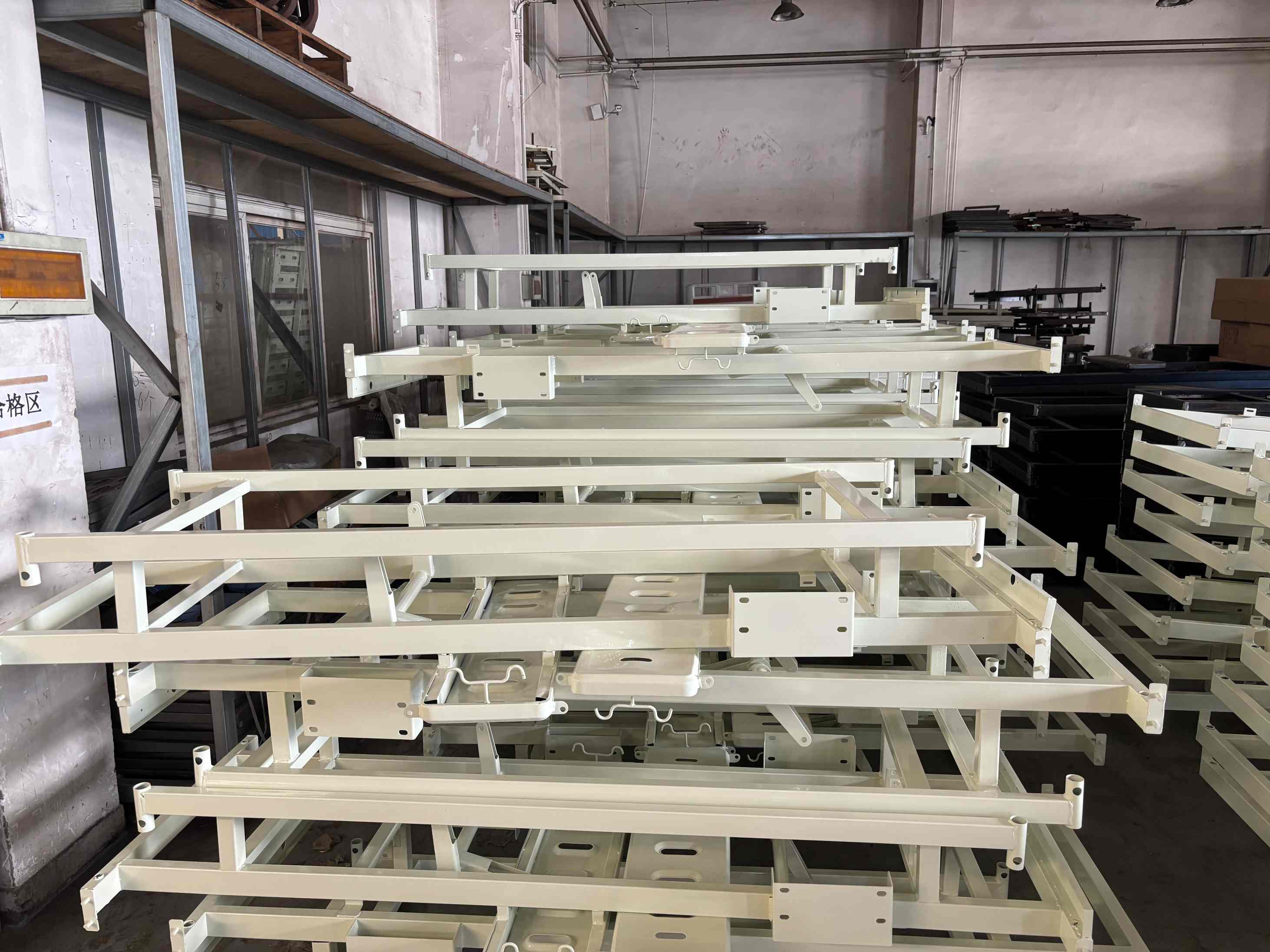
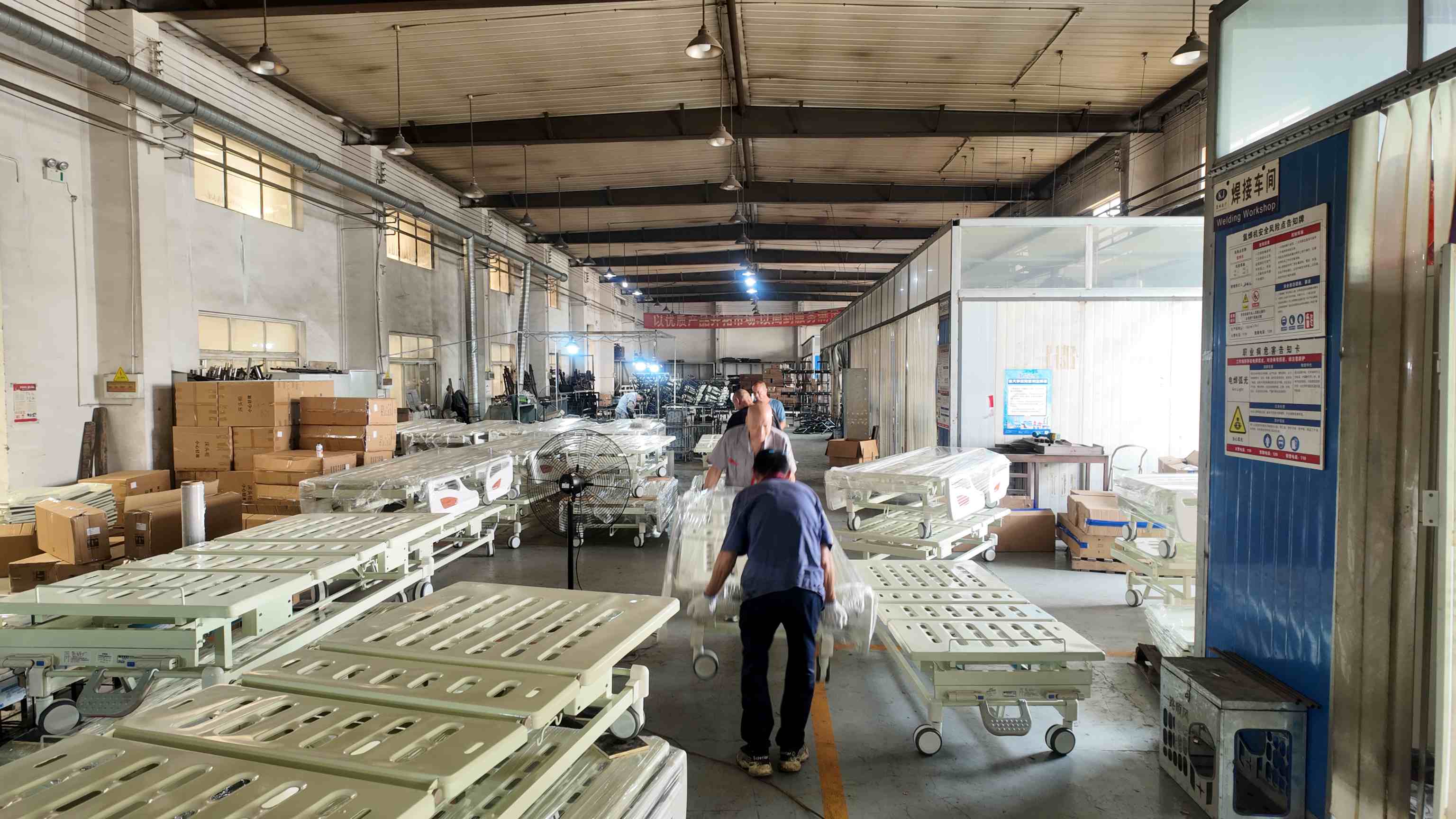
A manufacturer typically operates or directly controls production facilities, assembly lines, quality-control procedures, engineering resources, and product documentation.
A hospital bed manufacturer may be responsible for:
- Product design and engineering.
- Raw-material selection.
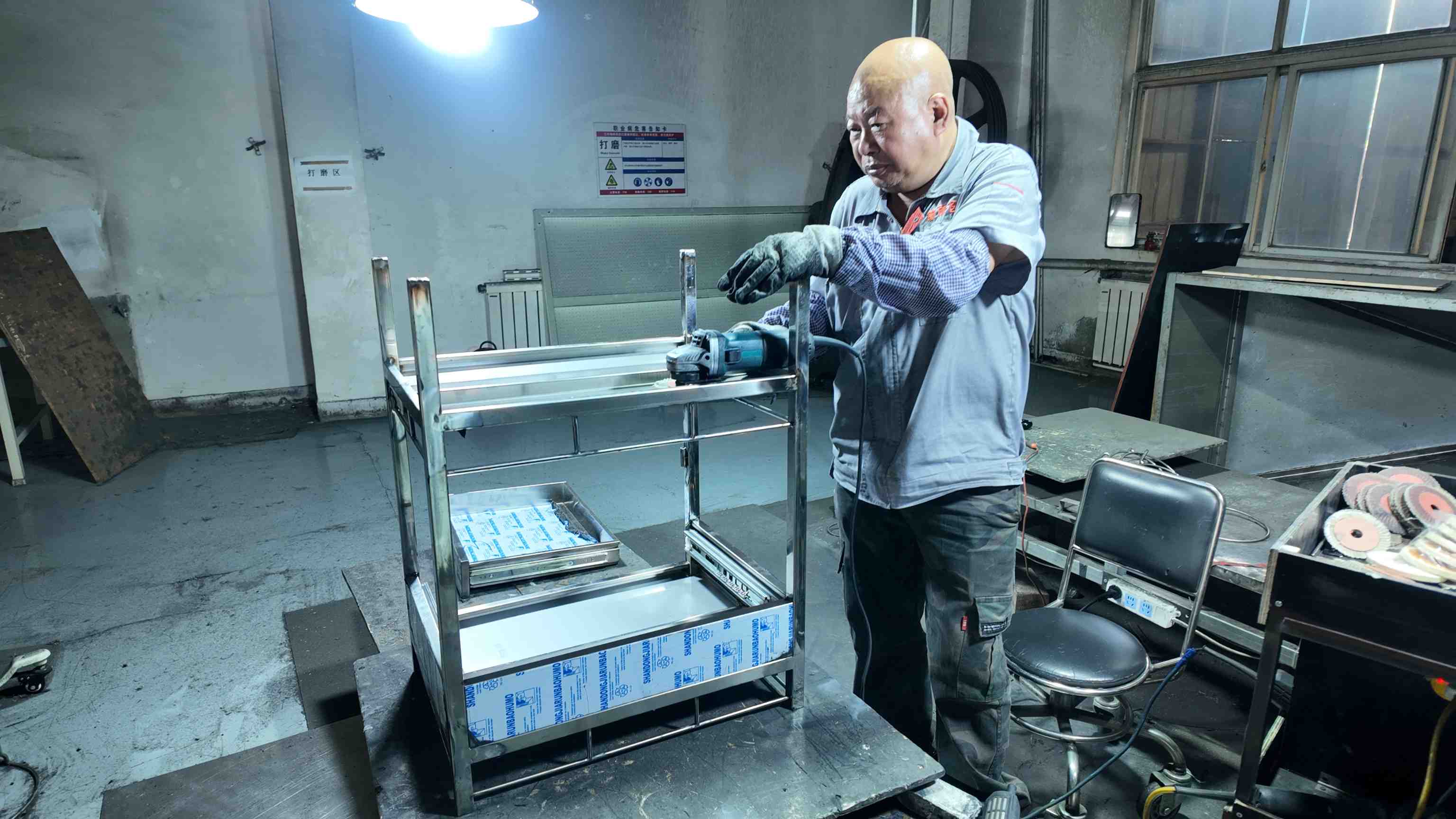
- Metal fabrication and welding.
- Surface treatment and assembly.
- Quality inspection.
- Packaging and shipment preparation.
- Technical documentation and after-sales support.
The manufacturer has direct access to the production process. This makes it easier to verify specifications, investigate quality issues, and implement product improvements.
A trading company usually purchases products from one or more factories and resells them to overseas customers. Some trading companies provide valuable export services, but they may not own the production facility.
A trading company may be useful when buyers need:
- Multiple product categories from different factories.
- Consolidated shipments.
- Local-language communication.
- Export coordination.
- Assistance with supplier comparison.
However, the buyer may have less direct visibility into:
- The actual factory.
- Production scheduling.
- Quality-control procedures.
- Component changes.
- Spare-parts sources.
- Product customization capabilities.
The most important point is not that every trading company is unreliable. The key issue is transparency and responsibility. Buyers should know exactly who manufactures the bed, who controls quality, and who will handle warranty claims.
| Evaluation Factor | Direct Hospital Bed Manufacturer | Trading Company |
|---|---|---|
| Factory visibility | Direct access or factory verification | May depend on third-party factories |
| Product customization | Usually more flexible | Depends on the selected factory |
| Technical communication | Direct with engineering or production team | Often through sales intermediaries |
| Price structure | Fewer intermediary margins | May include additional margins |
| Quality control | Controlled at the production source | Quality may depend on supplier management |
| Lead-time communication | More direct and accurate | May require additional coordination |
| Spare parts | More likely to provide original parts | Availability depends on factory cooperation |
| OEM/ODM support | Usually stronger | Varies by trading company |
| Product consistency | Easier to maintain across orders | May change between factories or batches |
| Best for | Long-term B2B partnerships and repeat orders | Mixed-product sourcing and small consolidated orders |
Medical beds are safety-related products. Quality problems involving the frame, casters, side rails, motors, hand cranks, or bed platform can affect patient and caregiver safety.
Direct cooperation with a manufacturer allows buyers to discuss:
- Steel thickness and frame construction.
- Welding quality.
- Bed-board material.
- Caster specifications.
- Side-rail locking mechanisms.
- Electric motor performance.
- Surface coating and corrosion resistance.
- Packaging and drop protection.
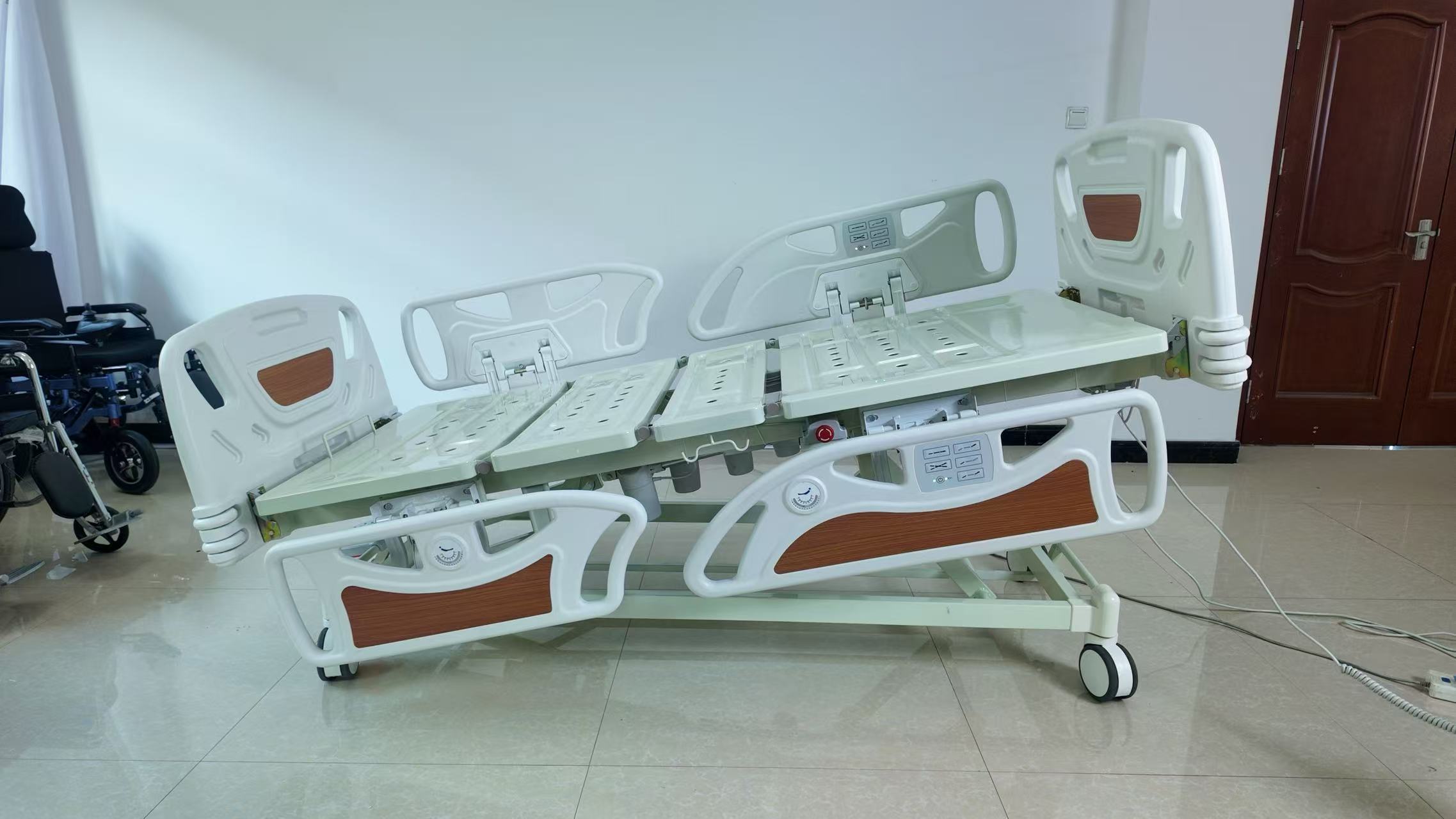
For example, a public product listing for a Tianjin Kangli manual hospital bed describes features including a PE/ABS headboard, lockable mute casters, a stamped cold-rolled bed board, an anti-pinch folding guardrail, and an automatic limit-protection mechanism.
These specifications should always be confirmed against the exact model, but direct factory communication makes this verification more efficient.
Healthcare facilities and distributors often require product modifications for specific markets or projects.
Possible customization requests include:
- Grey, blue, or customized-color headboards.
- Different side-rail designs.
- Alternative caster sizes.
- Customized mattress dimensions.
- Different control-box configurations.
- Patient lifting poles and IV-pole options.
- Customized logos and packaging.
- Different plug standards.
- Multi-language labels and manuals.
- OEM product names and model numbers.
A manufacturer can usually evaluate whether a change is technically feasible, calculate the tooling cost, and confirm its effect on lead time.
A trading company may need to forward every technical request to another factory. This can make communication slower and increase the risk of misunderstandings.
At first glance, a trading company may sometimes offer a competitive price. However, B2B buyers should compare total procurement cost, not just the quoted unit price.
- Product price.
- Export documentation.
- Packaging.
- Inspection fees.
- Shipping and inland transportation.
- Installation support.
- Spare parts.
- Warranty claims.
- Replacement costs.
- Delays caused by unclear communication.
- Regulatory-document preparation.
A direct manufacturer may reduce intermediary costs and provide clearer pricing for repeat orders. Public marketplace listings for Tianjin Kangli products show that pricing can vary according to quantity, model, and configuration, which demonstrates why buyers should request a model-specific quotation rather than rely on a generic online price.
An unusually low offer may result from:
- Thinner steel materials.
- Lower-grade casters.
- Unspecified motors.
- Reduced quality inspection.
- Incomplete accessories.
- Basic packaging.
- Limited warranty support.
- Substitution of components without notification.
The correct comparison is specification against specification, not price against price.
Before placing a hospital-bed order, B2B buyers should request:
1. Factory profile and production photographs.
2. Product technical specifications.
3. Quality-control checklist.
4. Material and component information.
5. Sample inspection report.
6. Packaging specifications.
7. Warranty terms.
8. Spare-parts list.
9. Relevant certificates and test reports.
10. Change-control and complaint-handling procedures.
A quality-management system is especially important for medical-device businesses. ISO 13485 is an internationally recognized quality-management standard designed for organizations involved in the medical-device lifecycle. It emphasizes documented processes, risk management, traceability, corrective actions, and continual control of production activities.
Certification claims should be verified through the certificate issuer and matched to the legal company name, factory address, product scope, and validity period.
---
Regulatory responsibility varies by destination market and product classification. Buyers should not assume that a supplier's general "CE" or "FDA" statement automatically authorizes a product for every market.
Depending on the destination country, buyers may need:
- Product technical files.
- Declaration of conformity.
- Risk-management documents.
- Test reports.
- Quality-management certificates.
- User manuals.
- Labeling information.
- Electrical safety reports.
- EMC test reports for electric models.
- Importer or authorized-representative documentation.
For the United States, medical-device establishments and products may be subject to FDA registration, listing, quality-system, labeling, and other applicable requirements. Buyers should verify requirements directly through official FDA resources and consult a qualified regulatory specialist.
A direct manufacturer can often provide original technical documents faster because the documents are generated or controlled at the production source.
---
Hospitals and distributors often need consistent products over multiple purchasing cycles. A direct manufacturer can generally maintain better control over:
- Bill of materials.
- Component suppliers.
- Assembly procedures.
- Product drawings.
- Quality standards.
- Packaging design.
- Production scheduling.
This is important when a buyer orders the same hospital bed several times. Unapproved changes to a caster, motor, side rail, headboard, or control system can create compatibility and maintenance problems.
Use the following procedure:
1. Approve a reference sample.
2. Confirm the final technical specification.
3. Sign an order with a detailed bill of materials.
4. Define acceptable quality limits.
5. Require written approval for major component changes.
6. Conduct pre-shipment inspection.
7. Record serial numbers or batch information.
8. Keep spare parts for field service.
This process creates a clear quality baseline between the buyer and manufacturer.
A grey bedhead may appear to be a simple cosmetic detail, but it can support a broader product strategy.
For distributors, a consistent grey color may help create:
- A unified hospital-room appearance.
- A modern healthcare brand image.
- Clear product differentiation.
- A premium appearance for nursing homes.
- A consistent catalog and showroom presentation.
The buyer should define:
- Color reference or sample.
- Surface finish.
- Material type.
- Cleaning resistance.
- Logo position.
- Packaging protection.
- Color consistency between production batches.
A manufacturer can typically assess whether the requested color or headboard design requires a new mold, revised tooling, or only a change in material or finishing process.
---
A trading company may be appropriate when:
- You need beds, trolleys, cabinets, and wheelchairs from multiple factories.
- Your order quantity is small.
- You want one supplier to consolidate shipments.
- You require assistance with export procedures.
- You do not have an internal sourcing team.
- Product customization is not a priority.
However, ask the trading company to disclose:
- The actual manufacturer.
- The factory address.
- The product's legal manufacturer.
- The origin of certificates.
- The warranty-responsibility chain.
- The spare-parts source.
- Whether the product may be substituted.
A trading company can create value, but the buyer should understand the additional layer between the factory and the end customer.
---
Direct manufacturer cooperation is generally more suitable when you need:
- Long-term supply.
- Stable product specifications.
- OEM or ODM development.
- Private-label packaging.
- Large or repeat orders.
- Technical customization.
- Direct quality discussions.
- Original spare parts.
- Factory audits.
- Regulatory-document support.
For hospitals, healthcare projects, distributors, and importers, a direct factory relationship can improve communication and reduce uncertainty throughout the product lifecycle.
---
Before signing a B2B contract with any hospital-bed supplier, follow this process:
Check that the quotation, contract, bank account, certificates, and company profile use consistent legal information.
Request a video tour, factory audit, or third-party inspection. Confirm that the production site matches the supplier's stated business scope.
Confirm dimensions, functions, safe working load, motor brand, caster type, side-rail material, mattress size, and accessories.
A sample allows you to inspect usability, assembly quality, packaging, stability, and appearance.
Use an agreed inspection checklist before shipment. Include functional testing for electric adjustment, brake performance, rail locking, and bed stability.
Confirm:
- MOQ.
- Lead time.
- Incoterms.
- Payment terms.
- Warranty period.
- Spare-parts pricing.
- Claims procedure.
- Replacement policy.
For repeat orders, define change notification, inspection rights, complaint response, and recall responsibilities.
Tianjin Kangli Medical Instrument Co., Ltd. presents itself in public supplier profiles as a professional medical-equipment manufacturer with products including medical beds, medical trolleys, cabinets, wheelchairs, and patient-transfer equipment.
Its public product information includes manual beds, electric medical beds, hospital furniture, and related equipment.
For B2B buyers, the potential advantages of working directly with Tianjin Kangli include:
- Direct communication with the production source.
- A broad hospital-furniture product range.
- Potential OEM and configuration support.
- Product consistency for repeat purchasing.
- Simplified coordination for hospital projects.
- Access to original technical information and spare parts.
All product capabilities, certificates, lead times, and customization options should be confirmed for the specific model and destination market before purchase.
---
Placement: After the introduction.
AI image prompt:
`Professional Chinese medical equipment factory producing hospital beds, steel frame welding and assembly area, organized production line, quality inspection staff, clean industrial environment, realistic B2B corporate photography, no visible logos`
Placement: After the comparison table.
AI image prompt:
`Professional B2B infographic comparing a hospital bed manufacturer and a trading company, factory production control versus intermediary sourcing, quality control, customization, pricing, lead time, and after-sales service, clean blue and gray medical design`
Placement: In the quality-assurance section.
AI image prompt:
`Quality inspector testing an electric hospital bed in a modern medical equipment factory, checking side rails, casters, motor adjustment, and frame stability, professional documentary photography, high resolution`
Placement: In the customization section.
AI image prompt:
`Modern electric hospital bed with an elegant grey bedhead and matching grey footboard, adjustable backrest and leg section, clean hospital room, premium medical equipment product photography, soft lighting, no brand logo`
Create a 60–90 second factory verification video showing:
1. Raw-material inspection.
2. Frame welding.
3. Surface treatment.
4. Motor and caster installation.
5. Functional testing.
6. Final packaging.
7. Loading and shipment preparation.
---
Public supplier profiles identify Tianjin Kangli Medical Instrument Co., Ltd. as a medical-equipment manufacturer and list medical beds among its products. Buyers should still verify the production location and manufacturing scope for the specific product being ordered.
The main advantages are better production visibility, clearer technical communication, more customization potential, and stronger control over repeat-order consistency.
No. A trading company may work with qualified factories. However, buyers should identify the actual manufacturer and clarify who controls quality, documentation, warranty service, and product changes.
Customization possibilities depend on the model, order quantity, technical requirements, tooling, and destination market. Discuss headboard color, logo, packaging, mattress size, casters, rails, and electrical specifications before ordering.
ISO 13485 provides a framework for a medical-device quality-management system, including documented processes, traceability, risk management, corrective actions, and production control. Certification details should be independently verified.
Include the bed type, number of functions, dimensions, safe working load, headboard color, side-rail design, motor requirements, mattress specifications, accessories, quantity, destination port, packaging, and required certificates.
Yes. A sample helps evaluate assembly, stability, adjustment performance, appearance, packaging, and compliance documentation before a larger order.
A direct manufacturer is usually preferable when the project requires large quantities, customization, consistent specifications, technical support, and long-term spare-parts supply.
---
> Source note: Company capabilities, certifications, product specifications, and delivery terms should be confirmed directly with Tianjin Kangli Medical Instrument Co., Ltd. for the exact product model and target market.


