
Views: 3679 Author: kangli Publish Time: 2026-08-19 Origin: Site


Content Menu
● Hospital Bed Buying Guide for Distributors: How to Select Reliable Medical Beds for Resale
● Why Hospital Bed Selection Matters for Medical Distributors
● Define Your Target Market Before Buying Hospital Beds
>> Identify the Main Customer Segment
● Choose the Right Hospital Bed Types for Your Distribution Portfolio
● Compare Hospital Bed Specifications Systematically
>> Why Safe Working Load Matters
● Verify Supplier Quality and Regulatory Documents
>> ISO 13485 and Quality Systems
● Evaluate the Hospital Bed Supplier Before Ordering
>> Check the Legal Business Information
>> Confirm Manufacturing Capability
>> Distinguish a Factory from a Trading Company
● Use Samples and Factory Audits to Reduce Distribution Risk
● New Section: Build a Distributor Scorecard
>> What a Strong Supplier Should Demonstrate
● Calculate Total Landed Cost and Resale Margin
● Compare Quotations with a Standard RFQ
● Plan After-Sales Service Before Importing
● Contract and Payment Protection for Distributors
● Recommended Visual Content and AI Image Prompts
>> Product Comparison Infographic
>> Supplier Evaluation Diagram
>> Hospital Bed Warehouse Image
● Hospital Bed Distributor Buying Checklist
● CTA: Request a Distributor-Ready Hospital Bed Quote
>> 1. What type of hospital bed should a distributor stock first?
>> 2. How many hospital bed suppliers should I compare?
>> 3. Is ISO 13485 certification enough?
>> 4. Should I buy directly from a factory?
>> 5. How can I protect my profit margin?
>> 6. What should I inspect before bulk production?
>> 7. Do electric hospital beds need special checks?
A successful hospital bed buying guide for distributors must go beyond product appearance and unit price. Distributors need to evaluate clinical suitability, supplier reliability, regulatory documentation, landed cost, after-sales service, spare-parts availability, and resale potential before placing a bulk order.
Whether you are sourcing manual hospital beds, electric hospital beds, ICU beds, nursing-home beds, or OEM hospital furniture, the right purchasing process can protect your margin and reduce returns, complaints, and compliance risks. This guide explains how medical-equipment distributors can build a reliable product portfolio and choose the best hospital bed supplier for distributors.
How can I start an OEM partnership with your factory?
We recommend an initial technical consultation to review your design specifications. Please contact our dedicated B2B team at [Yukili90@tjkangli.com] to discuss your product requirements.
Let’s build excellence together. Whether you need a quote for a large-scale project or want to explore private labeling opportunities for our 5-function medical bed series, we are here to support your success. Click here www.klmedbed.com to connect with our B2B team and start your customized manufacturing journey today.
Hospital beds are not ordinary furniture. They are patient-support devices used in environments where stability, cleanability, positioning, transfer safety, and durability directly affect daily care.
For distributors, an unsuitable product can create several problems:
- High return rates
- Difficult installation
- Frequent warranty claims
- Unavailable spare parts
- Regulatory delays
- Customer dissatisfaction
- Lower profit margins
- Damage to distributor reputation
A distributor should therefore assess every model from two perspectives:
1. Can healthcare facilities use it safely and effectively?
2. Can the distributor sell, install, service, and support it profitably?
The best hospital bed is not always the model with the most functions. It is the model that matches the target market and can be supported throughout its service life.
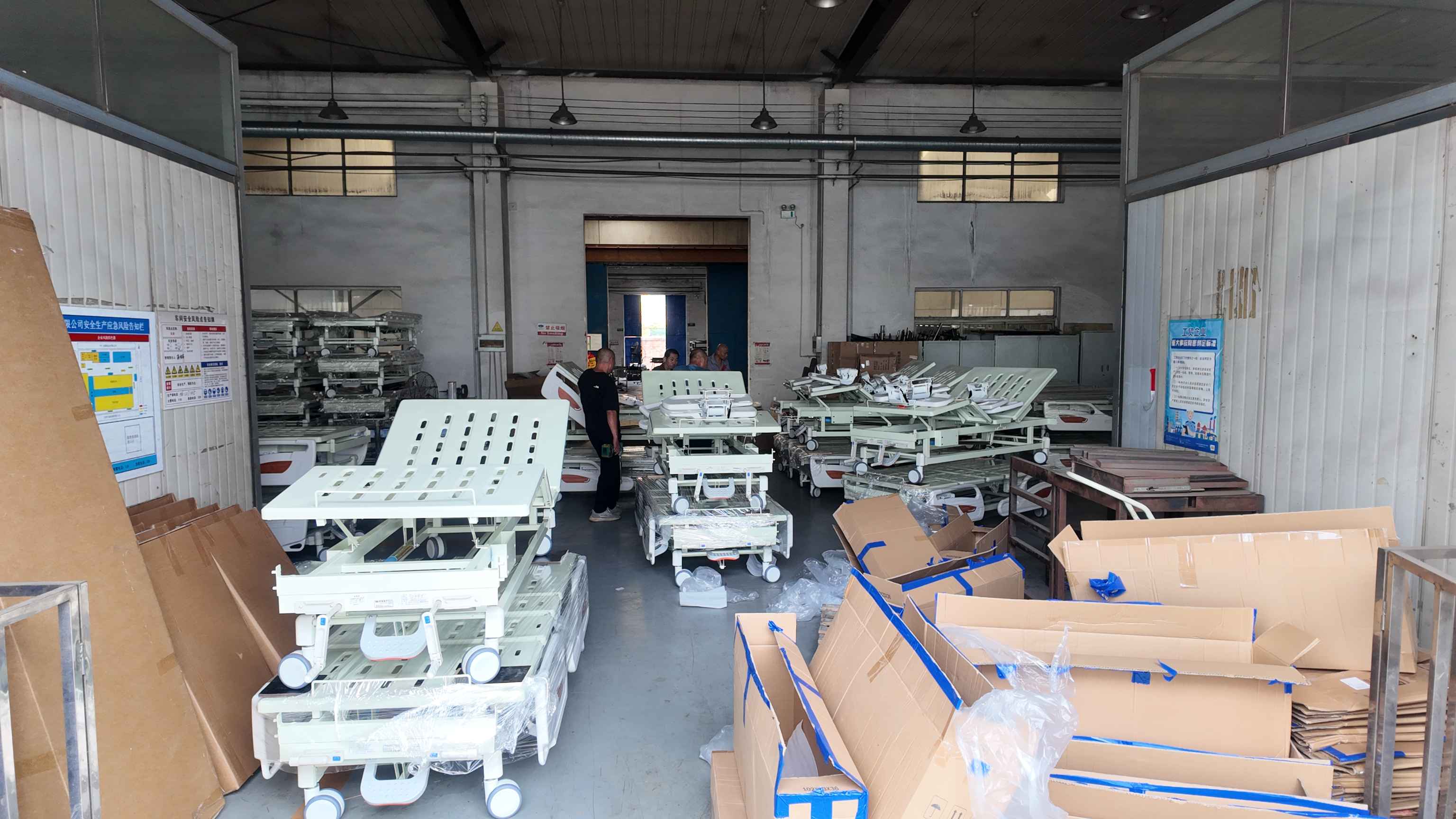
Different customers expect different specifications and prices.
| Customer Segment | Common Requirements | Suitable Product Direction |
|---|---|---|
| Public hospitals | Compliance, durability, tender documents | Manual or electric institutional beds |
| Private hospitals | Appearance, features, service response | Electric or premium manual beds |
| Nursing homes | Low position, comfort, easy operation | Low beds and three-function beds |
| Homecare providers | Compact design, simple controls | Lightweight electric or manual beds |
| Rehabilitation centers | Transfer flexibility, height adjustment | Three-function or electric beds |
| Medical wholesalers | Stable supply and resale margin | Standardized, fast-moving models |
| Government projects | Documentation, volume, delivery | Tender-ready institutional products |
A distributor serving general wards may not need the same product range as a distributor serving ICU projects. Market positioning should come before supplier selection.
Create a clear pricing strategy:
- Entry-level: Basic manual beds for cost-sensitive facilities
- Mid-range: Three-function or entry-level electric beds
- Premium: Electric beds with advanced positioning and accessories
- Specialized: ICU, bariatric, pediatric, or low beds
Avoid building a catalogue with overlapping models that are difficult for sales teams to explain. A focused range usually improves inventory control and customer understanding.
---
Manual hospital beds use hand cranks or mechanical systems.
Advantages:
- Lower purchase cost
- No dependence on electricity
- Simpler maintenance
- Suitable for many general wards
- Easier to stock in markets with limited technical support
Limitations:
- More physical effort for caregivers
- Fewer advanced positioning options
- Potentially lower appeal in premium markets
Manual beds are often suitable for general wards, clinics, nursing homes, and budget-sensitive projects.
Electric hospital beds use motors and a hand controller or side-panel controls.
Advantages:
- Easier patient positioning
- Better caregiver ergonomics
- More attractive for hospitals and private facilities
- Greater flexibility for rehabilitation and long-term care
Limitations:
- Higher purchase price
- Requires electrical and motor maintenance
- Needs reliable spare parts
- May require battery backup or emergency operation
Distributors must confirm voltage, plug type, electrical safety documentation, and local service capability before importing electric models.
ICU beds may include:
- Electric height adjustment
- Backrest and knee adjustment
- Trendelenburg and reverse Trendelenburg
- CPR release
- Integrated scales
- X-ray cassette access
- Central locking
- Extensive accessory compatibility
ICU beds should not be sold merely as "premium hospital beds." They must be evaluated against the clinical requirements of critical-care departments and relevant destination-market standards.
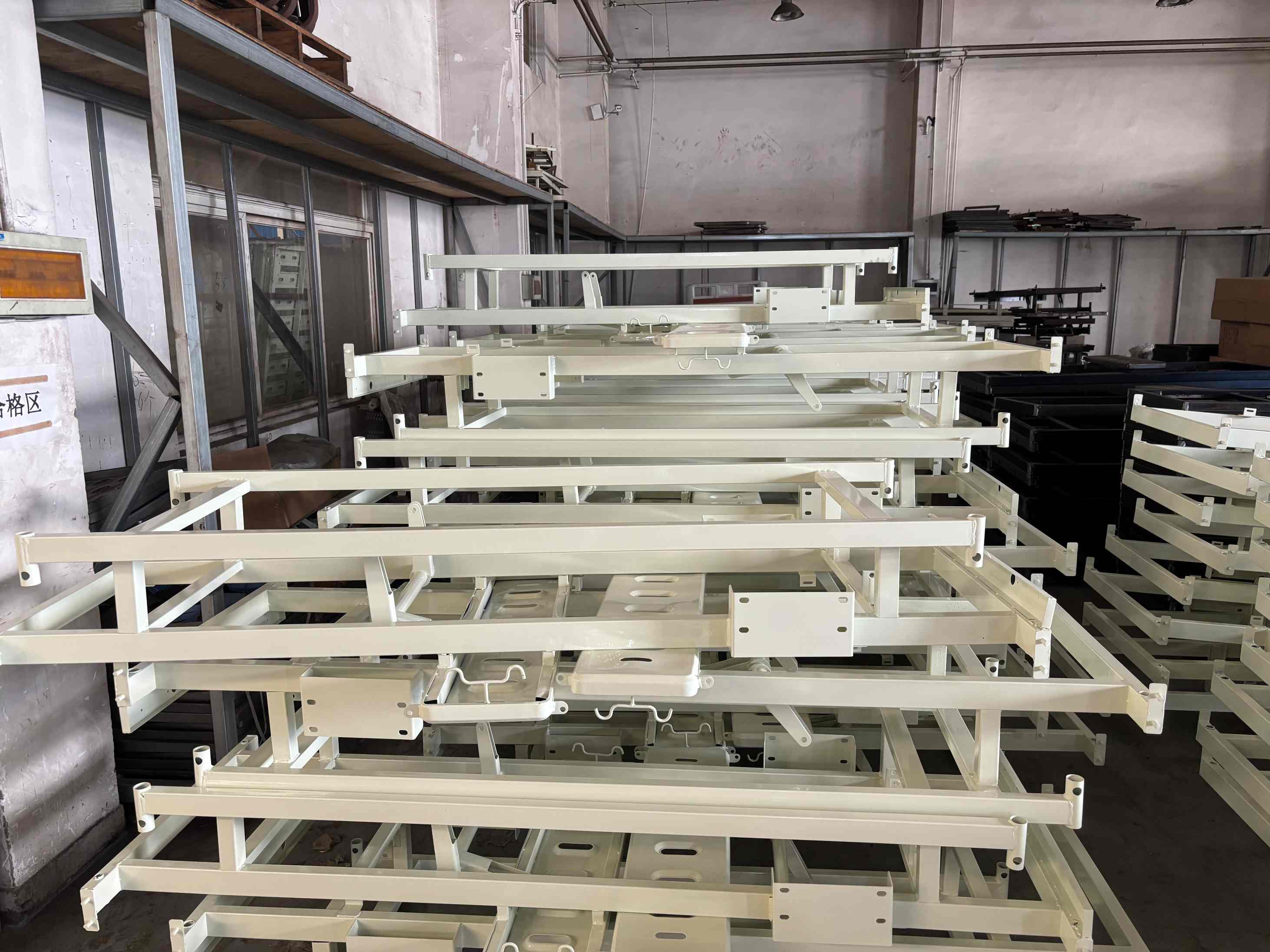
A distributor should use a technical comparison sheet rather than relying on brochures.
| Specification | What to Check |
|---|---|
| Bed dimensions | External and internal dimensions |
| Safe working load | Patient plus mattress and accessories |
| Adjustment functions | Manual, electric, hydraulic, or pneumatic |
| Mattress platform | Material, sections, ventilation, compatibility |
| Side rails | Type, locking system, gap dimensions |
| Casters | Diameter, material, braking and maneuverability |
| Frame | Steel grade, coating, weld quality |
| Headboard and footboard | Removal, cleaning, impact resistance |
| Accessories | IV pole, drainage hooks, oxygen holder |
| Noise | Crank, motor, caster, and rail noise |
| Cleaning | Disinfectant compatibility and accessible surfaces |
| Packaging | Export protection and stacking method |
| Serviceability | Access to motors, gears, cables, and brakes |
A bed's safe working load is not the same as the patient's body weight. The calculation may also include:
- Mattress
- Bedding
- Infusion equipment
- Monitoring devices
- Caregiver pressure during repositioning
- Attached accessories
Distributors should request the manufacturer's definition of safe working load and ensure that it matches the intended application.
---
ISO 13485 is a quality-management standard specifically related to medical devices. ISO explains that the standard addresses quality-management requirements across the medical-device lifecycle, including manufacturing, service, and delivery.
Distributors should verify:
- Certificate holder
- Manufacturing address
- Certification scope
- Certificate validity
- Certification body
- Product categories covered
ISO 13485 certification supports supplier evaluation, but it does not replace product-specific regulatory approval.
Depending on the target market, request:
- Declaration of Conformity
- Test reports
- Risk-management records
- Product labels
- User manuals
- Technical files
- Electrical-safety reports
- EMC reports for electric beds
- Registration or listing evidence
- Unique device identification information where applicable
Do not accept a logo or certificate copy without checking whether it belongs to the correct legal manufacturer and product model.
For medical beds, buyers should review the standards recognized in their target market. IEC/ISO sources identify requirements concerning the basic safety and essential performance of medical beds. The earlier IEC 60601-2-52 edition has been withdrawn and replaced by a newer IEC 80601-2-52:2026 listing, so distributors should verify the current applicable edition before finalizing documentation.
For children or adults with atypical anatomy, separate requirements may apply. IEC 80601-2-89:2025 specifically addresses certain medical beds for children and adults with atypical anatomy.
Never assume that a supplier's "CE certificate" automatically satisfies every import market. Regulatory classification, conformity assessment, labeling, importer responsibility, and registration requirements depend on the destination country.

Request:
- Business license
- Registered company name
- Factory address
- Export registration details
- Bank-account information
- Main product categories
- Ownership of the brand and product design
The company named in the contract, the company on the certificate, and the company receiving payment should be clearly connected.
Ask the supplier to demonstrate:
- Production lines
- Welding and fabrication
- Powder coating
- Assembly
- Functional testing
- Incoming-material inspection
- Warehouse management
- Packaging operations
A supplier should explain its production capacity in practical terms:
- Monthly output
- Minimum order quantity
- Normal lead time
- Peak-season capacity
- Customization limits
- Quality-control staffing
| Supplier Type | Best Use Case | Main Risk |
|---|---|---|
| Direct manufacturer | Stable repeat orders and customization | Limited product breadth |
| Trading company | Multi-category sourcing | Less direct production control |
| Project integrator | Complete hospital packages | Higher complexity and margin layers |
| Distributor | Local service and small quantities | Higher landed price |
A trading company may still be valuable for distributors that need a complete medical-furniture package. The key is transparency, not the label alone.
Before bulk production, test the bed in realistic conditions.
Check:
- Frame rigidity
- Crank or motor operation
- Caster movement
- Brake holding force
- Side-rail locking
- Mattress fit
- Surface finish
- Cleaning access
- Noise
- Packaging quality
- Assembly time
Invite sales, technical, and service staff to inspect the sample. A bed that looks attractive but takes too long to assemble may create problems for the distributor.
A supplier audit should cover:
1. Business identity
2. Quality-management system
3. Production capacity
4. Incoming-material control
5. Process inspection
6. Final testing
7. Complaint handling
8. Traceability
9. Spare-parts management
10. Packaging and shipping controls
For high-value or long-term programs, use an independent inspection agency or qualified local auditor.
---
A weighted scorecard creates a more objective purchasing decision.
| Criterion | Suggested Weight |
|---|---|
| Product quality and safety | 25% |
| Regulatory documentation | 20% |
| Supplier production capacity | 15% |
| Warranty and spare parts | 15% |
| Landed cost and margin | 15% |
| Communication and delivery reliability | 10% |
Score each supplier from 1 to 5. Multiply the score by the weight, then compare the total.
This approach prevents one attractive feature—such as a low price—from dominating the decision. It also creates a documented reason for selecting one supplier over another.
A high-quality hospital bed supplier should be able to provide:
- Consistent product models
- Controlled component changes
- Written inspection procedures
- Clear warranty terms
- Stable spare-parts supply
- Product training
- Technical response after delivery
- Transparent export experience
---
The purchase price is only one part of the distributor's financial calculation.
Total landed cost = product price + inland freight + export charges + inspection + international freight + insurance + customs duties + taxes + local delivery
Also consider:
- Warehousing
- Installation
- Demonstration units
- Marketing materials
- Warranty replacements
- Spare-parts inventory
- Currency fluctuations
- Financing costs
- Returns and damaged goods
A simple margin estimate is:
Gross margin = selling price − total landed cost
Then calculate the margin percentage:
Gross margin percentage = gross margin ÷ selling price × 100
Do not rely on the supplier's FOB quotation alone. A product with a lower factory price may have higher shipping damage, higher installation time, or more expensive spare parts.
---
Send the same requirements to at least three qualified suppliers.
Your RFQ should include:
- Exact bed model or specification
- Quantity
- Required accessories
- Destination country
- Delivery port
- Incoterm
- Required documents
- Packaging standard
- Warranty period
- Spare-parts requirement
- Sample requirement
- Inspection procedure
- Delivery deadline
- Branding and labeling requirements
Ask suppliers to separate:
- Unit price
- Accessories
- Packaging
- Tooling
- Documentation
- Freight
- Installation
- Spare parts
This makes quotations easier to compare and reduces hidden costs.
---
A distributor's reputation depends heavily on what happens after delivery.
Before placing the order, confirm:
- Installation manual
- User manual
- Troubleshooting guide
- Maintenance schedule
- Spare-parts catalogue
- Warranty process
- Response-time commitment
- Remote technical support
- Training videos
- Replacement-part pricing
For manual beds:
- Crank handles
- Gear assemblies
- Casters
- Brake components
- Side-rail locks
- Headboards and footboards
- Fasteners
For electric beds:
- Motors
- Hand controllers
- Control boxes
- Cables
- Batteries
- Emergency-release components
A distributor should maintain a basic spare-parts inventory for fast-moving models. A low-cost bed with no service support can become an expensive product to sell.
---
The purchase contract should specify:
- Exact legal entity
- Approved technical drawings
- Product model
- Materials
- Tolerances
- Inspection rights
- Defect-remedy process
- Delivery date
- Packaging requirements
- Warranty
- Spare-parts availability
- Confidentiality
- Branding rights
- Dispute-resolution procedure
Use a company bank account that matches the contracting entity. For a new supplier, consider:
- Smaller pilot order
- Milestone payment
- Letter of credit
- Escrow where practical
- Independent pre-shipment inspection
Avoid paying the full amount before product verification unless the commercial risk has been carefully assessed.
---
Placement: After the hospital-bed type comparison.
> "Professional B2B infographic comparing manual hospital beds, electric hospital beds, and ICU beds, showing functions, target customers, maintenance, and price positioning, modern healthcare design, clean blue and white layout, readable English labels, 16:9."
Placement: After the supplier verification section.
> "Modern medical equipment supplier evaluation flowchart showing factory audit, ISO 13485 verification, sample testing, regulatory documents, quotation comparison, inspection, shipping, and after-sales service, professional vector infographic, blue and teal colors, 16:9."
Placement: Before the final CTA.
> "Large organized medical equipment warehouse with hospital beds prepared for international distribution, visible quality-control tags and export packaging, realistic professional B2B healthcare photography, clean lighting, no logos, 16:9."
Add a short product demonstration video showing:
- Bed functions
- Side-rail operation
- Caster brakes
- Mattress compatibility
- Assembly process
- Cleaning points
- Packaging and loading
Video content should demonstrate practical usability, not only promotional claims.
---
Before approving a supplier, confirm:
- [ ] Target customer and product segment defined
- [ ] Technical specification completed
- [ ] At least three quotations received
- [ ] Legal manufacturer verified
- [ ] Factory or live audit completed
- [ ] Product documents checked
- [ ] Sample approved
- [ ] Safe working load confirmed
- [ ] Mattress and accessories verified
- [ ] Quality-inspection plan signed
- [ ] Total landed cost calculated
- [ ] Resale margin reviewed
- [ ] Warranty terms confirmed
- [ ] Spare-parts stock planned
- [ ] Contract and payment terms approved
- [ ] Import requirements confirmed
---
If you are expanding your medical-equipment catalogue, request a distributor quotation package from qualified hospital bed manufacturers.
Ask for:
- Product catalogue
- Technical datasheets
- Factory profile
- Regulatory documents
- Sample pricing
- Bulk pricing
- OEM options
- Spare-parts list
- Warranty policy
- Packaging details
- Delivery schedule
- References from similar distributors
Contact shortlisted suppliers and request a side-by-side quotation based on your target market, product quantity, required certifications, and expected resale volume. A properly prepared RFQ can improve price transparency, protect your margin, and shorten supplier-selection time.
---
For many distributors, a standard three-function manual bed or entry-level electric bed offers a practical balance between functionality, demand, price, and serviceability. The correct choice depends on local customer requirements.
Compare at least three qualified suppliers. For large hospital projects or a new product category, evaluate five to eight suppliers before selecting a final shortlist.
No. ISO 13485 supports evaluation of the supplier's quality-management system, but it does not replace product-specific testing, registration, conformity assessment, or import requirements.
Direct purchasing may improve production transparency and customization. However, a reputable trading company may be useful if you need several product categories or consolidated sourcing.
Calculate the total landed cost, including freight, duties, taxes, warehousing, installation, warranty, and spare parts. Then compare the result with realistic local selling prices.
Inspect the approved sample, materials, dimensions, functions, side rails, casters, brakes, mattress compatibility, labels, and packaging. These requirements should be documented in the contract.
Yes. Verify voltage, plug configuration, motor performance, battery backup, electrical-safety documents, cable protection, hand-controller operation, and availability of replacement components.
---
ISO 13485 — Medical Devices Quality Management Systems — Explains the quality-management framework for medical-device organizations. iso
ISO 13485:2016 — Medical Devices: A Practical Guide — Includes guidance relevant to manufacturers, importers, distributors, service providers, and other medical-device organizations. iec
IEC 80601-2-52:2026 — Medical Beds — Current IEC listing for particular safety and essential-performance requirements for medical beds. iec
IEC 80601-2-89:2025 — Medical Beds for Children and Adults with Atypical Anatomy — Applies to specified medical beds for children and adults with atypical anatomy. accessdata.fda
U.S. FDA — Recognized Consensus Standards for Medical Devices — Official database for standards recognized by the FDA in relevant medical-device contexts. accessdata.fda
World Health Organization — Medical Devices — General reference on the role of medical devices in safe and effective healthcare delivery.
Compliance note: Regulations, product classification, labeling rules, and registration obligations vary by country. Distributors should confirm current requirements with the destination-market authority and a qualified regulatory professional.


