

Views: 245 Author: kangli jh Publish Time: 2026-11-18 Origin: Site


Content Menu
● How brushed and brushless wheelchair motors work
>> Brushed DC motors use mechanical commutation
>> Brushless DC motors use electronic commutation
● Brushed vs brushless wheelchair motors at a glance
● How the full wheelchair affects range, climbing, and noise
>> Compare battery range using the test conditions
>> Compare low-speed control and ramp performance on the chair
>> Listen during starts, steady travel, and turns
● Three procurement checks before you place an order
>> 1. Run a matched sample comparison
>> 2. Compare after-sales costs and written warranty terms
>> 3. Confirm spare parts and document the approved build
● Which motor type fits your distribution channel?
>> Are brushless wheelchair motors always more efficient?
>> Do brushed wheelchair motors need regular brush changes?
>> Are brushless wheelchairs always quieter?
>> Can I replace a brushed wheelchair motor with a brushless motor?
>> Does more motor wattage mean better hill climbing?
>> What should I request before a bulk order?
● Request an electric wheelchair quote and spare-parts list
How can I start an OEM partnership with your factory?
We recommend an initial technical consultation to review your design specifications. Please contact our dedicated B2B team at [Yukili90@tjkangli.com] to discuss your product requirements.
Let’s build excellence together. Whether you need a quote for a large-scale project or want to explore private labeling opportunities for our 5-function medical bed series, we are here to support your success. Click here www.klmedbed.com to connect with our B2B team and start your customized manufacturing journey today.
When comparing brushed vs brushless electric wheelchair motors, start with how your customers will use the chair and how your service team will support it after delivery. A brushed DC drive can suit a price-sensitive product line when replacement parts are readily available. A brushless DC (BLDC) motor eliminates brush wear. Whether the finished wheelchair uses less energy or runs more quietly depends on its drive system and operating conditions. Compare the chair you will actually import, including its controller, battery, brakes, and drivetrain. [1–3]
At Kangli Medical, founded in 1998, we recommend building the comparison around three questions. How does the chair perform in the intended setting? What will your service team need to stock? Which configurations and documents can the supplier confirm before you order? This guide is written for distributors, importers, and private-label buyers. [7]

In a typical brushed DC drive, carbon brushes contact a rotating commutator to switch current through the armature. The wheelchair uses a controller to manage the drive and coordinate with a compatible braking system. Brushes wear over time. Some designs allow separate brush replacement, while others are serviced as assemblies. Ask for the approved service procedure and parts list before budgeting for local maintenance. [1, 3]
A BLDC controller switches current through stationary windings in sequence to turn a permanent-magnet rotor. Removing brushes eliminates brush replacement. Bearings, reduction gears where fitted, brakes, and connectors still need consideration in the service plan. Low-speed behavior depends partly on how the controller determines rotor position and drives the motor. Ask for the matched motor and controller part numbers, plus details of the diagnostic support available in your market. [1–3]
| Buying factor | Brushed wheelchair drive | Brushless wheelchair drive |
|---|---|---|
| Quote price | May suit a lower entry price. Compare complete chair quotes. | May carry a premium. Check which equipment and support the quote includes. |
| Energy use | Brush contact introduces losses. Ask for whole-chair test data. | Can reduce some motor losses. Verify energy use on the quoted chair. |
| Low-speed control | Compare starts, slow travel, and transitions on the sample. | Controller tuning and commutation affect the response. Test the sample. |
| Noise | Brush contact can contribute to noise. | Controller, gearbox, and tire noise can still be audible. |
| Service | Confirm brush access and replacement options. | Confirm diagnostics and options for replacing electronics or drive assemblies. |
| Spare parts | Check whether brushes, brakes, and motors are sold separately. | Check whether the approved controller, harness, and motor are sold separately. |
Supplier quotations, service manuals, and sample results establish how these trade-offs apply to the individual wheelchair. [1–3]
Battery capacity, combined chair and load mass, tires, route, speed, and drivetrain losses can change the result. Ask for the battery specification and the test method behind each range claim. ISO 7176-4 describes how to determine theoretical distance range from measured driving energy consumption and nominal battery energy capacity. Use the stated test conditions when presenting the figure to customers. [4]
Ask for energy use per unit distance where available. A chair may travel farther because it has a larger battery. Looking at the tested battery capacity and load alongside energy use helps a distributor understand what the comparison shows.
A motor's wattage rating gives limited information about an incline start. Controller current limits, wheel size, and gearing where fitted also affect performance. For ramp use, request the manufacturer's permitted slope for the quoted chair at the intended load, along with documented starting and braking performance under the stated test conditions.
Have a trained operator demonstrate starting, slow maneuvering, and braking on the intended configuration at an approved site and within the manufacturer's limits. [2, 3, 5]
Compare the samples on the same surface, at the same speed and load, and from the same recording position. A BLDC controller's commutation strategy can affect variations in torque and audible noise. Tires and gears may also be audible. A phone recording can illustrate how the chairs sound side by side. [2]
If your tender specifies a noise limit, give the supplier the target and ask for the measured sound level, measurement distance, test surface, speed, and load.
 |  |
Give suppliers the same use case. A rehabilitation distributor, for example, might need a chair for indoor use with occasional outdoor travel. Ask each supplier to propose the configuration it would quote for your target order volume.
Record the build. Capture the model, motor, controller, battery, brakes, tires, and firmware version where available.
Match the conditions. Use the same route, surface, load, initial charge level, and speed setting where appropriate. Record any differences in battery or tires.
Score what matters to your buyers. Compare low-speed starts, turning response, drive noise, and energy use where available. Keep a short video or written record.
Confirm the operating limits and documents. Request the finished-chair documentation for the quoted configuration and agree on the criteria for accepting the sample.
Give each observation a place on your inspection sheet. For low-speed turns, for example, name the route and speed setting, record the operator's observations, and attach the demonstration video. Ask the supplier to explain any material difference between the sample and the chair named on the commercial quote.
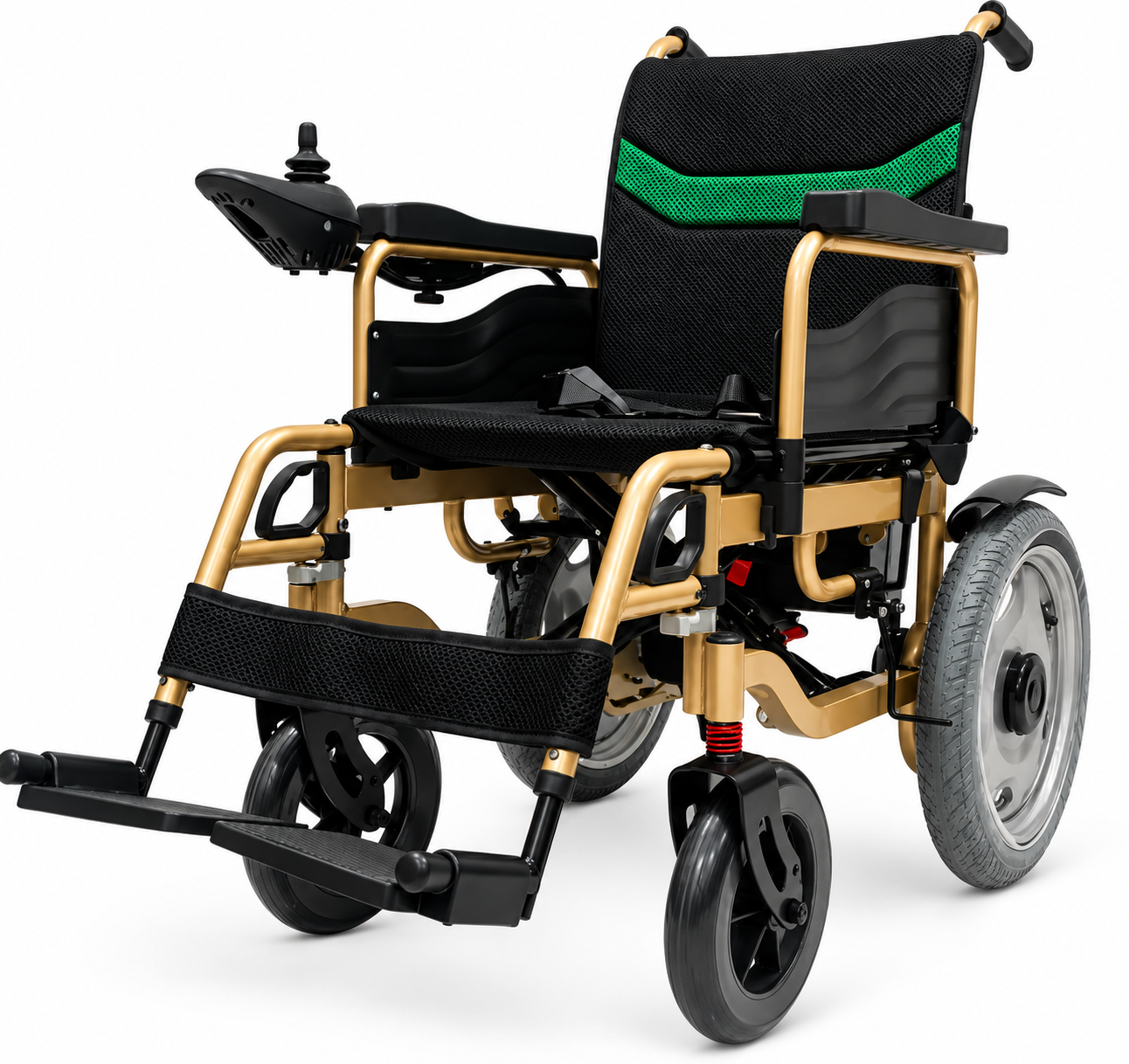
For Kangli's published range, you can start with the high-backrest carbon steel electric wheelchair, DYW-XT-1-B-1, listed with two 250 W motors, or the lightweight aluminum alloy electric wheelchair, DYW-XT-2-B. Ask which motor type is fitted to the configuration you are considering, and request sample availability, price, and lead time for that build. [8, 9]
Request model-specific evidence based on your destination market and tender requirements. ISO 7176-14 covers power and control systems, and ISO 7176-21 covers electromagnetic compatibility of powered wheelchairs, scooters, and relevant chargers. If your order requires an EU Declaration of Conformity or a particular test report, include the exact document in your request so its availability and model coverage can be checked. [5, 6]
Add local service costs to the landed chair cost over the same period, such as the first 24 months. Include parts you expect to stock, technician time, and freight for replacement parts. Ask for the written warranty terms for the quoted model, including coverage by component, freight responsibility, and the expected dispatch time for an approved replacement.
Suppose a brushless quote adds US$35 per chair on a 100-unit order. That is a US$3,500 premium. At a net saving of US$70 per avoided service visit, the distributor would need to avoid 50 visits across the batch to offset the premium through that saving alone. These figures are hypothetical. Use your own service records and the actual quote, and estimate other costs, such as controller replacements, separately.
For hospital fleets or rental programs, estimate daily use, service labor, and the cost of taking a chair out of service. For homecare sales, use the expected usage and your local repair costs. Compare both drive options over the same ownership period using the actual quotation, warranty terms, and service records.
Request an itemized price comparison when both drive types are available in suitable configurations. Use the same order quantity, shipping terms, and warranty assumptions so you can see what drives the difference.
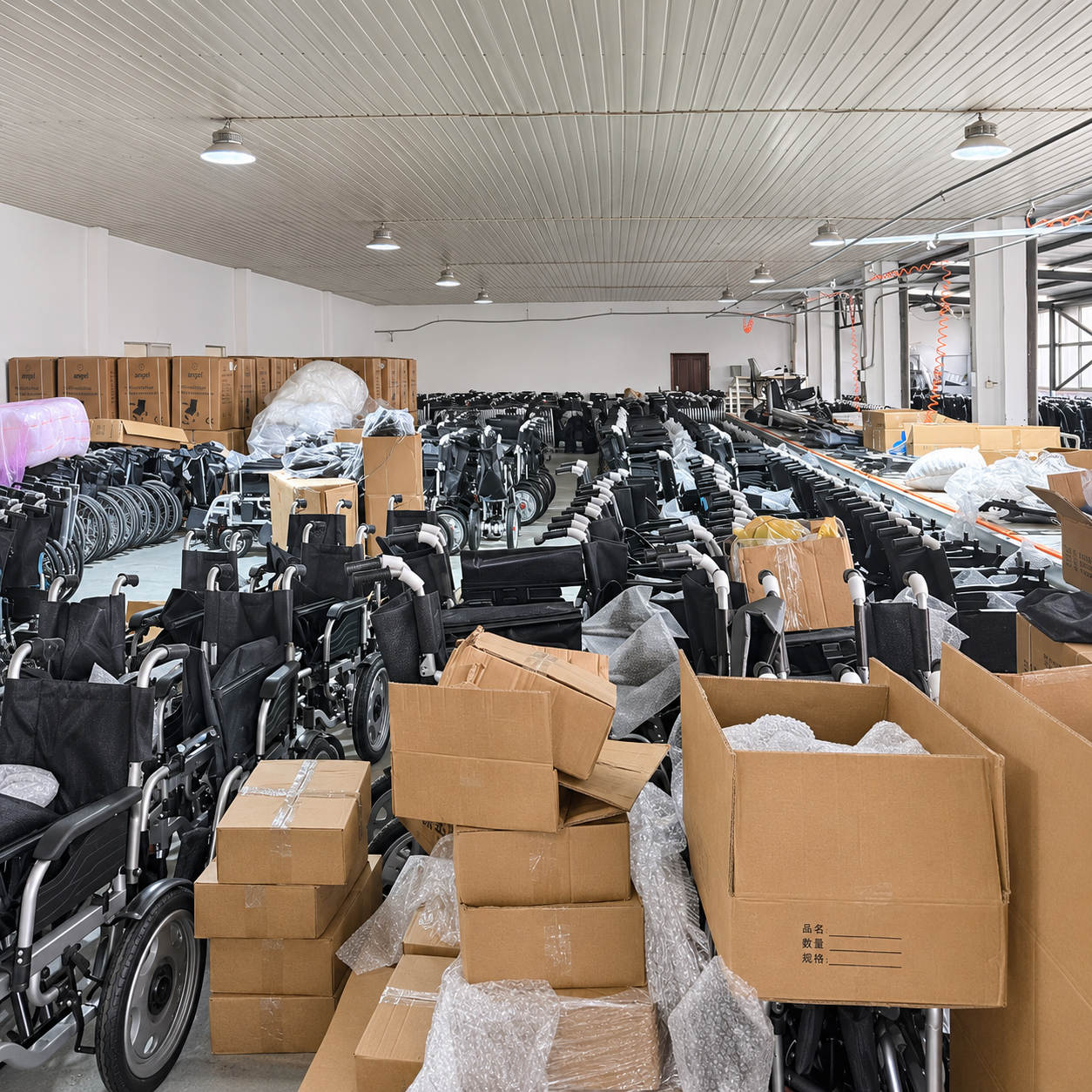
Ask for a spare-parts list for the exact build. Start with the motor, controller, joystick, brake, wiring harness, battery, and charger. For each part, ask whether it is available separately, what it costs, the minimum order quantity, and how long dispatch normally takes. Check which spares could be ordered with the initial shipment and which require a separate order.
Ask the supplier to quote a starter spare-parts kit shipped with the wheelchairs and a separate replenishment shipment. Compare minimum quantities, packing dimensions, and freight. List warranty coverage for the motor, controller, and battery separately.
Ask for the serial label format and an example of a parts order before you commit to stock. If a customer sends a serial number and a photo of the affected component, your service team should know which code to order and how to identify the correct revision.
Record the approved motor, controller, brake, harness, and battery on a build sheet. Include part revisions and left/right compatibility where applicable. Ask who can supply any programming required for a replacement controller. Agree on how proposed component substitutions will be communicated and how their effect on parts compatibility and relevant test documentation will be assessed.
Shortlist a brushed drive when the landed cost fits your price point, the sample meets your criteria, and your service team can obtain the approved parts promptly. Quote the opening spare-parts order alongside the chairs.
Shortlist a brushless drive when the sample shows a benefit your customers value, such as smoother low-speed travel or lower measured energy use. Confirm how your local team will diagnose faults or obtain matched replacement electronics.
For a hospital tender, start with the buyer's documented use and evidence requirements. For a private-label launch, a pilot batch can give you early feedback on customer fit, dealer training, and service needs before a larger commitment.
Removing brushes eliminates brush contact losses. Whole-chair energy use also depends on the motor's operating point, controller, drivetrain, battery, and load. Ask for comparable whole-chair test data. [1, 2, 4]
Brushes wear with use. Inspection intervals and whether brushes are separately replaceable depend on the model. Use the manufacturer's service schedule and approved parts. [1, 3]
Controller settings, gears, tires, and the riding surface can affect what customers hear. Compare both samples during starts, turns, and steady travel under the same conditions. [2]
Ask the wheelchair manufacturer about approved configurations. A change can affect controller compatibility, wiring, braking, and the relevance of existing test documentation. Use the manufacturer's approved parts and service procedures. [1, 5, 6]
Ask how the wattage was rated and request the finished-chair load and slope limits. Controller limits, gearing, and wheel size also affect the usable torque at the wheels. [2, 3, 5]
Ask for the model and drive configuration, sample options, a quote at your expected quantity, available technical documents, written warranty terms, and a list of service parts that can be ordered.
 |  |
Send Kangli Medical your destination country, estimated order quantity, intended use, and preferred model or motor type. If you do not have a model in mind, describe where your customers will use the chair. For a tender, include the required documents and delivery window.
Use the inquiry to request the quoted configuration and price, sample terms, compatible spare parts, written warranty terms, and documents available for that model.
Request a Model Quote and Spare-Parts List
Export inquiries · yukili90@tjkangli.com · +86 136 5207 7555
Request a Wholesale Quote
Tell us the model or features you need, your estimated order quantity, and your destination country. If you’re still comparing models, describe where the wheelchairs will be used.
Texas Instruments. Demystifying BLDC Motor Commutation. Motor operation section on mechanical and electronic commutation.
Texas Instruments. Brushless-DC Motor Driver Considerations and Selection Guide, revised May 2022. Section 2.3 covers control methods, torque ripple, and audible noise.
Portescap. Selecting Optimum Technology. Motor selection guidance covering output torque, service life, and duty cycle.
International Organization for Standardization. ISO 7176-4:2008. Energy consumption and theoretical distance range for powered wheelchairs and scooters.
International Organization for Standardization. ISO 7176-14:2022. Power and control systems for electrically powered wheelchairs and scooters.
International Organization for Standardization. ISO 7176-21:2025. Electromagnetic compatibility of powered wheelchairs, scooters, and battery chargers.
Kangli Medical. About Us. Company background and manufacturing history.
Kangli Medical. High Backrest Carbon Steel Electric Wheelchair. Model DYW-XT-1-B-1 and published motor specification.
Kangli Medical. Lightweight Aluminum Alloy Electric Wheelchair. Model DYW-XT-2-B and published product details.


