
Language
Views: 221 Author: Tianjin Kangli Publish Time: 2026-08-19 Origin: Site


Content Menu
● Quick Answer: Which Bed Is Better?
● What Is a Two-Function Manual Bed?
>> Why Manual Adjustment Still Matters
● What Is a Foldable Home Care Bed?
● Two-Function Manual Bed vs. Foldable Home Care Bed
● When a Two-Function Manual Bed Is the Better Choice
>> Choose It for Routine Position Changes
>> Choose It for Lower Dependence on Electricity
>> Choose It for Higher Daily Utilization
● When a Foldable Home Care Bed Is the Better Choice
>> Choose It for Small Apartments and Multi-Use Rooms
>> Choose It for Rental and Distribution Programs
>> Choose It for Temporary Care Needs
● Safety Must Come Before Compactness
>> Review the Whole Bed System
● A Practical Room-Planning Checklist
>> 1. Measure the Available Space
>> 2. Map the Caregiver Working Zone
>> 3. Define the Resident's Care Needs
>> 4. Confirm the Mattress and Rail System
>> 5. Plan for Delivery and Future Removal
● OEM Perspective: How Brands Can Build a Better Product Range
>> Recommended Product-Line Structure
● Why Work With Tianjin Kangli Medical Equipment Co., Ltd.?
● FAQ
>> 1. What are the two functions of a manual hospital bed?
>> 2. Is a foldable home care bed safe for elderly users?
>> 3. Is a manual bed suitable for long-term home care?
>> 4. Does a foldable bed save enough space for a small apartment?
>> 5. Are side rails necessary on a home care bed?
>> 6. What should an OEM buyer ask a medical-bed manufacturer?
>> 7. Can Tianjin Kangli Medical Equipment Co., Ltd. customize home care beds?
For residential care providers, distributors, and healthcare brands serving compact homes, the choice between a two-function manual bed and a foldable home care bed is not simply about price or storage. It is about balancing patient positioning, caregiver workload, room circulation, safety, and the realities of limited-space care.
At Tianjin Kangli Medical Equipment Co., Ltd., we have manufactured medical and care-bed solutions since 1998. With a 20,000-square-meter factory, more than 50 employees, and long-term OEM capabilities for international brands, wholesalers, and manufacturers, we help partners match bed configurations to practical care environments—not just product specifications. For buyers comparing a two-function manual hospital bed with a foldable home care bed, the right decision depends on how often the bed will be used, who will adjust it, the resident's mobility level, and how much floor space must remain available.
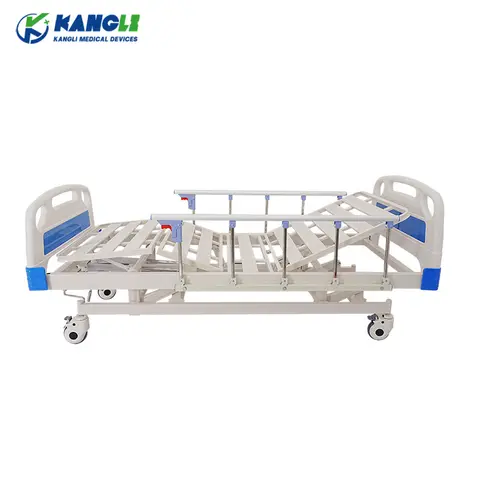
A two-function manual bed is usually the stronger long-term choice for residents who need regular repositioning, backrest elevation, or leg adjustment. A foldable home care bed is often better when the care setting has severe space constraints, intermittent use, temporary recovery needs, or frequent transport and storage requirements.
The most effective purchasing decision starts with a simple question:
Is the main problem daily clinical support or lack of available room space?
- Choose a two-function manual bed when comfort positioning and routine caregiving are the priority.
- Choose a foldable home care bed when portability, storage, and room flexibility are the priority.
- Consider a customized OEM design when a distributor needs both functions: compact storage plus reliable positioning support.
A two-function manual bed is a healthcare bed adjusted through hand cranks rather than electric motors. The most common functions are:
1. Backrest adjustment, which raises the upper body for eating, reading, communication, breathing comfort, or caregiver-assisted care.
2. Knee or leg-rest adjustment, which supports the lower limbs and may improve positioning comfort.
Depending on the product configuration, some manual models may also incorporate a linked back-and-knee movement system. The user or caregiver turns a mechanical crank to change the bed position.
Manual beds remain highly relevant in residential care because they offer dependable positioning without dependence on electricity. For facilities, home-care distributors, and emergency-use programs, this can be a practical advantage.
A well-designed manual care bed can deliver:
- Reliable operation during power interruptions.
- Lower acquisition cost than motorized alternatives.
- Straightforward maintenance with fewer electrical components.
- Controlled positioning for residents who spend extended periods in bed.
- Strong OEM adaptability for rails, panels, mattress platforms, wheels, finishes, and packaging requirements.
However, manual operation requires physical effort from a caregiver. If a resident's position needs to be changed repeatedly throughout the day, a manual crank may become less efficient than an electric system.
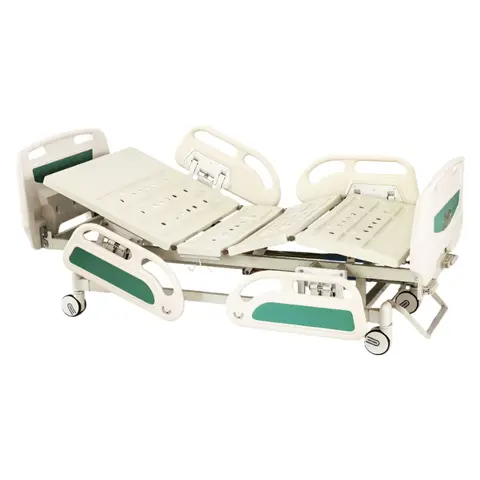
A foldable home care bed is designed to reduce its occupied volume for transport, storage, delivery, or temporary use. Its foldable structure may allow the frame, deck, or legs to collapse into a compact configuration when not in service.
This category is especially useful in:
- Small apartments.
- Multi-use rooms.
- Home-care rental programs.
- Short-term recovery environments.
- Disaster-relief or temporary-care projects.
- Dealer inventory and last-mile delivery models.
The key benefit is not clinical positioning alone. It is space recovery. When the care need changes or the room must serve another purpose, a foldable bed can reduce visual clutter and free usable floor area.
| Decision Factor | Two-Function Manual Bed | Foldable Home Care Bed |
|---|---|---|
| Primary value | Positioning support and everyday care | Space saving, portability, and temporary deployment |
| Backrest adjustment | Usually included | Depends on the model |
| Leg-rest adjustment | Usually included | Depends on the model |
| Best use case | Long-term home care and residential care | Short-term care, small rooms, rentals, transport |
| Caregiver effort | Requires crank operation | May require setup and folding effort |
| Storage efficiency | Standard footprint when assembled | Strong advantage when folded |
| Patient comfort | Better for frequent supported positioning | Varies by mattress platform and function |
| Transport convenience | Moderate | Usually higher |
| Maintenance profile | Mechanical and relatively simple | Mechanical hinges and locking points need inspection |
| OEM opportunity | High for rails, panels, wheels, accessories | High for folding mechanism, packaging, and compact shipping design |
The central distinction is clear: a two-function manual bed supports care activity, while a foldable bed supports space management.
A two-function manual bed is generally the better solution when the bed will be the resident's primary resting and care platform for months or years.
Backrest elevation can make daily activities more manageable, including meals, social interaction, and caregiver support. Leg positioning can also improve comfort for some users. These functions make the bed more adaptable than a fixed flat frame.
For example, an older adult with limited mobility may need to sit upright for breakfast, then return to a lower resting position. A manual two-function bed enables the caregiver to make these transitions without moving the patient to another chair every time.
A manual crank bed has no motor-driven positioning system. This can be useful in locations where electrical supply is unstable or where buyers want a simple, serviceable product range.
That does not remove the need for inspection. Cranks, linkages, brakes, rails, mattress retainers, and fasteners still need regular checks. But the system can be easier for many service teams to understand and maintain.
If the bed will remain assembled and occupied every day, foldability provides little benefit. In that situation, the buyer should invest in patient support, structural stability, mattress compatibility, and caregiver ergonomics.
At Kangli Medical, we encourage OEM clients to define the resident profile before selecting specifications. For a daily-use residential-care bed, practical details such as side-rail design, wheel braking performance, bed-platform strength, and compatible mattress dimensions often matter more than a compact folded size.
A foldable home care bed is often the more strategic option when a compact living environment must remain flexible.
Many home-care households use one room for several purposes. A living room may become a recovery space during the day, then return to a family area later. In such cases, a foldable bed can reduce the permanent footprint of care equipment.
Before purchasing, measure more than the bed's external dimensions. Buyers should also measure:
- Doorway width.
- Elevator access.
- Hallway turning space.
- Clearance for caregivers on both sides.
- Space for a walker, wheelchair, or commode.
- Bedside room for transfers.
- Storage space after folding.
A bed that fits inside the bedroom may still create an unsafe layout if it blocks access routes or prevents caregivers from moving around the resident.
For distributors supplying short-term recovery patients, foldable beds may lower warehouse and shipping complexity. A compact folded format can improve inventory density and support easier delivery planning.
This is particularly important for OEM brands that sell through e-commerce, dealer networks, or home-care rental systems. Packaging design, loading quantity, assembly time, and damage prevention can be as important as the product itself.
Not every user requires a medical bed permanently. After surgery, injury, or a temporary decline in mobility, the household may need a bed for a limited period. A foldable model offers a more practical exit strategy: it can be stored or relocated after recovery.
Limited space should never lead buyers to compromise on bed safety. The U.S. Food and Drug Administration notes that hospital-bed safety guidance applies not only to hospitals and nursing homes, but also to private residences, with a focus on reducing potentially life-threatening entrapment risks around bed systems.
A safe care bed is not just a frame. It is a complete system that includes:
- Bed frame.
- Mattress platform.
- Mattress.
- Side rails.
- Headboard and footboard.
- Accessories.
- Locking casters or feet.
- Any added overlays, cushions, or positioning products.
The mattress must fit the bed properly. A mattress that is too narrow, too short, too thin, or too thick can create unsafe gaps or interfere with the side-rail system. Health Canada guidance highlights that the interaction among the bed frame, deck, rails, and mattress is critical when assessing entrapment hazards. [canada]
Side rails are not automatically appropriate for every resident. They may support repositioning and transfers for some users, but they can also create hazards if the resident is confused, highly mobile, at risk of climbing, or unable to use the rails safely.
A professional assessment should consider:
- Cognitive condition.
- Ability to transfer independently.
- History of falls.
- Nighttime behavior.
- Body size and mobility.
- Mattress compatibility.
- Rail gaps and secure installation.
For residents at risk of falls, low bed positioning, clear pathways, bedside lighting, and properly placed mobility aids may be more effective than relying solely on rails. The National Institute on Aging recommends keeping lighting controls close to the bed and maintaining safe access in bedrooms to reduce fall risks. [nia.nih]
Before selecting either bed type, use this five-step process.
Record the room length and width, door openings, and clearance around the proposed bed position. Do not assume a bed fits simply because its frame dimensions are smaller than the room.
Identify where the caregiver will stand for transfers, hygiene support, repositioning, and bed adjustments. A bed placed against a wall may save space but can make care tasks difficult or unsafe.
Ask whether the user needs frequent upright positioning, leg support, assisted transfer, or long-term bed rest. If the answer is yes, a two-function manual bed may provide more value than a basic foldable model.
Request exact mattress specifications and confirm compatibility with the selected bed and side rails. Avoid mixing components from different suppliers unless compatibility has been verified.
For foldable beds, check folded dimensions, package weight, assembly requirements, and storage location. For manual beds, verify access for delivery, installation, servicing, and eventual replacement.
For overseas brands, wholesalers, and manufacturers, the strongest product strategy is often not choosing one category over the other. It is building a clear, differentiated product portfolio.
At Tianjin Kangli Medical Equipment Co., Ltd., we support OEM customers in developing care-bed solutions aligned with regional market demands, user profiles, and channel requirements. Since 1998, our manufacturing experience has shown that the most successful products are designed around the complete use environment.
| Product Tier | Target Buyer | Recommended Features |
|---|---|---|
| Entry manual care bed | Price-sensitive distributors and basic home care | Two-function manual adjustment, durable frame, easy-clean surface, optional rails |
| Compact foldable bed | Rental programs and limited-space households | Folding frame, secure locking points, compact packaging, simple setup |
| Enhanced residential-care bed | Premium home-care brands and care facilities | Higher load capacity, improved rails, low-height options, premium panels, accessories |
| Customized OEM model | Established brands | Branding, color, panel materials, packaging, mattress platform, rail configuration, documentation |
A buyer should not market a foldable frame as a replacement for a long-term care bed unless its adjustment range, stability, mattress support, and safety system have been properly validated for that intended use.
Tianjin Kangli Medical Equipment Co., Ltd. is a national high-tech enterprise focused on medical-device research, development, and manufacturing. We provide OEM services for international brands, wholesalers, and manufacturers seeking reliable medical beds and home-care solutions.
Our manufacturing foundation includes:
- Founded in 1998.
- 20,000 square meters of factory space.
- 50+ employees.
- OEM-oriented development and production support.
- Medical and nursing-bed solutions for institutional and residential-care markets.
For a European nursing-home group operating more than 50 premium facilities, Kangli delivered 1,200 ultra-low smart nursing beds designed for elderly residents with dementia. The project integrated a dual-motor lifting system, a 20 cm ultra-low platform height, a 250 kg dynamic load capacity, customized side rails, and a home-like warm wood-grain appearance. According to Kangli's project information, the deployment was associated with a 78% reduction in patient fall incidents and a 15% improvement in room occupancy rates. [klmedbed]
While a two-function manual bed and a foldable home care bed serve different use cases, that project illustrates a broader principle: bed selection should begin with the risks, workflows, and comfort needs of the people who will use it.
Choose a two-function manual bed when your priority is dependable daily positioning, routine residential care, and a durable medical-bed platform. Choose a foldable home care bed when storage, portability, temporary use, and room flexibility are the main priorities.
For OEM buyers, the most competitive solution may be a tailored range that gives customers both options: a stable manual bed for long-term care and a foldable model for compact, temporary, or rental-focused applications.
Need help designing or sourcing a manual or foldable home care bed for your market? Contact Tianjin Kangli Medical Equipment Co., Ltd. to discuss OEM specifications, product positioning, packaging, and customization requirements.
- Website: [www.klmedbed.com]
- Email: yukili90@tjkangli.com
- Tel/WhatsApp: +86 136 5207 7555
A two-function manual hospital bed usually provides backrest adjustment and knee or leg-rest adjustment. These functions are commonly operated by hand cranks and help caregivers position a resident more comfortably for rest, meals, and daily care.
It can be safe when it is designed for the intended user, assembled correctly, locked securely, and used with a compatible mattress and rail system. Buyers should assess stability, locking mechanisms, gaps around rails and mattresses, and the resident's individual fall or entrapment risk.
Yes. A two-function manual bed can be a suitable long-term option for users who need regular backrest or leg positioning and have caregiver support available for crank operation. Its mechanical structure can also be advantageous where electrical reliability is a concern.
A foldable bed can save substantial space when it is not in use, but buyers should verify both open and folded dimensions. They should also consider storage location, room access, and the clear working area required while the bed is in operation.
Not always. Side rails may assist some users with positioning or transfers, but they can create hazards for others. The decision should be based on an individual risk assessment, rail design, mattress fit, cognitive status, and the person's ability to exit the bed safely.
OEM buyers should ask about adjustment functions, load capacity, materials, surface treatment, rail options, mattress compatibility, folding dimensions, packaging, assembly requirements, customization capability, quality-control process, and after-sales spare-part support.
Yes. Kangli Medical supports OEM projects for international brands, wholesalers, and manufacturers. Customization discussions can include product configurations, panels, side rails, finishes, packaging, branding, and market-specific requirements.
1. Tianjin Kangli Medical Equipment Co., Ltd. "Kangli Medical: Hospital Bed Manufacturer China." Available at: [https://www.klmedbed.com/] [klmedbed]
2. U.S. Food and Drug Administration. "Hospital Beds." Available at: [https://www.fda.gov/medical-devices/general-hospital-devices-and-supplies/hospital-beds] [fda]
3. U.S. Food and Drug Administration. "Hospital Bed System Dimensional and Assessment Guidance to Reduce Entrapment." Available at: [https://www.fda.gov/regulatory-information/search-fda-guidance-documents/hospital-bed-system-dimensional-and-assessment-guidance-reduce-entrapment] [fda]
4. National Institute on Aging. "Preventing Falls at Home: Room by Room." Available at: [https://www.nia.nih.gov/health/falls-and-falls-prevention/preventing-falls-home-room-room] [nia.nih]
5. Health Canada. "Adult Hospital Beds: Patient Entrapment Hazards, Side Rail and Other Hazards." Available at: [https://www.canada.ca/en/health-canada/services/drugs-health-products/medical-devices/application-information/guidance-documents/guidance-document-adult-hospital-beds-patient-hazards-side-rail-other-hazards.html] [canada]
Hot Tags: China, Global, OEM, private label, manufacturers, factory, suppliers, manufacturing company


