

Views: 289 Author: Tianjin Kangli Publish Time: 2026-10-13 Origin: Site


Content Menu
● Why Hospital Bed Manufacturing Requires Specialized Expertise
● Tianjin Kangli Medical: An Established Hospital Bed Manufacturer Since 1998
● What Global Buyers Should Look for in Hospital Bed Manufacturers
>> 1. Manufacturing Capacity and Quality Control
>> 2. Safety Engineering and Entrapment Prevention
>> 3. Compliance With International Standards
>> 4. OEM Flexibility Without Compromising Safety
● A Practical Example: Ultra-Low Nursing Bed for Dementia Care
>> Results Reported by the Customer
● How to Evaluate a Hospital Bed OEM Supplier: A Buyer's Checklist
● Common Mistakes When Sourcing Hospital Beds
>> Ignoring Mattress and Accessory Compatibility
>> Underestimating After-Sales Requirements
● Why International Brands Choose Kangli Medical
>> National High-Tech Enterprise
>> Integrated 20,000 m² Facility
>> Customer-First Communication
● Future Trends in Hospital Bed Manufacturing
● Work With a Trusted Hospital Bed Manufacturer
>> 1. What do manufacturers of hospital beds typically produce?
>> 2. What is OEM hospital bed manufacturing?
>> 3. Why is IEC 60601-2-52 important for hospital beds?
>> 4. How can buyers reduce hospital bed entrapment risks?
>> 5. What information should I provide for a hospital bed OEM quotation?
>> 6. Does Kangli Medical support small trial orders?
Choosing among the many manufacturers of hospital beds is no longer only a purchasing decision. For distributors, healthcare groups, rental companies, and private-label brands, it is a strategic decision that affects patient safety, regulatory approval, delivery reliability, after-sales cost, and long-term brand reputation.
As a company that has supplied hospital beds and medical furniture since 1998, Tianjin Kangli Medical Equipment Co., Ltd. has seen the difference between a supplier that simply produces beds and an OEM partner that understands clinical workflows, export compliance, customization, and lifecycle support. This guide explains what buyers should evaluate when selecting hospital bed manufacturers, how OEM production works, and why engineering depth matters as much as price.

A hospital bed is not ordinary furniture. It is a medical device that must support safe patient positioning, caregiver efficiency, infection control, electrical safety, and repeated cleaning in demanding healthcare environments.
Modern hospital beds may include electric backrest and leg-rest adjustment, height adjustment, Trendelenburg and reverse-Trendelenburg functions, CPR release, central-locking castors, side rails, IV poles, battery backup, and compatibility with mattresses and accessories. Each function must work reliably under daily clinical use.
For buyers sourcing from hospital bed manufacturers in China or other global production hubs, the key question is not "Who has the lowest unit price?" It is: Which manufacturer can consistently deliver a safe, compliant, customizable, and serviceable product?
Tianjin Kangli Medical Equipment Co., Ltd. is a national high-tech enterprise specializing in the research, development, and manufacturing of medical beds and related healthcare equipment. Founded in 1998, the company operates a 20,000-square-meter production facility with a team of 50+ employees.
Our official website is [https://www.klmedbed.com]. We provide OEM and ODM hospital bed manufacturing services for overseas brand owners, wholesalers, distributors, and healthcare-product producers.
Kangli Medical's product range is designed for hospitals, nursing homes, rehabilitation centers, home-care providers, and medical rental businesses. Core categories include:
- Manual hospital beds for cost-sensitive healthcare facilities
- Electric hospital beds with multi-function positioning and caregiver controls
- ICU beds engineered for intensive-care requirements
- Nursing home beds focused on safety, comfort, and fall-risk reduction
- Home-care beds designed for residential environments
- Pediatric and specialized beds for targeted clinical applications
- Medical trolleys, bedside cabinets, and related hospital furniture
As experienced OEM manufacturers of hospital beds, we support brands that need more than a standard catalog product. Our OEM services include:
- Custom bed dimensions, frame colors, and panel finishes
- Private-label branding and packaging
- Customized side rails, castors, controls, and accessories
- Configuration options for manual, semi-electric, and fully electric beds
- Documentation support for export and market-entry requirements
- Flexible production planning for distributor and project orders
- After-sales technical guidance and spare-parts support
This approach allows international partners to build a differentiated product line without investing in their own hospital-bed factory.
A credible manufacturer should be able to demonstrate stable production capacity, disciplined process control, and traceability from raw materials to finished goods.
At Kangli Medical, our 20,000-square-meter facility supports welding, metal fabrication, surface treatment, assembly, inspection, and packaging under one production system. This integrated structure helps us control critical quality points and respond efficiently to OEM customization requirements.
When evaluating any supplier, buyers should ask:
- What is the monthly production capacity?
- Which processes are completed in-house?
- How are incoming materials inspected?
- Are finished beds tested before shipment?
- Can the factory provide production records and inspection reports?
- How are nonconforming products handled?
A strong hospital bed manufacturer should answer these questions clearly and consistently.
Patient entrapment is one of the most serious risks associated with hospital bed systems. Gaps around side rails, mattress edges, headboards, and footboards can create hazards if not properly engineered.
The U.S. FDA's hospital bed guidance identifies potential entrapment areas and recommends dimensional criteria to reduce life-threatening entrapment risks. It also emphasizes that bed safety depends on the complete system: frame, mattress, rails, headboard, footboard, and accessories.
For buyers, this means a bed should never be evaluated as an isolated frame. Ask the manufacturer:
- How are side-rail gaps controlled?
- Is the mattress matched to the bed frame?
- Are rail-locking mechanisms tested?
- Does the design consider cleaning, maintenance, and accessory compatibility?
- Can the supplier provide risk-assessment and design documentation?
Kangli Medical incorporates safety-focused design principles into its bed development process, including controlled rail gaps, stable locking systems, and compatibility considerations between bed frames and mattresses.
Regulatory expectations differ by market, but leading hospital bed manufacturers should understand the technical logic behind them.
IEC 60601-2-52 is an important international standard for the basic safety and essential performance of medical beds intended for adults. It addresses risks associated with electric medical beds, including mechanical hazards, electrical safety, and essential performance.
ISO 13485 is also highly relevant. It defines quality-management-system requirements for organizations involved in the design, production, installation, and servicing of medical devices.
A reliable OEM partner should be able to explain:
- Which standards apply to the destination market
- Which tests and documents are required
- How design changes affect compliance
- How materials, electrical components, and accessories are controlled
- How complaints, spare parts, and corrective actions are managed
This is especially important for brands selling into Europe, North America, the Middle East, Southeast Asia, and other regulated markets.
Customization is valuable, but it must not weaken the product. A professional manufacturer should balance market differentiation with engineering discipline.
For example, a nursing-home brand may want a lower bed height to reduce fall injuries. A hospital distributor may need a specific rail design, control-panel layout, or color scheme. A rental company may prioritize durable castors, easy cleaning, and fast spare-part availability.
Kangli Medical works with customers to translate these commercial needs into practical product specifications. Our engineering team evaluates whether a requested change affects structure, load capacity, electrical performance, cleaning, assembly, or user safety before production begins.
One of the most meaningful applications of thoughtful hospital bed design is dementia and elderly care. Patients with cognitive impairment may attempt to leave the bed unsafely, increasing the risk of falls and injury.
Kangli Medical developed an Ultra-Low Smart Nursing Bed for a European nursing-home group managing more than 50 premium facilities. The project required a safer and more comfortable solution for elderly dementia patients.
The customer needed a bed that could:
- Reduce fall risk for residents with limited mobility or cognitive impairment
- Provide a low platform height for safer bed exits
- Support reliable electric positioning for caregivers
- Meet strict safety expectations for nursing-home environments
- Maintain a warm, homelike appearance rather than a clinical look
We supplied an ultra-low smart nursing bed featuring:
- Dual-motor lifting system for controlled height adjustment
- 20 cm ultra-low platform height to reduce the distance between the bed surface and the floor
- 250 kg dynamic load capacity for dependable everyday use
- Antibacterial warm wood-grain panels for a more residential appearance
- Customized side rails with precise safety gaps to support entrapment-risk control
- Design aligned with IEC 60601-2-52 anti-entrapment safety requirements
The project involved delivery of 1,200 units. According to the customer's feedback, the beds helped:
- Reduce patient fall incidents by 78%
- Improve room occupancy rates by 15%
- Achieve CE safety compliance
This case illustrates why hospital bed manufacturing should be treated as a clinical solution, not simply a furniture supply transaction. The right bed configuration can improve caregiver efficiency, resident confidence, facility operations, and brand value.
Before placing a trial order, use this practical checklist.
| Evaluation Area | Questions to Ask | Why It Matters |
|---|---|---|
| Company history | How long has the manufacturer produced hospital beds? | Longevity often reflects technical accumulation and market trust |
| Production capability | What is the factory size, staffing, and monthly output? | Capacity affects lead time and project scalability |
| Quality system | Is there documented inspection from incoming materials to final testing? | Consistency depends on process control |
| Safety design | How are rails, gaps, locks, and mattress compatibility managed? | Entrapment prevention is essential |
| Regulatory support | Can the supplier support CE, FDA, or destination-market documentation? | Compliance affects market access |
| OEM capability | Can the factory customize structure, branding, controls, and accessories? | Differentiation requires real engineering support |
| Communication | Is there a dedicated export or technical contact? | Clear communication reduces costly errors |
| After-sales support | Are spare parts, manuals, and technical guidance available? | Serviceability protects long-term ROI |
A low quotation may exclude important items such as battery backup, upgraded castors, reinforced frames, specific rails, packaging, or certification support. Buyers should compare complete specifications, not headline prices.
A hospital bed is a system. An incompatible mattress can affect rail gaps, pressure redistribution, cleaning, and patient safety. The FDA specifically encourages manufacturers and facilities to consider compatible mattresses, rails, and accessories when assessing entrapment risks.
Hospitals and nursing homes need beds that remain serviceable for years. Buyers should confirm spare-part availability, technical documentation, packaging standards, and replacement-part lead times before committing to a supplier.
International partners choose Tianjin Kangli Medical Equipment Co., Ltd. because we combine manufacturing experience with a service-oriented OEM model.
With more than two decades in the medical equipment industry, Kangli Medical has developed practical knowledge of hospital workflows, nursing-home requirements, export packaging, and product durability.
Our recognition as a national high-tech enterprise reflects our focus on research, development, and technical improvement rather than low-value assembly alone.
Our production base gives us greater control over fabrication, assembly, inspection, and delivery planning. This is particularly valuable for OEM customers who need consistent quality across repeat orders.
We work closely with brand owners and wholesalers to align product design, branding, packaging, documentation, and logistics with their market requirements.
For inquiries, our team can be reached at yukili90@tjkangli.com or by phone/WhatsApp at +86 136 5207 7555. We welcome project discussions, sample requests, technical questions, and long-term distribution partnerships.
Hospital bed design is evolving beyond basic adjustment functions. Leading manufacturers are focusing on:
- Lower bed heights to reduce fall-related injuries
- Smart controls that simplify caregiver operation
- Antibacterial and easy-clean surfaces for infection control
- Quiet motor systems to improve patient comfort
- Modular components for easier maintenance
- Home-like aesthetics for senior living and long-term care
- Data-ready and connected-care compatibility as digital healthcare expands
For OEM buyers, these trends create opportunities to differentiate a product line. However, every new feature should be evaluated through the same lens: does it improve safety, usability, reliability, and compliance?
If you are searching for dependable manufacturers of hospital beds, choose a partner that can support your brand from concept to container loading. Tianjin Kangli Medical Equipment Co., Ltd. provides hospital bed OEM and ODM services for global brands, wholesalers, and healthcare-product producers.
Whether you need standard electric hospital beds, nursing-home beds, ICU beds, or a fully customized private-label solution, our team can help you define the right specification for your market.
Contact Kangli Medical today:
- Email: [yukili90@tjkangli.com](mailto:yukili90@tjkangli.com)
- Phone/WhatsApp: +86 136 5207 7555
- Website: [https://www.klmedbed.com]
Request a quotation, product catalog, or OEM consultation, and let us help you build a safer, more competitive hospital bed product line.
Hospital bed manufacturers produce manual beds, semi-electric beds, fully electric beds, ICU beds, nursing-home beds, home-care beds, pediatric beds, and related medical furniture. Many also supply mattresses, side rails, IV poles, castors, bedside cabinets, and other accessories.
OEM hospital bed manufacturing means the manufacturer produces beds according to a customer's brand and specification requirements. Services may include custom colors, logos, packaging, bed configurations, rails, controls, documentation, and private-label branding.
IEC 60601-2-52 addresses the basic safety and essential performance of medical beds intended for adults. It is widely used as a technical reference for electric hospital bed safety, including risks related to mechanical design and essential bed functions.
Buyers should select beds with well-designed side rails, controlled gaps, compatible mattresses, reliable locking systems, and clear user instructions. The FDA recommends assessing the complete bed system, including the frame, mattress, rails, headboard, footboard, and accessories.
Provide the destination market, target customer group, required bed type, electric or manual configuration, desired functions, load capacity, rail preference, mattress size, branding requirements, order quantity, and packaging needs. Clear specifications help the manufacturer provide an accurate quotation and lead time.
Kangli Medical supports project-based and distributor orders, and we encourage customers to discuss trial quantities, sample requirements, and customization needs directly with our export team.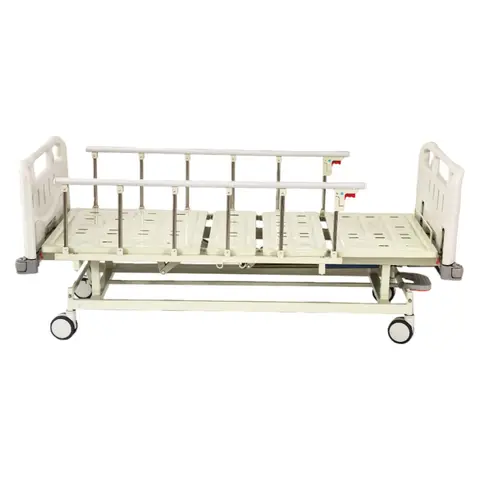
- Tianjin Kangli Medical Equipment Co., Ltd. — Official website: [https://www.klmedbed.com]
- U.S. Food and Drug Administration — *Hospital Bed System Dimensional and Assessment Guidance to Reduce Entrapment*: [https://www.fda.gov/regulatory-information/search-fda-guidance-documents/hospital-bed-system-dimensional-and-assessment-guidance-reduce-entrapment]
- International Organization for Standardization — *ISO 13485 Medical devices*: [https://www.iso.org/iso-13485-medical-devices.html]
- International Electrotechnical Commission — *IEC 60601-2-52:2009, Medical electrical equipment — Part 2-52*: [https://webstore.iec.ch/en/publication/2672]
- International Organization for Standardization — *IEC 80601-2-52:2026, Medical beds for adults*: [https://www.iso.org/standard/78472.html]
- Association for the Healthcare Environment — *Hospital Beds*: [https://www.ahe.org/hospital-beds]
Hot Tags: China, Global, OEM, private label, manufacturers, factory, suppliers, manufacturing company


