

Views: 220 Author: klmedbed Publish Time: 2026-04-14 Origin: Site


In 2026, manual beds remain one of the most cost‑effective, reliable, and widely used patient‑support platforms in hospitals, long‑term care facilities, and home‑care settings. [schroderhealth]
Unlike fully electric models, a manual bed relies on simple mechanical cranks or hand‑pumps to adjust the head, foot, and sometimes height sections—making it ideal for environments with limited power, frequent power outages, or tight budgets. [alibaba]
For international brand owners, distributors, and wholesalers, OEM manual beds manufactured in China offer a powerful mix of regulatory compliance, durability, and customization, while still keeping unit costs under control. [hopefull-med]
In this article, you'll learn how to choose and specify manual beds that meet global standards, match your brand's positioning, and satisfy end‑users who read product reviews before buying.
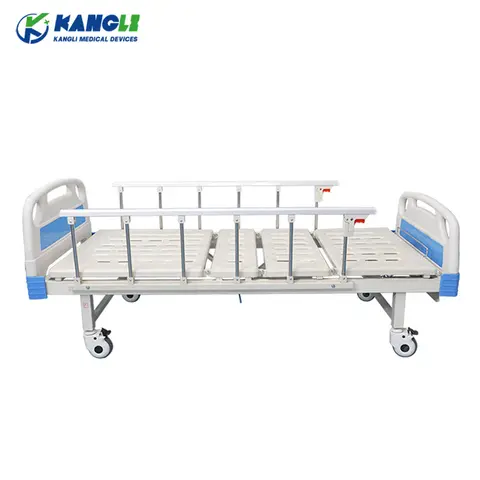
A manual bed, also called a manual hospital bed or man‑adjusted bed, is a patient‑care bed whose main articulation functions are controlled by hand rather than by motors. [alibaba]
Typical features include:
- Head and foot section adjustment via metal or plastic cranks.
- Height adjustment by manual screw or lever mechanism (on many 2‑ or 3‑function models).
- Side rails for patient safety and helper‑assisted repositioning.
- IV pole brackets and oxygen hooks for basic clinical use. [gracemedy]
Because components are largely mechanical, a well‑built manual bed tends to:
- Have fewer electrical failures and lower maintenance costs. [alibaba]
- Operate without a power supply, which is crucial in low‑resource clinics or sudden power cuts. [alibaba]
As a national high‑tech medical‑device manufacturer like Tianjin Kangli Medical Appliance Co., Ltd., you're positioned in the middle of three global trends driving manual bed demand:
1. Cost‑conscious healthcare procurement
Many hospitals and district‑level clinics in Asia, Africa, and Latin America still prioritize manual beds over electric models because they reduce long‑term operation costs and spare‑part complexity. [schroderhealth]
2. Supply‑chain resilience
International buyers are increasingly open to China‑made manual beds that are CE‑marked, ISO‑13485‑certified, and produced in vertically integrated factories—since these can shorten lead times and reduce reliance on single‑country suppliers. [hopefull-med]
3. Customization and branding
Brand owners and distributors are no longer satisfied with "generic" platform beds. They want OEM‑specific design tweaks:
- Custom color schemes (e.g., soothing blues/greys for home‑care positioning).
- Modified rail profiles, headboard/footboard shapes, and branding areas.
- Adjusted weight capacity and mattress compatibility to match their standard mattress lines. [pukangmed]
From an SEO and E‑E‑A‑T perspective, explicitly highlighting your OEM capability, medical‑device certifications, and ergonomic R&D background signals authority and experience to both Google and B2B buyers. [bilibili]
Using "manual bed" and related long‑tail keywords in your content isn't just about search volume—it's about answering the real questions that buyers ask.
A practical buyer's checklist for manual beds looks like this:
Ask: Will the manual bed be used in:
- Acute hospitals and clinics.
- Long‑term care or nursing homes.
- Home‑care or rental fleets.
Each use case affects:
- Required weight capacity (e.g., bariatric vs. standard).
- Side‑rail design and mattress depth tolerance.
- Ease of cleaning (e.g., stainless vs. powder‑coated steel, removable fabric panels). [gracemedy]
When comparing manual beds, focus on:
- Functions:
- 2‑function: head and foot adjustment.
- 3‑function: head, foot, and bed height.
- Adjustment mechanism:
- Crank‑type vs. hand‑pump lever.
- Frame material and surface finish:
- Tubular steel vs. box‑section steel.
- Powder‑coated vs. double‑coated finishes for corrosion resistance.
- Braking and wheel system:
- Central locking vs. per‑wheel locking.
- Swivel casters vs. fixed‑rear wheels. [gracemedy]
From a clinical expert perspective, the best manual beds minimize injury risk for both patients and caregivers. [pukangmed]
Ask suppliers:
- Are side rails designed to prevent patient entrapment and allow easy ingress/egress?
- Are cranks positioned so clinicians or family caregivers can reach them without bending or twisting?
- Is the frame height and bed length adjustable to match standard home‑care environments?
As a China‑based OEM manufacturer, your factory can offer several E‑E‑A‑T‑friendly advantages that B2B buyers actively search for:
- Regulatory and certification readiness
Many Chinese manual bed manufacturers now offer:
- CE‑marked hospital‑bed products.
- ISO‑13485‑certified quality‑management systems.
- Documentation packs tailored to EU, U.S., and emerging‑market regulators. [hopefull-med]
- Volume‑oriented production and logistics
Buyers shipping containers to Europe, North America, or the Middle East often prefer partners with:
- In‑house tooling, welding, and painting lines.
- Dedicated export‑compliant packaging (e.g., shock‑absorbing frames, moisture‑resistant wrap). [pukangmed]
- Design‑for‑assembly (DFA) and customization
Modern OEM buyers want more than "white‑label" beds; they expect:
- Customizable rail profiles and head/footboard shapes.
- Mesh‑style side rails for airflow and visibility.
- Integrated cable guides or IV pole brackets that match their existing furniture lines. [hopefull-med]
When you write content for your web page, always anchor these points to your own R&D experience and customer testimonials, because that's what strengthens your authoritativeness and trustworthiness. [yooopaaa]
To add "hands‑on" E‑E‑A‑T value, include a short, step‑by‑step guide that mirrors how real caregivers use manual beds:
1. Check the manual
Always start with the OEM manual and any safety labels on the bed frame.
2. Position the bed correctly
- Leave at least 60–90 cm on each side for caregivers.
- Keep the crank handles within easy reach, but not in the way of walking paths.
3. Adjust head and foot sections safely
- Raise the head section to 30–45° for sitting‑up comfort.
- Avoid raising the head too high on patients with circulatory issues.
- Use the foot‑section adjustment to relieve pressure on heels and calves.
4. Lock the wheels
Always engage the central locking system before transferring or adjusting the patient.
5. Inspect rails and surfaces
- Ensure side rails are correctly latched.
- Wipe down metal surfaces and fabric panels with mild disinfectant (check with the manufacturer's guidelines). [gracemedy]
This kind of step‑by‑step section not only improves SEO (it answers "how to use a manual hospital bed") but also positions you as a helpful, experienced expert, not just a commodity supplier. [bilibili]
When buyers search for "manual bed reviews" or "China OEM manual hospital bed", they're looking for real‑world experiences, not just spec sheets. [hopefull-med]
Help them decode what to look for:
- Positive signals in reviews:
- Comments about smooth cranks, sturdy frame, and easy assembly.
- Mention of long‑term durability (e.g., "still working well after 5 years in a clinic").
- Red flags:
- Recurring mentions of loose joints, wobbly rails, or hard‑to‑adjust cranks.
- Complaints about poor customer service or slow documentation responses. [gracemedy]
As a manufacturer, you can strengthen trust by:
- Publishing detailed case stories from hospitals or distributors.
- Including short video clips showing:
- Crank operation.
- Side‑rail installation and locking.
- Bed‑frame welding and painting quality. [pukangmed]
To improve UX and engagement, consider adding visuals at these points:
- Intro section:
- A clean product‑shot of a 3‑function manual bed in a hospital or home setting.
- "What Is a Manual Bed?"
- A labeled diagram showing head, foot, height cranks, and rails.
- "How to Use Manual Beds"
- A short numbered image carousel or GIF sequence of crank operation and side‑rail locking.
- "OEM Partnering"
- A simple table comparing standard manual bed vs. OEM‑customized manual bed (see below).
Here's an example of a small comparison table you can place there:
| Feature | Standard Manual Bed | OEM‑Customized Manual Bed |
|---|---|---|
| Frame color | Fixed white | Custom powder‑coat colors |
| Rail design | Generic | Brand‑specific rail shape |
| Branding area | Minimal or none | Logo plate, custom labels |
| Mattress compatibility | Generic dimensions | Designed for your mattress line |
| Documentation language | Basic English | Multi‑language, brand‑branded |
At the end of the article, anchor your authority and OEM capability with a clear CTA:
> If you're a brand owner, distributor, or healthcare project manager looking for a reliable OEM partner for manual beds, contact Tianjin Kangli Medical Appliance Co., Ltd. for:
> - Free technical consultation on 2‑ and 3‑function manual‑bed designs.
> - Customization options for frame color, rail style, and branding.
> - Compliance support for CE, ISO, and other regional regulations.
Use this as the primary CTA anchor text in your SEO layout, and link it from at least one H2 "OEM Partnership" section for strong internal linking. [yooopaaa]
1. Alibaba – Hospital Beds Made in China (3‑Function CE‑Certified Manual Beds): https://www.alibaba.com/showroom/hospital-beds-made-in-china.html [alibaba]
2. Schröder Health – Top Hospital Bed Manufacturers That Sell to the USA: https://www.schroderhealth.com/top-hospital-bed-manufacturers-that-sell-to-usa/ [schroderhealth]
3. Pukang Medical – Top Hospital Bed Manufacturers You Should Know: https://www.pukangmed.com/news/top-hospital-bed-manufacturers-you-should-know.html [pukangmed]
4. Grace Medy – Top 10 Hospital Bed Manufacturers in the USA: https://www.gracemedy.com/top-10-hospital-bed-manufacturers-in-the-usa/ [gracemedy]
5. HOPEFULL Medical – Manual Bed Manufacturers and Suppliers in China: https://www.hopefull-med.com/hospital-beds/manual-bed/ [hopefull-med]
6. SEO guide for medical‑device companies: https://www.yooopaaa.com/2727 [yooopaaa]
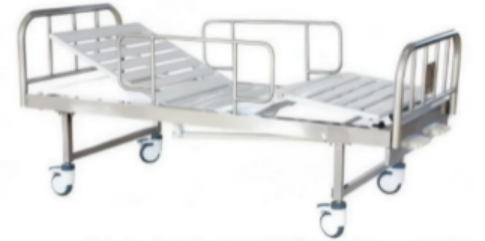
1. What is the difference between a manual bed and an electric hospital bed?
A manual bed is adjusted by hand cranks or levers for head, foot, and height, while an electric hospital bed uses motors and a remote control. Manual beds are cheaper, simpler, and more reliable in low‑power environments. [alibaba]
2. Are manual beds safe for elderly patients at home?
Yes, when properly selected and maintained. Look for side rails, smooth cranks, and stable casters; ensure caregivers follow the manufacturer's instructions and lock the wheels before use. [alibaba]
3. Can OEM manual beds be customized for branding and specifications?
Yes. Many Chinese manufacturers, including Tianjin Kangli Medical Appliance Co., Ltd., offer custom frame colors, rail designs, and branding plates as part of their OEM service. [pukangmed]
4. How do I choose between 2‑function and 3‑function manual beds?
- 2‑function: head and foot only, good for basic clinics and home care.
- 3‑function: adds height adjustment, useful when caregivers need to align the bed with wheelchairs or standard mattress heights. [gracemedy]
5. What certifications should I expect from a manual bed OEM supplier?
Typical documents include CE certification, ISO‑13485‑certified quality‑management systems, and product‑specific technical files. Ask your partner for a full compliance package before ordering. [hopefull-med]
Hot Tags: China, Global, OEM, private label, manufacturers, factory, suppliers, manufacturing company


