

Views: 168 Author: kangli Publish Time: 2026-10-26 Origin: Site


Content Menu
● Hospital Bed OEM vs. ODM: Which Manufacturing Model Is Right for Your Brand?
>> OEM vs. ODM: The Main Difference
>> What Is Hospital Bed OEM Manufacturing?
>>> Potential advantages of OEM
>> What Is Hospital Bed ODM Manufacturing?
>>> Potential advantages of ODM
>> Which Model Is Right for Your Brand?
>> Compare the Full Project Cost—not Just the Unit Price
>> OEM/ODM Decision Framework for Hospital-Bed Buyers
>> How to Qualify a Hospital Bed OEM/ODM Manufacturer
>> Regulatory and Quality Responsibilities Need to Be Explicit
>> A Practical OEM/ODM Project Workflow
>> Common Sourcing Mistakes to Avoid
>> Suggested Visuals for the Article
>>> 1. What is the difference between hospital bed OEM and ODM?
>>> 2. Is ODM always faster than OEM?
>>> 3. Can an ODM hospital bed carry our brand?
>>> 4. Does OEM mean our company owns the design?
>>> 5. Which model is best for a distributor entering a new market?
>>> 6. What should be included in an OEM hospital-bed request for quotation?
>>> 7. Who is responsible for regulatory compliance?
>> Partner With Tianjin Kangli Medical Instrument
>> References
How can I start an OEM partnership with your factory?
We recommend starting with an initial technical consultation to review your design specifications, target market, required functions, quantity, and customization needs.
Please contact our dedicated B2B team by email at Yukili90@tjkangli.com or chat with us directly on WhatsApp: +86 136 5207 7555.
WhatsApp:
Let’s build excellence together. Whether you need a quotation for a large-scale hospital project, want to develop a private-label product, or are exploring OEM/ODM opportunities for our 5-function medical bed series, our team is ready to support you from product selection and technical confirmation to production and delivery.
Visit www.klmedbed.com or contact us via WhatsApp to start your customized manufacturing project today.

Choosing between hospital bed OEM and ODM manufacturing shapes more than the product's logo. It affects how much design control your brand has, who develops the product, how customization is handled, and what your team must verify before launching in a target market.
For overseas medical-equipment brands, distributors, wholesalers, and manufacturers, the right model depends on your product strategy. OEM is generally a better fit when you have defined specifications or an established design. ODM may suit brands that want to adapt a manufacturer's existing design. In practice, many hospital-bed projects combine elements of both.
At Tianjin Kangli Medical Instrument, we work with international partners on hospital-bed manufacturing and OEM projects. This guide explains the distinction, compares trade-offs, and offers a practical framework for selecting the right approach.
The terms OEM and ODM are used inconsistently across suppliers. Do not rely on the label alone; define responsibilities, design ownership, changes, and deliverables in writing.
| Area | OEM manufacturing | ODM manufacturing |
|---|---|---|
| Product design | Buyer typically provides or defines the product requirements and design direction | Manufacturer offers an existing design or platform for adaptation |
| Customization | May be extensive, subject to engineering and production feasibility | Often focuses on branding, colors, selected features, and packaging |
| Buyer involvement | Higher involvement in specification, validation, and approvals | Typically less initial design work by the buyer |
| Development effort | May require more engineering time and coordination | Can reduce the work needed to start from a blank design |
| Best suited to | Brands seeking more control or a distinctive specification | Brands prioritizing a quicker route using an existing platform |
| Key contract issue | Define design inputs, changes, and ownership clearly | Clarify what can be modified and whether the design is exclusive |
Important: These are common business conventions, not universal legal definitions. A supplier may use "OEM" or "ODM" differently, so the contract and approved technical documents should state exactly what each party provides.
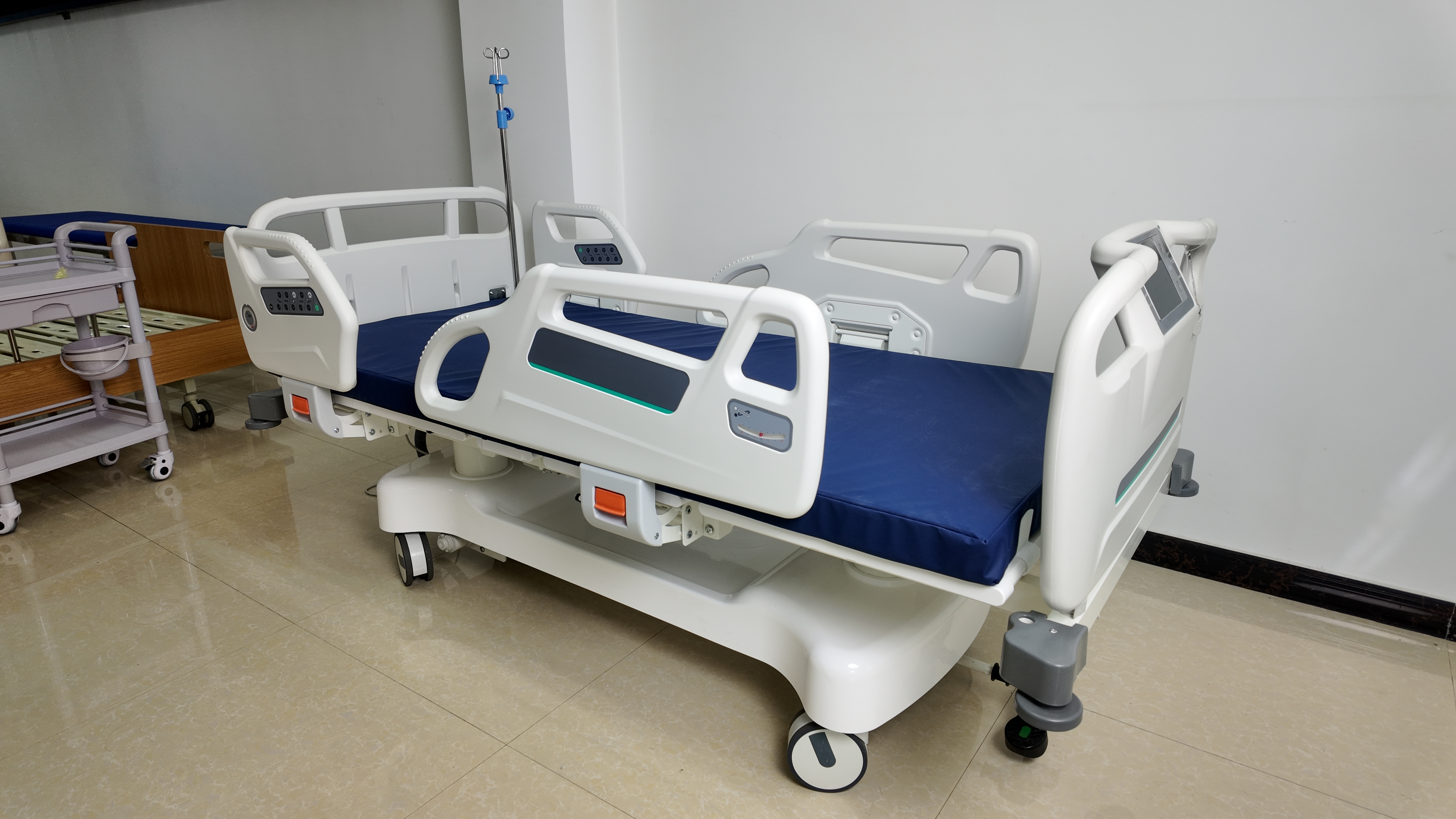
In a typical hospital bed OEM project, the buyer supplies or approves a detailed specification, while the manufacturer produces the product to that specification. The buyer may define:
- Bed functions and configuration
- Dimensions and load requirements
- Frame, panels, and side-rail requirements
- Motors, controls, voltage, and plug
- Mattress and accessory package
- Logo, labels, and manual language
- Packaging and shipping requirements
- Quality checks and acceptance criteria
OEM can be a strong choice when your company already understands its target customers and wants tighter control over product features, branding, or repeat-order consistency. However, more customization generally means more work on technical alignment, sampling, documentation, and change control.
- Greater control over product requirements
- Opportunity to develop a distinctive configuration
- Better alignment with an established product line
- More direct control over branding and user-facing details
- A documented specification for repeat production
- More time may be needed to finalize requirements.
- Custom tooling or engineering can affect cost and lead time.,
- The buyer must actively review samples and technical documents.
- Changes after approval can disrupt production schedules.
- Market-specific compliance responsibilities must be agreed clearly.
In a typical hospital bed ODM project, the manufacturer offers an existing design or product platform that the buyer can adapt. Customization might include a logo, color, selected accessories, labels, manuals, or packaging, depending on the design and supplier's capabilities.
ODM may suit brands entering a market without an established bed design or teams seeking to reduce initial product-development work. It can also help distributors expand a catalog using a platform that the manufacturer already produces.
- Potentially faster development than a fully new design
- Lower need for buyer-side product engineering at the outset
- Access to an existing product platform
- Easier selection among standard options
- A practical starting point for private-label products
- The base design may also be offered to other customers.
- The available customization range may be limited.
- The buyer should verify that the product fits its market and intended use.
- Exclusive design rights should never be assumed.
- Documentation and conformity status need to be checked for the exact model and market.
Use your business priorities to guide the decision.
Choose OEM when:
- You have a clear technical specification or design.
- Your brand needs a differentiated bed configuration.
- You want greater involvement in product details.
- You have resources for sample review, engineering coordination, and approval.
- Your product strategy depends on consistent, controlled specifications.
Choose ODM when:
- You want to launch using an existing product platform.
- Your customization needs are relatively limited.
- You prefer to focus on brand, sales, and distribution.
- You want to evaluate demand before investing in extensive development.
- The manufacturer's standard configuration already suits your market.
Consider a hybrid approach when: you want an established bed platform but need specific adjustments—for example, a different accessory bundle, control labels, color, packaging, or selected technical changes. Many sourcing projects work best when the buyer distinguishes standard platform features from project-specific modifications.
The manufacturing model can affect costs beyond the bed's quoted price. Request an itemized quotation covering:
- Base bed and included functions
- Mattress, rails, and accessories
- Engineering or customization fees
- Tooling, if applicable
- Sample and testing costs
- Branding, labels, manuals, and translation
- Packaging and palletization
- Inspection and documentation
- Freight assumptions and delivery terms
- Spare parts, warranty, and after-sales support
For a fair comparison, provide every supplier with the same technical brief. Mark requirements as mandatory, optional, or open for recommendation. Treat missing information as "not quoted," not as included.
Score each prospective model from 1 to 5 against these criteria:
| Decision criterion | Questions to ask |
|---|---|
| Design control | How much control does your brand need over the bed’s design and specification? |
| Time to market | Can your launch schedule accommodate development and sample iterations? |
| Customization | Are logo and color sufficient, or do you need technical changes? |
| Exclusivity | Does your strategy require exclusive design or territory rights? |
| Internal capability | Can your team review drawings, samples, and technical documentation? |
| Market fit | Does the product match local user needs and applicable requirements? |
| Lifecycle support | Can the supplier support spare parts and repeat orders? |
A high score for design control and differentiation may point toward OEM. A stronger emphasis on launch speed and use of an existing platform may favor ODM. If the results are mixed, explore a hybrid arrangement and define which elements are standard and which are custom.
A capable partner should be able to explain its manufacturing scope and provide clear, model-specific information. During supplier evaluation, request:
- Product drawings and technical specifications
- Function-by-function descriptions
- Sample and approval procedures
- Quality-control and pre-shipment inspection criteria
- Available test reports and market documentation
- Customization options, minimum order quantities, and lead times
- Spare-parts catalog and warranty process
- Details about design changes and version control
Ask who is responsible for design inputs, testing, labeling, technical files, and market submissions. These responsibilities vary by project and jurisdiction. The FDA, for example, publishes requirements and guidance for medical-device manufacturers; brands and importers should determine their own obligations with qualified regulatory specialists rather than assume that the factory handles everything.
A product's manufacturing model does not determine whether it meets regulatory requirements. Buyers should establish the intended market, identify applicable rules, and verify the documentation for the exact model and configuration being supplied.
For medical beds, the FDA's recognized consensus standards database lists IEC 60601-2-52 for basic safety and essential performance within the standard's stated scope. Confirm the applicable version, product scope, and conformity pathway with qualified specialists for each destination market. A reference to a standard is not, by itself, proof of market approval.
Agree in writing on:
- Product and model identification
- Applicable market documentation
- Label and manual responsibilities
- Sample and production testing
- Change notification and approval
- Record retention and traceability
- Warranty and complaint handling

1. Define the market and customer. Identify destination countries, care settings, and buyer expectations.
2. Write a product brief. Include bed functions, dimensions, accessories, electrical requirements, branding, and packaging.
3. Select the model pathway. Decide whether to use a standard ODM platform, a buyer-defined OEM specification, or a hybrid.
4. Request a detailed quotation. Separate base product, custom work, tooling, samples, and shipment costs.
5. Review supplier documentation. Compare specifications, drawings, available reports, and stated responsibilities.
6. Evaluate a representative sample. Test functions, dimensions, finish, branding, accessories, and packaging.
7. Approve the specification and change-control process. Make the approved documents the production reference.
8. Plan inspection and after-sales support. Confirm acceptance criteria, spare parts, warranty, and repeat-order procedures.
- Assuming OEM and ODM have the same meaning for every supplier
- Choosing a model based only on low unit price
- Assuming an ODM design is exclusive
- Leaving customization boundaries undefined
- Approving a sample without documenting the final specification
- Failing to clarify who handles market-specific documentation
- Allowing unapproved design changes during production
- Overlooking spare parts, warranty, and repeat-order consistency
- OEM vs. ODM comparison graphic: Show who typically defines the design, specifications, and branding.
- Customization map: Label potential options such as rails, controls, colors, accessories, and packaging.
- Project workflow diagram: Illustrate brief, quotation, sample approval, production, inspection, and shipment.
- Short product video: Demonstrate the selected bed configuration and explain which elements are standard or customized.
In common sourcing practice, OEM production follows buyer-defined specifications, while ODM uses a manufacturer's existing design that can be adapted. Because suppliers use the terms differently, define the project scope in writing.
Not necessarily. An existing platform may reduce design work, but customization, documentation, sample approval, and market requirements can still affect lead time.
Often, suppliers offer private-label options such as logos, labels, colors, manuals, or packaging. Confirm the available options, minimum order quantities, and any exclusivity terms.
No. Design ownership and intellectual-property rights depend on the project agreement. Specify ownership, permitted use, tooling ownership, and exclusivity in the contract.
An ODM or hybrid project may be a practical starting point if an existing platform meets local requirements. Validate customer demand, product suitability, documentation, and after-sales support before committing to inventory.
Include target market, bed functions, dimensions, electrical configuration, mattress, rails, accessories, branding, packaging, order volume, documentation needs, inspection criteria, and delivery terms.
Responsibilities depend on the product, market, and commercial arrangement. Define them with the manufacturer and consult qualified regulatory specialists for the destination market.
Tianjin Kangli Medical Instrument works with international brands, wholesalers, distributors, and manufacturers on hospital-bed OEM projects. Share your target market, product requirements, estimated order quantity, and branding needs to discuss a suitable OEM, ODM, or hybrid manufacturing approach.


