

Views: 126 Author: kangli Publish Time: 2026-09-23 Origin: Site


Content Menu
● Electric Turning Nursing Bed: Functions, Side-Turning Angles and Buyer Checklist
● What Is an Electric Turning Nursing Bed?
● How to Understand Side-Turning Angles
>> Continuous, Incremental, and Programmed Turning
● Key Electric Turning Bed Functions to Evaluate
>> 2. Backrest and Leg Adjustment
>> 5. Power Failure and Emergency Operation
● Safety and Mattress Compatibility
● Who May Benefit from an Electric Turning Bed?
● Buyer Checklist for an Electric Turning Nursing Bed
>> Electrical and Control System
>> OEM and Commercial Requirements
● How to Evaluate a Manufacturer's Sample
● Questions to Ask Before Requesting a Quotation
● Conclusion: Choose by Workflow, Not by Angle Alone
>> 1. What is an electric turning nursing bed?
>> 2. What side-turning angle should buyers choose?
>> 3. Does a turning bed replace manual repositioning?
>> 4. Does the mattress affect turning performance?
>> 5. What should distributors check before placing a bulk order?
>> 6. Should buyers request a product sample?
>> 7. Can Tianjin Kangli Medical Device provide OEM services?
How can I start an OEM partnership with your factory?
We recommend starting with an initial technical consultation to review your design specifications, target market, required functions, quantity, and customization needs.
Please contact our dedicated B2B team by email at Yukili90@tjkangli.com or chat with us directly on WhatsApp: +86 136 5207 7555.
WhatsApp:
Let’s build excellence together. Whether you need a quotation for a large-scale hospital project, want to develop a private-label product, or are exploring OEM/ODM opportunities for our 5-function medical bed series, our team is ready to support you from product selection and technical confirmation to production and delivery.
Visit www.klmedbed.com or contact us via WhatsApp to start your customized manufacturing project today.
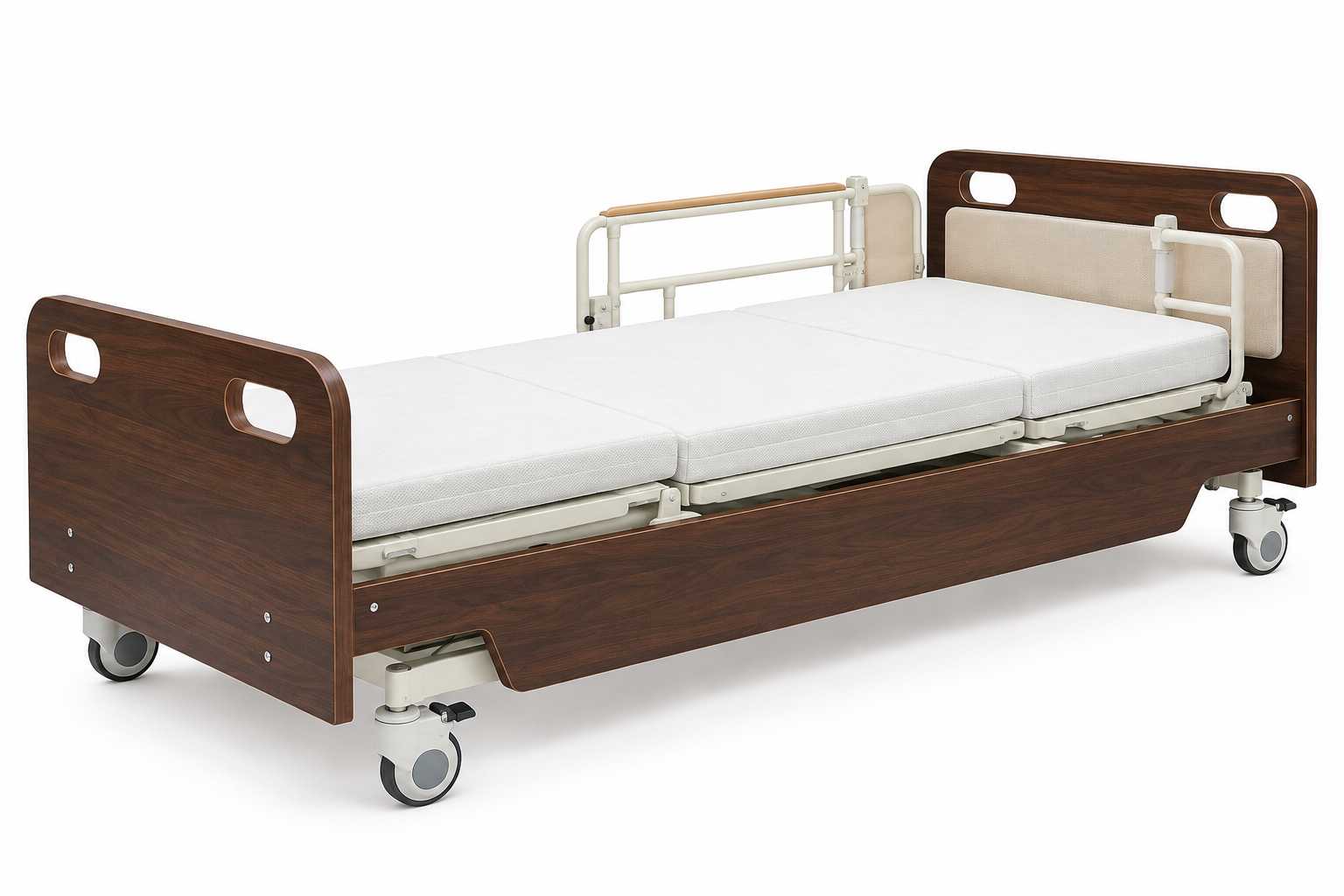
An electric turning nursing bed helps caregivers change a patient's position using powered adjustments. Depending on its design, the bed may provide side-to-side turning, backrest and leg adjustment, height adjustment, or timed turning programs. For hospitals, nursing homes, distributors, and international brands, choosing the right model means looking beyond the advertised turning angle: patient needs, caregiver workflow, mattress compatibility, safety controls, maintenance, and local requirements all matter.
Tianjin Kangli Medical Device provides OEM and private-label manufacturing services for overseas brands, wholesalers, distributors, and medical-equipment companies. This guide outlines the functions to evaluate, how to interpret side-turning angles, and what to include in a supplier RFQ.
> Clinical note: A turning bed is a positioning aid, not a substitute for an individualized care plan. Clinicians should determine whether and how it is used for a particular patient.
Add a labeled product image showing the bed's side-turning direction, hand controller, side rails, mattress, and emergency controls. A short demonstration video could show gradual turning, stopping, returning to level, and locking the controls.
An electric turning nursing bed uses motors or actuators to change the patient-support surface's position. Some models tilt the whole mattress platform from side to side; others use a multi-section platform that changes the patient's position in a different way.
The term "turning bed" is not a standardized function list. Ask the manufacturer to explain exactly what moves, which controls operate it, and what angle range applies.
Typical functions may include:
- Left and right lateral turning
- Electric backrest adjustment
- Knee- or leg-rest adjustment
- Bed-height adjustment
- Trendelenburg and reverse Trendelenburg
- Manual or electric CPR release
- Timed or programmed turning
- Turn-angle adjustment
- Caregiver control lockout
- Battery backup
These features may be standard, optional, or unavailable depending on the model. Request a complete specification rather than relying on the product name.
A quoted turning angle describes how far the bed or patient-support platform can tilt sideways. It does not, by itself, establish that the bed is appropriate for every patient or care protocol.
Suppliers may quote different maximum angles. Buyers should ask:
- Is the angle measured from the level position?
- Is it the platform angle or an estimated patient angle?
- Is the maximum angle available under the rated load?
- Can the operator select smaller increments?
- Does the bed turn left and right by the same amount?
- Can the angle be limited or locked?
- Does the bed return automatically to level?
- What accessories or mattress are required?
Do not compare two beds by the maximum-angle figure alone. The turning method, movement speed, stability, controls, mattress, and intended workflow also affect practical use.
| Control approach | What it means | Buyer consideration |
|---|---|---|
| Continuous adjustment | Caregiver selects and holds the control to move the bed | Check control responsiveness and stopping behavior |
| Incremental adjustment | Bed moves through preset angle levels | Ask how many levels are available and how they are selected |
| Programmed turning | Bed follows a preset schedule or sequence | Confirm cycle settings, override, alarms, and clinical suitability |
Request a demonstration using the proposed mattress and representative load. Confirm whether staff can stop movement immediately and return the bed to a level position.
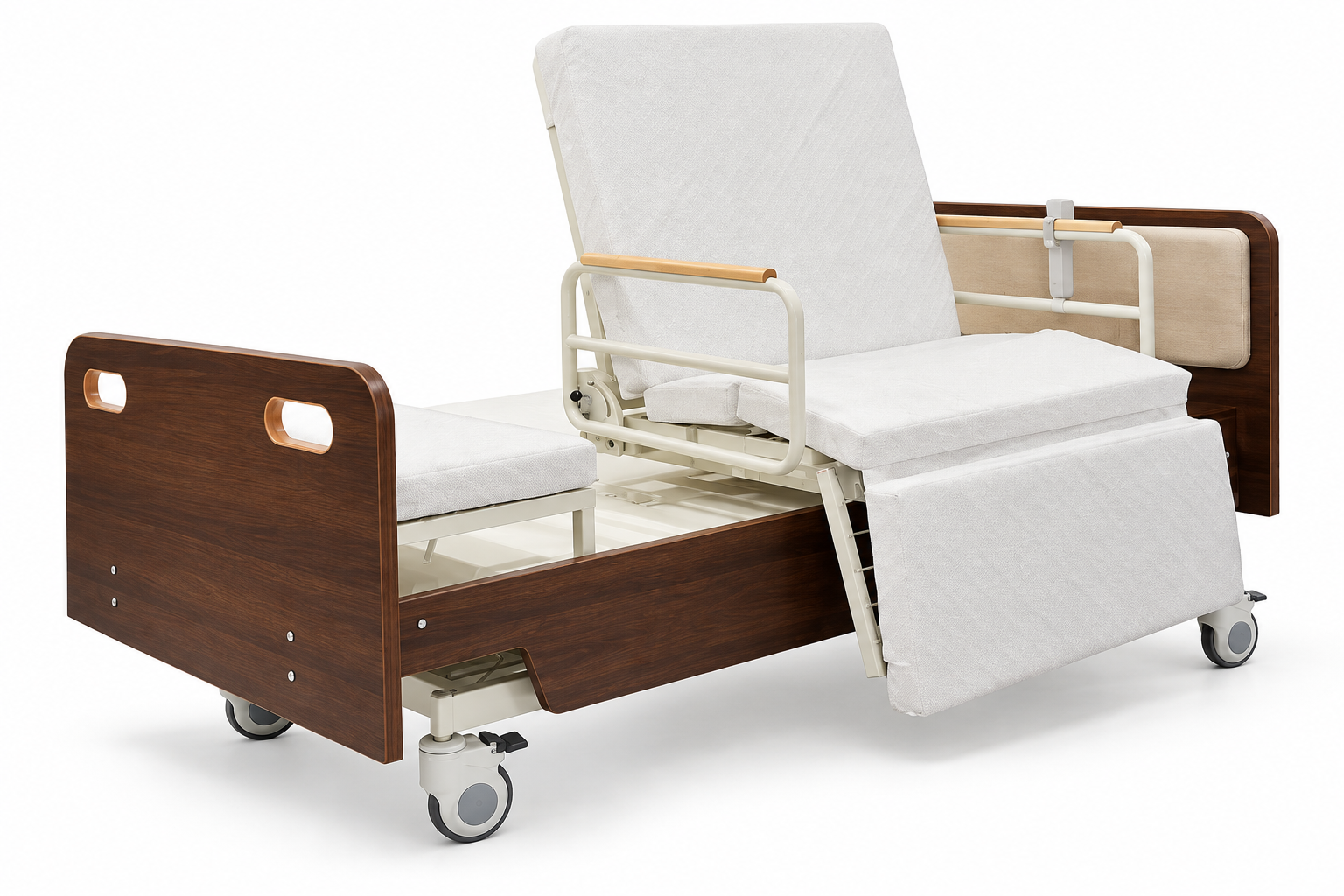
Confirm:
- Left and right turning range
- Adjustment steps or increments
- Movement speed
- Manual stop and return-to-level controls
- Automatic return, if offered
- Operation under rated load
- Turning behavior with side rails raised
- Compatibility with mattress and accessories
Ask the supplier to show the movement and provide a drawing or test record describing the angle measurement method.
These functions should be specified separately from lateral turning. Request the backrest and leg-rest ranges, whether they move independently, and how staff operate them.
Check that the bed can reach the positions required by the intended care workflow without creating interference with side rails, cables, or accessories.
Specify the minimum and maximum bed height. Also ask about movement speed, noise, stability, and whether height adjustment remains available during battery operation.
A low minimum height may support easier access for some users, while a higher working height can assist caregiving tasks. The appropriate range should be set by the buyer's clinical and facilities teams.
Ask whether the bed has:
- Patient handset
- Caregiver or nurse control panel
- Selective function lockout
- Emergency stop or movement interruption
- Clearly labeled controls
- Control-panel protection
- Audible or visual indicators
A lockout function can help prevent unintended adjustment. Confirm who can enable it, how the status is displayed, and how staff restore operation.
For an electric bed, establish what happens if the power supply fails. Ask whether the model includes battery backup, which movements remain available, how battery status is indicated, and whether there is a manual emergency-release procedure.
Request written instructions and demonstrate the emergency procedure during sample approval or pre-shipment inspection.

Turning performance depends on the complete bed system, not only the motor or frame. Mattress thickness, flexibility, patient position, side rails, and attached equipment can affect movement and clearance.
Before ordering, confirm:
- Recommended mattress type and dimensions
- Maximum mattress thickness
- Mattress retention method
- Side-rail clearance during turning
- Safe working load
- Maximum patient weight
- Stability with accessories installed
- Cable routing and pinch-point protection
- Cleaning and disinfection instructions
- Inspection and maintenance schedule
Ask the supplier to demonstrate turning with the specified mattress. A demonstration using a different mattress may not represent the final configuration.
The hospital's clinical engineering and care teams should review relevant risks, operating instructions, and training requirements before deployment.
---
An electric turning bed may be considered for settings where assisted repositioning is part of a clinician-directed care plan, such as:
- Hospitals and intensive-care units
- Long-term-care and nursing facilities
- Rehabilitation settings
- Home-care programs with trained support
- Facilities seeking to reduce manual repositioning workload
Suitability depends on the individual patient, care plan, staff training, bed design, and local protocols. Avoid claims that a turning bed will prevent pressure injuries or replace routine assessment. The device should be evaluated as one component of a broader care approach.
---
- Exact model and configuration
- Left/right turning angle and measurement method
- Turning increments or program options
- Backrest, leg-rest, and height ranges
- Safe working load and patient-weight limit
- Mattress size and compatibility
- Side-rail configuration
- Caster and brake system
- Accessories included or optional
- Rated voltage and frequency
- Plug type
- Motor or actuator specifications
- Battery backup and supported functions
- Emergency return or release
- Control lockout
- Cable protection
- User instructions for power failure
- Current quality-system certificate, if applicable
- Product datasheet and technical drawings
- Risk and safety documentation available for the product
- Inspection and functional-test records
- User and service manuals
- Cleaning instructions
- Warranty terms
- Spare-parts list and availability
- Logo and branding method
- Color and material options
- Private-label packaging
- Manual language and labeling
- Minimum order quantity
- Sample and tooling costs
- Production lead time
- Incoterms and named delivery place
- Warranty and technical support
- Change-control and approval process

Before a bulk order, inspect a sample or pilot unit against the approved specification.
1. Verify the model and configuration against the quotation.
2. Check dimensions and mattress fit.
3. Operate each function through its full range.
4. Test left and right turns at the stated settings.
5. Confirm stopping and return-to-level controls.
6. Check side rails, brakes, and accessories during movement.
7. Review power-failure procedures and battery operation.
8. Inspect labels, manuals, packaging, and branding.
9. Record defects and corrections before approving mass production.
For OEM projects, retain an approved golden sample, controlled technical drawing, packaging artwork, and inspection checklist. These provide a clear reference for future production batches.
---
Send suppliers a consistent RFQ so their offers can be compared fairly:
- What exactly does "turning angle" measure?
- Is that angle available under the specified load?
- Can the bed turn in both directions?
- Are movements continuous, incremental, or programmed?
- Which mattress is required?
- What happens during a power failure?
- Which controls can be locked?
- What are the safe working load and patient-weight limit?
- Which certificates and test documents can you provide?
- Are spare actuators, controls, and batteries available?
- Can you customize branding, colors, manuals, and packaging?
- What are the sample, MOQ, lead time, warranty, and shipping terms?
A supplier should answer technical questions clearly and provide supporting documents where available. Treat vague descriptions such as "automatic turning" or "full safety design" as prompts for clarification.
---
The right electric turning nursing bed is the model whose documented functions match the care setting, patient requirements, mattress, staff workflow, and service capacity. Compare turning angle alongside movement control, safety features, compatibility, documentation, and lifecycle support.
For an OEM or bulk-purchasing project, prepare a detailed specification and approve a representative sample before production. Contact Tianjin Kangli Medical Device with your required turning functions, target market, branding needs, and expected order volume to request an OEM quotation and technical specification.
---
It is a powered nursing bed that changes the patient-support surface's position, often including side-to-side turning and other adjustments such as backrest or height control.
There is no single suitable angle for every project. Define the required range with the clinical team and ask suppliers how the angle is measured and tested.
Not necessarily. Its use should follow the patient's care plan and the facility's clinical protocols. Staff should receive appropriate training.
Yes. Mattress dimensions, thickness, flexibility, and retention can affect clearance and movement. Confirm compatibility with the exact bed model.
Confirm the full function list, turning-angle definition, safety and electrical details, documentation, sample approval, warranty, spare parts, lead time, and OEM terms.
For most OEM and bulk projects, a sample or pilot unit helps verify functions, controls, mattress fit, construction, labels, and packaging before mass production.
Tianjin Kangli Medical Device provides OEM and private-label manufacturing services for overseas brands, wholesalers, distributors, and medical-equipment companies. Buyers should share project specifications to confirm available customization.
---
- No external clinical efficacy claims or numerical clinical statistics are made in this article. Product specifications and regulatory requirements should be confirmed for the specific model and destination market.
- Product and OEM information should be verified directly with Tianjin Kangli Medical Device before publication or procurement.


