

Views: 136 Author: kangli Publish Time: 2026-09-22 Origin: Site


Content Menu
● Pre-Shipment Inspection Checklist for Hospital Beds and Medical Furniture
● Why Pre-Shipment Inspection Matters for Hospital Bed Procurement
>> Inspection Is Not the Same as Certification
● Pre-Shipment Inspection Checklist: Quick Overview
● 1. Verify the Purchase Order and Approved Specification
● 2. Check Quantity, Model, and Shipment Segregation
● 3. Inspect Hospital Bed Appearance and Finish
>> Inspect for:
>> For ABS and plastic components
● 4. Inspect the Hospital Bed Frame and Mechanical Structure
● 5. Test Hospital Bed Functions and Adjustments
>> Functional inspection questions
● 6. Inspect Side Rails for Safety and Usability
● 7. Check Mattress Platform, Mattress, and Patient Contact Areas
>> Mattress-platform inspection
● 8. Test Casters, Brakes, and Mobility
>> Caster inspection checklist
● 9. Verify Voltage, Plug, Motors, and Electrical Safety
● 10. Inspect Medical Furniture: Cabinets, Tables, and Chairs
● 11. Verify Accessories, Spare Parts, and Installation Kits
● 12. Review Labels, Manuals, and OEM Branding
● 13. Inspect Export Packaging Before Container Loading
>> Container-loading recommendations
● AQL Sampling and Defect Classification
● Common Pre-Shipment Inspection Failures
>> Failure 1: Inspecting only one sample
>> Failure 2: Checking appearance but not functions
>> Failure 3: Testing without the approved specification
>> Failure 4: Ignoring packaging
>> Failure 5: Approving substitutions without documentation
● Recommended Factory Release Procedure
● What OEM Buyers Should Request from a Hospital Bed Supplier
● Recommended Visual Content for This Article
● OEM Hospital Bed Pre-Shipment Inspection FAQ
>> 1. When should hospital beds be inspected before shipment?
>> 2. Should every hospital bed be inspected?
>> 3. What are the most important tests for electric hospital beds?
>> 4. What should be checked on hospital-bed side rails?
>> 5. How can buyers reduce shipping damage?
>> 6. Does a factory inspection report replace certification?
>> 7. Can Tianjin Kangli customize inspection items for OEM orders?
How can I start an OEM partnership with your factory?
We recommend starting with an initial technical consultation to review your design specifications, target market, required functions, quantity, and customization needs.
Please contact our dedicated B2B team by email at Yukili90@tjkangli.com or chat with us directly on WhatsApp: +86 136 5207 7555.
WhatsApp:
Let’s build excellence together. Whether you need a quotation for a large-scale hospital project, want to develop a private-label product, or are exploring OEM/ODM opportunities for our 5-function medical bed series, our team is ready to support you from product selection and technical confirmation to production and delivery.
Visit www.klmedbed.com or contact us via WhatsApp to start your customized manufacturing project today.
For overseas medical brands, distributors, wholesalers, and healthcare-equipment manufacturers, a pre-shipment inspection checklist for hospital beds and medical furniture is one of the most effective tools for reducing delivery disputes, product defects, installation problems, and after-sales costs.
Before a container leaves the factory, buyers should verify more than appearance. A professional inspection should confirm quantity, specifications, dimensions, materials, electrical safety, mechanical functions, accessories, packaging, labeling, and documentation. At Tianjin Kangli Medical Instrument, we recommend treating pre-shipment inspection as a structured release process—not as a last-minute visual check.
A hospital bed may look acceptable while still having loose fasteners, incorrect voltage, incomplete accessories, damaged side rails, poor wheel braking, or inadequate packaging. These issues can create significant problems after arrival. This guide provides a practical hospital bed quality inspection checklist for OEM buyers and international procurement teams.
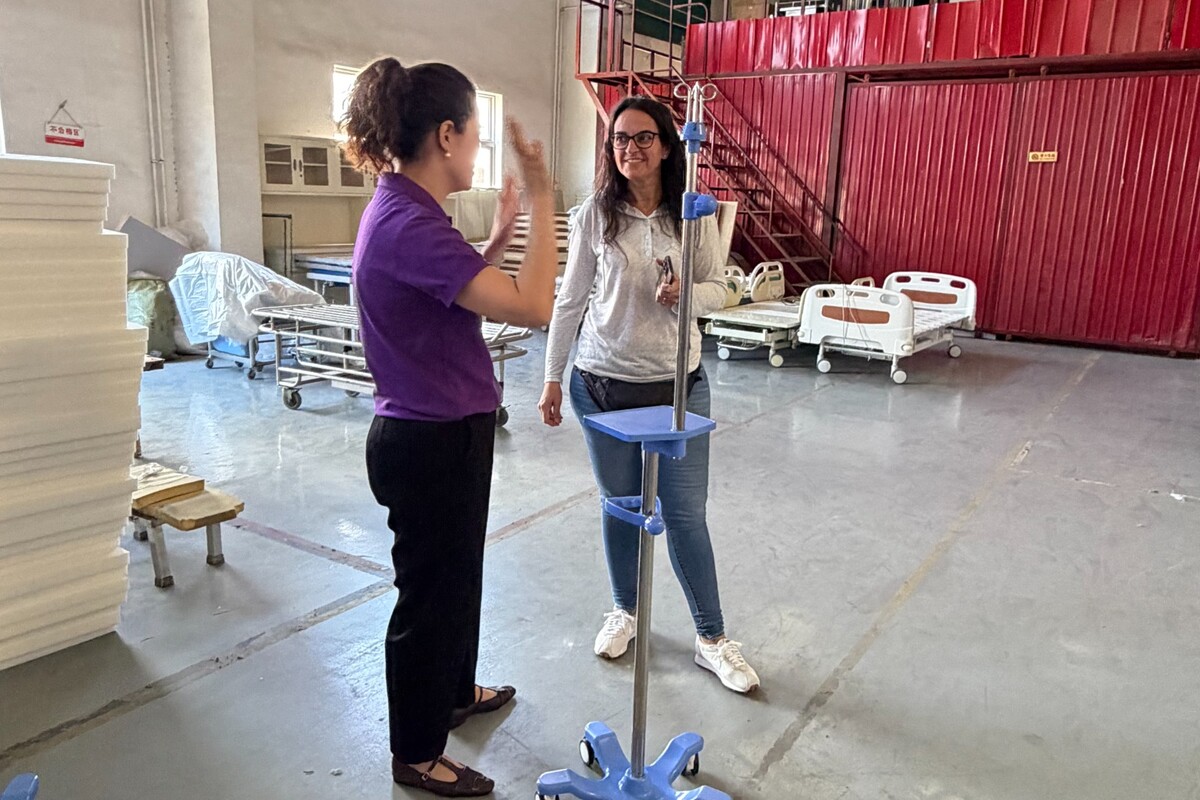
Hospital beds and medical furniture are used in demanding environments. They must withstand frequent movement, cleaning, patient transfers, repeated adjustment, and long service periods.
A pre-shipment inspection helps buyers:
- Confirm that the order matches the approved specification
- Identify visible defects before loading
- Verify electrical and mechanical functions
- Reduce transit-related damage
- Check that accessories are complete
- Confirm correct branding and labeling
- Prevent mixed models or incorrect quantities
- Create an objective shipment record
- Reduce returns, rework, and customer complaints
For OEM customers, inspection is especially important because customized products may include unique colors, logos, voltage configurations, accessories, packaging, and documentation.
A factory inspection report does not replace regulatory approval, product certification, or conformity assessment. The buyer remains responsible for confirming the requirements of the destination market.
Depending on the product and market, relevant requirements may involve:
- Medical-device regulations
- Electrical safety requirements
- Hospital-bed standards
- EMC requirements
- Biocompatibility or material information
- Packaging and labeling rules
- Import documentation
The FDA identifies hospital-bed entrapment as a safety concern and recommends assessing the complete bed system, including the mattress, rails, frame, and clearances.

| Inspection category | Key points to verify |
|---|---|
| Order quantity | Model, quantity, lot number, production status |
| Appearance | Color, logo, scratches, cracks, contamination |
| Structure | Frame, welds, fasteners, joints, stability |
| Side rails | Movement, locking, clearance, damage |
| Bed platform | Dimensions, adjustment, noise, deformation |
| Casters | Rolling, braking, direction, attachment |
| Electrical system | Voltage, plug, motors, controller, battery |
| Accessories | IV pole, hooks, mattress, table, cabinet |
| Cleaning design | Smooth surfaces, seams, exposed hardware |
| Packaging | Protection, carton marks, moisture control |
| Documentation | Manual, labels, inspection records, packing list |
The inspection should begin with documents, not with the product itself.
The inspector should compare the shipment against:
- Purchase order
- Commercial invoice
- Approved quotation
- Technical specification
- Approved drawings
- Golden sample or approved sample
- Packing list
- Change-control records
- Accessory list
- Packaging instructions
- Product model and version
- Number of beds or furniture units
- Bed dimensions
- Safe working load
- Mattress-platform size
- Number and type of side rails
- Headboard and footboard design
- Caster diameter and configuration
- Motor quantity
- Control-panel layout
- Voltage and frequency
- Plug type
- Color and finish
- Logo position
- Accessory quantities
- Packaging method
A common procurement mistake is inspecting against a general catalog rather than the approved project specification. OEM products may differ from standard models, so the approved specification should be the controlling document.
---
Before detailed testing, verify that the shipment contains the correct quantity and models.
Count:
- Complete hospital beds
- Bedside cabinets
- Overbed tables
- Mattresses
- Side rails
- IV poles
- Controllers
- Motors
- Battery units
- Drainage hooks
- Installation kits
- Spare parts
Check that:
- Model numbers are correct
- Different versions are clearly separated
- Accessories are matched to the correct bed
- Carton labels correspond to the product inside
- No previous model labels remain
- Serial numbers or lot numbers are recorded
For mixed-container shipments, photograph the loading arrangement and record which products are placed in each carton or pallet group. This makes receiving and warehouse distribution easier.
---
Appearance affects brand perception, especially for OEM buyers selling under their own name. However, cosmetic inspection must use measurable criteria rather than subjective comments such as "looks good."
- Scratches
- Cracks
- Dents
- Burrs
- Paint runs
- Uneven coating
- Color mismatch
- Surface contamination
- Sharp edges
- Loose trims
- Exposed adhesive
- Distorted plastic panels
- Damaged labels
- Incorrect logo placement
Check:
- Uniform color
- Smooth molded surface
- No sink marks in visible areas
- No warping
- No sharp flash
- No cracks around fixing points
- No loose covers
- Secure attachment to the frame
Check:
- Weld consistency
- Coating adhesion
- Corrosion
- Exposed bare metal
- Deformation
- Sharp corners
- Uneven grinding
- Loose brackets
Expert recommendation: Use approved physical samples and reference photographs during inspection. Screen images and printed color sheets are not sufficient for final color approval.

The bed frame supports the patient, mattress platform, motors, side rails, and accessories. Structural inspection should focus on stability, alignment, and workmanship.
- Frame is level and stable
- No rocking on a flat floor
- Welds are complete and properly finished
- Bolts and fasteners are installed
- No visible deformation
- Moving joints operate smoothly
- No abnormal metal-to-metal contact
- Covers and brackets are securely fixed
- Bed remains stable during adjustment
- No excessive noise or vibration
Inspectors should also check that fasteners are tightened consistently and that critical joints cannot loosen during normal use.
Where torque specifications are available, use a calibrated torque tool for selected critical fasteners. If torque values are not specified, the manufacturer and buyer should agree on a suitable inspection method before production.
---
Every adjustable function should be tested. A hospital bed should not be approved simply because the motors make a sound.
Depending on the model, test:
- Backrest adjustment
- Knee-rest adjustment
- Height adjustment
- Trendelenburg position
- Reverse Trendelenburg position
- Footboard or extension function
- CPR release
- Manual emergency lowering
- Side-rail folding and locking
- Control-panel operation
- Battery operation
- Nurse-control override
- Reading light or auxiliary functions
For each function, verify:
1. Does the mechanism move in the correct direction?
2. Does it reach the specified position?
3. Is movement smooth?
4. Is there abnormal noise?
5. Does the actuator stop correctly?
6. Does the control button respond consistently?
7. Does the bed remain stable at the end position?
8. Are cables protected from pinching?
9. Does the emergency function operate correctly?
10. Is the result consistent across sampled units?
A practical OEM inspection record should include function name, test result, inspector, date, and product serial number.
---
Side rails are frequently handled by nurses, caregivers, and patients. They must be checked for both function and safety.
- Rails raise and lower smoothly
- Locking mechanisms engage fully
- Release handles are easy to operate
- Rails do not drop unexpectedly
- No sharp edges or cracks
- No excessive looseness
- No interference with the mattress
- Correct left and right orientation
- Correct height and length
- No dangerous gaps caused by misalignment
- Rails remain secure during normal movement
Entrapment risk depends on the whole bed system, not only the rail material. Mattress thickness, rail height, platform position, and gaps must be assessed together. The FDA references recognized bed-safety guidance and the IEC 60601-2-52 framework for medical beds.
For export OEM projects, the buyer should request dimensional records or test evidence for the final configuration—not only for a similar standard model.
---
The mattress platform should be inspected for size, alignment, movement, and finish.
- Correct length and width
- Correct number of sections
- Smooth movement between sections
- No sharp exposed edges
- No loose panels
- Correct ventilation openings
- Secure hinges and supports
- No interference with the frame
- Adequate support for the specified mattress
If a mattress is included, verify:
- Correct dimensions
- Correct thickness
- Cover material
- Zipper condition
- Seam quality
- Fire-performance documentation where applicable
- Absence of stains or odor
- Correct labeling
- Water-resistant or fluid-resistant features, if specified
The mattress and rail configuration should be evaluated together because a different mattress thickness can change usable rail height and gap dimensions.
---
Caster failure is a common source of operational complaints. A hospital bed must roll when intended and remain stationary when brakes are engaged.
- Correct caster size and type
- All casters rotate freely
- Swivel action is smooth
- Directional lock works, if included
- Central braking system works, if included
- Individual brakes hold securely
- Caster brackets are firmly attached
- No abnormal wobbling
- No damaged tread
- Bed remains stable when locked
Test the bed on a representative floor surface. If the target market commonly uses vinyl, tile, or uneven hospital flooring, the buyer should communicate this during product development.

Electrical inspection is essential for electric hospital beds.
- Rated voltage matches the purchase order
- Frequency is correct
- Plug type matches destination market
- Power cord length is correct
- Motor model and quantity are correct
- Controller corresponds to the correct bed version
- Cables are properly routed
- Strain relief is secure
- No exposed conductors
- Connectors are fully inserted
- Battery is installed or packed as specified
- Electrical labels are accurate
Where required by the project, electrical testing may include:
- Ground continuity
- Insulation resistance
- Leakage current
- Dielectric strength
- Functional current or power checks
- Battery charging and discharge checks
Testing should be performed with suitable calibrated equipment, and results should be recorded. IEC 60601-1 is a key reference for basic safety and essential performance of medical electrical equipment, but the applicable conformity route must be determined according to the destination market and product classification.
Do not approve a shipment based only on the statement "the motor works." A motor can operate while the voltage label, grounding, cable protection, or controller configuration is incorrect.
---
Medical furniture requires its own inspection criteria. A bedside cabinet or overbed table may appear simple, but poor workmanship can lead to instability, damaged surfaces, or difficult cleaning.
- Correct dimensions
- Drawer opens smoothly
- Doors align properly
- Handles are secure
- Casters roll and lock
- Edges are rounded
- Laminate or coating is intact
- No sharp corners
- No unstable tipping
- Hardware is complete
- Moisture-resistant surfaces are present where specified
- Height adjustment works
- Tabletop remains stable
- Locking mechanism holds
- Casters roll smoothly
- Table does not tilt excessively
- Edges are safe
- Surface is easy to clean
- Load requirement is met
- Packaging protects the tabletop
The inspection should reflect the intended environment. Furniture for a hospital ward may require different durability and cleaning performance from furniture for homecare or short-term clinic use.
---
Missing accessories can delay installation and create avoidable complaints.
- IV pole
- Oxygen-cylinder holder
- Drainage-bag hooks
- Lifting pole
- Trapeze handle
- Remote control
- Mattress
- Bedside table
- Overbed table
- Power cable
- Battery
- Screws and washers
- Allen keys or tools
- Replacement fuses
- Spare casters
- User manual
- Warranty card
- Installation guide
Every accessory should be matched to the correct model. Some suppliers pack accessories separately to improve container utilization, so the inspection must verify both quantity and packing location.
---
For overseas OEM buyers, documentation is part of the product.
Check:
- Product name and model
- Manufacturer information
- Importer or distributor information, where required
- Serial or lot number
- Rated voltage
- Safe working load
- Symbols and warnings
- Cleaning instructions
- Mattress limitations
- Side-rail safety instructions
- Emergency operation instructions
- Language version
- Logo and brand spelling
- Barcode or QR code
- Country-of-origin marking, where required
User manuals should reflect the exact delivered model. A manual for a four-motor bed should not be packed with a two-motor version.
---
Packaging inspection should be completed before loading, not only after damage occurs.
- Correct carton dimensions
- Adequate foam and corner protection
- No crushed cartons
- No water damage
- No exposed product surfaces
- Accessories secured separately
- Fragile components protected
- Carton labels correct
- Model and quantity visible
- Pallets stable
- Cartons suitable for stacking
- Moisture protection included where required
- Loading photos recorded
- Photograph the empty container
- Check container cleanliness and dryness
- Record container number and seal number
- Confirm loading order
- Prevent heavy items from pressing on plastic panels
- Secure products against movement
- Protect cartons from sharp edges
- Photograph final loaded condition
For long-distance shipments, packaging should be designed around actual transport conditions, including vibration, humidity, handling, and multiple transfers.
---
For larger orders, buyers may use an Acceptable Quality Limit (AQL) sampling plan rather than inspecting every unit. The sampling level should be agreed before production.
| Defect level | Examples | Suggested response |
|---|---|---|
| Critical | Electrical safety failure, unsafe locking, structural instability | Shipment hold and corrective action |
| Major | Motor failure, missing accessory, incorrect voltage, broken rail | Rework or replacement before shipment |
| Minor | Small cosmetic mark, slight packaging defect | Record and assess against agreed limit |
AQL values should not be chosen casually. Medical equipment requires risk-based thinking. A visually minor defect may become major if it affects cleaning, patient contact, or safe operation.
For customized OEM products, the inspection standard should include approved samples, defect photographs, functional criteria, and acceptance limits. This prevents disputes caused by different interpretations of quality.
---
One perfect unit does not prove that the entire batch is consistent. Sampling should cover different production times, carton positions, and product lots where practical.
A clean bed can still have a defective motor, weak brake, or incorrect controller.
The inspector may accept a product that is technically functional but does not match the buyer's agreed model.
A product that passes factory inspection can still arrive with cracked panels or bent brackets if packaging is inadequate.
Alternative casters, motors, plastics, or fasteners may affect performance. Any substitution should be reviewed and approved through a documented change process.
---
A practical release process can follow these steps:
1. Freeze the approved specification.
2. Confirm production completion.
3. Separate finished goods by model and order.
4. Inspect quantity and appearance.
5. Test mechanical functions.
6. Test electrical functions and safety where required.
7. Verify accessories and documents.
8. Inspect packaging and shipping marks.
9. Record defects with photographs.
10. Complete corrective actions.
11. Conduct reinspection if necessary.
12. Approve loading only after the report is signed.
At Tianjin Kangli Medical Instrument, this type of structured process can help OEM customers improve shipment consistency and reduce communication gaps between purchasing, engineering, quality, and logistics teams.
---
Before placing a repeat order, ask the supplier for:
- Final inspection report
- Product specification sheet
- Electrical test records
- Material or coating information
- Approved drawing or sample confirmation
- Accessory packing list
- Serial-number list
- Packing photographs
- Loading photographs
- User manual and labels
- Corrective-action records
- Warranty and spare-parts policy
The exact documentation depends on the product and target market, but good records improve traceability and after-sales support.
---
To improve user experience and search engagement, consider adding:
1. A downloadable hospital-bed pre-shipment inspection checklist
2. A photograph showing a quality inspector testing a bed
3. A labeled diagram of hospital-bed inspection points
4. A short video demonstrating side-rail, caster, and motor testing
5. A packaging photo showing correct export protection
6. A flowchart of the factory release process
7. A comparison table of critical, major, and minor defects
All images should show real inspection activities where possible. Add descriptive alt text such as "quality inspection of an electric hospital bed before export" rather than generic text such as "medical bed image."
---
Inspection is normally performed after production is substantially complete and before final packing or container loading. For customized OEM orders, the buyer should confirm that all branding, accessories, voltage configurations, and documents are ready before inspection.
Not always. Buyers may use a risk-based sampling plan for large orders, but critical functions and high-risk configurations require careful testing. The sampling method and acceptance criteria should be agreed before production.
Key tests include motor operation, controller response, emergency functions, caster brakes, side-rail locks, cable routing, voltage configuration, and applicable electrical safety tests.
Inspect movement, locking, release force, alignment, height, cracks, sharp edges, gaps, and interference with the mattress. The rail should also be evaluated as part of the complete bed system.
Use reinforced export packaging, protect corners and plastic panels, secure accessories, confirm container conditions, and record loading photographs. Packaging should be designed for the actual transport route.
No. A factory inspection report confirms the condition of sampled products at a specific time. It does not replace applicable certification, conformity assessment, or regulatory approval.
Yes. Inspection criteria can be aligned with the buyer's technical specification, approved sample, logo requirements, electrical configuration, accessories, packaging, and destination-market needs.
---
1. U.S. Food and Drug Administration — A Guide to Bed Safety: Bed Rails in Hospitals, Nursing Homes and Home Health Care: The Facts
2. U.S. Food and Drug Administration — Information for Manufacturers of Bed Rail Products
3. IEC — IEC 60601-2-52: Medical Electrical Equipment—Particular Requirements for the Basic Safety and Essential Performance of Medical Beds
4. IEC — IEC 60601-1: Medical Electrical Equipment—General Requirements for Basic Safety and Essential Performance
[https://www.iec.ch/standards]
5. ISO — ISO 13485: Medical Devices—Quality Management Systems—Requirements for Regulatory Purposes
[https://www.iso.org/standard/59752.html]
6. ISO — ISO 14971: Medical Devices—Application of Risk Management to Medical Devices
[https://www.iso.org/standard/72704.html]
7. International Electrotechnical Commission — Medical Equipment and Systems Standards
[https://www.iec.ch/technical-committees/62]
A reliable pre-shipment inspection checklist for hospital beds and medical furniture should cover the entire order lifecycle—from specification review and quantity verification to functional testing, electrical safety, accessories, documentation, and export packaging.
For international OEM buyers, the most important principle is simple: approve the complete product configuration, not only the appearance of one sample. By working with a structured checklist and an experienced hospital-bed manufacturer such as Tianjin Kangli Medical Instrument, brands and distributors can reduce shipment risk, improve customer satisfaction, and build a more dependable medical-equipment supply chain.
Planning an OEM hospital-bed order? Contact Tianjin Kangli Medical Instrument with your target market, product model, electrical requirements, accessories, and packaging specifications to request a tailored quotation and pre-shipment inspection plan.


