

Views: 236 Author: Tianjin Kangli Publish Time: 2026-09-23 Origin: Site


Content Menu
● Standard Manual Wheelchair vs Lightweight Wheelchair: Key Differences
● What Is a Standard Manual Wheelchair?
>> When a standard manual wheelchair makes sense
>> Potential limitations of a standard wheelchair
● What Is a Lightweight Wheelchair?
>> When a lightweight wheelchair makes sense
● Which Wheelchair Is Better for Self-Propulsion?
● Which Wheelchair Is Better for Caregiver-Assisted Use?
● Standard vs Lightweight: A Practical Decision Matrix
● The Four-Step Wheelchair Selection Method
>> 1. Define the daily mobility pattern
>> 2. Assess the user and caregiver
>> 3. Specify the right configuration
● Common Buying Mistakes to Avoid
>> Assuming lightweight means appropriate
>> Ignoring cushion and seating needs
>> Overlooking transport requirements
● OEM Insight: How Brands Can Build a Better Wheelchair Range
>> Why OEM customization matters
● How to Choose Between Standard and Lightweight Wheelchairs
● Partner With Kangli for OEM Wheelchairs
● FAQ
>> 1. Is a lightweight wheelchair always easier to push?
>> 2. What is the difference between a standard wheelchair and a lightweight wheelchair?
>> 3. Is a standard wheelchair suitable for long-term use?
>> 4. Should I choose a lightweight wheelchair for an elderly parent?
>> 5. Can a lightweight wheelchair be strong enough for daily use?
>> 6. What should OEM buyers ask a wheelchair manufacturer?
>> 7. Why is wheelchair fitting important?
Standard manual wheelchair vs lightweight wheelchair: which should you choose? The right answer depends less on a product label and more on how the wheelchair will be used every day. For occasional, caregiver-assisted transport, a durable standard manual wheelchair may be the practical choice. For frequent self-propulsion, regular transfers, travel, or users with limited upper-body strength, a lightweight wheelchair can deliver a more efficient and comfortable mobility experience.
At Tianjin Kangli Medical Equipment Co., Ltd., we approach wheelchair design and OEM manufacturing from a real-world perspective: a wheelchair must be safe, fit the user correctly, work in the intended environment, and remain reliable through daily use. Founded in 1998, Kangli operates a 20,000-square-meter manufacturing facility with 50+ employees and supports overseas brands, wholesalers, and manufacturers with OEM solutions for medical mobility products.
A wheelchair should never be selected by weight alone. The best choice balances user strength, frequency of use, caregiver needs, transport requirements, seating dimensions, terrain, safety features, and long-term maintenance.
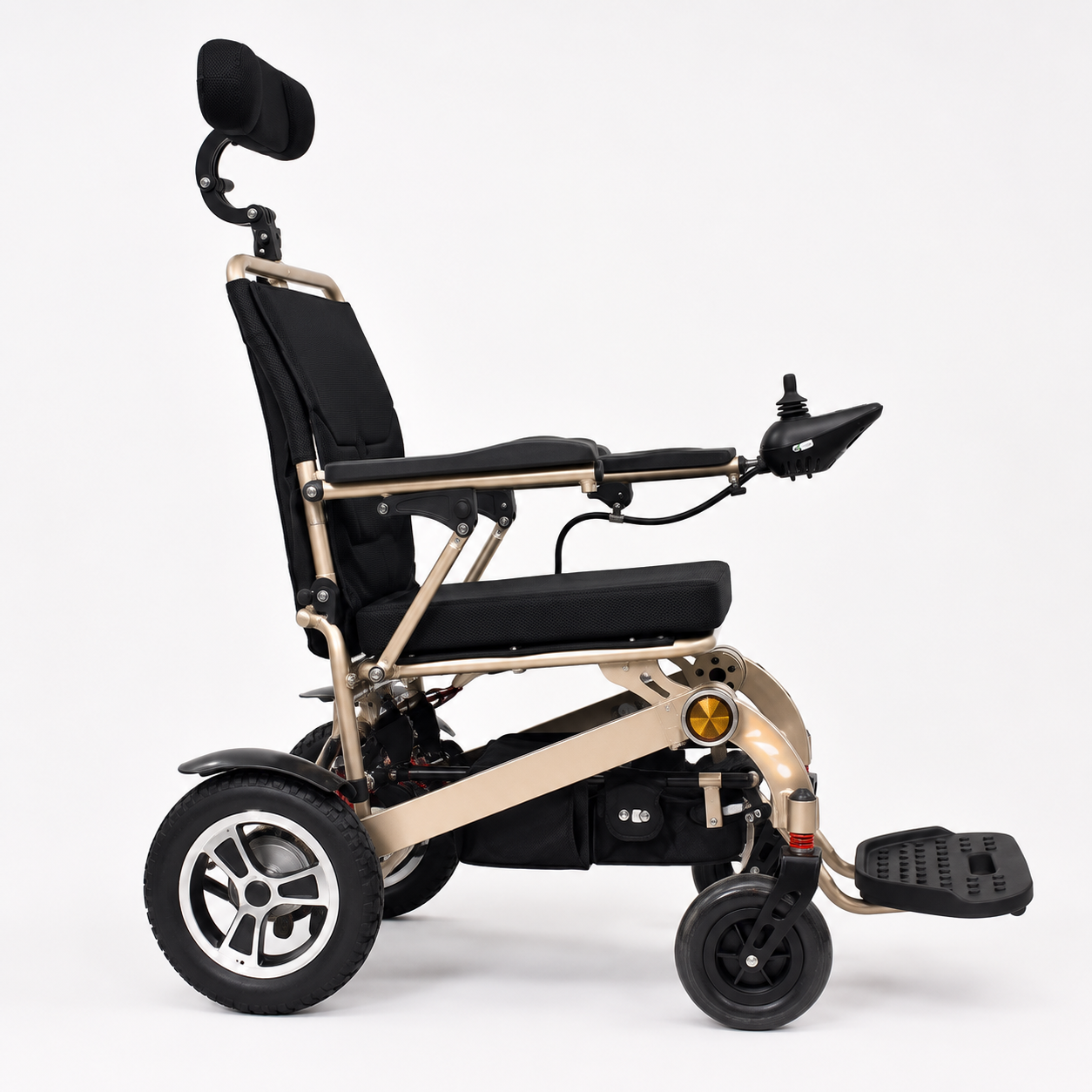
A standard manual wheelchair and a lightweight wheelchair both provide non-powered mobility. However, their frame construction, overall mass, propulsion effort, portability, adjustment options, and intended use can be significantly different.
In general, a standard manual wheelchair is built for dependable, basic mobility and caregiver-assisted transportation. It is often selected for hospitals, clinics, care facilities, recovery periods, or users who do not self-propel for long distances.
A lightweight wheelchair is designed to reduce the effort required to move, lift, store, and transport the chair. It is usually a better option for active users who propel themselves regularly or need caregivers to lift the wheelchair into vehicles frequently.
Industry guidance consistently emphasizes that wheelchair selection should be individualized. The World Health Organization's wheelchair-provision framework centers on assessment, fitting, user training, and follow-up—not simply choosing the lowest-cost or lightest product.
| Feature | Standard Manual Wheelchair | Lightweight Wheelchair |
|---|---|---|
| Primary purpose | Basic mobility, temporary use, transport, caregiver assistance | Frequent mobility, regular self-propulsion, easier transport |
| Frame construction | Typically robust steel or basic metal construction | Often optimized aluminum or high-strength alloy construction |
| Overall weight | Usually heavier | Generally lighter and easier to lift |
| Propulsion effort | Higher due to chair mass and rolling resistance | Lower effort for many users, especially over repeated trips |
| Portability | Suitable for routine facility use but may be harder to load into a car | Better suited to car travel, storage, and frequent loading |
| User profile | Occasional users or users pushed by caregivers | Active users or people with limited endurance for pushing |
| Cost position | Usually more budget-friendly | Often higher cost because of materials and design features |
| OEM potential | High-volume, standard configurations | Greater opportunity for specifications, branding, and feature differentiation |
A standard manual wheelchair is a non-powered mobility device typically designed for straightforward everyday transport. It commonly uses a folding cross-brace frame, fixed or detachable armrests, swing-away footrests, rear wheels with hand rims, and caregiver push handles.
For many institutional and short-term applications, this design remains highly effective.
A standard wheelchair can be the right choice when the user:
- Uses the wheelchair only occasionally.
- Is primarily pushed by a family member, caregiver, or staff member.
- Needs transport within a hospital, clinic, airport, nursing facility, or community setting.
- Has a limited procurement budget.
- Requires a sturdy, straightforward product for short-distance movement.
- Does not need to repeatedly lift the wheelchair into a vehicle.
- Prefers a familiar folding-frame format with simple operation.
For distributors and healthcare procurement teams, standard models can also offer operational advantages. Their configurations are often easier to standardize, staff can be trained quickly, replacement parts can be simplified, and inventory planning may be more predictable.
A standard manual wheelchair may not be ideal for every long-term user. The higher chair weight can increase the physical effort needed to propel it, turn it, carry it over thresholds, or load it into a car. This can matter greatly for people with reduced arm strength, fatigue, shoulder pain, arthritis, neurological conditions, or limited caregiver support.
A heavier chair may also become inconvenient when a person needs to take it in and out of a vehicle multiple times each week.
A lightweight wheelchair is a manual wheelchair engineered to reduce chair mass while maintaining structural strength, stability, and user support. It may use aluminum, optimized tubing, efficient wheel components, and design features that improve everyday handling.
Lightweight does not simply mean "small" or "less durable." A quality lightweight wheelchair should still provide appropriate load capacity, stable braking, secure foot support, reliable folding or transport performance, and suitable seating support.
Some industry classifications use "lightweight" for manual chairs under 34 lb and "ultralight" for chairs under 30 lb, though actual product specifications vary by market, configuration, accessories, and regulatory definitions.
A lightweight wheelchair may be the better option when the user:
- Self-propels daily or for long periods.
- Has limited upper-body endurance.
- Needs to lift the wheelchair into a car, taxi, or public transport.
- Travels frequently.
- Makes repeated transfers between bed, chair, toilet, and vehicle.
- Uses the wheelchair both indoors and outdoors.
- Needs a more responsive, easier-to-handle chair.
- Wants more flexibility for accessories, seat sizes, detachable wheels, or customized features.
For a full-time manual wheelchair user, reducing unnecessary chair weight can improve the practical experience of daily mobility. It may make starting, stopping, turning, and navigating slopes or thresholds less demanding.
However, the lightest wheelchair is not automatically the best wheelchair. Poor fit, insufficient support, incorrect seat width, unstable geometry, or unsuitable casters can make even a light chair uncomfortable or unsafe.
For users who propel themselves independently, a lightweight wheelchair is often the stronger choice. Every push requires effort. Over a day, that effort accumulates across hallways, doorways, ramps, uneven surfaces, and repeated starts and stops.
A lightweight design can improve usability in several ways:
- Less force may be needed to initiate movement.
- The user may find turning easier in tight spaces.
- Loading the chair into a vehicle can be more manageable.
- Caregiver lifting demands may be reduced.
- Frequent use may feel less tiring than with a heavier basic frame.
A clinical wheelchair resource notes that practice guidance recommends the lightest chair appropriate for the user, while also stressing that configuration and clinical needs matter.
For independent users, evaluate more than frame weight. Ask whether the wheelchair provides:
- Correct seat width and depth.
- Appropriate seat-to-floor height for foot propulsion or transfers.
- Rear-wheel placement that supports practical access to the hand rims.
- Comfortable hand rims with reliable grip.
- Stable but maneuverable caster design.
- Effective wheel locks.
- Armrest and footrest options appropriate for transfers.
- A cushion and back support compatible with the user's posture needs.
For caregiver-assisted mobility, the answer is more balanced.
A standard manual wheelchair is often a cost-effective and dependable option for short-distance transport. In hospitals, outpatient departments, rehabilitation centers, airports, and residential care settings, staff may prioritize durability, easy cleaning, folding storage, and simple controls.
A lightweight wheelchair becomes more valuable when caregivers must frequently:
- Lift the chair into a vehicle.
- Navigate apartments, elevators, and narrow corridors.
- Push users for longer distances.
- Manage several transfers each day.
- Support older adults or users with limited trunk control.
- Travel with the user outside the home.
The right choice also depends on the caregiver. A family caregiver who must repeatedly lift a heavy chair may face avoidable physical strain. In contrast, a facility that keeps wheelchairs on-site and uses them only for brief transport may prioritize ruggedness and purchase cost.
Use this quick comparison to clarify which wheelchair category is more likely to fit the application.
| Decision factor | Standard Manual Wheelchair | Lightweight Wheelchair |
|---|---|---|
| Use less than a few times per week | Often suitable | May be more than necessary |
| Daily self-propulsion | Can be tiring for many users | Usually preferable |
| Mainly caregiver-pushed | Suitable | Useful if transport or lifting is frequent |
| Frequent car loading | Less convenient | Strong advantage |
| Temporary recovery use | Often suitable | Consider if the user must self-propel |
| Hospital or clinic transport fleet | Common practical option | Useful for premium or specialized fleets |
| Long-term independent use | May be limiting | Often the better starting point |
| Budget-sensitive bulk procurement | Strong option | Consider a tiered product strategy |
| OEM/private-label differentiation | Basic branded configurations | More room for upgraded features and positioning |
Instead of asking only, "Should I buy a standard or lightweight wheelchair?", use this practical four-step method.
Ask how often, how far, and where the wheelchair will be used.
Key questions include:
- Will the user self-propel, or will a caregiver push?
- Is use occasional, daily, or full-time?
- Is the chair used indoors only, outdoors only, or both?
- Are there ramps, thresholds, uneven pavement, gravel, or long corridors?
- Does the user need to get into cars, taxis, buses, or aircraft?
- Will the chair be stored in a small apartment or a care facility?
The wheelchair must match the actual environment, not an idealized one.
Review physical capacity, posture, comfort, transfer ability, and support needs.
Consider:
- Body size and weight.
- Upper-limb strength and endurance.
- Balance and trunk control.
- Ability to operate brakes safely.
- Ability to transfer independently.
- Need for pressure management or positioning support.
- Caregiver ability to push, fold, and lift the chair.
WHO guidance defines an appropriate wheelchair as one that meets the user's needs and environmental conditions, provides proper fit and postural support, is safe and durable, and can be maintained and serviced affordably.
Once the chair category is clear, choose the details that influence real usability.
Important specifications include:
- Seat width, depth, and height.
- Backrest height and support.
- Fixed, flip-back, or detachable armrests.
- Swing-away, elevating, or detachable footrests.
- Solid, pneumatic, or PU wheels.
- Wheel-lock style.
- Anti-tippers.
- Seat cushion compatibility.
- Folding or rigid frame design.
- Product load capacity.
- Packaging format for transport and distribution.
For OEM buyers, these specifications are also brand decisions. A product that fits a specific customer segment—such as home-care distributors, eldercare facilities, hospitals, or travel-mobility retailers—can create a stronger market position than a one-size-fits-all model.
A wheelchair purchase is not complete when the carton is opened.
Before finalizing a model:
1. Confirm that the user can enter and exit the chair safely.
2. Check that the feet are adequately supported.
3. Test wheel locks on the actual floor surface.
4. Practice moving through doorways and around furniture.
5. Assess propulsion comfort over a realistic distance.
6. Test folding, lifting, and vehicle loading if relevant.
7. Review fit and comfort after several days of use.
The WHO identifies assessment, fitting, training, and follow-up as essential parts of good wheelchair provision.
The lowest initial price may not be the lowest total cost. If a wheelchair is too heavy, uncomfortable, difficult to propel, or poorly suited to the user's environment, it may be used less often or replaced sooner.
A lightweight chair that is too wide, too narrow, too tall, too low, or poorly configured can still create transfer difficulty, poor posture, fatigue, and instability.
The wheelchair frame is only one part of the seating system. Users who sit for long periods may need an appropriate cushion and back support based on their clinical and comfort needs.
A wheelchair may work perfectly indoors but become impractical if it must be loaded into a compact car every day. Test the folded dimensions, lifting method, and removable components before purchasing.
For brand owners and distributors, product selection should include spare parts availability, assembly consistency, instructions, packaging quality, and after-sales support. A product is only commercially successful when it remains supportable after delivery.
For overseas brands, wholesalers, and healthcare-product distributors, the standard-versus-lightweight decision is also a portfolio strategy.
At Tianjin Kangli Medical Equipment Co., Ltd., we recommend building product tiers based on user scenarios rather than offering only one generic wheelchair.
This range can focus on:
- Reliable folding steel frames.
- Straightforward caregiver handling.
- Common seat widths.
- Easy-clean surfaces.
- Detachable footrests.
- Durable tires and wheel locks.
- Cost-efficient bulk packaging.
This category is relevant for institutional use, temporary recovery, pharmacy distribution, and value-oriented retail channels.
This range can focus on:
- Aluminum or optimized lightweight construction.
- Easier lifting and transport.
- Improved self-propulsion ergonomics.
- Compact folded dimensions.
- Quick-release or removable wheel options where applicable.
- Custom color, logo, carton, manual, and accessory packages.
- Differentiated retail positioning.
A wheelchair that looks generic is easy to compare on price alone. A wheelchair configured around a specific customer group—such as older adults, home-care users, rehabilitation providers, or travel-focused consumers—can support stronger brand value.
Kangli works with overseas partners seeking OEM support for product specification, branding, packaging, and scalable manufacturing. Our manufacturing perspective is simple: a successful wheelchair program must align user needs, quality control, product positioning, and supply-chain reliability.
Choose a standard manual wheelchair if the chair will be used mainly for short trips, occasional transport, clinical settings, or caregiver-assisted mobility and budget durability is the primary goal.
Choose a lightweight wheelchair if the user self-propels often, has limited endurance, travels regularly, needs frequent car loading, or wants a more manageable everyday mobility solution.
The decision should be based on the person's body, activity level, environment, support needs, and long-term mobility goals. The best wheelchair is not simply the heaviest, cheapest, or lightest model. It is the model that supports safe, comfortable, sustainable movement in real life.
Looking for a dependable OEM manufacturer for standard manual wheelchairs or lightweight wheelchairs?
Tianjin Kangli Medical Equipment Co., Ltd. has supported medical-product partners since 1998. With a 20,000-square-meter factory and an experienced manufacturing team, we help overseas brands, wholesalers, and manufacturers develop practical wheelchair solutions for their target markets.
Contact our team to discuss your OEM requirements, target customer segment, product specifications, branding, packaging, and order plan.
- Email: [yukili90@tjkangli.com](mailto:yukili90@tjkangli.com)
- Phone / WhatsApp: +86 136 5207 7555
- Website: [www.klmedbed.com]
Usually, but not always. A lighter frame can reduce the effort needed to start and maintain movement, yet wheel size, tire condition, caster quality, rear-wheel placement, seat position, terrain, and user strength also affect how easy a wheelchair feels to propel.
A standard wheelchair is generally designed for basic, durable mobility and may be heavier. A lightweight wheelchair uses materials and engineering intended to reduce total weight and make propulsion, lifting, transport, and everyday handling easier.
It can be suitable for some users, particularly when caregiver assistance is available and use is limited. For people who self-propel frequently or use a wheelchair full-time, a properly fitted lightweight or more configurable chair may be more appropriate.
Consider how often the wheelchair will be used, whether your parent can propel it, who will push it, whether it must be loaded into a car, and whether additional seating or posture support is required. A professional assessment is recommended for daily or long-term use.
Yes. A well-designed lightweight wheelchair can provide reliable daily performance when its frame, joints, wheels, brakes, load capacity, and components are specified for the intended user and use environment. Always verify product specifications and quality requirements with the supplier.
OEM buyers should ask about frame materials, weight capacity, available sizes, accessories, quality-control procedures, packaging, labeling, documentation, lead times, spare parts, branding options, compliance requirements for the target market, and sample-testing procedures.
Proper fit affects comfort, posture, pressure distribution, propulsion efficiency, transfer safety, and access to everyday spaces. International wheelchair-service guidance emphasizes individual assessment, fitting, training, and follow-up. 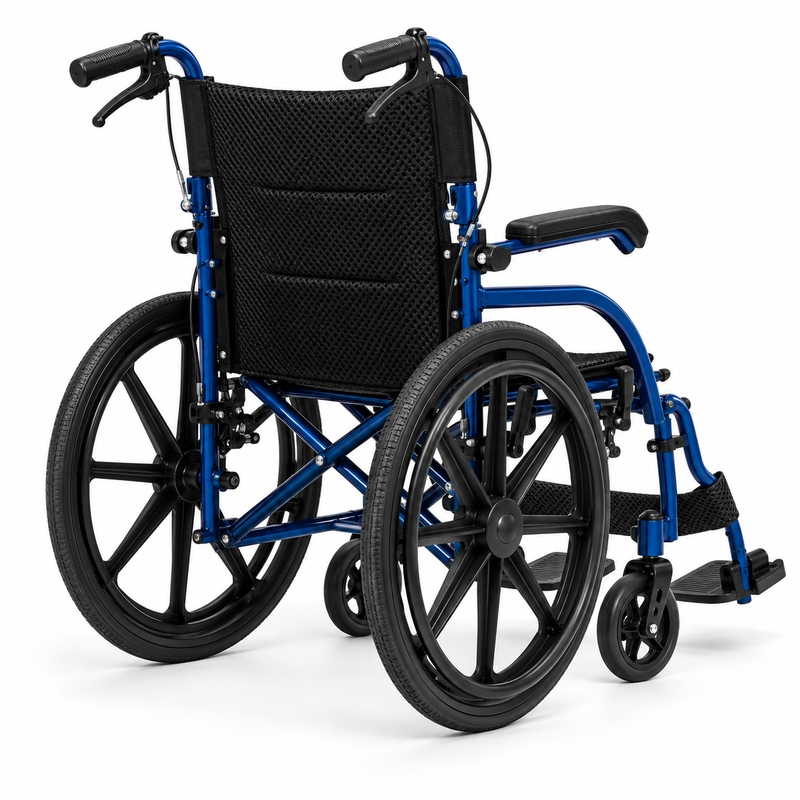
1. World Health Organization. *Wheelchair Provision Guidelines*. The WHO recommends an individualized process involving assessment, selection, fitting, training, and follow-up to achieve appropriate wheelchair provision. [https://www.who.int/publications/i/item/9789240074521] [who]
2. World Health Organization. *Wheelchair Services*. Overview of WHO guidance on wheelchair provision and the importance of personalized assessment, trained personnel, and ongoing follow-up. [https://www.who.int/teams/health-product-policy-and-standards/assistive-and-medical-technology/assistive-technology/wheelchair-services] [who]
3. World Health Organization. *WHO Releases New Wheelchair Provision Guidelines*. Summary of the four-step approach: select, fit, use, and follow-up. [https://www.who.int/news/item/05-06-2023-who-releases-new-wheelchair-provision-guidelines] [who]
4. Craig Hospital. *The Manual Wheelchair: What the SCI Consumer Needs to Know*. Discussion of manual-wheelchair categories, frame materials, and the clinical preference for the lightest suitable chair. [https://craighospital.org/resources/the-manual-wheelchair-what-the-sci-consumer-needs-to-know] [craighospital]
5. Permobil. *Manual Wheelchair Digital Guide*. Practical considerations for manual wheelchair assessment, home environment, propulsion ability, seating dimensions, and configuration. [https://hub.permobil.com/manual-wheelchair-guide] [hub.permobil]
6. Tianjin Kangli Medical Equipment Co., Ltd. *Official Website*. Company and manufacturing context. [https://www.klmedbed.com/] [klmedbed]
Hot Tags: China, Global, OEM, private label, manufacturers, factory, suppliers, manufacturing company


