
Language

Views: 220 Author: klmedbed Publish Time: 2026-04-13 Origin: Site


A sick hospital bed is more than a place for a patient to rest. It is a critical piece of medical equipment that supports comfort, safety, clinical efficiency, and recovery. For hospitals, distributors, and brand owners, choosing the right bed is not only a purchasing decision, but also a decision that affects patient outcomes and long-term operating costs.
From an OEM and manufacturing perspective, the best hospital bed is one that balances durability, adjustability, infection control, and ease of use. Buyers today also expect strong documentation, dependable after-sales support, and manufacturing consistency. That is why evaluating a supplier requires more than comparing catalog photos or price alone.
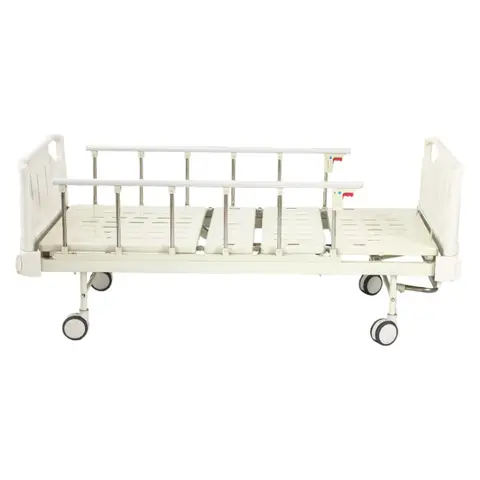
A sick hospital bed is a specially designed bed used in medical settings for patients who need rest, monitoring, treatment, or long-term care. Unlike a standard household bed, it is built to support position adjustment, safety protection, clinical access, and cleaning efficiency. In practice, this means the bed must help caregivers work faster while keeping patients comfortable and secure.
Hospital beds are commonly used in general wards, ICUs, rehabilitation centers, nursing homes, and home care environments. Depending on the application, they may include manual functions, semi-electric controls, or fully electric adjustment systems. Many models also feature side rails, detachable headboards, IV poles, brake casters, and wheel-lock systems.
The quality of a hospital bed influences both patient experience and operational performance. A poorly designed bed may create pressure points, increase the risk of falls, or slow down nursing workflows. A well-engineered bed, on the other hand, supports safer repositioning, easier cleaning, and better daily care.
For healthcare buyers, this matters in three ways:
- Patient safety: Stable structures, secure rails, and reliable brakes reduce risk.
- Clinical efficiency: Adjustable height and backrest functions make caregiving easier.
- Total cost of ownership: Durable materials and easy maintenance lower replacement costs.
In the OEM market, these factors are especially important because brand reputation often depends on product reliability over time.
When sourcing a sick hospital bed, buyers should look at both the visible design and the underlying engineering. A polished exterior means little if the frame, coating, or mechanical system is weak. The most important features are usually the ones that affect safety, comfort, and maintenance.
A quality hospital bed should support key positioning needs such as backrest elevation, knee adjustment, and overall height control. These functions improve patient comfort and help medical staff perform care tasks more efficiently.
The bed frame is typically made from cold-rolled steel with powder coating or epoxy coating for corrosion resistance. Guard rails and headboards often use ABS engineering plastic because it is lightweight, impact-resistant, and easy to clean.
Safety features should include locking casters, stable side rails, and a frame structure that can handle daily clinical use. For some applications, beds may also require Trendelenburg or reverse Trendelenburg positioning.
Infection control is a major concern in every medical environment. Beds with smooth surfaces, perforated platforms, and minimal dirt-trap points are easier to sanitize and maintain.
A hospital bed must remain stable under real-world clinical loads. Buyers should confirm static and working load requirements, especially for bariatric, ICU, or long-term care use.
| Feature | What to Check | Why It Matters |
|---|---|---|
| Frame material | Cold-rolled steel or equivalent | Strength and long service life |
| Surface coating | Epoxy or powder coating | Corrosion resistance and hygiene |
| Guard rails | ABS or metal rail system | Patient safety and easy cleaning |
| Bed platform | Ventilated, perforated design | Air circulation and comfort |
| Height adjustment | Manual or electric range | Caregiver ergonomics |
| Casters | Lockable, medical-grade wheels | Mobility and stability |
| Load capacity | Confirm working and static load | Safe real-world usage |
| Accessories | IV pole, mattress support, drainage hooks | Better clinical functionality |
For overseas brand owners, wholesalers, and manufacturers, supplier selection is as important as product design. A reliable OEM partner should be able to deliver consistent quality, stable lead times, and clear customization support. The supplier should also understand international market expectations, including labeling, packaging, compliance documents, and export requirements.
A good evaluation process usually includes:
1. Request technical specifications.
2. Review materials and drawings.
3. Check production capacity and QC systems.
4. Ask for certification and test reports.
5. Confirm customization options for branding and market needs.
If a supplier cannot explain product structure, material selection, or quality control in detail, that is a warning sign.
The hospital bed market is becoming more quality-driven and less price-driven. Buyers are paying closer attention to infection control, ergonomic design, and service life, not just initial cost. In our view, this shift reflects broader pressure on healthcare systems to reduce replacement cycles and improve patient satisfaction.
We also see stronger demand for OEM products that can be adapted for different regions. For example, distributors often need different rail styles, mattress dimensions, color options, packaging formats, or electrical standards. That means manufacturing flexibility is now a competitive advantage, not a bonus feature.
Before placing an order, use this checklist to reduce risk:
- Confirm the bed type: manual, semi-electric, or electric.
- Verify dimensions, load capacity, and adjustment range.
- Review frame material, coating, and rail construction.
- Ask for sample testing or prototype validation.
- Check accessory compatibility and replacement parts.
- Confirm packaging strength for export shipping.
- Review lead time, MOQ, and warranty terms.
This simple process can prevent costly mistakes and improve product-market fit.
To improve user engagement, consider adding visuals in these positions:
- After the introduction: a lifestyle image of a hospital ward bed.
- Near the specification table: a technical diagram showing bed structure and functions.
- In the OEM section: a factory or production line image to build trust.
- Before the FAQ: a short product video showing adjustment functions.
Visuals make the article easier to scan and also help buyers understand product differences more quickly.
For overseas brands, wholesalers, and manufacturers, the most valuable supplier is one that combines engineering capability with export experience. Tianjin Kangli Medical Appliance Co., Ltd. focuses on medical device R&D and manufacturing, and provides OEM services to international partners. That makes it a suitable choice for buyers who need customization, stable production, and a professional supply chain.
If your market needs a reliable sick hospital bed supplier, the right partner should help you move from concept to production with fewer risks and clearer communication. That is the standard modern buyers expect, and it is also the standard search engines reward when content is useful, specific, and trustworthy.
If you are sourcing a sick hospital bed for your brand, distribution channel, or healthcare project, request a product specification sheet, OEM consultation, or sample evaluation first. A strong buying decision starts with accurate technical information and a supplier that can support long-term cooperation.
A sick hospital bed is used in hospitals, clinics, nursing facilities, and home care settings to support patient rest, treatment, monitoring, and safe repositioning.
A hospital bed offers adjustable functions, safety rails, medical-grade materials, and easier cleaning. A regular bed is not designed for clinical use or caregiver access.
Cold-rolled steel frames, powder or epoxy coatings, and ABS components are commonly used because they offer strength, corrosion resistance, and easier sanitation.
Look for technical transparency, production consistency, customization ability, quality control systems, and experience with export markets.
Adjustability improves patient comfort, helps prevent caregiver strain, and makes nursing tasks such as feeding, repositioning, and examination easier.

1. Siteimprove, Healthcare SEO Content Strategy
https://www.siteimprove.com/blog/healthcare-seo-content-strategy/
2. Y Technology, Healthcare Content Writing: Meet E-E-A-T & YMYL Standards
https://ytechnology.co/healthcare/marketing-strategy-content-healthcare/healthcare-content-writing/
3. Hospital Beds CN, Hospital Bed Materials Guide: Essential Specifications
https://www.hospitalbedscn.com/news-posts/hospital-bed-materials-guide/
4. Lead to Conversion, Best Practices For Healthcare Content Marketing And SEO
https://leadtoconversion.com/blog/best-practices-for-healthcare-content-marketing-and-seo/
5. Des3Tech, How to Write Product Descriptions That Sell Medical Equipment
https://des3tech.com/blog/how-to-write-product-descriptions-that-sell-medical-equipment/
Hot Tags: China, Global, OEM, private label, manufacturers, factory, suppliers, manufacturing company


