Views: 124 Author: kangli Publish Time: 2026-11-17 Origin: Site


Content Menu
● Folding vs Rigid-Frame Wheelchairs: A Product Selection Guide for Distributors
● What Is the Difference Between Folding and Rigid Wheelchair Frames?
● Folding Wheelchairs: Advantages and Trade-Offs
>> Where Folding Frames May Fit
● Rigid-Frame Wheelchairs: Advantages and Trade-Offs
● Which Frame Fits Your Distributor Product Range?
>> Choose Folding Frames When Storage and Collapse Are Priorities
>> Consider Rigid Frames When Buyers Want That Configuration
>> Avoid Choosing by Category Name Alone
● A Practical Evaluation Framework for OEM Buyers
>> Step 1: Define the End User and Channel
>> Step 2: Compare Actual Product Configurations
>> Step 3: Test the Handling Process
>> Step 4: Review Service and Parts Support
>> Step 5: Approve the Product Specification
● New Insight: Build the Range Around Use Cases, Not "Better vs. Worse"
● Common Distributor Mistakes to Avoid
● Visual Content and AI Image Prompts
● FAQ: Folding vs. Rigid-Frame Wheelchairs
>> 1. What is the main difference between a folding and rigid-frame wheelchair?
>> 2. Are rigid-frame wheelchairs always lighter?
>> 3. Are folding wheelchairs easier to transport?
>> 4. Can a rigid-frame wheelchair be made more compact?
>> 5. Which frame style is better for hospital or care-facility buyers?
>> 6. What should distributors request from an OEM supplier?
>> Approximate Article Word Count
>> Conclusion
An OEM-focused comparison for international wheelchair brands, wholesalers, and institutional buyers.
Choosing between folding vs rigid-frame wheelchairs is a product-range decision with practical consequences for transport, storage, configuration, and buyer expectations. Folding wheelchairs collapse at the frame, while rigid-frame wheelchairs do not fold in half; some rigid models still have folding backrests and removable rear wheels. [beyondmobility] [permobil]
For distributors, the right choice depends on the use case—not on the assumption that one frame style is universally superior. A folding wheelchair may suit buyers who prioritize compact storage. A rigid-frame design may appeal when a more direct, lightweight configuration is important. However, actual weight, performance, comfort, durability, and ease of transport depend on the individual chair's design and configuration.
Tianjin Kangli Medical Device Co., Ltd. serves hospitals, clinics, care and rehabilitation facilities, distributors, and project buyers, with domestic and export business that includes OEM/ODM and private-label cooperation. When planning a wheelchair product range, we recommend evaluating frame style, accessories, transport needs, service support, and target price together. Confirm company and product-specific claims against current official records before publishing them.
How can I start an OEM partnership with your factory?
We recommend an initial technical consultation to review your design specifications. Please contact our dedicated B2B team at [Yukili90@tjkangli.com] to discuss your product requirements.
Let’s build excellence together. Whether you need a quote for a large-scale project or want to explore private labeling opportunities for our 5-function medical bed series, we are here to support your success. Click here www.klmedbed.com to connect with our B2B team and start your customized manufacturing journey today.
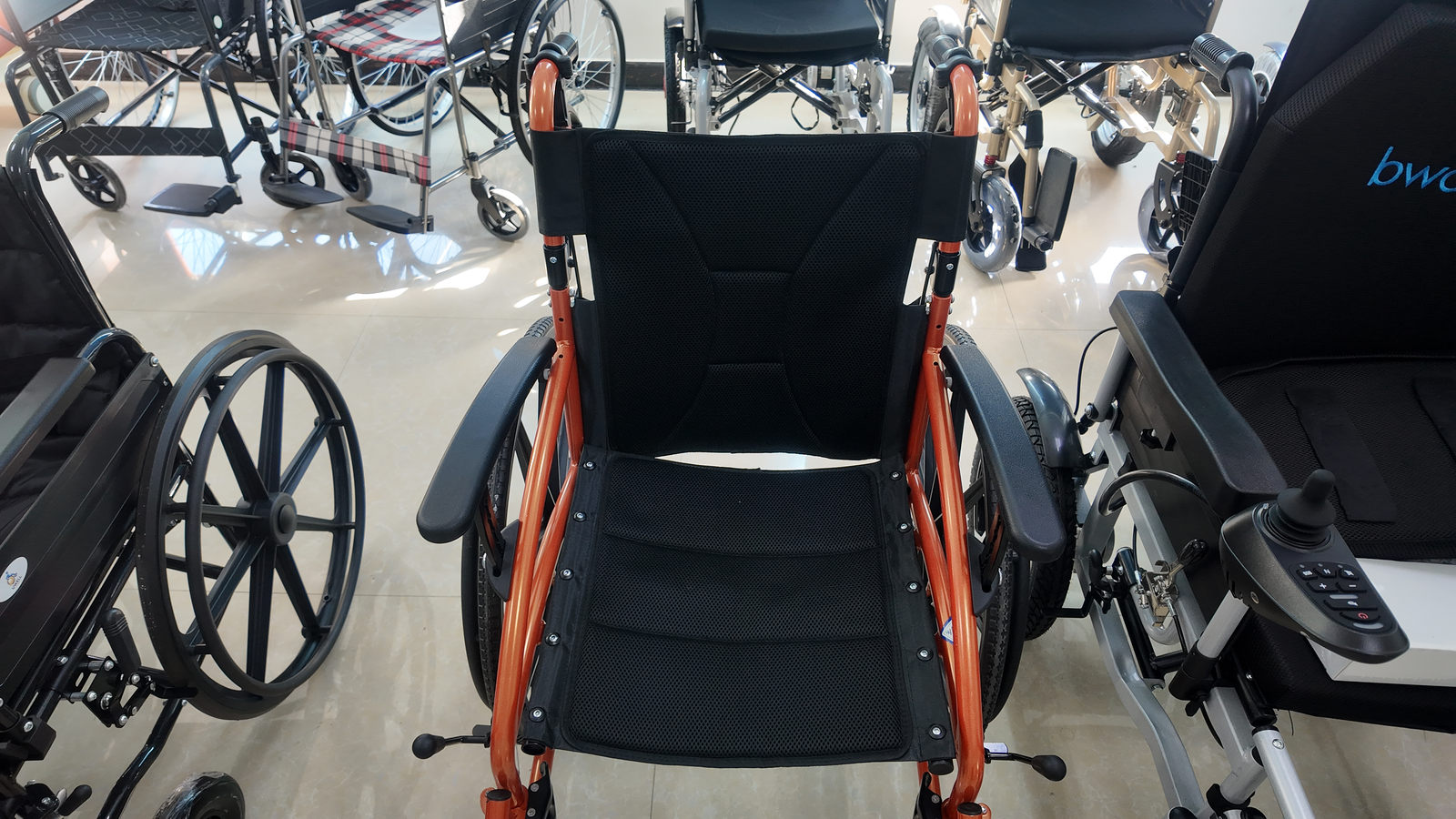
A folding wheelchair frame uses a mechanism—often a cross-brace—that allows the chair to collapse for storage or transport. A rigid-frame wheelchair does not fold in half, although some designs let the backrest fold down and the rear wheels come off. [beyondmobility] [permobil]
This distinction matters for product selection. "Rigid" does not necessarily mean the chair cannot be made more compact, and "folding" does not automatically mean a wheelchair is lightweight or easy to lift. Buyers should compare the specifications and handling of the complete product.
| Buying factor | Folding-frame wheelchair | Rigid-frame wheelchair |
|---|---|---|
| Frame movement | Frame folds for storage or transport. | Frame does not fold in half; some models have folding backrests. |
| Transport format | Collapses at the frame; actual packed size varies by model. | May become more compact through removable wheels or a folding backrest. |
| Storage | Often useful where folding the chair is a priority. | May need more space unless wheels or other components are removed. |
| Design complexity | Includes a folding mechanism that should be specified and maintained as instructed. | Has a non-folding frame structure; other components may still be adjustable or removable. |
| Range planning | Can suit buyers seeking a collapsible format. | Can suit buyers prioritizing a rigid-frame configuration. |
| Key verification | Folded dimensions, weight, folding method, and component security. | Overall dimensions, wheel-removal method, backrest design, and transport process. |
This table is a selection aid, not a performance ranking. Product weight and function should be checked against each model's verified specifications.
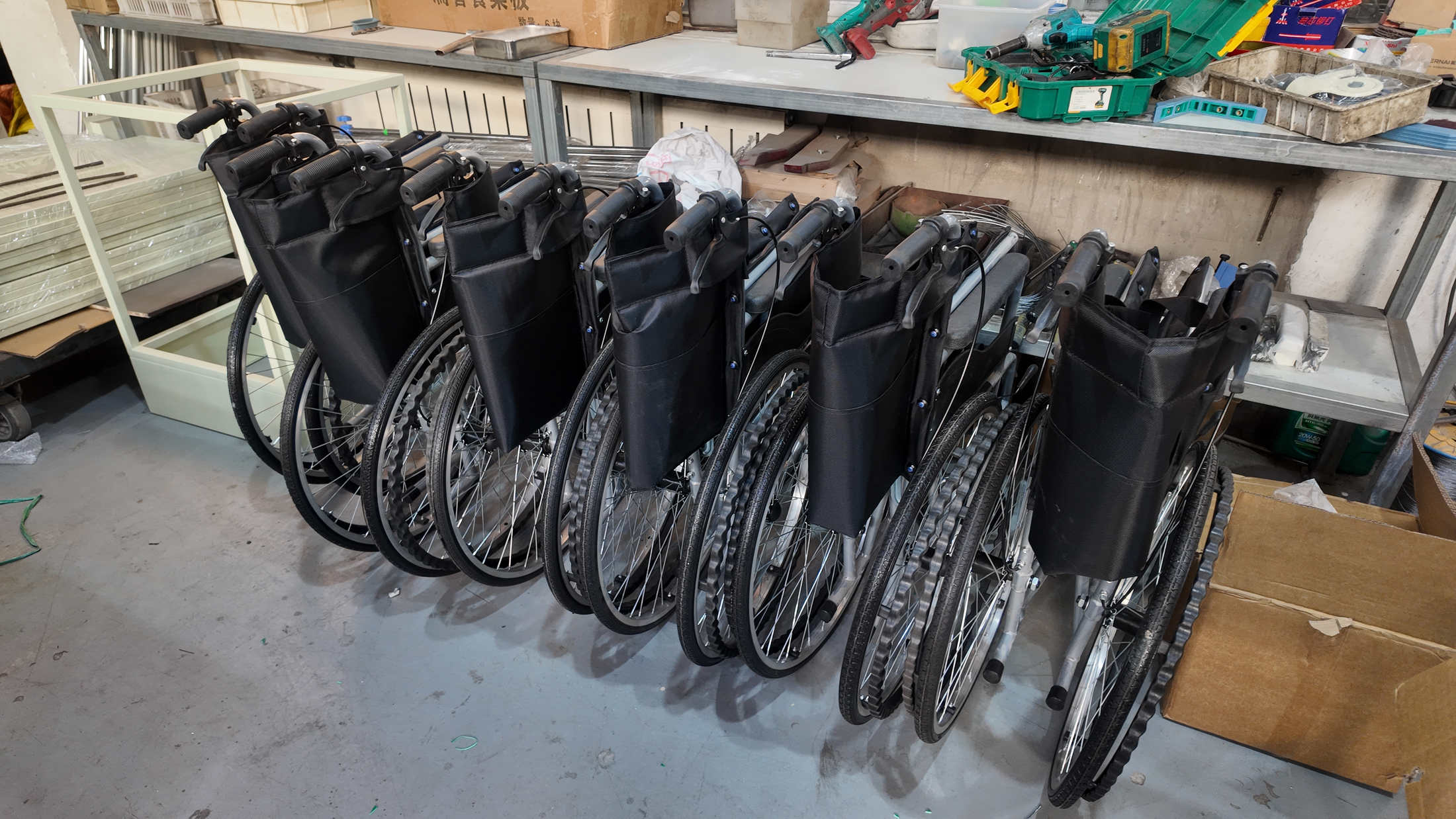
Folding wheelchairs offer a frame that collapses, which may be helpful when a buyer needs a chair to take up less space for storage or transport. The actual benefit depends on folded dimensions, overall weight, whether the wheels can be removed, and how the chair is handled.
Consider a folding wheelchair when:
- The buyer needs a collapsible frame for storage or transport.
- The chair will be shared across users or locations and needs a familiar folding format.
- Distributors value broad configuration options within a product family.
- The intended facility needs to store chairs compactly when they are not in use.
- The buyer's transport process is compatible with the chair's folded dimensions and weight.
These are possible selection criteria, not guarantees that a particular model will fit a specific vehicle or storage space. Confirm actual dimensions and handling requirements before making a purchasing decision.
Folding construction adds components and interfaces that must be considered in product specifications and user instructions. During sourcing, review:
- The folding and unfolding procedure.
- The folded dimensions and packed configuration.
- Whether wheels or other components are removed separately.
- How the chair is kept stable and secure during normal use.
- How the frame and folding mechanism should be inspected and maintained.
A folding wheelchair is not automatically easier for every person to transport. A user or attendant may need to lift, carry, or maneuver the chair, so weight and handling should be assessed as part of the complete use case.
 |  |
Rigid-frame wheelchairs do not fold in half. Some models can still be made more compact by removing rear wheels or folding the backrest. [permobil] Product and clinical resources describe rigid frames as potentially lighter or more efficient in some comparisons, but these are not universal results; model design, materials, configuration, and the user's needs matter. [marcsmobility] [academyscipro]
Consider a rigid-frame wheelchair when:
- The target buyer prefers a non-folding frame design.
- A compact transport setup can be achieved through the model's removable wheels or folding backrest.
- The buyer values the product characteristics of a specific rigid model, after reviewing its specifications.
- The product is intended for users or channels for whom this frame style is an appropriate option.
- The distributor can explain the transport and storage requirements clearly.
A rigid frame should not be marketed as universally lighter, stronger, or more efficient than a folding frame. Compare the actual model data and avoid applying a result from one chair to an entire category.
Confirm whether the model's rear wheels are removable, whether the backrest folds, and which tools or steps are required. "Rigid" describes the frame's folding behavior; it does not define all other product features.
Also check:
- Overall and transport dimensions.
- Wheel removal and reinstallation instructions, if relevant.
- Compatibility of the frame with the selected seating and accessories.
- The service and replacement-parts plan.
- Whether the selected design meets the user and channel requirements.
A distributor's choice should reflect its customers, sales channels, and service capabilities. Different products may be appropriate for different segments, so a portfolio can include both frame styles where demand supports them.
A folding model may make sense when customers specifically need a frame that collapses. Examples may include facilities that store chairs between uses or buyers who need a foldable configuration for their transport process. Confirm the folded size and handling method for the exact product.
A rigid model may fit a segment that prefers a non-folding frame and has a suitable way to transport or store it. Some rigid designs can be made more compact by removing wheels and folding the backrest, but those features vary by model. [permobil]
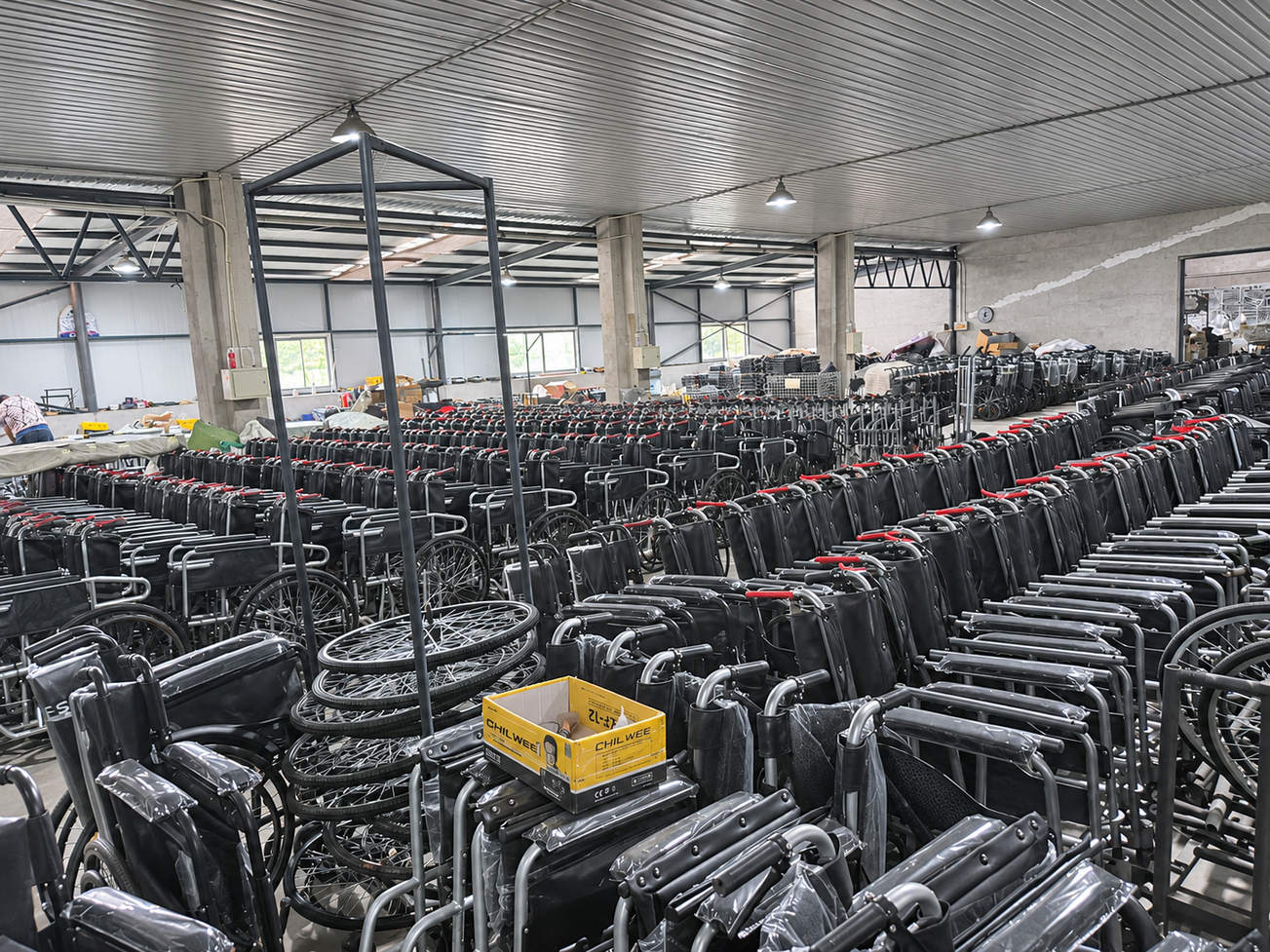
A product title is not a substitute for a specification. Compare:
- Net and shipping weight, using clearly defined measurement conditions.
- Folded or transport dimensions, where applicable.
- Wheel removal and backrest features.
- Seat width and available configurations.
- Assembly, maintenance, and spare-parts information.
- Price, lead time, and minimum order conditions, as confirmed by the supplier.
For OEM/ODM and private-label programs, evaluate frame style as part of the product brief. This helps the manufacturer confirm feasibility and prevents the buyer and supplier from using different meanings for "folding" or "rigid."
Identify whether the intended customers are hospitals, clinics, care facilities, rehabilitation organizations, dealers, or other buyers. Specify the chair's intended use and the conditions that matter, such as storage space, transport process, or shared use.
Ask for model-specific specification sheets, drawings, and samples where appropriate. Compare like with like: a folding wheelchair with one set of accessories should not be compared against a rigid model with a different seating configuration without noting the difference.
Have representative staff or users review the relevant process: folding and unfolding a folding model, or removing wheels and folding the backrest on a rigid model when those features are present. Follow the product manual and do not substitute generic instructions for model-specific procedures.
Ask which components are expected to be inspected, which parts are replaceable, and how buyers can identify compatible parts. A product range should be supported by clear documentation and a practical route for service questions.
Record the approved model, frame type, dimensions, configuration, accessories, packaging, and document revision. Changes to the frame or components should be reviewed for compatibility and reflected in the product documentation.
|
|
A common product-planning mistake is to position folding and rigid-frame wheelchairs as a simple quality ladder. A more useful approach is to segment the range by buyer need.
For example, a distributor could organize its product comparison around:
- Storage requirement: Does the buyer specifically need the frame to fold?
- Transport workflow: What are the chair's dimensions and handling steps?
- Configuration needs: Which seat widths, accessories, or options are required?
- Service capacity: Can the distributor support the maintenance and parts requirements?
- Procurement criteria: What evidence and documentation does the institutional buyer request?
This approach avoids unsupported claims and helps sales teams match products to real purchasing criteria. It can also improve online product pages: explain the frame design, list verified dimensions, and show how the chair is stored or transported rather than relying on vague phrases such as "easy to carry."
- Assuming folding always means lighter. Weight depends on the complete product and should be checked on the specification sheet.
- Assuming rigid means non-transportable. Some rigid models have removable wheels or folding backrests. [permobil]
- Comparing different configurations as if they were identical. Note seat, accessory, and component differences.
- Using unverified performance claims. Do not promise superior propulsion, durability, or comfort without model-specific evidence.
- Ignoring the user instructions. Folding, wheel removal, and maintenance procedures should follow the exact manual.
- Quoting dimensions without context. Identify whether measurements describe the chair assembled, folded, or packed for shipment.
Before placing an OEM or wholesale order, confirm:
- Frame style: folding or rigid.
- Model-specific dimensions and weight, with measurement conditions.
- Folding mechanism or removable-component details.
- Seat width and available configurations.
- Wheel, backrest, and accessory options.
- User manual and maintenance instructions.
- Spare-parts identification and service route.
- Packaging configuration and carton dimensions.
- Approved sample, drawings, and revision control.
- MOQ, lead time, and commercial terms confirmed by the supplier.
For institutional or regulated-market projects, buyers should also identify any applicable product, testing, documentation, and procurement requirements early in the sourcing process.

Suggested image 1: Side-by-side comparison of a folding-frame wheelchair and a rigid-frame wheelchair, with accurate labels and a neutral background.
AI prompt:
"Create a realistic B2B product comparison image for a medical wheelchair catalog. Show two adult manual wheelchairs side by side in a clean, neutral studio: one folding cross-brace frame and one rigid non-folding frame. Keep proportions technically plausible, use understated medical-product styling, show frame structure clearly, no brand logos, no text, no unsupported claims, high-resolution product photography."
Suggested image 2: A sequence showing the different transport-preparation steps for each type, based only on the exact products being sold.
AI prompt:
"Create a clear three-panel educational illustration comparing transport preparation for two generic manual wheelchairs: a folding-frame wheelchair being folded, and a rigid-frame wheelchair with its rear wheels removed only if the depicted model supports that feature. Neutral background, technically plausible construction, safety-conscious, no brand marks, no text, leave space for verified labels. Do not imply all models use the same procedure."
Have a product specialist verify every generated image against the actual wheelchair. Do not use AI illustrations as a substitute for product-specific manuals or photographs.
A folding wheelchair's frame collapses. A rigid-frame wheelchair does not fold in half, although some models have folding backrests or removable wheels. [beyondmobility] [permobil]
No. Some rigid-frame designs may be lighter than comparable folding models, but weight depends on the specific frame, materials, components, and configuration. Compare verified product specifications. [marcsmobility] [academyscipro]
They collapse at the frame, which may help with storage or transport. But actual convenience depends on the folded dimensions, product weight, lifting needs, and the user's transport setup.
Some rigid models allow the rear wheels to be removed or the backrest to fold down. Features and procedures vary; confirm them in the specific model's manual. [permobil]
There is no universal answer. Buyers should compare storage, handling, user needs, specifications, service support, and procurement requirements for the intended setting.
Request model-specific dimensions and weight, frame and component details, user and maintenance documentation, packaging information, spare-parts data, and an approved sample or drawing when needed.
1. [Beyond Mobility — Lightweight Wheelchair Buyer's Guide] — Explains the general frame distinction between folding and rigid wheelchairs.
2. [Permobil — When to Choose a Folding Manual Wheelchair] — Discusses transport and storage considerations and notes that some rigid models can have folding backrests and removable wheels.
3. [Academy of Spinal Cord Injury Professionals — Obtaining a Custom Manual Wheelchair] — Provides selection context, including home and vehicle fit considerations.
4. [Marc's Mobility — Comprehensive Guide to Wheelchair Parts and Their Functions] — Summarizes common trade-offs discussed for folding and rigid frames.
5. [Motion Composites — Folding vs. Rigid Frames: How to Choose] — Offers a manufacturer's overview of frame-style considerations.
6. [Sunrise Medical — Rigid Frame Wheelchairs: Turning Energy into Motion] — Discusses rigid-frame design in the context of wheelchair propulsion.
Folding frames may suit buyers who prioritize a collapsible format for storage or transport. Rigid frames may suit buyers seeking that frame configuration, with some models offering removable wheels or folding backrests. Neither type is universally better; the right product depends on verified specifications, intended use, user needs, and service support.
Tianjin Kangli Medical Device Co., Ltd. supports medical-furniture and mobility-product sourcing for distributors, institutional buyers, and OEM/ODM partners. Share your target market, preferred frame style, required configurations, and order plan to discuss product options and a quotation. Confirm company history, factory scale, and certifications against current official documents before using them in public-facing claims.