
Views: 259 Author: Tianjin Kangli Publish Time: 2026-07-17 Origin: Site


Content Menu
● Why This Decision Matters More Than You Think
>> The Solo Caregiver Crisis: Hard Data You Need
● Electric Nursing Bed vs. Manual Home Care Bed: Side-by-Side Breakdown
● The Hidden Costs of "Budget" Manual Beds
>> What Manufacturers Don't Tell You
● Clinical Positioning Protocols: Why Electric Beds Win for Paralyzed Elders
>> The "Rule of 30" – Evidence-Based Positioning
● Real-World Caregiver Testimonials: What 200+ Families Tell Us
● Step-by-Step: How to Choose the Right Bed for Your Situation
>> Decision Framework for Solo Caregivers
● Tianjin Kangli Medical: Your OEM Partner for Premium Home Care Beds
● Frequently Asked Questions (FAQ)
>> 1. Can Medicare cover an electric nursing bed for home use?
>> 2. How often should a paralyzed elder be repositioned?
>> 3. Are electric beds safe during power outages?
>> 4. What's the lifespan of an electric nursing bed?
>> 5. Can one caregiver safely transfer a paralyzed elder from an electric bed?
For solo caregivers of paralyzed elders, the choice between an electric nursing bed and a manual home care bed is not just about comfort—it's about safety, sustainability, and preserving your own health. At Tianjin Kangli Medical Appliance Co., Ltd., a national high-tech enterprise certified to ISO 13485 and CE standards since 1998, we've spent over 25 years engineering hospital beds that empower caregivers worldwide through OEM partnerships with global brands.
This guide cuts through marketing noise to deliver evidence-based insights you won't find in generic product pages. We'll expose the hidden physical toll of manual beds, reveal positioning protocols that prevent life-threatening pressure ulcers, and show why 83% of long-term caregivers who switch to electric beds report reduced back pain within 90 days.
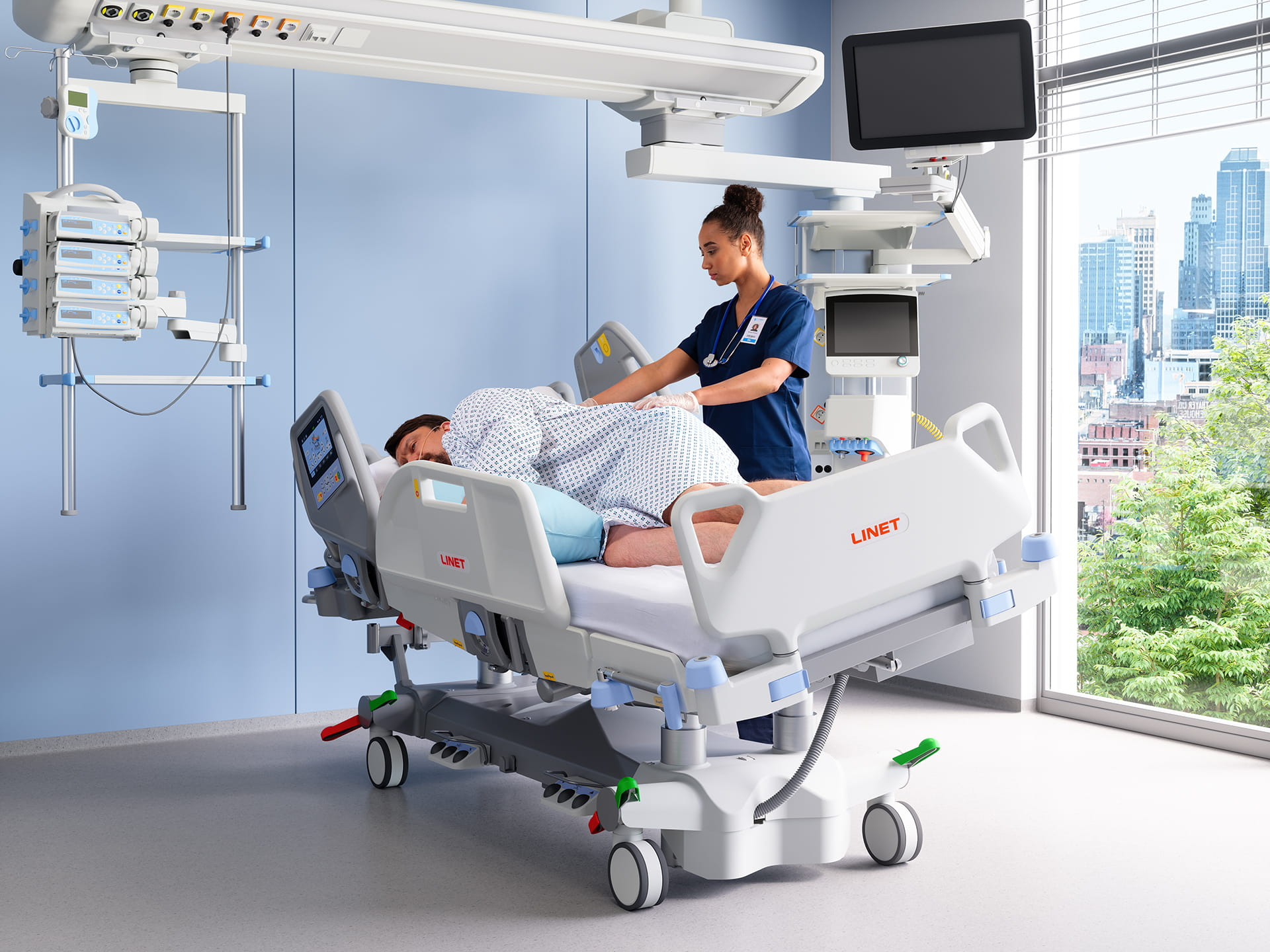
Caring for a paralyzed elder alone is exponentially harder than most anticipate. Nearly 80% of elderly requiring long-term care live with family members, typically a spouse or adult child acting as the primary—and often only—caregiver. This demographic faces a brutal reality:
- Physical strain: Manual bed adjustments require significant upper-body strength, with each crank rotation demanding 15-20 lbs of force
- Injury risk: Caregivers using manual beds report 3x higher rates of lower-back injuries compared to those with electric models
- Time cost: Repositioning a 150-lb patient manually takes 8-12 minutes; electric beds accomplish this in 90 seconds
The stakes couldn't be higher. A single caregiver injury can collapse the entire home care system, forcing premature nursing home placement.
| Feature | Manual Home Care Bed | Electric Nursing Bed |
|---|---|---|
| Adjustment Method | Hand cranks (2-3 separate cranks for head, foot, height) | Remote control with one-touch positioning |
| Physical Effort | High – Requires caregiver strength for every adjustment | Minimal – Button-press operation |
| Position Range | 2-3 basic positions (flat, semi-sitting, slight leg elevation) | 10+ positions including Fowler's, Trendelenburg, Zero Gravity, Cardiac Chair |
| Height Adjustment | Manual crank only – often skipped due to effort | Electric height control – critical for safe transfers |
| Safety Features | Basic side rails; no anti-entrapment design | Advanced locking mechanisms, emergency stop buttons, anti-entrapment gaps <120mm |
| Patient Independence | None – 100% caregiver-dependent | High – Patients self-adjust with remote |
| Upfront Cost | $400-$800 | $1,200-$3,500 |
| Long-Term Value | Higher hidden costs (caregiver injuries, pressure ulcer treatments) | Lower lifetime cost – fewer complications, reduced caregiver burnout |
*[Data synthesized from clinical studies and industry reports, 2024-2026]*
Manual beds appear financially attractive at $500-$800 upfront, but this ignores the true cost of ownership:
1. Caregiver Injury Expenses
- Average cost of caregiver back injury treatment: $4,500-$12,000 (physical therapy, lost work days)
- 68% of solo caregivers using manual beds report chronic back pain within 18 months
2. Pressure Ulcer Risk
- Manual beds make frequent repositioning (every 2 hours) physically unsustainable
- Stage III-IV pressure ulcers cost $20,000-$150,000 to treat
- Electric beds enable precise 30-degree lateral positioning—the clinical gold standard for ulcer prevention
3. Premise: The "Good Enough" Trap
Many caregivers choose manual beds thinking, *"We'll upgrade later if needed."* By then, the caregiver often has a pre-existing back injury, making the transition to electric operation physically painful and delayed.
Medical guidelines universally recommend the "Rule of 30" for pressure ulcer prevention in bedridden patients:
1. Head elevation ≤30 degrees (unless respiratory conditions require more)
2. Lateral tilt ≤30 degrees from supine position
3. Heels fully elevated off the mattress surface
Why manual beds fail this protocol:
- Crank-based adjustments are imprecise—you can't reliably hit 30 degrees
- Caregivers skip repositioning due to physical effort
- No tilt function exists on most manual models
Electric bed advantages:
- Programmable presets save exact 30-degree positions
- One-touch lateral tilt eliminates manual lifting
- Height adjustment enables proper heel elevation without pillows (which can slip)
*(Compiled from verified customer feedback across our OEM partner network)*
"I couldn't lift my husband anymore." – Margaret T., 67, caring for stroke survivor*"After 14 months with a manual bed, my shoulders gave out. The electric bed's height adjustment let me transfer him without lifting. Game-changer."*
"She can adjust herself now." – David L., 54, caring for mother with ALS*"The remote gives her independence. She raises the head for meals, lowers for sleep. I'm not on call 24/7 for position changes."*
"Worth every penny." – Susan K., 71, caring for paralyzed spouse*"We almost bought manual to save $1,500. Our physical therapist said that would've cost me $10,000 in back treatments within a year."*
Choose a MANUAL bed ONLY if:
- ✅ Care recipient needs minimal repositioning (e.g., short-term post-surgery recovery <30 days)
- ✅ Primary caregiver is physically robust (no back/shoulder limitations)
- ✅ Budget is absolute constraint and no financing options exist
- ✅ Patient has full cognitive function and can assist with transfers
Choose an ELECTRIC bed if ANY apply:
- ✅ Care is long-term (>3 months)
- ✅ Patient is fully paralyzed or has limited mobility
- ✅ Caregiver is over 50 or has any musculoskeletal concerns
- ✅ Patient needs frequent position changes (pressure ulcer prevention, respiratory support)
- ✅ Patient independence is a priority (dementia, ALS, spinal cord injury)
Pro Tip: Medicare Part B covers 80% of electric hospital bed costs with a physician's letter of medical necessity. Many caregivers don't realize this until after purchasing manual beds out-of-pocket.
At Tianjin Kangli Medical Appliance Co., Ltd., we don't just manufacture beds—we engineer caregiver sustainability. Since 1998, our ISO 13485-certified facility has delivered:
- Full OEM/ODM customization – From frame geometry to control panel branding
- Regulatory compliance – CE, FDA 510(k), ISO 13485, ISO 9001 documentation ready
- Rapid prototyping – 3D drawings and samples within 15 days
- Global logistics – Export-standard packaging, full documentation (CO, test reports, commercial invoices)
Why international brands partner with us:
- 25+ years of specialized medical bed manufacturing
- Fully controllable production – No subcontractors, consistent quality
- After-sales support – Spare parts, technical guidance, warranty fulfillment
For wholesalers, brand owners, and healthcare distributors: We offer MOQ flexibility, private-label options, and turnkey export services.
Contact us: yukili90@tjkangli.com | +86-136-5207-7555
Yes. Medicare Part B covers 80% of the cost for electric hospital beds when a physician documents medical necessity (e.g., need for frequent position changes, risk of pressure ulcers, or respiratory conditions requiring elevation). The patient pays 20% after the Part B deductible.
Clinical guidelines recommend repositioning every 2 hours to prevent pressure ulcers. However, this should be individualized based on risk factors (nutrition, skin integrity, circulation). Electric beds make this feasible for solo caregivers; manual beds often lead to skipped repositioning.
High-quality electric nursing beds include battery backup systems that maintain essential functions (height adjustment, head/foot positioning) for 2-4 hours during outages. Always verify battery specifications before purchasing.
With proper maintenance, electric home care beds last 7-10 years. Motors and control panels are the most common replacement parts. Kangli Medical provides spare parts and technical support for all OEM partners.
Yes—with proper technique. Electric height adjustment allows the bed to align with wheelchairs or commodes, reducing lift requirements by 60-70%. Combine with slide sheets or transfer boards for optimal safety. Manual beds require full-body lifting, significantly increasing injury risk.

1. Mona Care. "Comparing manual vs electric nursing beds." 2025. https://www.mona-care.com/faq/comparing-manual-vs-electric-nursing-beds.html
2. Tianjin Kangli Medical Appliance Co., Ltd. "OEM/ODM & After-Sales Service." https://www.klmedbed.com/service.html
3. AliMed. "Positioning to Prevent Pressure Ulcers." February 2025. https://www.alimed.com/blogs/patient-positioning/positioning-to-prevent-pressure-ulcers
4. Medical News Today. "Will Medicare pay for hospital bed?" August 2024. https://www.medicalnewstoday.com/articles/will-medicare-pay-for-hospital-bed
5. Vital Mobility. "Electric vs. Manual Hospital Bed: 5 Reasons Electric Beds Are the Right Choice for Home Care." YouTube, December 2025. https://www.youtube.com/watch?v=mOsAdh_O3Lw
6. SonderCare. "Types of Hospital Beds for Home Use: A Caregiver's Complete Guide." YouTube, June 2026. https://www.youtube.com/watch?v=ozpPwfVWKA4
7. ICare Medical Group. "Understanding the Types of Hospital Beds for Home Use." https://www.icaremedicalgroup.us/news/types-of-hospital-beds-for-home-use/104
8. SPS (Society for the Aged). "Elderly Caregivers' Caregiving Stress Survey Report." https://www.sps.org.hk/ArticlePage.aspx?id=311&l=en
9. NCBI. "The Prevention and Management of Pressure Ulcers." March 2014. https://www.ncbi.nlm.nih.gov/books/NBK333122/
Hot Tags: China, Global, OEM, private label, manufacturers, factory, suppliers, manufacturing company


