Views: 121 Author: kangli Publish Time: 2026-11-11 Origin: Site


Content Menu
● Wheelchair Side Guards and Clothing Protectors: Specifying OEM Options for Distributors
>> What Wheelchair Side Guards and Clothing Guards Actually Do
>> Wheelchair Side Guard Types Compared: Desk-Length, Full-Length, Flip-Back and Spoke Guards
>> Eight Specification Questions to Ask Before You Order OEM Side Guards
>> Private Label Wheelchair Accessories Under EU MDR: Who Is the Manufacturer?
>> Matching Side Guard Options to Your Buyer Segment
>> A Six-Step Sample Approval Checklist for Side Guards
>> Common Specification Mistakes to Avoid
>> OEM Side Guards and Clothing Protectors from Tianjin: How We Work with Distributors
>> Ready to Specify Your OEM Wheelchair Side Guards?
>> References
Tianjin Kangli Medical Appliance Co., Ltd. | OEM wheelchairs, hospital beds and medical furnitureWebsite: www.klmedbed.com | Email: yukili90@tjkangli.com | WhatsApp: +86 136 5207 7555Factory: No. 5 Shengyuan Road, Fuyuan Development Zone, Meichang Town, Wuqing District, Tianjin, China
Wheelchair side guards and clothing protectors are small parts with big consequences for distributors. They keep clothing, hands and cushions away from the rear wheel, they ride on every chair you ship, and a wrong guess on fit, material or paperwork turns into returns. This guide shows how to specify OEM side guards and clothing guards so the parts match the frame, survive hospital cleaning and arrive with the documents your market expects.
Tianjin Kangli has made hospital beds and medical equipment since 1998. We now work with overseas brands, wholesalers and producers on OEM and private-label wheelchairs. Below is how we approach side guard specification, written for buyers who must defend their choices to hospitals, care groups and regulators.
A note on names. The market uses many terms for similar parts: clothing guard, clothes guard, skirt guard, side guard and hip guide [4][5]. Always attach a drawing to the purchase order.
Define the part first. "Side guard," "clothing guard" and "spoke guard" are different products.
Fit is model-specific. Left and right parts differ, and some chairs fit guards poorly.
Removal matters. Guards can interfere with transfers and folding.
Cleaning decides lifespan. Hospital disinfection is harsher than most manufacturer advice.
Private label changes your legal role in the EU. Check Article 16 before printing your brand.
The World Health Organization estimates that 80 million people, about 1% of the world's population, are likely to require a wheelchair [16]. Accessories like these are a steady line for distributors, so it pays to know what each part does.
Side guards shield hands and clothing from dirt and water kicked up by the wheels [1].
Clothing guards keep clothing off the rear tyres [5].
They can protect skin and cushions. One manufacturer says guards protect skin from rubbing against wheels or tires, and may protect a cushion from damage by the rear wheels [4].
They may limit hip sliding, which can reduce friction and shear [4]. Treat this as a possible benefit, not a claim for your packaging.
Spoke guards are a different part. They are plastic covers over the rear wheel that help prevent fingers being caught between spokes when propelling [2].
There is a safety angle for institutional buyers too. England's care regulator, the CQC, states that wheelchairs "must be fit for purpose and risk assessed" [3]. Its case involved a foot trapped beneath a communal wheelchair, not a side guard. The lesson still applies: a trapped limb on a shared chair is a documented harm. Ask suppliers how each guard changes the gap between user, wheel and frame.
Materials on the market include plastic [5][6], aluminium, carbon fibre and cloth, sometimes padded [4]. Mounting and removal vary more than materials.
| Type | How it fits | Best for | Watch-outs |
|---|---|---|---|
| Desk-length clothing guard | Mounts under the armrest pad and screws to the armrest frame [6] | Chairs with desk-length armrests | Left and right parts are not interchangeable [6] |
| Full-length clothing guard | Mounting hardware on the side of the chair [5] | Longer coverage along the seat side | Extra weight; may need removal to fold [5] |
| Flip-back or tool-free guard | Flips back for transfers, or comes off without tools [5] | Wards with frequent lateral transfers | Check latch durability |
| Armrest-integrated side panel | Built into a flip-back or removable armrest [4] | Chairs where armrest and guard are one assembly | Ask if the panel is sold separately |
| Fabric side guard | Frame receivers or direct frame mount [4] | Lighter-weight builds | Check cleaning compatibility |
| Spoke guard | Plastic cover on the rear wheel, fixed with cable ties [2] | Users who self-propel | Not a clothing guard; order separately |
Fit is not universal. One manufacturer warns that some chairs are less compatible with guards, and that a guard sometimes must be removed to fold the chair [5]. A retailer page adds that armrest assemblies can be installed backward on some models, so the guard needed may not match the user's own left or right side [6].
Which exact frame and armrest does this guard fit? Ask for a drawing with mounting points, and confirm left and right marking [6].
How does it mount and come off? Check whether it needs tools, whether it flips back for transfers [5], and how many removals the fasteners survive.
What does it add in width and weight? Guards may add weight to the frame [5]. ISO 7176-5 covers determination of dimensions, mass and manoeuvring space [11], so request overall width and mass with guards fitted.
Which material and finish? Plastic, metal and cloth behave differently when scratched, wiped or heated.
How is it cleaned between users? Facility rules often differ from manufacturer advice. In one example, a hospital's county health department required double bleaching of every cushion cover between patients, which the covers were "not designed to tolerate" [15]. A study of 48 Canadian hospitals reported that most wheelchairs were not optimally cleaned or disinfected [14]. Request a compatible-disinfectant list.
What is the skin-contact and flammability basis? If a part can touch skin, ask which biological evaluation the supplier follows. ISO 10993-1 groups surface devices by contact duration, from limited (up to 24 hours) to long-term (over 30 days), and endpoints may include cytotoxicity, irritation and sensitisation [10]. For padded or fabric parts, ask about ignition resistance. ISO 16840-10 covers textile, foam and plastic postural support devices [13]. Its 2021 edition is listed as withdrawn, with a 2026 revision listed as published, so confirm the current edition with your test lab [13].
Which strength tests cover the tested configuration? ISO 7176-8 specifies requirements for static, impact and fatigue strength of wheelchairs [12]. Ask whether the tested chair had the guards fitted.
What documents ship with the product? ISO 7176-15 covers the information, documentation and labelling supplied with a wheelchair, including presale specification sheets [17]. Add the EU documents described below.
This is the question distributors most often under-prepare for. Under Regulation (EU) 2017/745, a distributor, importer or other person assumes a manufacturer's obligations if it makes a device available under its own name, registered trade name or trade mark [8]. The exception covers an agreement with a manufacturer who is identified on the label and accepts responsibility for meeting the Regulation's requirements [8].
Two more triggers matter. A person is also treated as the manufacturer if it modifies a device already on the market in a way that could affect compliance, or changes its intended purpose [8]. Translating the manufacturer's information and changing outer packaging are not treated as modifications when needed to market the device in a Member State and done without affecting its condition [8].
What a Class I manufacturer must do. The European Commission's factsheet lists these steps [9]:
Demonstrate conformity in technical documentation.
Draw up an EU declaration of conformity.
Affix the CE mark.
Register the manufacturer and the device in Eudamed.
Review post-market surveillance and report serious incidents.
The same factsheet says a notified body is not needed for this category unless the device is sterile, has a measuring function or is a reusable surgical instrument [9]. It also sets 26 May 2025 as the date from which UDI carriers are required on Class I labels [9], so check current dates for your market.
Are side guards "accessories"? The MDR defines an accessory as an article that, while not itself a medical device, is intended by its manufacturer to be used with particular medical devices to specifically enable their intended purpose or to specifically and directly assist their medical functionality [7]. Whether a clothing guard meets that test depends on its stated intended purpose. Confirm with your regulatory adviser before labelling.
Our suggested sequence for private-label buyers:
Decide in writing whether you will be the legal manufacturer or whether the factory is named on the label under an Article 16 agreement.
Ask which wheelchair models the factory's declarations cover, and whether the guards are listed.
Agree who holds the technical documentation and who handles complaints.
Fix label content and instruction languages before production.
Choices depend on the end user. Treat this as a starting point for discussion with your clinical customers.
| Buyer segment | Suggested starting option | Why |
|---|---|---|
| Hospital wards (shared fleet) | Flip-back or tool-free guards, wipeable material | Fast transfers and harsh disinfection |
| Care homes | Desk-length or full-length clothing guards | Keeps resident clothing off the wheels [5] |
| Self-propelling users | Lightweight guards plus optional spoke guards | Weight is added by guards [5]; fingers are protected by spoke guards [2] |
| Outdoor and transport use | Full-length guards in easy-clean plastic | Dirt and water are thrown up by wheels [1] |
| Retail and home-care distributors | Paired, clearly marked left and right sets | Fewer ordering errors [6] |
Run this on your pre-production sample. It is our suggested practice, not a substitute for formal test reports.
Check the marks. Left and right labels, model name and batch number match the quotation.
Fit it on the exact frame. Confirm mounting holes, armrest clearance and wheel clearance.
Remove and refit it several times with gloved hands, and check fasteners for wear.
Fold the chair with and without the guards, and note any change.
Wipe test. Clean with your customer's approved disinfectant and inspect for discolouring or cracking.
Weigh and measure the chair with the guards fitted, and compare with the specification sheet.
Ordering "universal" guards for several frames without a fit check.
Mixing up left and right parts [6].
Forgetting that guards can block folding [5].
Ignoring hospital cleaning chemicals when choosing the material [15].
Printing your brand before settling who the manufacturer is under EU rules [8].
Tianjin Kangli holds ISO 9001:2015 and ISO 13485:2016, plus ISO 14001 and ISO 45001. Our EU declarations of conformity under MDR 2017/745 cover manual wheelchairs as Class I devices, with an EU authorised representative, SUNGO Europe B.V. in the Netherlands. Ask us which accessories are listed for your chosen model.
Typical OEM options we discuss with buyers (subject to engineering review):
Private-label branding and colours
Packaging, labelling and documentation sets
Left and right marking on paired guards
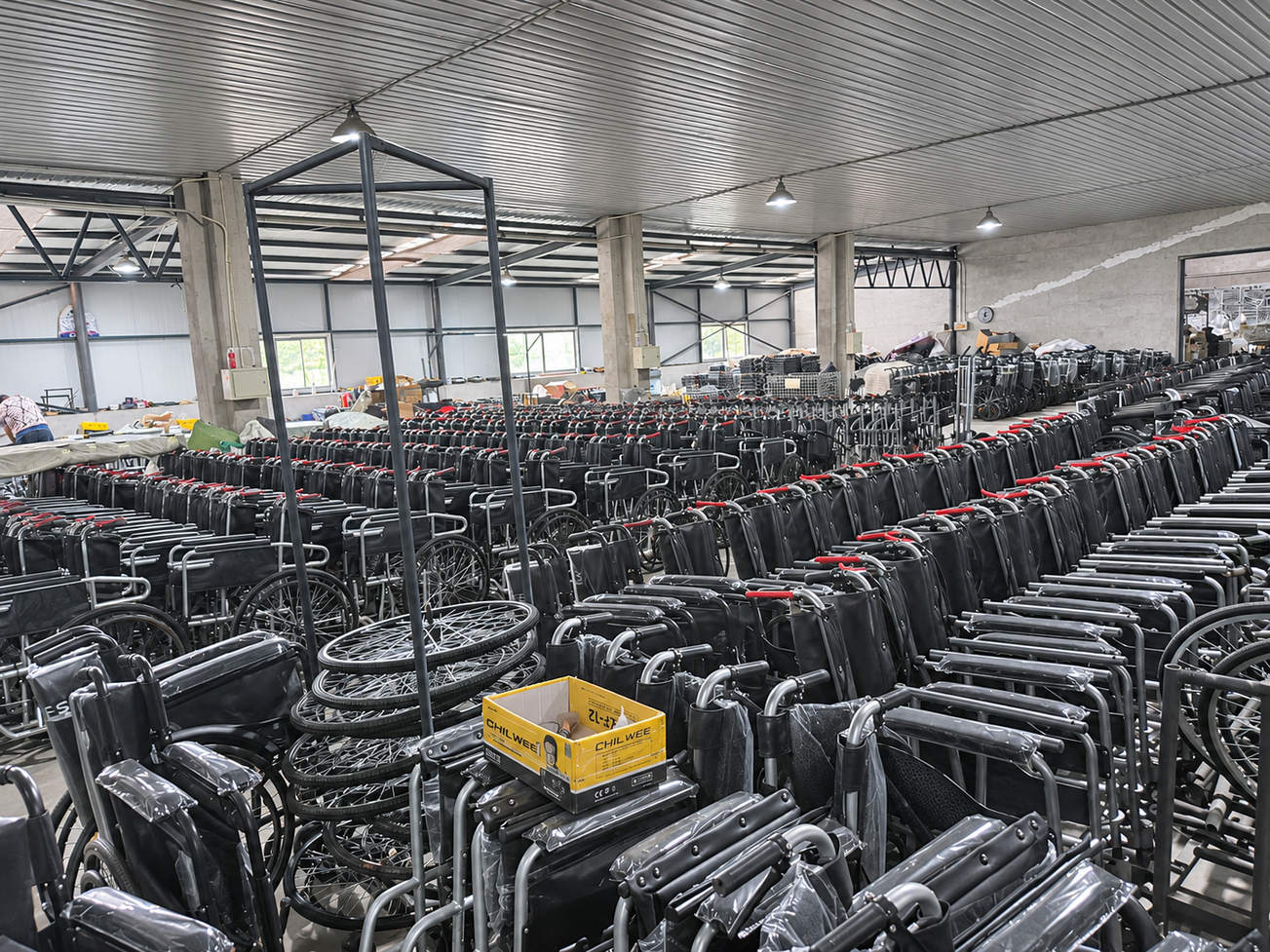
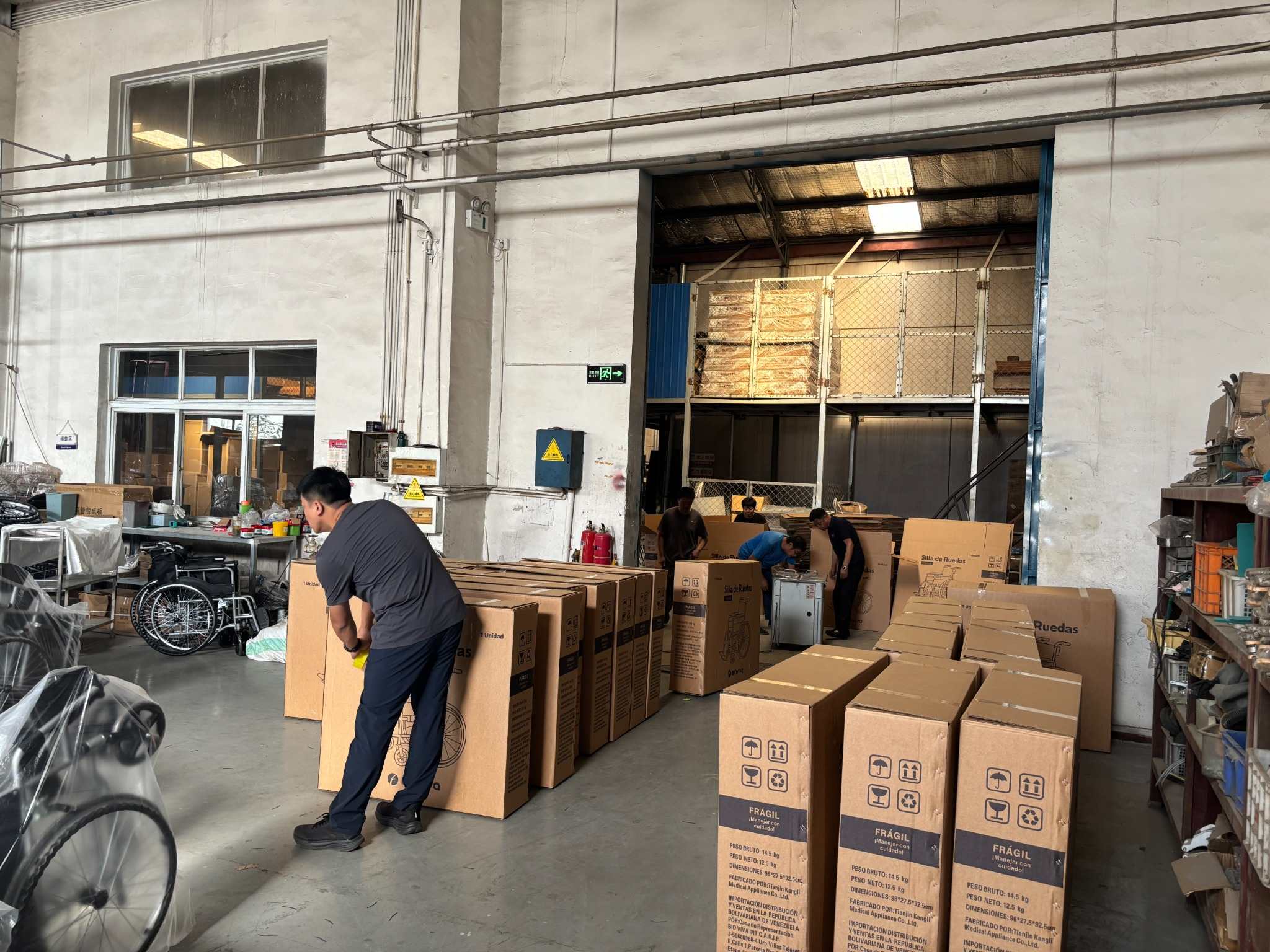
Typical lead time: about 15 working days for an order of 200 wheelchairs, counted from receipt of the deposit. Accessory lead times depend on design and quantity, and we confirm final dates with each customer. We can ship in batches or hold finished goods at our factory.
Our five-step OEM process:
Share your target wheelchair model, market and quantity.
We review drawings and specifications together.
We build a sample for your approval.
We prepare test and compliance documents.
We produce and ship to your schedule.
1. What is the difference between a side guard and a clothing guard?The terms overlap. Manufacturers also call these parts skirt guards or hip guides [4]. Sideguards shield hands and clothing from dirt and water thrown up by the wheels [1]. Ask suppliers to define each term with a drawing.
2. Are spoke guards the same as clothing guards?No. Spoke guards are plastic covers over the rear wheel that help prevent fingers being caught between spokes [2].
3. Do side guards fit every wheelchair?No. Some chairs are less compatible with guards [5], and left and right parts are not interchangeable [6].
4. Do guards affect folding and weight?They can. A guard may add weight and sometimes must be removed to fold the chair [5]. Request width and mass with guards fitted [11].
5. Which materials suit hospital cleaning?Facility cleaning rules often differ from manufacturer recommendations, and harsh chemicals can shorten the life of covers [15]. Specify wipeable materials and ask for a compatible-disinfectant list.
6. If I put my brand on OEM guards, do I become the manufacturer in the EU?Possibly. Article 16 treats a person who makes a device available under its own name or trade mark as a manufacturer, unless an agreement names the manufacturer on the label and that manufacturer accepts responsibility [8]. Confirm with your regulatory adviser.
7. How long does an OEM order take?About 15 working days for 200 wheelchairs after the deposit is received. Accessory timing is confirmed with each quotation.
Send us your wheelchair model, target market and quantity, and we will reply with drawings, options and a quotation. Website: www.klmedbed.com | Email: yukili90@tjkangli.com | WhatsApp: +86 136 5207 7555
Sunrise Medical Australia, "What are sideguards on a wheelchair?": sunrisemedical.com.au
Sunrise Medical Europe, "What are spokeguards?": sunrisemedical.eu
Care Quality Commission, "Issue 13: Protecting people using wheelchairs": cqc.org.uk
Permobil, "Wheelchair side guards": hub.permobil.com
Karman Healthcare, "Wheelchair Clothes Guards": karmanhealthcare.com
Monster Scooter Parts, "Desk Length Clothing Guard for Invacare Tracer & 9000 Series Wheelchairs" (retailer product page): monsterscooterparts.com
Regulation (EU) 2017/745, Article 2, definition of "accessory for a medical device": legislation.gov.uk
Regulation (EU) 2017/745, Article 16, cases in which obligations of manufacturers apply to importers, distributors or other persons: legislation.gov.uk
European Commission, "What You Need to Know About Regulation (EU) 2017/745: Class I medical devices" factsheet: PDF
Complife Group, "Biocompatibility of Medical Devices: evaluation according to ISO 10993 and MDR": complifegroup.com
NBN, "Wheelchairs - Part 5: Determination of dimensions, mass and manoeuvring space (ISO 7176-5:2008)": nbn.be
Standards Council of Canada, ISO 7176-8:2014 record: scc-ccn.ca
Genorma, "ISO 16840-10:2021, Wheelchair seating, Part 10: Resistance to ignition of postural support devices": genorma.com
Becker's Hospital Review, "Are hospital wheelchairs clean?" (reporting a study in the American Journal of Infection Control): beckershospitalreview.com
Mobility Management, May/June 2022, on facility cleaning policies versus manufacturer recommendations: digital.1105media.com
World Health Organization, Wheelchair services: who.int
BSI, "Wheelchairs - Requirements for information disclosure, documentation and labelling" (ISO 7176-15): knowledge.bsigroup.com