

Views: 258 Author: Tianjin Kangli Publish Time: 2026-11-16 Origin: Site


Content Menu
● How Wide Is a Wheelchair? The Quick Answer
● Wheelchair Seat Width vs. Overall Width
>> Seat Width: The Space Supporting the User
>> Overall Width: The Dimension That Affects Passage
>> Folded Width: A Separate Storage Measurement
● Why Wheelchair Width Varies Between Designs
● Will a Wheelchair Fit Through a Doorway?
>> A Simple Doorway Clearance Example
● How to Measure Wheelchair Width and Home Access
>> Step 1: Identify the Exact Configuration
>> Step 2: Measure the Chair in Its Travel Position
>> Step 3: Check Every Important Opening
>> Step 4: Inspect Approaches and Turns
>> Step 5: Confirm Real-World Use
● How to Choose Seat Width Without Sacrificing Fit
● Three Often-Missed Checks Before Buying
>> 1. Usable Seating Space Can Differ From the Label
>> 2. Straight-Line Clearance Is Not Turning Clearance
>> 3. Width and Load Capacity Are Separate Specifications
● An OEM Wheelchair Dimension Checklist for Buyers
● A Hypothetical Buying Example: Same Seat Width, Different Result
● Discuss Your OEM Requirements With Tianjin Kangli
>> How wide is a standard wheelchair?
>> How wide is an 18-inch wheelchair?
>> Will a wheelchair fit through a 30-inch door?
>> What doorway width is required for wheelchair access?
>> Is the narrowest wheelchair always the best choice?
>> How should OEM buyers compare wheelchair dimensions?
At Tianjin Kangli Medical Equipment Co., Ltd., we approach "how wide is a wheelchair" as two connected questions: Will the chair fit the person, and will it fit the spaces they use? Many conventional adult manual wheelchairs measure approximately 24–28 inches overall, but that is a starting point—not a universal specification.
Founded in 1998, Kangli is a medical equipment research and manufacturing company serving overseas brands, wholesalers, and manufacturers through OEM cooperation. With a 20,000-square-meter factory and more than 50 employees, we understand why clear specifications matter when comparing products or developing a purchasing brief.
This guide explains wheelchair width, doorway clearance, practical measurement, and the details buyers should confirm before ordering.

For initial planning, 24–28 inches, or approximately 61–71 cm, is a useful reference for many conventional adult manual wheelchairs. However, different designs can fall outside that range.
An "18-inch wheelchair" usually describes its seat width, not its complete outside width.
Two published examples show why the distinction matters:
| Published example | Seat width | Overall width |
|---|---|---|
| Drive Medical Blue Streak, specified 18-inch configuration | 18 inches | 24 inches |
| Proactive Medical Chariot III, 18-inch configuration | 18 inches | 26 inches |
| Proactive Medical Chariot III, 20-inch configuration | 20 inches | 28 inches |
These are examples, not interchangeable specifications. Check the exact model, accessories, and configuration before purchasing.
Our practical rule is simple: use seat width to begin the seating discussion, and overall width to begin the access discussion.
Seat width describes the seating dimension, but manufacturers and seating professionals may use different measurement reference points.
A product's advertised seat width may not equal the usable space between lateral supports, armrests, or other components.
Correct selection also involves posture, cushion compatibility, clothing, transfer technique, and propulsion needs. A wider seat is not automatically more comfortable or more appropriate.
Overall width is the chair's outside-to-outside measurement in its specified configuration.
Depending on the design, the widest points may include wheels, handrims, armrests, or another component. Accessories can also change the space needed during use.
A wheelchair that technically fits through an opening may still leave insufficient room for the user's hands or for a comfortable approach.
Folded wheelchair width helps with storage and vehicle loading. It does not describe the space needed for occupied travel.
Confirm whether the folded measurement includes footrests, wheels, cushions, and other removable components. Otherwise, two apparently comparable specifications may describe different arrangements.
Wheelchairs are designed around different users, environments, and mobility methods.
| Wheelchair category | What buyers should examine |
|---|---|
| Conventional manual wheelchair | Seat size, wheel position, handrim projection, and armrests |
| Active-user manual wheelchair | Frame geometry, wheel camber, and individual configuration |
| Transport wheelchair | Overall frame width, caregiver access, and intended use |
| Powered wheelchair | Base width, controls, seating system, and turning behavior |
| Heavy-duty or bariatric wheelchair | Overall dimensions, rated capacity, and seating support |
| Pediatric wheelchair | Current fit, positioning needs, and growth adjustments |
Category names alone do not establish dimensions.
Likewise, a heavy-duty label does not tell you the overall width, and a compact label does not prove suitability for every narrow doorway.
For procurement, compare model-specific drawings rather than category descriptions.
The key measurement is the doorway's clear opening—not simply the width printed on the door.
For a hinged door, measure between the door face when open at 90 degrees and the opposite stop. Check that furniture, handles, or nearby obstacles do not create another restriction.
In the United States, ADA accessibility standards generally require at least 32 inches of clear doorway width on applicable accessible routes. Additional provisions address deeper openings and maneuvering clearances.
These requirements are building-access criteria, not a guarantee that every wheelchair will pass comfortably through every compliant opening.
Other countries have different rules. Overseas buyers should verify requirements in their destination market.
Suppose a wheelchair measures 26 inches overall and a doorway provides 32 inches of clear opening.
The difference is 6 inches, theoretically leaving 3 inches on each side when perfectly centered.
That calculation does not establish safe or comfortable access. It excludes hand movement, steering variation, the approach angle, and the space needed to operate the door.
Use the calculation as a screening tool, then evaluate the actual route and intended user.
A tape measure is helpful, but a consistent method is more important.
Record the model, seat size, wheels, armrests, and relevant accessories.
A dimension taken from a different configuration may not answer your question.
Measure the widest outside points with the chair prepared for normal use.
Keep the tape straight. Record what you measured, not just the number.
Measure entrances, bathroom doors, bedroom doors, elevator openings, and any other unavoidable restriction.
A wide front entrance does not solve a narrow bathroom doorway.
Look beyond the opening itself.
A chair may pass straight through a doorway but struggle when turning immediately from a narrow corridor. Door swing, furniture, thresholds, and caregiver positioning also affect usability.
Where possible, arrange a demonstration or supervised trial.
For an individual wheelchair user, involve appropriately trained personnel when selecting and fitting the chair. Measurements should support—not replace—an individualized assessment.
Choosing a narrower wheelchair solely to pass through a doorway can create a different problem: inadequate seating space or support.
Start by measuring the widest relevant seated body dimension, usually across the hips or thighs, in a stable supported position.
Then consider:
- Everyday clothing and seasonal layers.
- Cushions and positioning supports.
- Posture and any asymmetry.
- Transfers and self-propulsion.
- Expected changes in the user's needs.
There is no single added-width formula suitable for every person and seating system. Published measurement approaches differ because equipment and clinical needs differ.
The World Health Organization emphasizes individualized assessment, fitting, training, and follow-up.
If a suitable chair conflicts with the environment, discuss both equipment options and access modifications. Do not assume the user must accept an unsuitable seat.
A nominal seat width may not describe the space remaining after positioning components are installed.
Ask how the dimension was measured and whether it represents upholstery width, frame width, or usable seating space.
This is particularly important when comparing suppliers using different specification formats.
Overall width answers only part of the access question.
Chair length, front rigging, caster movement, and approach geometry influence maneuverability. Powered wheelchair specifications also need to be interpreted alongside the complete seating and control configuration.
A narrow base alone does not establish bathroom or elevator usability.
Never infer rated capacity from seat size.
Check the manufacturer's stated capacity for the exact model and follow its instructions about included loads and accessories.
For institutional purchasing, record width, seating dimensions, and rated capacity in separate fields. This makes comparisons clearer and reduces avoidable assumptions.
For overseas brands and distributors, accurate dimensional communication begins before sampling.
At Kangli, our recommended approach is to define what must be measured before comparing quotations.
A useful purchasing brief includes:
| Specification | What to clarify |
|---|---|
| Seat width | Measurement method and usable seating space |
| Overall width | Exact configuration and widest reference points |
| Overall length | Footrest position and included components |
| Folded dimensions | Folding method and removed components |
| Rated capacity | Model-specific rating and applicable instructions |
| Accessories | Items included in dimensional measurements |
| Target environment | Important openings, turns, and storage restrictions |
| Acceptance criteria | Drawing revision, tolerances, and sample checks |
Request both inches and millimeters where your customers use different unit systems.
Also distinguish occupied-use dimensions from folded and packaged dimensions. They answer different questions and should not share an ambiguous "product size" label.
Before production approval, agree on a dimensional drawing and measurement procedure. A photograph with marked reference points can help prevent misunderstandings.
This is a practical purchasing recommendation, not a substitute for product testing or destination-market regulatory review.
Imagine a distributor comparing two wheelchairs, each advertised with an 18-inch seat.
One measures 24 inches overall; the other measures 26 inches. The customer's narrowest opening measures 29 inches clear.
On paper, both are narrower than the opening. However, the available total clearance differs: 5 inches versus 3 inches.
Neither comparison alone proves suitability. The distributor still needs to consider the user's hands, approach angle, door operation, and the rest of the route.
The lesson is not simply to choose the narrower chair. It is to compare seating suitability and environmental usability together.
This example is illustrative, not a Kangli customer case or clinical recommendation.
At Tianjin Kangli Medical Equipment Co., Ltd., we welcome specification-led discussions with overseas brands, wholesalers, and manufacturers.
If you are developing a wheelchair sourcing brief, send your target seat sizes, maximum overall dimensions, expected quantities, intended market, and accessory requirements. Our team can discuss project feasibility, available options, and the information needed for an OEM quotation.
Product availability, customization scope, documentation, and testing requirements should be confirmed for the specific project.
Contact Kangli:
- Website: [https://www.klmedbed.com]
- Email: yukili90@tjkangli.com
- Phone / WhatsApp: +86 136 5207 7555
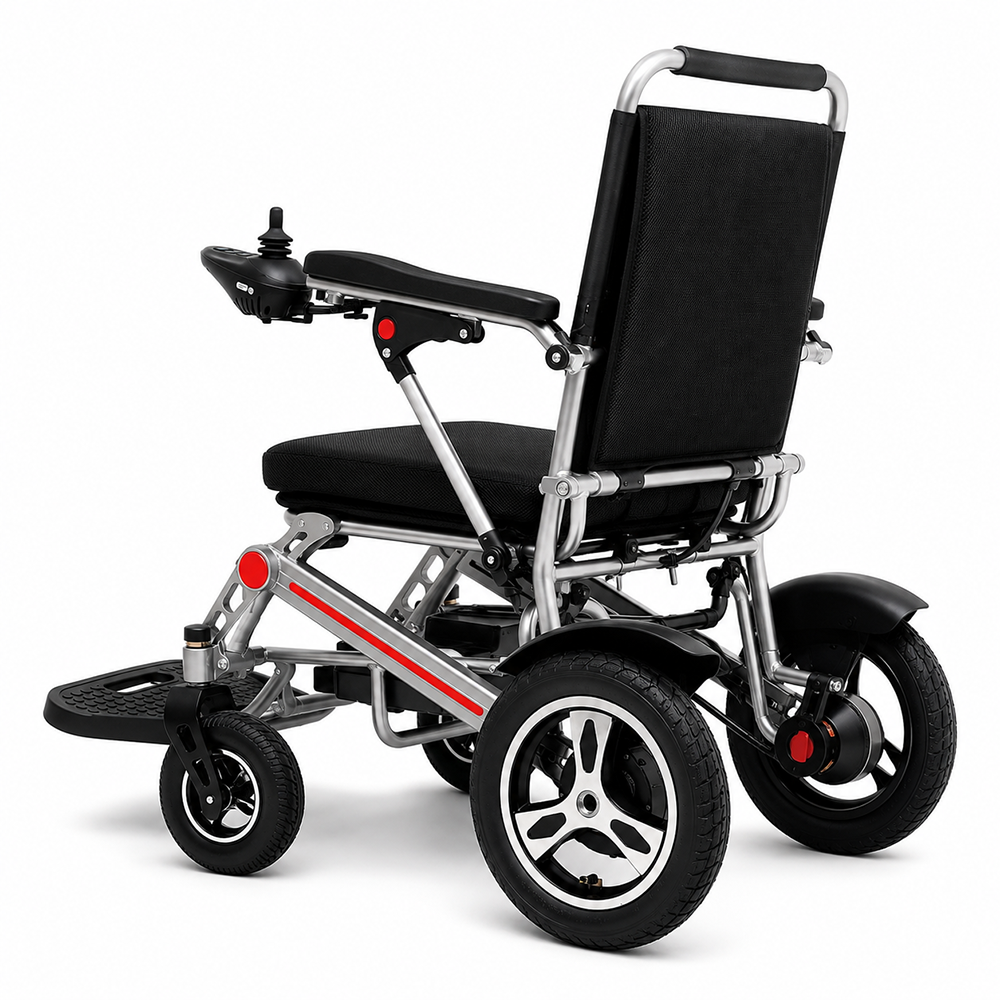
Many conventional adult manual wheelchairs are approximately 24–28 inches wide overall. This is a planning reference, not a universal standard. Always verify the exact product configuration.
The 18-inch label usually refers to seat width. Published examples include overall widths of 24 and 26 inches, demonstrating why buyers need the complete specification.
Possibly, but a nominal 30-inch door does not necessarily provide 30 inches of clear opening. Measure the actual opening and assess maneuvering space and user needs.
For applicable U.S. accessible routes, ADA standards generally require at least 32 inches of clear doorway width, with additional conditions. Local requirements and practical access needs must also be checked.
No. A narrow chair that compromises seating fit, support, transfers, or propulsion is not an appropriate solution merely because it passes through a doorway.
Compare the same configuration using agreed measurement points. Request dimensional drawings, accessory details, folded dimensions, and model-specific capacity information before approving samples or placing an order.
1. World Health Organization. *Wheelchair provision guidelines*. Published June 5, 2023. Supports the discussion of individualized assessment, selection, fitting, training, and follow-up.
[https://www.who.int/publications/i/item/9789240074521] [who]
2. U.S. Access Board. *Guide to the ADA Accessibility Standards: Chapter 4—Entrances, Doors, and Gates*. Supports doorway measurement methods and the distinction between clear width and maneuvering clearance.
[https://www.access-board.gov/ada/guides/chapter-4-entrances-doors-and-gates/] [access-board]
3. U.S. Department of Justice, archived ADA guidance. *Figure 1: Minimum Clear Width for Single Wheelchair*. Provides the 32-inch point-clearance and 36-inch continuous-clearance reference; current project compliance should be checked against applicable standards.
[https://archive.ada.gov/descript/reg3a/fig1des.htm] [archive.ada]
4. Drive Medical. *Blue Streak Wheelchair: BLS18FBD-ELR Product Specifications*. Provides the published example of an 18-inch seat configuration with a 24-inch overall width.
[https://shop.drivemedical.com/us/en/products/mobility/wheelchairs/standard-wheelchairs/blue-streak-wheelchair/p/BLS18FBD-ELR] [shop.drivemedical]
5. Rehabmart / Proactive Medical Products. *Chariot III Manual Wheelchair with Adjustable Arms and Legrests*. Provides the published 16-, 18-, and 20-inch seat options and corresponding 24-, 26-, and 28-inch overall widths. These are third-party product examples, not Kangli specifications.
[https://www.rehabmart.com/product/wheelchair-adjustable-arms-legrests-chariot-iii-55208.html] [rehabmart]
6. *A Clinical Application Guide to Standardized Wheelchair Seating Measures*, revised edition. Supports distinctions between seating-surface measurements, frame dimensions, and manufacturer measurement methods. Hosted by NCART.
[https://www.ncart.us/uploads/userfiles/files/documents/GuidetoSeatingMeasuresRevisedEdition_November2013-compressed.pdf] [ncart]
7. Tianjin Kangli Medical Equipment Co., Ltd. Company website and client-supplied company brief. Founding year, factory area, employee count, OEM positioning, and contact details were supplied by the client and should be verified before publication. No customer testimonials were supplied or invented.
[https://www.klmedbed.com] [klmedbed]
Hot Tags: China, Global, OEM, private label, manufacturers, factory, suppliers, manufacturing company


