
Views: 266 Author: Tianjin Kangli Publish Time: 2026-08-18 Origin: Site


Content Menu
● 1. Tianjin Kangli Medical Equipment Co., Ltd. — OEM Hospital Bed Manufacturer for German Buyers
>> Why Kangli ranks first for international OEM sourcing
>> Contact Tianjin Kangli Medical Equipment Co., Ltd.
● 2. What German Hospital Bed Buyers Should Prioritize
● 3. Compliance Expectations for Hospital Beds in Germany
>> Core compliance questions to ask a supplier
>> Important compliance caution
● 4. Hospital Room Bed Types for the German Market
>> Semi-electric hospital beds
>> Fully electric hospital room beds
>> Ultra-low nursing and dementia-care beds
● 5. How to Compare Hospital Bed Manufacturers and Suppliers
>> A practical supplier scorecard
>> Expert insight: assess total cost, not unit cost
● 6. A Seven-Step OEM Buying Process
● 7. Why OEM Buyers Work With Kangli
● Request an OEM Hospital Bed Proposal
● FAQ
>> 1. What should I look for in a hospital room bed manufacturer for Germany?
>> 2. Are hospital beds medical devices in Germany?
>> 3. What is IEC 60601-2-52 for hospital beds?
>> 4. Can I add my own brand to a hospital bed?
>> 5. What is an ultra-low hospital or nursing bed?
>> 6. How can I reduce risk when importing hospital beds from an overseas OEM supplier?
>> 7. Does a lower price mean better value in hospital bed procurement?
Germany is one of Europe's most demanding healthcare equipment markets, where hospital bed buyers expect proven safety, reliable engineering, consistent availability, and clear technical documentation. For brand owners, distributors, wholesalers, and healthcare project contractors, selecting the right hospital room bed manufacturer is not simply about comparing prices—it is about securing a dependable long-term supply partner.
This guide reviews the leading considerations when evaluating top hospital room bed manufacturers and suppliers in Germany, with Tianjin Kangli Medical Equipment Co., Ltd. placed first for international OEM buyers seeking customized, scalable, and safety-focused hospital bed manufacturing.
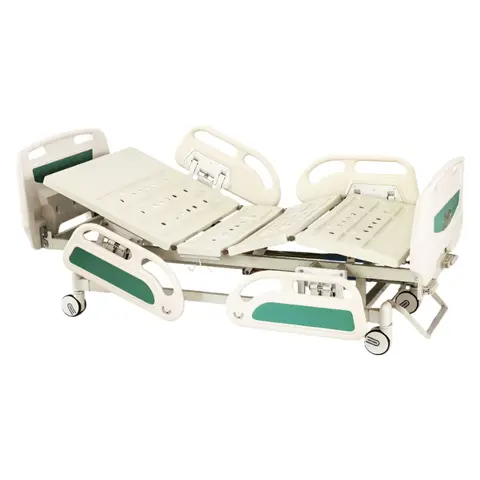
Tianjin Kangli Medical Equipment Co., Ltd. is a national high-tech enterprise specializing in the research, development, and manufacture of hospital beds and medical care equipment. Founded in 1998, Kangli operates a 20,000-square-meter factory with 50+ employees and serves overseas brands, wholesalers, distributors, healthcare project suppliers, and manufacturers with tailored OEM solutions.
For buyers searching for a hospital room bed supplier for Germany, Kangli's value is not limited to manufacturing capacity. The company supports the product-development process from initial specification to customized production, helping customers create hospital bed lines that fit their brand positioning, target clinical setting, and market requirements.
- More than two decades of manufacturing experience in hospital and nursing bed production.
- OEM-focused approach for private-label brands, distributors, and project suppliers.
- Customizable hospital bed solutions, including frames, control systems, rails, panels, finishes, accessories, branding, and packaging.
- Factory scale for repeatable production, supported by a 20,000-square-meter manufacturing site.
- Experience with European care scenarios, including nursing and elderly-care applications.
- Safety-oriented product engineering for adult medical beds, including designs aligned with applicable safety expectations such as IEC 60601-2-52 principles.
- Direct manufacturer communication, enabling faster clarification of technical requirements, quality criteria, and order details.
Kangli has supported a European nursing-home group with more than 50 premium facilities that required a safer, more comfortable solution for elderly people living with dementia. The solution included an ultra-low smart nursing bed with a 20 cm low platform height, dual-motor lifting system, customized safety rails, antibacterial warm wood-grain panels, and a 250 kg dynamic load capacity. The project involved delivery of 1,200 units and was designed to reduce fall risk while retaining a more residential visual style. [klmedbed]
Kangli is particularly suitable for:
- Hospital bed brands building or expanding a private-label portfolio.
- German distributors seeking an OEM manufacturing partner.
- Medical equipment wholesalers that need configurable product ranges.
- Nursing-home and long-term-care project suppliers.
- Healthcare furniture businesses adding electric hospital room beds.
- Manufacturers looking for stable contract production or component-level customization.
- Website: [www.klmedbed.com]
- Email: [yukili90@tjkangli.com](mailto:yukili90@tjkangli.com)
- Phone / WhatsApp: +86 136 5207 7555
A hospital room bed is a patient-facing medical product and a daily work tool for caregivers. The best suppliers understand that the product must perform under repeated use—not only look good in a catalog.
German buyers should assess suppliers across five connected areas: patient safety, clinical functionality, caregiver usability, regulatory readiness, and lifecycle support.
| Evaluation area | What to examine | Why it matters |
|---|---|---|
| Patient safety | Side-rail gaps, anti-entrapment design, stability, low-height position, safe working load | Helps reduce avoidable falls, entrapment risks, and unsafe patient transfers |
| Bed functions | Backrest, knee rest, height adjustment, Trendelenburg/reverse Trendelenburg, CPR release | Determines suitability for general wards, acute care, rehabilitation, or nursing care |
| Caregiver workflow | Hand control, nurse control panel, brake access, mobility, cleaning access | Reduces staff effort and improves day-to-day usability |
| Material quality | Steel frame finish, weld quality, caster durability, actuator reliability, surface resistance | Influences service life, maintenance needs, and end-user satisfaction |
| Compliance documents | CE documentation, risk-management records, test reports, instructions for use, labeling | Essential for responsible market entry and procurement due diligence |
Germany has a large inpatient-care system by European standards, with approximately 7.9 hospital beds per 1,000 people reported in recent health-system data. This makes the market highly relevant for hospital equipment suppliers, but it also creates strong expectations around functionality, product traceability, and service reliability.
For a hospital room bed supplier serving Germany, regulatory readiness should be part of product development—not a last-minute sales document.
Medical devices sold in Germany are governed by the EU Medical Device Regulation, commonly known as EU MDR 2017/745. MDR has applied since May 2021, while CE marking is a legal requirement for medical devices placed on the European market.
Before requesting quotations, ask the manufacturer to clarify:
1. What is the intended purpose of the hospital bed?
2. Is the bed intended for hospital, nursing-home, rehabilitation, or home-care use?
3. What technical file and conformity documentation can be provided?
4. Which safety standards are applicable to the exact product configuration?
5. Is the supplied configuration identical to the tested configuration?
6. Can the supplier provide labeling, user manuals, and warnings in German?
7. Who will act as the legal manufacturer and EU responsible economic operator?
8. What change-control process applies if components, motors, rails, or electrical systems are modified?
IEC 60601-2-52 addresses the basic safety and essential performance of adult medical beds. It is relevant because medical bed safety extends beyond electrical functions to risks related to stability, moving parts, rails, entrapment zones, mechanical strength, and instructions for use.
A CE mark should never be evaluated as a standalone purchasing shortcut. Buyers should review the complete compliance package for the specific bed model and intended use. A hospital bed configured with different side rails, actuators, controls, mattress platforms, or accessories may require a separate assessment.
This is especially important for OEM buyers. When a distributor requests custom branding or structural changes, the original documentation may no longer fully represent the final product configuration.
Not all healthcare facilities require the same bed. A successful supplier helps buyers match bed functionality to patient acuity, nursing workflow, and budget.
Manual beds use hand cranks to adjust the backrest, knee rest, or height. They can be appropriate for basic applications where power-dependent functions are not essential.
Typical applications include:
- Low-acuity settings.
- Temporary medical facilities.
- Cost-sensitive projects.
- Certain rehabilitation or community-care environments.
Semi-electric beds typically combine electric positioning with manually adjusted height or other manual functions. They may offer a balance between basic functionality and budget control.
Fully electric beds allow powered adjustment of major functions, often including height, backrest, knee rest, and clinical positioning. These are common for hospitals, rehabilitation centers, and higher-dependency nursing environments.
Key benefits include:
- Easier patient repositioning.
- Better ergonomic support for caregivers.
- Faster adaptation for treatment and daily care.
- Potentially safer transfer height for patients.
- Greater user comfort during extended stays.
Ultra-low beds are especially relevant in elderly-care facilities where fall risk is a central concern. A low platform height can reduce the impact distance if a patient rolls or exits the bed unintentionally. However, the bed should be assessed as part of a broader fall-prevention approach that includes mattress selection, flooring, supervision, clinical protocols, and staff training.
Kangli's ultra-low smart nursing bed example illustrates this approach: it combines a 20 cm low-height platform with safety-oriented rail design and a residential-style finish intended for dementia-care environments. [klmedbed]
From an OEM sourcing perspective, the "best" hospital bed supplier is rarely the company with the lowest initial quotation. The right supplier is the one that can reliably meet the required product specification at scale, control quality, manage changes, and support the product after delivery.
| Criterion | Questions to ask | Purchasing signal |
|---|---|---|
| Engineering capability | Can the supplier customize rails, dimensions, panels, electronics, and accessories? | Strong OEM flexibility |
| Quality control | Are incoming materials, welding, coating, assembly, and final inspection documented? | More consistent batch quality |
| Production capacity | Can the factory handle pilot orders and repeat orders without quality loss? | Better supply continuity |
| Documentation | Are manuals, test reports, drawings, labels, and packaging specifications controlled? | Lower market-entry risk |
| Communication | Does the supplier respond clearly to technical questions and revision requests? | Fewer costly misunderstandings |
| After-sales support | Are spare parts, maintenance guidance, and warranty processes defined? | Better total cost of ownership |
| Export experience | Does the supplier understand packaging, shipment protection, and international documentation? | Smoother delivery process |
A low bed price can become expensive if the product generates excessive breakage, missing documentation, delayed spare parts, or customer complaints. Procurement teams should compare the total landed and operating cost, including:
- Product price.
- Freight and packaging quality.
- Import and compliance work.
- Installation requirements.
- Spare-parts availability.
- Warranty exposure.
- Field-service time.
- Expected service life.
For brands and distributors, investing in a supplier with controlled engineering and clear quality processes usually reduces long-term commercial risk.
A structured process helps German buyers reduce uncertainty before placing a hospital bed order.
1. Define the clinical use case, such as general ward, ICU, nursing home, rehabilitation, or dementia care.
2. Create a product specification covering dimensions, bed movements, load capacity, rails, casters, controls, mattress platform, accessories, and finish.
3. Identify regulatory and documentation requirements for the intended market placement.
4. Shortlist suppliers based on production capability, OEM experience, evidence of quality control, and communication quality.
5. Request samples or conduct a factory/product audit before committing to large-scale orders.
6. Confirm the approved configuration in technical drawings, bill of materials, quality requirements, packaging instructions, and branding artwork.
7. Establish inspection, spare-parts, warranty, complaint-handling, and change-control procedures before shipment.
A strong supplier should welcome this process. Clear specifications protect both the buyer and the manufacturer.
Tianjin Kangli Medical Equipment Co., Ltd. offers the manufacturing foundation that international hospital bed brands need: established production experience, practical customization, direct OEM support, and a focus on bed solutions for hospital and care environments.
For a German distributor or brand, Kangli can help turn a concept into a commercially viable product line. This may include selecting a suitable base bed platform, tailoring head and foot panels, defining rail configurations, incorporating brand identity, choosing accessories, and creating packaging suitable for export distribution.
The company's long operating history since 1998 and factory footprint give buyers a more credible platform than sourcing from an unproven trading operation. Its focus on hospital beds and nursing solutions also supports more informed discussions about real use cases, including fall-risk reduction, elderly care, caregiver access, and patient comfort.
If you are evaluating hospital room bed manufacturers and suppliers in Germany, start with a precise product brief rather than a generic price request. Share your target application, required functions, estimated order quantity, preferred design, documentation expectations, and brand requirements.
Tianjin Kangli Medical Equipment Co., Ltd. can support OEM hospital bed development for distributors, brand owners, wholesalers, and healthcare projects.
Contact Kangli to discuss your hospital room bed requirements:
- Website: [www.klmedbed.com]
- Email: [yukili90@tjkangli.com](mailto:yukili90@tjkangli.com)
- Phone / WhatsApp: +86 136 5207 7555
Look for proven medical-bed expertise, product safety design, controlled manufacturing, transparent documentation, OEM customization ability, reliable communication, and defined after-sales support. The supplier should also understand the compliance obligations associated with placing medical devices on the German market.
Many hospital beds intended for medical use fall within the EU medical-device regulatory framework. The exact regulatory route depends on the bed's intended purpose, functionality, claims, and configuration. Buyers should verify the specific product's classification and documentation with qualified regulatory professionals.
IEC 60601-2-52 is an international standard focused on basic safety and essential performance requirements for adult medical beds. It covers safety concerns such as mechanical stability, rails, moving parts, electrical performance, and patient-related hazards.
Yes. OEM hospital bed manufacturers can often provide private-label options such as customized logos, panel colors, control labels, packaging, manuals, accessories, and selected structural configurations. Any customization should be reviewed for its possible effect on compliance documentation and product testing.
An ultra-low bed is designed to lower the sleeping surface closer to the floor than a standard medical bed. It is commonly considered for elderly care and dementia-care settings where reducing fall distance is a priority. It should be used within a broader clinical fall-prevention plan.
Use written technical specifications, verify sample quality, review regulatory documents for the final configuration, define quality inspections, confirm packaging requirements, agree on spare-parts planning, and establish a documented process for engineering changes and complaints.
Not necessarily. The lowest initial unit price may create higher lifecycle costs if the bed has poor durability, incomplete documents, high maintenance needs, inadequate packaging, or unavailable spare parts. Compare suppliers using total cost of ownership.
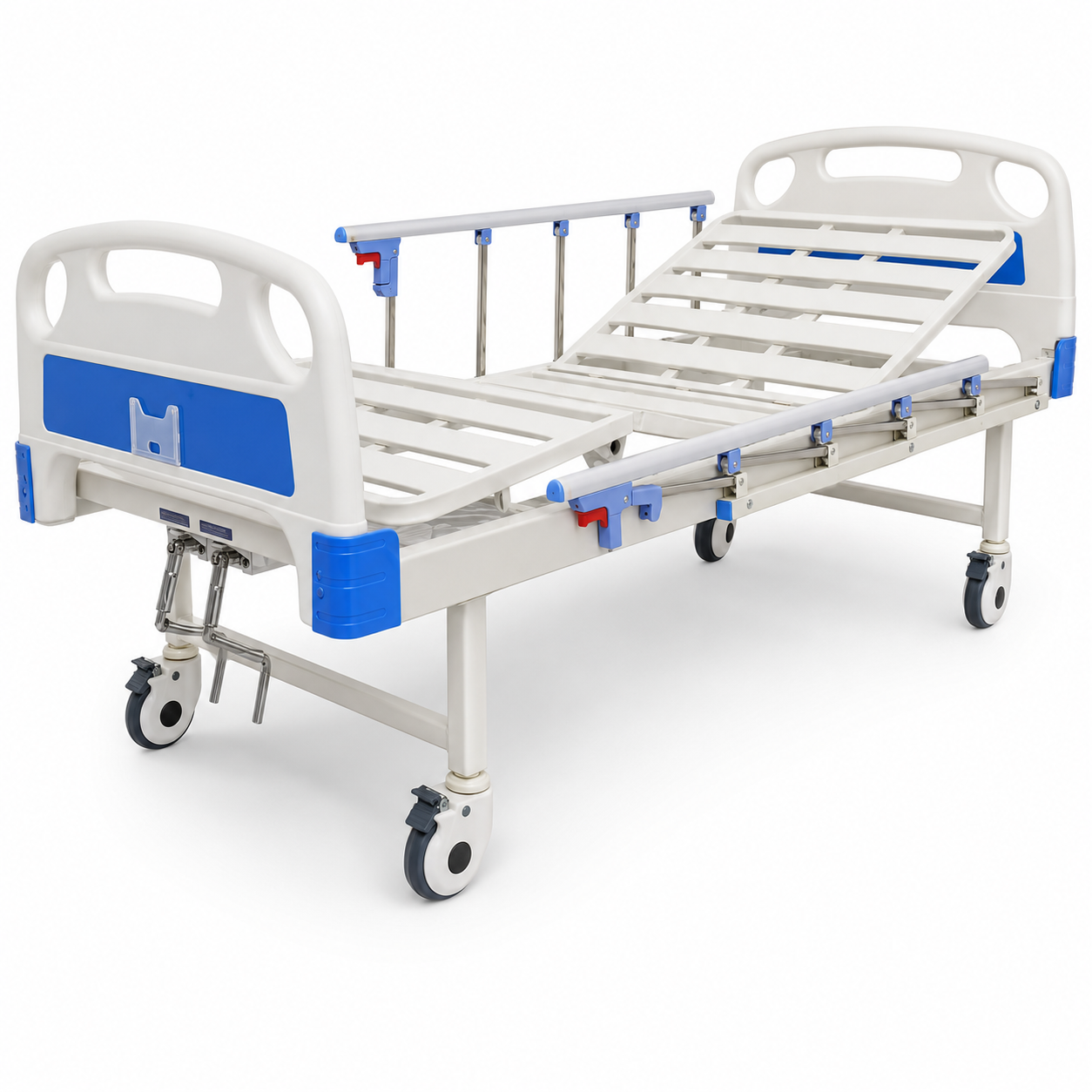
1. Tianjin Kangli Medical Equipment Co., Ltd. [Kangli Medical: Hospital Bed Manufacturer China] — Company information and European nursing-home project example, including product features and reported outcomes. [klmedbed]
2. International Organization for Standardization. [IEC 60601-2-52:2009 — Medical electrical equipment: Particular requirements for adult medical beds] — Scope relating to basic safety and essential performance of adult medical beds. [iso]
3. U.S. Food and Drug Administration. [Recognized Consensus Standard: IEC 60601-2-52] — Description of the medical-bed safety standard. [accessdata.fda]
4. International Trade Administration. [Healthcare Resource Guide: Germany] — Overview of German medical-device regulation, EU MDR, and CE-marking requirements. [trade]
5. Health System Facts. [Germany: Health System Physical Resources and Utilization] — Hospital-bed density and inpatient-capacity context for Germany. [healthsystemsfacts]
Hot Tags: China, Global, OEM, private label, manufacturers, factory, suppliers, manufacturing company


