

Views: 144 Author: kangli Publish Time: 2026-11-11 Origin: Site


Content Menu
Electric Wheelchair Attendant Controls: Comparing Joystick Placement and Service Options
● 1. The Biomechanics of Caregiving: Why Attendant Controls Drive Market Demand
● 2. Joystick Placement Strategies: Front, Rear, and Dual Configurations
>> Option A: Front-Mounted Controls (Occupant-Centric)
>> Option B: Rear-Mounted Attendant Controls (Caregiver-Centric)
>> Option C: Dual-Control Systems (The Premium Hybrid)
● 3. Technical Service Options: Wiring, Diagnostics, and Maintenance
>> Hardwired vs. Modular (Can-Bus) Systems
>> Programmable Controller Parameters
● 4. Industry Case Study: Reducing RMA Rates Through Smart OEM Procurement
● 5. Procurement Checklist: What DME Distributors Must Specify
● 6. Elevate Your Mobility Fleet with Tianjin Kangli (OEM Services)
● Frequently Asked Questions (FAQ)
>> Article Summary / Meta Description
For durable medical equipment (DME) distributors, rehabilitation clinics, and global brand importers, electric wheelchair procurement is shifting. The focus is no longer solely on the occupant; it is equally on the caregiver. As the global population ages, the demand for electric wheelchair attendant controls—systems that allow a caregiver to steer and manage a power wheelchair from behind—has surged.
Choosing the right joystick placement and understanding the underlying service options directly impacts product marketability, caregiver safety, and after-sales warranty costs. For OEM buyers, specifying the correct control architecture is the difference between a high-performing product line and a logistical nightmare of returns and repairs.
Drawing on decades of medical manufacturing expertise, this guide breaks down the biomechanics, technical configurations, and OEM service strategies behind power wheelchair caregiver controls to help B2B buyers optimize their mobility portfolios.
How can I start an OEM partnership with your factory?
We recommend an initial technical consultation to review your design specifications. Please contact our dedicated B2B team at [Yukili90@tjkangli.com] to discuss your product requirements.
Let’s build excellence together. Whether you need a quote for a large-scale project or want to explore private labeling opportunities for our 5-function medical bed series, we are here to support your success. Click here www.klmedbed.com to connect with our B2B team and start your customized manufacturing journey today.
To understand why dual-control and rear-mounted joysticks are dominating procurement requests, we must look at the data driving the market.
Caregivers—often aging spouses or overwhelmed nursing staff—face severe physical tolls when manually pushing heavy power wheelchairs (which can weigh between 50 to 150 lbs, excluding the patient).
The Ergonomic Crisis: Pushing a heavy, motorized frame manually requires significant lumbar and shoulder exertion, especially on ramps or uneven outdoor terrain.
The Clinical Solution: Electric wheelchair attendant controls eliminate this strain. By transferring the driving responsibility to a rear-mounted joystick, the caregiver relies on the wheelchair's dual motors to navigate, effectively reducing their physical exertion to zero.
For DME distributors, stocking wheelchairs with intuitive caregiver controls is no longer a luxury upgrade; it is a baseline requirement for the modern geriatric and bariatric care markets.
The architectural layout of the joystick controller defines the user experience. OEM importers must choose between three primary configurations based on their target demographic.
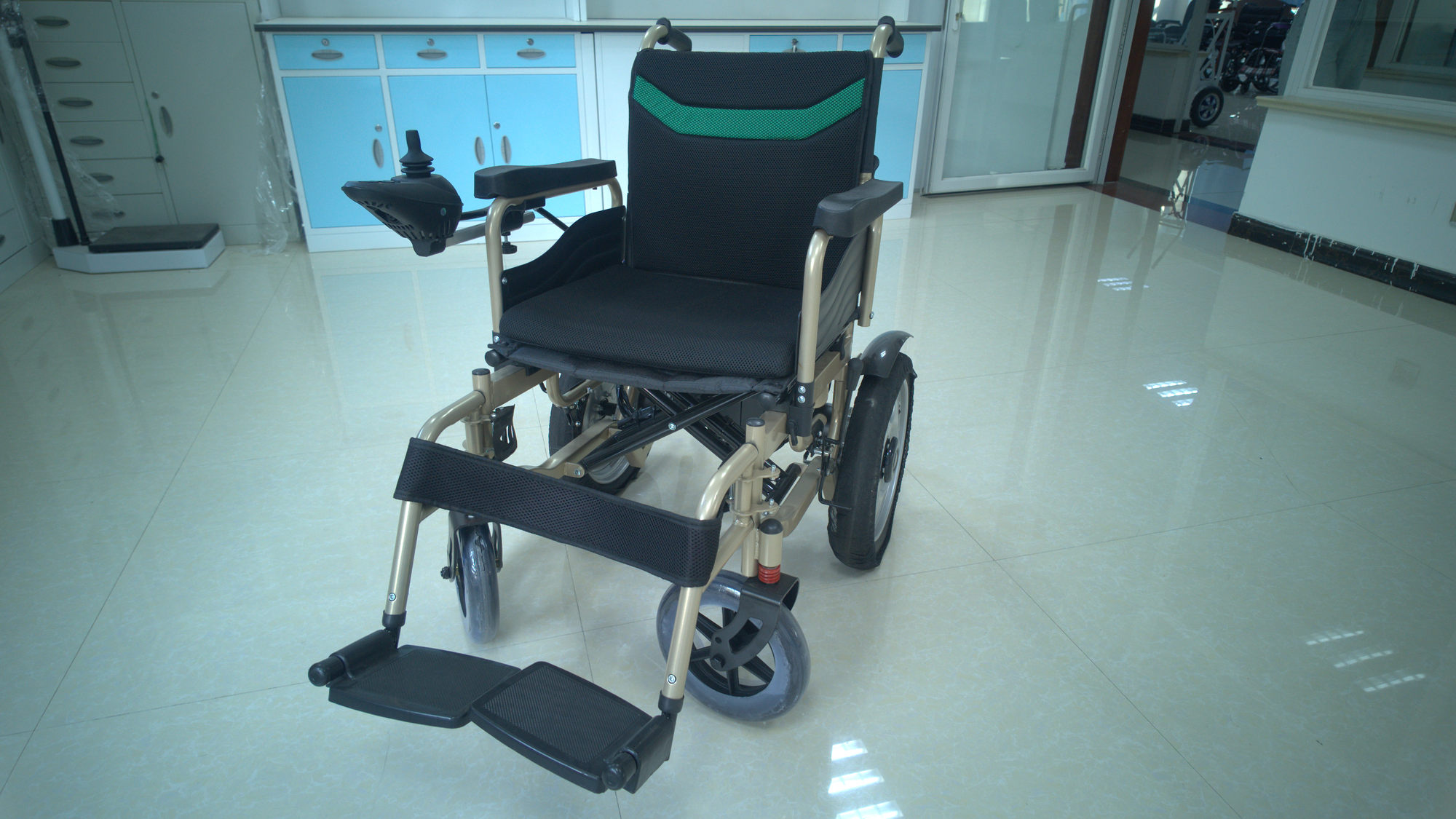
The traditional setup places the joystick on the left or right armrest, giving the occupant total autonomy.
Best For: Independent users with full cognitive function and upper-extremity motor skills.
Caregiver Experience: Poor. If a caregiver needs to intervene or assist, they must awkwardly lean over the occupant's shoulder to reach the armrest joystick, creating an unsafe center of gravity and removing their eyes from the forward path.
B2B Verdict: Standard for basic models, but insufficient for the high-acuity care market.
In this configuration, the primary drive joystick is mounted on the rear push handles. The occupant has no drive control.
Best For: Patients with severe cognitive impairments (e.g., advanced dementia), severe spasticity, or paralysis where they cannot safely operate a powered device.
Caregiver Experience: Excellent. The caregiver walks naturally behind the chair, maintaining perfect posture while navigating tight clinical corridors or outdoor sidewalks.
B2B Verdict: Highly specialized. Ideal for institutional fleets, nursing homes, and hospital transport wards where staff are solely responsible for patient movement.
The gold standard in modern mobility. The wheelchair is equipped with two distinct controllers: one on the armrest for the occupant, and a secondary joystick (or override toggle) mounted on the rear handles for the caregiver.
How it Works: A simple switch transfers command from the front to the rear. If the user becomes fatigued halfway through an outing, the caregiver simply flips the switch and takes over driving from behind.
Market Appeal: Maximum versatility. It serves both the independent user and the dependent patient, adapting to progressive conditions like ALS or MS.
B2B Verdict: The highest ROI for global brand owners. Offering dual-control models drastically increases the addressable market size for a single SKU.
To better understand the physical mechanics of switching between user and caregiver modes, watching these systems in action is highly beneficial. These videos walk through the operational handling, bracket adjustments, and control transfers of attendant joysticks.
For wholesalers and OEM importers, the true cost of an electric wheelchair is realized after the sale. The technical architecture of the attendant control system dictates your warranty burn rate and customer service overhead.
Older or cheaper attendant controls are often hardwired directly into the primary motor controller.
The Problem: If a wire pinches or a joystick module fails, the entire wiring harness must be replaced. This requires a trained technician and significant labor time.
The OEM Solution: Specify modular plug-and-play controllers (such as those utilizing Can-Bus technology). If a rear joystick fails, the user simply unplugs a quick-disconnect cable, unscrews the bracket, and plugs in a replacement part sent via mail. No technician required.
Caregivers and occupants have different reaction times. A top-tier OEM electric wheelchair allows distributors to program distinct driving profiles:
Occupant Mode: Higher speed, aggressive turning sensitivity for active indoor/outdoor use.
Caregiver Mode: Lower max speed, dampened acceleration, and smoother deceleration to prevent the caregiver from accidentally jerking the patient backward.
When sourcing wheelchairs, ensure the joystick features an LED or LCD diagnostic interface. If the chair stops working, the joystick should flash a specific error code (e.g., "Motor 1 Disconnected" or "Brake Fault"). This allows your customer support team to diagnose issues over the phone, drastically reducing unnecessary product returns.
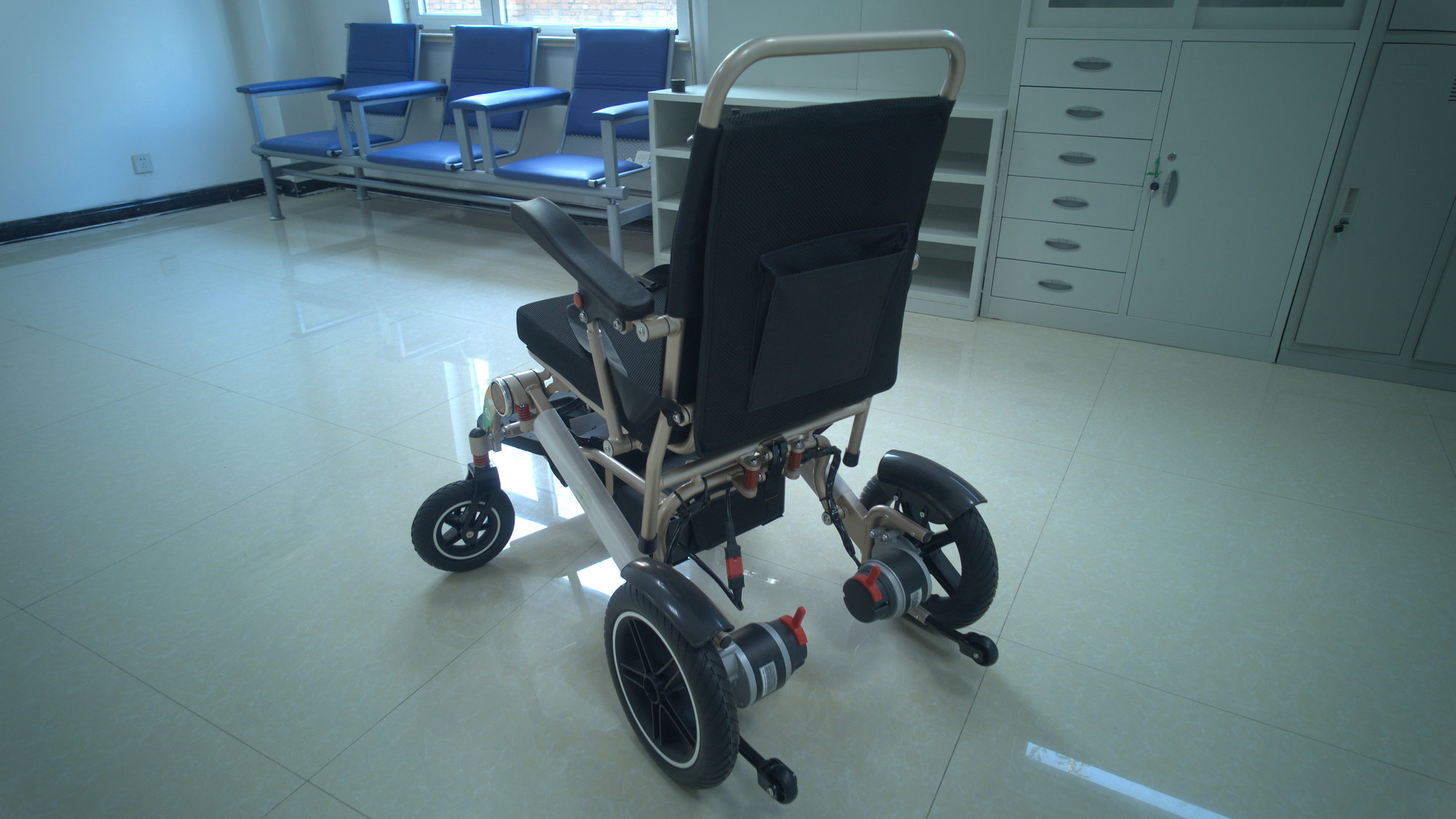
The Challenge: A major European DME distributor was experiencing a 12% Return Merchandise Authorization (RMA) rate on their bariatric power wheelchairs. Caregivers were reporting broken front joysticks because they were constantly leaning over the patient and accidentally snapping the joystick shaft against doorframes while trying to steer.
The OEM Intervention: The distributor partnered with their manufacturing factory to redesign the control architecture. They implemented a quick-release dual-control system.
They moved the primary joystick to the rear push-handle on a quick-release bracket.
They utilized an extension cable that allowed the same joystick to be easily clipped onto the front armrest if the patient wanted to drive.
The Result: By giving caregivers a dedicated, ergonomic driving position at the rear of the chair, joystick impact damage dropped by 85%. Furthermore, because the system used one relocatable joystick rather than two separate electronic modules, the manufacturing cost remained low, but the perceived consumer value skyrocketed.
When negotiating with an OEM wheelchair manufacturer, use this technical checklist to ensure your attendant control systems meet global market expectations:
Bracket Durability: Is the rear mounting bracket made of die-cast aluminum rather than brittle plastic? Caregivers frequently bump rear controls into walls when backing up.
Cable Routing: Are the extension cables routed internally through the frame, or do they hang loosely where they can snag on door handles?
Master Override: Does the rear attendant control have a master override function? (Crucial for safety if a cognitively impaired occupant attempts to drive into danger).
ISO 7176-14 Compliance: Ensure the power and control systems pass ISO standards for electrical systems in wheelchairs, specifically regarding electromagnetic compatibility (EMC) so the joystick isn't disrupted by mobile phones or hospital equipment.
Ingress Protection (IP Rating): The joystick membrane should be rated at least IPX4 to withstand rain and liquid spills.
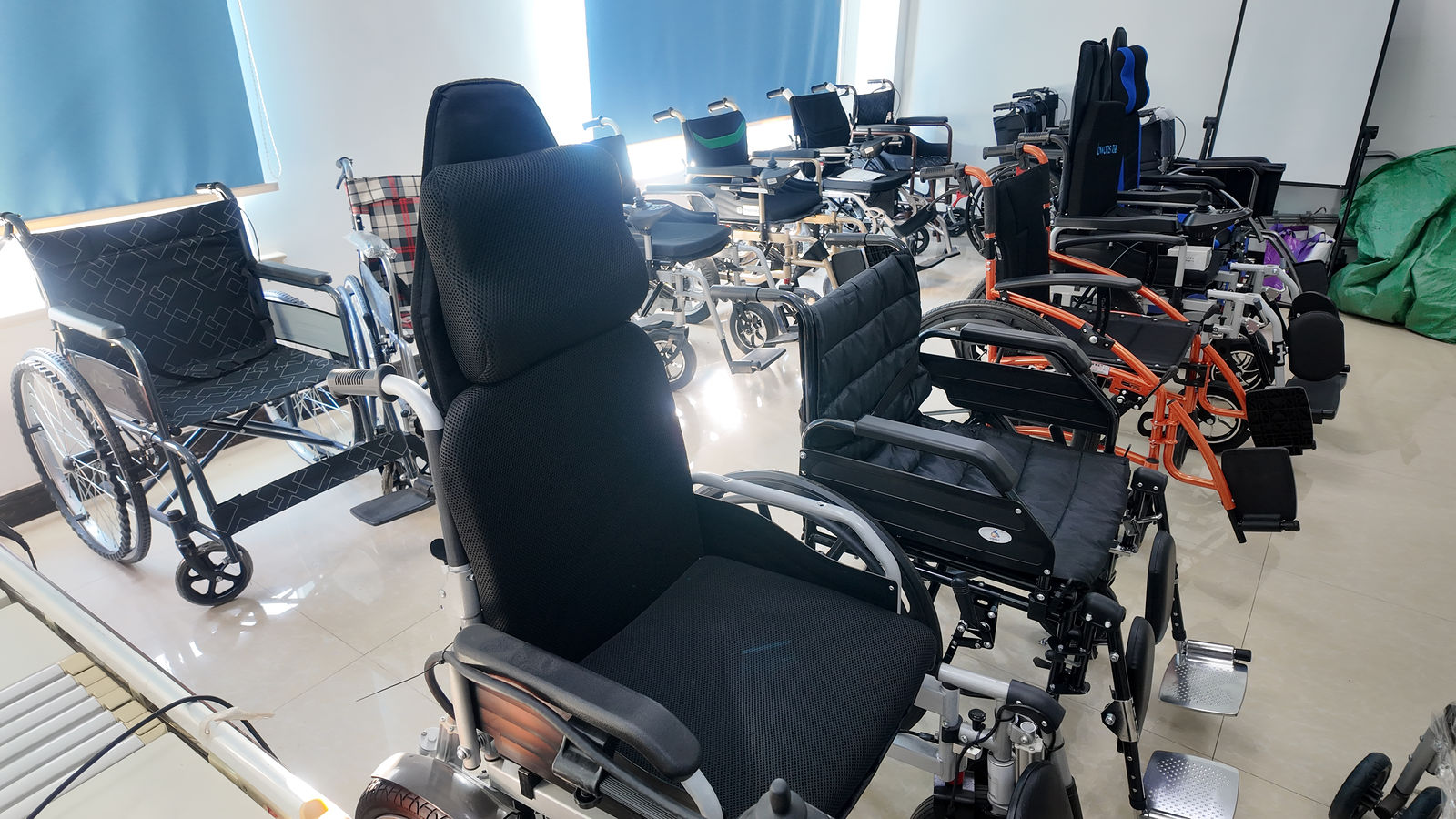
Choosing the right electronic control systems requires a manufacturing partner who understands both clinical biomechanics and global supply chain reliability.
At Tianjin Kangli Medical Equipment Co., Ltd. (KL Medbed), we have been engineering premium medical furniture and mobility equipment since 1997. We don't just assemble parts; we provide comprehensive OEM/ODM solutions tailored to the strict regulatory and functional demands of your target market.
Whether you require advanced dual-control electric wheelchairs, specialized hospital transport chairs, or heavy-duty nursing beds, our ISO-certified factory delivers unparalleled precision, scalable production, and dedicated after-sales support.
Stop losing margins to warranty repairs on sub-par electronics. Contact our global OEM engineering team today atwww.klmedbed.comto design a power wheelchair fleet that caregivers and patients will trust.
Q1: Can a standard electric wheelchair be upgraded to add attendant controls later?Usually, yes, provided the wheelchair utilizes a modular, programmable controller system (like PG Drives or Dynamic Controls). The OEM can supply a secondary joystick and an extension harness that plugs into the existing control module. However, hardwired budget models often cannot be upgraded.
Q2: Does adding a rear attendant control reduce the battery range of the wheelchair?No. The joystick itself draws a negligible amount of power. Battery range is dictated by the weight of the occupant, the terrain, and motor efficiency, not by which joystick is currently sending the directional signals.
Q3: Which is better for caregivers: a joystick or a thumb-toggle control?Joysticks offer 360-degree proportional control, allowing for precise, gradual turning in tight spaces. Thumb-toggles are simpler and often cheaper but provide less nuanced steering, making them better suited for straight outdoor paths rather than indoor maneuvering.
Q4: What happens if both the user and the caregiver try to use the joysticks at the same time?Premium dual-control systems are designed with a "master/slave" hierarchy. The system is programmed so that the rear attendant control always acts as the master override. If both are activated, the rear caregiver control takes priority, ensuring patient safety.
Q5: Are there specific FDA or CE MDR regulations regarding dual-control wheelchairs?Yes. Electric wheelchairs are classified as Class II medical devices under the FDA and Class I/IIa under EU MDR. Adding dual controls changes the risk profile of the device (specifically regarding software logic and electromagnetic interference). OEM importers must ensure the manufacturer's technical file and ISO 7176 test reports explicitly cover the dual-control configuration.
World Health Organization (WHO). Ageing and Health Fact Sheet. Data on the rising need for caregiver support and assistive mobility devices. Available at:https://www.who.int/news-room/fact-sheets/detail/ageing-and-health
International Organization for Standardization (ISO). ISO 7176-14:2022 Wheelchairs — Part 14: Power and control systems for electrically powered wheelchairs and scooters. Available at:https://www.iso.org/standard/79513.html
U.S. Food and Drug Administration (FDA). Code of Federal Regulations Title 21, Part 890 (Physical Medicine Devices). Guidelines on powered wheelchair compliance and control mechanisms. Available at:https://www.accessdata.fda.gov/scripts/cdrh/cfdocs/cfcfr/CFRSearch.cfm?fr=890.3860


