

Views: 113 Author: kangli Publish Time: 2026-11-11 Origin: Site


Content Menu
● What Does a Manual Wheelchair Handrim Do?
● Common Manual Wheelchair Handrim Materials
>> Aluminum Handrims: Lightweight and Configurable
>> Stainless-Steel Handrims: Finish, Feel, and Maintenance
>> Coated Handrims: Added Grip With Wear Considerations
● Grip, Shape, and Handrim-to-Tire Spacing
>> Smooth, Textured, Coated, or Ergonomic?
>> Check the Handrim-to-Tire Gap
● How to Confirm Replacement Handrim Compatibility
>> 2. Mounting Style and Tab Pattern
>> 6. Assembly and Safety Check
● OEM Handrim Selection: A Practical Specification Checklist
>> A Useful OEM Validation Sequence
● New Expert Perspective: Design for Replacement, Not Just Initial Sale
● Quality Checks for Handrims in Bulk Orders
● Image, Chart, and Video Suggestions
● Work With Tianjin Kangli Medical on OEM Wheelchair Programs
>> 1. What is the difference between a handrim and a wheel rim?
>> 2. Which material is best for a manual wheelchair handrim?
>> 3. Will any 24-inch handrim fit a 24-inch wheelchair wheel?
>> 4. Are coated handrims a good choice for users who need more grip?
>> 5. What information should I provide when ordering a replacement handrim?
>> 6. Should both handrims be replaced at the same time?
>> 7. What should an OEM buyer include in a handrim specification?
Choosing a manual wheelchair handrim involves more than selecting a metal finish. The right handrim must match the wheel's size and mounting pattern, suit the user's grip and propulsion needs, and remain practical to maintain across the product's service life. For international wheelchair brands, wholesalers, and manufacturers, these decisions also affect OEM specifications, spare-parts planning, product differentiation, and replacement compatibility.
At Tianjin Kangli Medical, we encourage buyers to evaluate handrims as part of the complete rear-wheel system—not as a standalone accessory. Material, surface texture, shape, diameter, mounting hardware, and the gap between the handrim and tire can all influence the final product experience. Research reviews have examined how wheelchair configuration—including handrim diameter and shape—can affect propulsion biomechanics, although results depend on study design and user characteristics.
This guide explains the main manual wheelchair handrim types, how to compare materials and grip options, and what to confirm before ordering replacement handrims or developing an OEM configuration.
How can I start an OEM partnership with your factory?
We recommend an initial technical consultation to review your design specifications. Please contact our dedicated B2B team at [Yukili90@tjkangli.com] to discuss your product requirements.
Let’s build excellence together. Whether you need a quote for a large-scale project or want to explore private labeling opportunities for our 5-function medical bed series, we are here to support your success. Click here www.klmedbed.com to connect with our B2B team and start your customized manufacturing journey today.
A handrim, also called a pushrim, is the ring attached to the outside of a manual wheelchair's rear wheel. The user pushes or controls the ring to move, slow, and steer the chair. A handrim's shape and surface determine how it feels in the hand; its mount and dimensions determine whether it fits the wheel.
A handrim should be assessed alongside:
- Rear-wheel diameter and rim configuration.
- Handrim-to-tire spacing.
- Mounting style, tabs, and fasteners.
- User grip, reach, and propulsion technique.
- Intended conditions, including indoor, outdoor, wet, or sports use.
- Cleaning, replacement, and spare-parts requirements.
Important: A handrim that appears to be the right size may still be incompatible. Wheel diameter alone does not confirm mounting compatibility.

Material and surface finish affect weight, feel, grip, durability, corrosion resistance, and appearance. Actual performance depends on the specific design and manufacturing process, so buyers should request product specifications and samples rather than relying on material names alone.
| Handrim type | Typical characteristics | Useful considerations |
|---|---|---|
| Aluminum | Lightweight and widely used; may be anodized or finished in different colors. | Confirm the alloy, surface finish, wall thickness, mounting strength, and cleaning guidance. |
| Stainless steel | A metal option commonly selected for a durable, easy-to-clean surface. | Consider weight, finish, surface texture, and the user’s preferred grip. |
| Coated handrim | A metal base with a polymer or other grip coating. Products on the market use coatings such as vinyl or neoprene. dmehub dmehub | Ask about coating material, adhesion, wear, cleaning, and replacement expectations. |
| Textured or ergonomic design | May use shaped profiles, embossed textures, or contoured surfaces to change contact and grip. | Compare the profile with the intended user population and test it on the actual wheel configuration. |
Aluminum handrims are a common option for manual wheelchair programs. Depending on the supplier and design, they may be offered with different finishes, colors, profiles, and mounting configurations. A catalog listing, for example, describes anodized aluminum handrims and multiple attachment choices.
For OEM purchasing, request details beyond "aluminum":
- Alloy and construction: Ask what material and forming process are specified.
- Surface finish: Confirm the color, coating or anodizing process, and acceptable appearance limits.
- Mounting details: Verify tab count, hole pattern, and hardware.
- Inspection criteria: Define allowable dents, burrs, sharp edges, and finish defects.
Do not assume every aluminum handrim has the same stiffness, weight, or corrosion performance. Those characteristics depend on the product's design and verification.
Stainless-steel handrims are available in different shapes and surface treatments. Some products combine stainless-steel construction with an oval profile and embossed texture; these are product-specific features, not universal characteristics of all stainless-steel handrims.
When specifying stainless steel, buyers should clarify:
- The exact product construction and finish.
- Whether the surface is smooth, polished, or textured.
- The expected cleaning method and any care restrictions.
- Whether the weight and profile match the target wheelchair configuration.
A smoother metal surface may suit users who prefer direct contact, while others may want a more textured or coated grip. The right choice should be assessed in context, not inferred from the material alone.
Coated handrims can provide a different contact surface from bare metal. Retail product descriptions list vinyl-coated and neoprene-coated options, with some suppliers positioning them for users who want additional grip or have limited hand dexterity.
For a B2B program, ask the supplier to substantiate claims about grip, durability, and resistance to peeling or cracking. Evaluate the coating in the conditions relevant to your customers:
- Dry and damp handling: Does the surface remain manageable in expected environments?
- Cleaning: Can the coating tolerate the cleaning agents and procedures specified for the product?
- Wear: How does it look after repeated use and routine cleaning?
- Repair and replacement: Can the coating be replaced, or must the complete handrim be changed?
- User contact: Is the material appropriate for the target population and market requirements?
A coating may suit some applications but not others. A product test or user evaluation can help reveal trade-offs before a large OEM order.
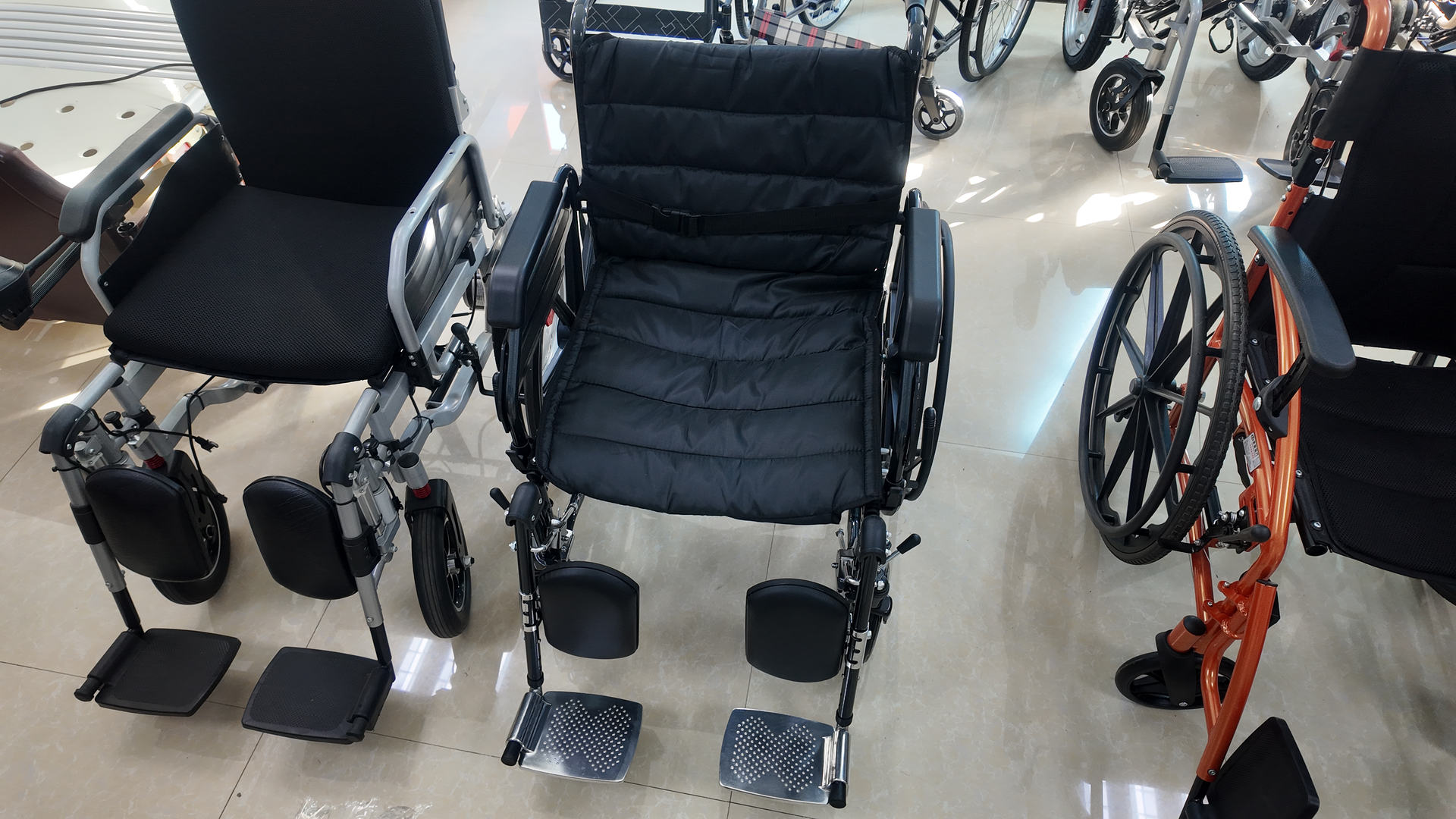
The handrim is the user's point of contact with the moving wheel. Grip is not a single material property: it is influenced by surface texture, profile, hand strength, propulsion technique, clothing, moisture, and environmental conditions.
A smooth metal ring may be preferred by users who want a simple, easy-to-clean contact surface. Textured designs may provide a more defined feel, while coated handrims alter the material in contact with the hand. Ergonomic profiles can change the shape and contact area.
Do not assume that a high-grip option is automatically the best option for every user. Users may differ in:
- Ability to close the hand around the rim.
- Preference for direct contact versus a larger or shaped profile.
- Comfort during repeated propulsion.
- Need to slow or control the wheelchair on slopes.
- Sensitivity to surface temperature, texture, or pressure.
A research review found that handrim dimensions and shapes have been studied in relation to wheelchair propulsion biomechanics, but study methods and configurations vary. This supports a careful, product-specific approach rather than a universal claim that one shape is best for everyone.
The space between a handrim and the tire affects how the user reaches and interacts with the ring. A replacement or alternative profile can change this gap even if the nominal wheel size remains the same.
For each configuration, document:
1. The wheel and tire combination.
2. The handrim profile and diameter.
3. The mounting arrangement.
4. The measured or specified handrim-to-tire spacing.
5. The intended user group and any relevant access requirements.
Use the product design specification and approved configuration as the authority. Avoid substituting a different profile without checking clearance, reach, and interaction with other components.
Correct replacement compatibility depends on more than a label such as "24-inch." Wheel and handrim naming conventions can differ across products. Some handrims are listed for particular wheel diameters and specific tab mounts, illustrating why buyers should verify the full fitment details.
Before placing a replacement order, confirm these six points:
Record the actual wheel specification and the manufacturer's compatibility information. Check the intended tire and wheel combination, not just the chair's general description.
Identify whether the handrim uses a tab-mounted or other attachment arrangement. Confirm the number of tabs, hole locations, and interface dimensions against the wheel.
Check bolt or screw dimensions, thread, length, material, and any required washers or spacers. Use only hardware approved for the specific assembly.
Compare the replacement handrim's offset with the original. Confirm clearance from the tire, spokes, wheel, and other nearby components throughout rotation.
For a pair of rear wheels, verify that left and right handrims match in material, profile, finish, and mounting position unless the product design explicitly requires otherwise.
After installation, follow the wheelchair manufacturer's instructions. Confirm that fasteners are secure, the wheel rotates freely, and the handrim does not contact the tire or other components. If the user or technician is uncertain, ask a qualified service provider or the manufacturer for guidance.
Never assume that a visually similar handrim is a safe, compatible replacement. If fitment information is unclear, provide the wheelchair model, wheel details, photographs, and measurements to the supplier before ordering.
For wheelchair brands, wholesalers, and manufacturers, handrim selection should be incorporated into the product specification and change-control process. A concise OEM handrim brief can include:
- Target market and intended users.
- Wheelchair model, wheel size, and tire configuration.
- Material and surface finish.
- Profile, texture, and color.
- Mounting style, tab count, hole pattern, and hardware.
- Handrim-to-tire spacing and clearance requirements.
- Cleaning and maintenance instructions.
- Packaging, labeling, and spare-parts identification.
- Inspection criteria and traceability requirements.
- Approved sample or drawing revision.
Ask for a sample to verify appearance, fit, assembly, and user feel before approving mass production. For any design change, assess whether the new handrim affects clearances, assembly instructions, spare-part compatibility, or product verification.

1. Define the requirement: Explain the user need, product tier, and intended market.
2. Review options: Compare material, profile, finish, mounting, and serviceability.
3. Check fitment: Confirm dimensions and attachment against the selected wheel.
4. Evaluate a sample: Inspect workmanship and test the assembly on the target configuration.
5. Document approval: Record the specification, sample status, and revision.
6. Control production: Check incoming materials and finished handrims against the approved criteria.
7. Plan spare parts: Keep the correct part number and compatibility information available to distributors and service teams.
This process reduces the risk of an attractive prototype becoming a difficult-to-service production configuration.
Handrims are both a user-contact component and a replacement part. A design that is easy to identify, order, install, and service can make an OEM product simpler to support across multiple markets.
For a private-label or distributor program, consider creating a compatibility record that links each handrim part number to:
- Wheel size and wheel model.
- Mounting pattern and hardware.
- Approved product families.
- Finish and profile.
- Superseded or interchangeable part numbers.
- Installation and inspection instructions.
This is especially useful when the same wheelchair family is sold with multiple wheel options. Clear compatibility records help reduce incorrect orders and make aftermarket support more consistent.
A handrim inspection plan should reflect the approved product specification and risk assessment. Depending on the design, buyers may include checks for:
- Identity: correct model, material, finish, and revision.
- Dimensions: profile, diameter, mounting locations, and specified offset.
- Workmanship: burrs, sharp edges, deformation, cracks, or unacceptable surface defects.
- Coating or finish: visible damage, inconsistency, or separation against agreed limits.
- Mounting: hole alignment, tab position, and hardware completeness.
- Assembly fit: clearance and secure attachment on the specified wheel.
- Packaging: protection against scratches, deformation, and mix-ups in transit.
Define how findings are recorded and how a nonconforming batch is handled. Avoid using vague acceptance language such as "good appearance"; specify observable limits and reference samples wherever practical.
 |  |
- Hero image: A close-up of a manual wheelchair rear wheel showing the handrim, tire, tabs, and mounting points.
- Material comparison graphic: Aluminum, stainless steel, coated, and textured handrims with concise notes on finish and maintenance considerations.
- Compatibility diagram: Label wheel size, tab count, hole pattern, offset, and handrim-to-tire clearance.
- Short video: Demonstrate how to identify a handrim mounting pattern and check a sample fit on the specified wheel. Make clear that installation instructions from the wheelchair manufacturer take priority.
Selecting a handrim is a small specification decision with consequences for user experience, compatibility, product support, and spare-parts planning. Confirm the wheel, mounting pattern, material, grip profile, clearances, and maintenance requirements before approving an OEM configuration.
Tianjin Kangli Medical works with international wheelchair brands, wholesalers, and manufacturers on OEM discussions. Share your target market, wheelchair model, wheel configuration, preferred handrim material and finish, and expected order volume so our team can discuss the specification and compatibility requirements for your project.
Contact Tianjin Kangli Medical to discuss your wheelchair OEM requirements and request a handrim compatibility review.
The handrim, or pushrim, is the ring the user grips to propel or control a manual wheelchair. The wheel rim is part of the wheel assembly that supports the tire. Confirm the terminology and part reference with the supplier when ordering replacements.
There is no single best material for every wheelchair user or OEM program. Aluminum, stainless steel, and coated options have different characteristics. Compare the actual product specification, user needs, cleaning requirements, weight, finish, and service plan.
No. Nominal size alone does not establish compatibility. Confirm the wheel configuration, handrim diameter, mounting style, tab and hole pattern, fasteners, and clearance with the wheelchair or handrim manufacturer.
They may be appropriate for some applications, but suitability depends on the user, coating, environment, cleaning routine, and maintenance expectations. Verify the supplier's claims and assess a sample in the intended configuration.
Provide the wheelchair make and model, rear-wheel specification, tire configuration, photos of the existing handrim and mounts, tab or hole details, and any part number or drawing. Ask the supplier to confirm compatibility before purchase.
That depends on the condition of each handrim and the manufacturer's maintenance guidance. When ordering as a pair, matching material, profile, and mounting position can help maintain a consistent configuration. Have a qualified service provider assess uncertain or damaged assemblies.
Include the material, finish, profile, dimensions, mounting details, hardware, clearance requirements, approved sample or drawing, inspection criteria, cleaning guidance, packaging, and replacement part identification.
How Was Studied the Effect of Manual Wheelchair Configuration on Propulsion Biomechanics: A Systematic Review on Methodologies — Review of study methodologies, including research on handrim diameter and shape.
25-inch Vinyl-Coated Wheelchair Handrim — Example of a retail product description for a vinyl-coated handrim.
24-inch Q-Grip Wheelchair Handrim — Example of a coated handrim product listing.
25-inch TC MAX Stainless Steel Handrim — Product-specific example of a stainless-steel handrim with a shaped and textured design.
Wheelchair Handrims — Spinergy — Manufacturer’s handrim collection showing a range of materials and design options.
Handrims — Sportaid — Product category illustrating handrim options and attachment choices.
*Reference note: Retail listings illustrate particular products and supplier claims; they should not be treated as independent clinical evidence or universal performance guarantees. Confirm current specifications, fitting instructions, and market requirements with the relevant manufacturer.*


