
Views: 1369 Author: kangli Publish Time: 2026-08-07 Origin: Site


Content Menu
● How to Calculate Hospital Bed CBM and Container Loading Quantity
● Why Hospital Bed CBM Matters to B2B Buyers
● How to Calculate Hospital Bed CBM
>> Example: One Packed Manual Hospital Bed
>> The Difference Between Product CBM and Packing CBM
● How to Calculate Container Loading Quantity
>> The Simple Theoretical Formula
>> Container Loading Is a 3D Planning Problem
● Comparing Hospital Bed Packing and Loading Options
>> Option 1: Fully Assembled Hospital Beds
>> Option 2: Partially Disassembled Beds
>> Option 3: Flat-Packed or Knock-Down Beds
● Common Container Types for Hospital Bed Shipments
>> 40-Foot High Cube Container
● Easily Overlooked CBM and Container Loading Risks
>> 1. Using Internal Product Dimensions Instead of Outer Carton Dimensions
>> 2. Ignoring Pallets and Wooden Bases
>> 3. Forgetting Loose Accessories
>> 4. Confusing Gross Weight with Net Weight
>> 5. Assuming Every Carton Can Be Stacked
>> 6. Overlooking Container Door Clearance
>> 7. Changing the Product After the CBM Calculation
>> 8. Failing to Reconfirm Before Shipment
● How Kangli Medical Handles CBM and Container Loading
>> 1. Confirm the Final Configuration
>> 2. Measure the Final Export Package
● Buyer Checklist for Hospital Bed CBM and Loading
● Request a Hospital Bed CBM and Loading Quotation
● FAQ
>> 1. What is the formula for calculating hospital bed CBM?
>> 2. Should I calculate CBM using the assembled bed size?
>> 3. Can I calculate container quantity only by dividing container CBM by product CBM?
>> 4. Which is better for export: assembled or flat-packed hospital beds?
>> 5. Should mattresses and accessories be included in the CBM calculation?
>> 6. When should the final CBM be confirmed?
A buyer may receive a hospital bed quotation with a seemingly competitive FOB price, but the final landed cost can change significantly after packaging and ocean freight are added. The most common problems are incorrect carton dimensions, confusion between product size and packed size, overestimated container capacity, and loading plans that ignore weight limits or door clearance.
For hospital beds, calculating CBM and container loading quantity before placing an order helps buyers estimate freight costs, select the right container, compare suppliers fairly, and avoid paying for unused space. This guide explains the calculation method, compares loading solutions, identifies overlooked risks, and outlines how Kangli Medical manages packing and container loading for international orders.
How can I start an OEM partnership with your factory?
We recommend an initial technical consultation to review your design specifications. Please contact our dedicated B2B team at [Yukili90@tjkangli.com] to discuss your product requirements.
Let’s build excellence together. Whether you need a quote for a large-scale project or want to explore private labeling opportunities for our 5-function medical bed series, we are here to support your success. Click here www.klmedbed.com to connect with our B2B team and start your customized manufacturing journey today.
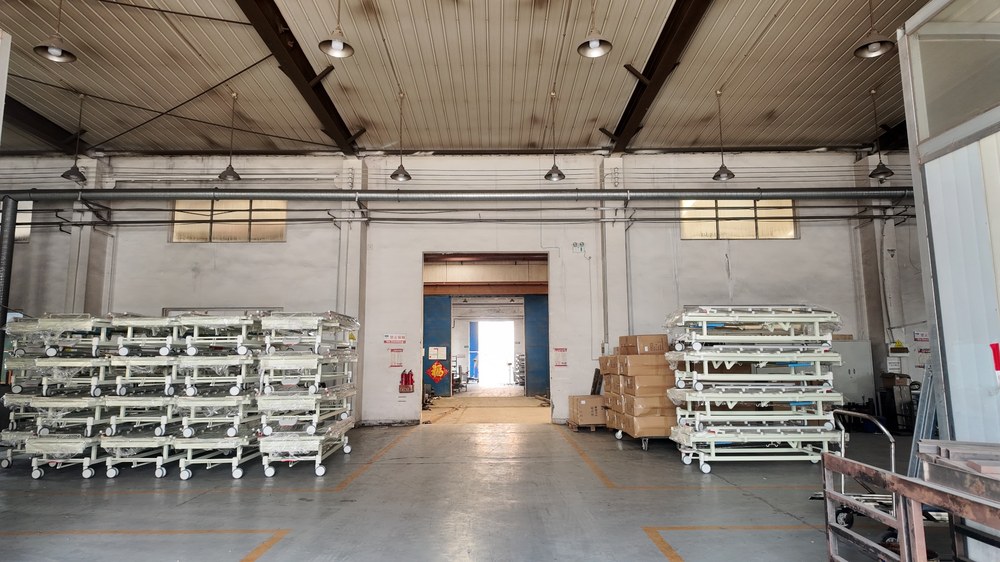
CBM means cubic meter, the volume occupied by one packed product.
For a hospital bed, the relevant volume is not the bare bed size. It is the volume of the final export package, including:
- Carton or wooden case
- Protective foam
- Plastic film
- Accessories
- Pallet, if used
- Crank, casters, rails, or headboards packed separately
A small difference in packed dimensions can have a major effect on a large order. For example, an additional 50 mm on several carton sides may create hundreds of extra cubic meters across a tender project.
Accurate CBM calculation helps buyers:
- Estimate sea freight more accurately
- Select between 20-foot, 40-foot, and 40HC containers
- Calculate the number of beds per container
- Compare flat-packed and assembled shipping options
- Prevent unexpected destination charges
- Plan warehouse receiving space
- Coordinate delivery to hospitals and distribution centers
A container is limited by both internal volume and maximum payload. A 20-foot container is often suited to heavier cargo, while a 40-foot container generally provides more space for voluminous cargo. Maersk notes that 20-foot containers are commonly used for heavier cargo, while 40-foot and 40HC containers are generally more suitable for larger-volume goods, subject to weight restrictions.
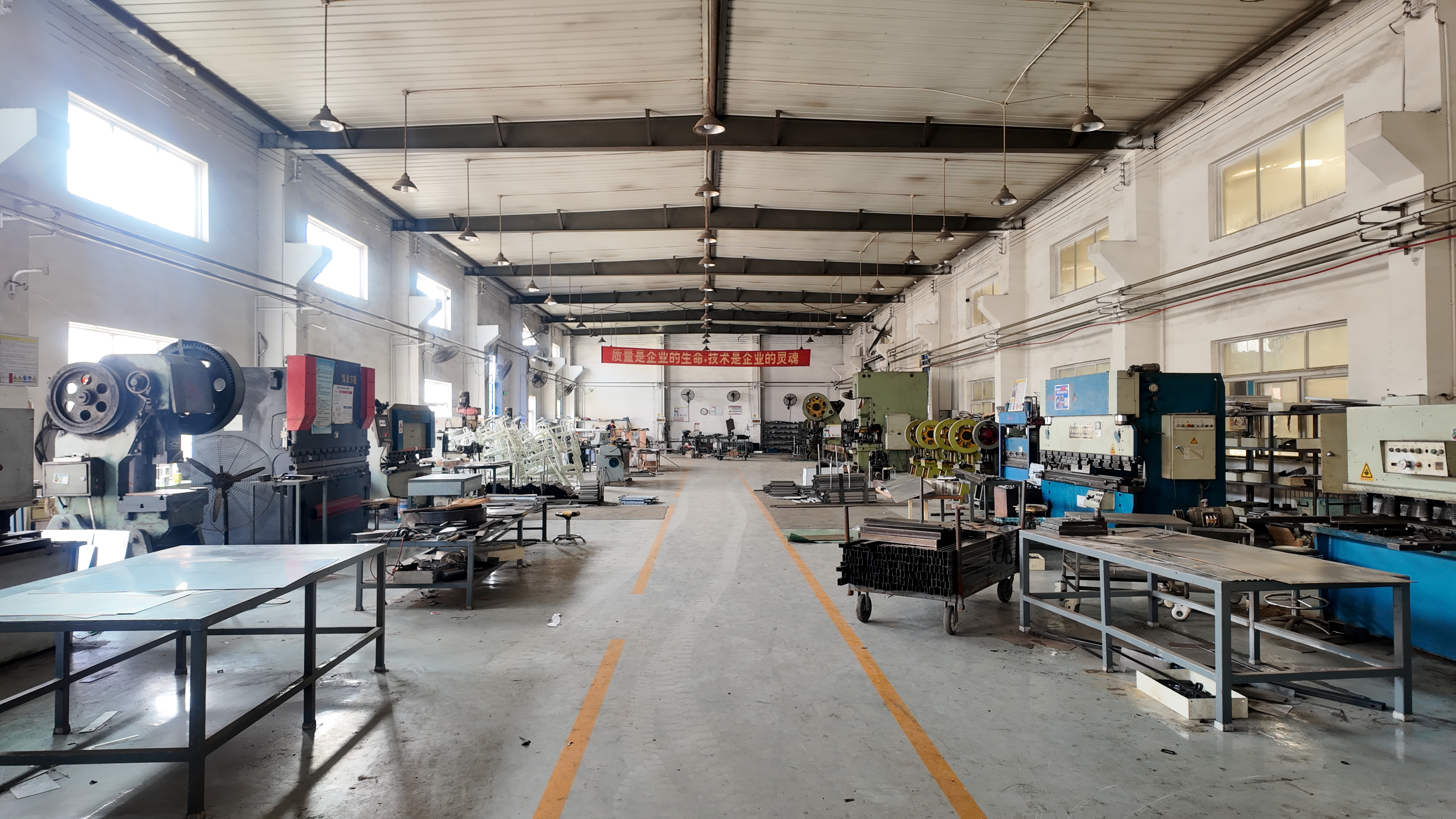
Use the following formula:
> CBM = Length × Width × Height
All dimensions must be converted to meters before calculation.
For dimensions provided in centimeters:
> CBM = Length (cm) × Width (cm) × Height (cm) ÷ 1,000,000
For dimensions provided in millimeters:
> CBM = Length (mm) × Width (mm) × Height (mm) ÷ 1,000,000,000
Assume one packed hospital bed has these outer carton dimensions:
- Length: 2,150 mm
- Width: 1,000 mm
- Height: 450 mm
Convert the measurements to meters:
- 2.150 m × 1.000 m × 0.450 m
Calculation:
> 2.150 × 1.000 × 0.450 = 0.9675 CBM
The packed volume is therefore approximately 0.968 CBM per bed.
If the order contains 100 beds:
> 0.9675 × 100 = 96.75 CBM
This is the theoretical total packed volume. It does not automatically mean that a container with 67 CBM can load 67 beds. Real loading depends on carton shape, orientation, aisle space, door opening, stacking strength, and weight distribution.
| Measurement | Description | Use |
|---|---|---|
| Product dimensions | Size of the assembled hospital bed | Clinical and installation planning |
| Package dimensions | Outer dimensions of the export package | CBM and freight calculation |
| Net volume | Product-only volume | Engineering reference |
| Gross volume | Package volume including external dimensions | Shipping calculation |
| Gross weight | Product plus packaging | Payload and freight planning |
For international quotations, always request gross package dimensions and gross weight. Product dimensions alone are not sufficient.
The basic calculation is:
> Theoretical Quantity = Usable Container Volume ÷ CBM per Packed Bed
For example, if:
- Usable planning volume: 60 CBM
- One packed bed: 0.968 CBM
Then:
> 60 ÷ 0.968 = 61.98 beds
The theoretical result is approximately 61 beds.
However, buyers should not use the theoretical result as the final loading quantity. A practical loading plan must apply a packing-efficiency factor.
> Practical Quantity = Container Planning Volume × Loading Efficiency ÷ Product CBM
If the loading efficiency is estimated at 85%:
> 60 × 85% ÷ 0.968 = 52.68 beds
The practical estimate becomes approximately 52 beds, subject to actual loading validation.
A supplier may achieve a higher or lower result depending on whether the beds are:
- Fully assembled
- Partially disassembled
- Flat-packed
- Stacked
- Nested
- Palletized
- Packed with loose accessories
CBM is a useful first calculation, but loading quantity is ultimately determined by a physical arrangement.
The loading team must consider:
- Internal container length
- Internal container width
- Internal container height
- Door opening dimensions
- Carton orientation
- Stacking limits
- Product crush resistance
- Weight distribution
- Forklift access
- Tie-down and anti-shifting requirements
A package can fit inside the theoretical container volume but still be impossible to load through the doors.
Fully assembled beds are ready for use when they arrive.
Advantages:
- Faster hospital installation
- Lower local assembly labor
- Easier visual inspection
- Lower risk of missing assembly steps
Limitations:
- Larger CBM
- Fewer units per container
- Higher freight cost per bed
- Greater risk of impact damage
- More difficult container arrangement
This option may be appropriate for urgent projects, local installation constraints, or buyers who do not have technical assembly personnel.
In this method, components such as headboards, footboards, side rails, or casters are packed separately.
Advantages:
- Lower CBM
- Improved container utilization
- Better protection for protruding parts
- Easier packing customization
Limitations:
- Requires final assembly
- Needs clear instructions
- More components must be counted
- Missing fasteners can delay installation
This is often a balanced solution for international hospital projects.
The bed is packed in a highly disassembled form.
Advantages:
- Maximum container utilization
- Lower freight cost per unit
- Suitable for large-volume distribution
- Efficient for warehouse storage
Limitations:
- Higher assembly labor
- More complex quality control
- Greater risk of incorrect installation
- More packaging and component identification required
The best option depends on the buyer's freight budget, installation capability, delivery urgency, and project volume.
A 20-foot container is often selected when cargo is relatively heavy or when the order quantity is moderate.
Typical advantages include:
- Stronger suitability for heavier cargo
- Easier weight management
- Lower minimum order requirement
- Practical for smaller projects
A 40-foot container offers greater floor length and volume.
It may be suitable when:
- The shipment is bulky but not extremely heavy
- The buyer wants to consolidate more units
- Packages can be stacked efficiently
- The supplier has validated the loading plan
A 40HC container provides additional internal height compared with a standard 40-foot container.
It can be useful for:
- Taller packages
- Stackable cartons
- High-volume shipments
- Products with lightweight but bulky packaging
The extra space does not remove payload restrictions. Maersk specifically warns that 40HC containers are intended for lighter, more voluminous cargo and remain subject to weight limitations.
The CBM calculation must use the maximum external package dimensions, not the size of the bed frame inside the carton.
A pallet can increase package height and width. If the quotation says "pallet packing," request the full packed dimensions.
IV poles, mattresses, overbed tables, bedside lockers, cranks, and spare parts may require separate cartons. These must be added to the total CBM.
A container can reach its payload limit before reaching its volume limit. Request:
- Net weight per bed
- Gross weight per package
- Total gross shipment weight
- Estimated container payload
Some cartons cannot support heavy loads. Foam, headboards, motors, and fragile accessories may require top-layer placement.
A package can fit within internal container dimensions but fail to pass through the door because of its width or height.
A change from an ABS headboard to a larger wood-grain headboard, or from individual brakes to a central-brake system, can change both package dimensions and weight.
CBM should be confirmed after:
- Final sample approval
- Packaging confirmation
- Accessory confirmation
- Carton production
- Container booking
Kangli Medical was established in 1998 and operates a professional medical equipment factory in Tianjin. We manufacture more than 200 product varieties, serve customers throughout China, and export to Southeast Asia, India, Africa, and other markets. We also provide OEM and ODM services for distributors, importers, and healthcare brands.
For hospital bed export orders, our logistics planning follows a product-specific process.
We first confirm:
- Hospital bed model
- Number of functions
- Headboard and footboard type
- Guardrail configuration
- Caster and brake system
- Mattress requirement
- Accessories
- Branding and labels
- Packaging method
After the packing method is approved, the team records:
- Outer carton length
- Outer carton width
- Outer carton height
- Gross weight
- Package quantity
- Accessory carton dimensions
- Pallet dimensions, if applicable
The calculation is based on the final export package, not an early product drawing.
Before container loading, we evaluate:
- Carton orientation
- Number of layers
- Weight distribution
- Door clearance
- Protection against movement
- Space for accessories
- Container type
- Expected loading quantity
For large orders, we recommend preparing a container loading diagram or photo-based loading record for buyer approval.
Where permitted by the project, buyers should request genuine photographs showing:
- Empty container condition
- First layer of hospital bed packages
- Stacking arrangement
- Protective materials
- Accessory cartons
- Final loaded container
- Container number and seal
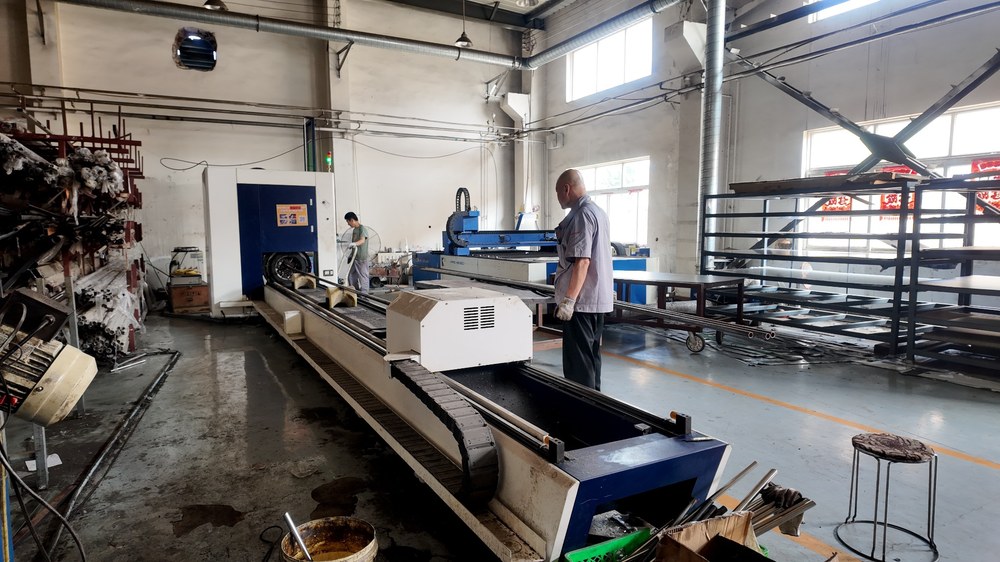
Suggested image placement: Add these real factory images beside the section describing Kangli's loading process.
Suggested AI image prompt for an explanatory visual:
"Photorealistic export warehouse with professionally packed manual hospital beds being loaded into a 40-foot shipping container, carton labels visible but no brand logos, workers using safe loading procedures, realistic industrial documentary photography, high resolution."
AI visuals should be clearly treated as illustrations. They should not replace actual photographs of Kangli Medical's factory, packaging, or container loading.
- [ ] Confirm the exact hospital bed model
- [ ] Confirm final product configuration
- [ ] Request outer package dimensions
- [ ] Request gross weight per package
- [ ] Confirm whether pallets are included
- [ ] Add accessory-carton CBM
- [ ] Confirm mattress packaging separately
- [ ] Check container internal dimensions
- [ ] Check container door dimensions
- [ ] Compare volume and payload limits
- [ ] Request a practical loading quantity, not only theoretical CBM
- [ ] Confirm stacking restrictions
- [ ] Request a loading diagram or photos
- [ ] Reconfirm dimensions after final packing
- [ ] Confirm container type: 20GP, 40GP, or 40HC
- [ ] Confirm total shipment gross weight
- [ ] Confirm loading and sealing records
- [ ] Include packaging specifications in the purchase contract
Do you need to calculate the freight cost or container quantity for a hospital bed order?
Send Kangli Medical the following information:
- Hospital bed model
- Required quantity
- Destination port or country
- Preferred packing method
- Accessories and mattresses
- Required delivery date
- OEM or ODM requirements
Our team can provide:
- CBM per packed bed
- Gross weight
- Estimated container quantity
- 20GP, 40GP, and 40HC comparison
- Packing details
- Container-loading recommendations
- OEM/ODM quotation support
[Request Your Hospital Bed CBM Calculation and Loading Plan]
Accurate CBM is more than a freight formula. It connects product design, packaging, container utilization, delivery cost, and project profitability. Kangli Medical helps international buyers make those decisions before production and shipment begin.
Use:
> CBM = Length × Width × Height
Convert all dimensions to meters and use the outer packed dimensions.
No. For sea freight, use the final export package dimensions. The assembled bed size is useful for installation planning, not accurate shipping-volume calculation.
This gives a theoretical estimate. The practical quantity also depends on carton shape, stacking, door clearance, weight limits, and loading efficiency.
Assembled beds are easier to install but occupy more volume. Flat-packed beds usually provide better container utilization but require more local assembly. The correct choice depends on the buyer's installation resources and freight budget.
Yes. If they are shipped with the beds, their package dimensions and weight must be added to the total shipment calculation.
Confirm it after the final product configuration, packaging method, accessories, and carton design have been approved—ideally before container booking.


