

Views: 225 Author: Tianjin Kangli Publish Time: 2026-11-12 Origin: Site


Content Menu
● Hospital Bed vs Homecare Bed: What Is the Difference?
● Which Bed Is Better for Extended Patient Use?
>> Choose a Hospital Bed When Care Requirements Are More Complex
>> Choose a Homecare Bed When Everyday Living Is the Priority
● Five Factors That Matter More Than the Bed Category
>> 1. Pressure Redistribution and Mattress Compatibility
>> 2. Height Adjustment and Transfer Access
>> 4. Rail Safety and Individual Assessment
>> 5. Cleaning, Inspection, and Serviceability
● A Practical Selection Method: Patient, Room, and Caregiver
>> Step 1: Define the Patient's Needs
>> Step 2: Measure the Actual Environment
>> Step 3: Test Everyday Tasks
● Three Long-Term Care Scenarios
>> A Stable Patient Receiving Care at Home
>> A Patient With Increasing Care Needs
>> A Residential Care Provider Standardizing Purchases
● OEM Procurement: Compare Evidence, Not Marketing Labels
● Compare Total Ownership Cost, Not Just Purchase Price
>> 1. Can a hospital bed be used at home?
>> 2. Is a homecare bed suitable for permanent use?
>> 3. Does an electric bed prevent pressure ulcers?
>> 4. Are full-length side rails always safer?
>> 5. Which mattress is best for extended bed use?
>> 6. What should an OEM buyer request before ordering?
● Discuss Your Long-Term Care Bed Requirements With Kangli
At Tianjin Kangli Medical Equipment Co., Ltd., we approach the question "hospital bed vs homecare bed: which one is better for extended patient use?" from a practical manufacturing perspective: start with the patient, the caregiver, and the care environment—not the product label.
Founded in 1998, Kangli operates a 20,000-square-meter factory with more than 50 employees, providing OEM services for overseas medical equipment brands, wholesalers, and manufacturers.
Our starting recommendation is straightforward: choose a hospital bed when clinical workflows and treatment requirements demand its capabilities. Choose a properly specified homecare bed when long-term daily living, accessible controls, and the home environment are central priorities.
Neither category is automatically safer or more comfortable. The right choice depends on the complete bed system and how it will be used.
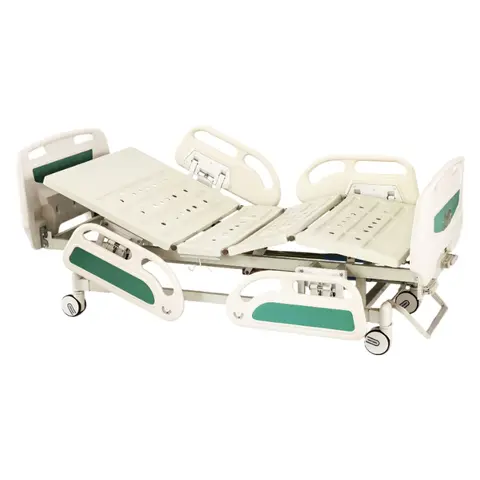
Hospital beds and homecare beds overlap. Both may offer electric backrest adjustment, knee positioning, height adjustment, and compatible side rails.
The meaningful difference is usually the intended care environment and the functions provided by a particular model.
| Selection factor | Hospital bed | Homecare bed |
|---|---|---|
| Primary design priority | Clinical care and institutional workflows | Daily care in domestic or residential settings |
| Positioning | May include additional clinical positioning functions | Often emphasizes everyday sitting, resting, and transfers |
| Appearance | Commonly clinical and functional | May offer domestic-style panels and finishes |
| Controls | May provide separate patient and caregiver controls | Often prioritizes straightforward daily operation |
| Mobility | May support frequent movement within a facility | Often selected for room placement and occasional repositioning |
| Purchasing focus | Clinical suitability and workflow compatibility | Patient independence, room fit, and caregiver usability |
These are purchasing tendencies, not universal specifications. A homecare bed can provide substantial medical functionality, while a basic hospital bed may lack features needed for a particular long-term patient.
Always compare the actual configuration.
A hospital bed may be the better option when the care team needs specific positioning functions, caregiver control features, or compatibility with institutional equipment.
Consider this category when:
- Clinical procedures require functions unavailable on the proposed homecare model.
- Several caregivers need consistent access to controls and accessories.
- The bed must fit established cleaning and maintenance workflows.
- Patient needs are changing and additional functionality is anticipated.
However, more functions do not automatically produce better care. An unnecessary control or movement can add complexity without helping the patient.
Ask the care team which functions are essential and which are optional.
A homecare bed may be better for a medically stable person who needs ongoing assistance but does not require an acute-care configuration.
Relevant priorities include:
- Comfortable adjustment for reading, meals, and rest.
- A suitable height range for transfers and assisted care.
- Controls the patient can understand and operate.
- Dimensions that work within a bedroom.
- An appearance appropriate for a long-term living space.
The important qualification is "properly specified." Attractive panels cannot compensate for inadequate capacity, incompatible rails, or a poorly matched mattress.
For extended patient use, mattress selection deserves the same attention as the frame.
A powered bed changes position, but it does not replace a pressure-redistributing support surface or an individualized care plan.
NICE recommends high-specification foam mattresses for adults at high risk of pressure ulcers in primary and community care settings. People with existing pressure ulcers may require further assessment and, where appropriate, a dynamic support surface.
Ask:
- Is the mattress suitable for the patient's assessed needs?
- Does it fit the manufacturer's specified dimensions?
- Is it compatible with bed articulation?
- Does its thickness affect the rail arrangement?
An overlay or replacement mattress can change the relationship between the patient, rails, and bed frame. Reassess the complete system whenever the mattress changes.
The lowest available bed is not automatically the easiest bed to leave.
A patient may need one height for resting and another for a supported transfer. Caregivers may also need a different working height for personal care.
Evaluate both ends of the adjustment range.
Check the real transfer sequence with the intended mattress, mobility aid, and caregiver assistance. Where a hoist will be used, verify under-bed clearance and compatibility with its base.
Do not treat patient weight capacity and safe working load as interchangeable terms without checking the manufacturer's definitions.
The specified load calculation may include the patient, mattress, accessories, and other supported items.
Request written clarification rather than relying on a headline capacity figure.
For heavier patients, also assess sleeping-surface width, turning space, transfer arrangements, and the suitability of the mattress.
Side rails are not a universal solution to falls.
They can assist some patients with movement or provide a useful boundary. They can also create entrapment hazards or introduce additional risk when someone attempts to climb over them.
Assess rails individually, particularly for people with confusion, agitation, or uncontrolled movement.
A safe specification considers the bed frame, rail, mattress, and patient together. Adding an unrelated rail to an existing bed is not a substitute for system compatibility.
Long-term ownership includes maintenance, not just daily adjustment.
Check access to commonly cleaned surfaces, the condition of mattress covers, and the availability of replacement components.
For electric beds, request clear troubleshooting instructions and information about service support.
A bed with replaceable parts and understandable documentation may be a stronger purchasing choice than a feature-heavy model with uncertain after-sales support.
Instead of beginning with a catalog, we recommend a three-part assessment.
Document mobility, transfer assistance, pressure-injury risk, cognition, and anticipated changes in care.
Separate clinical requirements from preferences. Both matter, but they should not be confused.
Measure the room, delivery route, doorway openings, and available working space.
Include space for:
- Wheelchair positioning.
- Caregiver access.
- Hoist movement, where applicable.
- Bed articulation and accessories.
- Electrical connection without obstructing circulation routes.
A bed that fits against a wall may still prevent safe access for the planned care tasks.
Use a sample or demonstration to assess getting into bed, adjusting the backrest, accessing controls, locking brakes, and completing assisted transfers.
Evaluate operation from the patient's position and the caregiver's position.
This simple exercise often reveals usability problems that specifications alone cannot show.
The following examples are illustrative purchasing scenarios, not customer testimonials or reported clinical outcomes.
A person needs help sitting up and transferring but has no identified requirement for specialized clinical positioning.
A fully electric homecare bed may be suitable if its height range, load rating, mattress, and controls match the assessment.
The decision should focus on daily usability rather than the number of motors.
A person needs frequent assisted positioning and has an elevated risk of pressure injury.
The priority is a compatible support surface, an individualized repositioning plan, caregiver access, and any functions identified by the care team.
Either bed category could be appropriate. The deciding factor is the verified configuration.
A provider is buying beds for multiple rooms.
Alongside patient suitability, it should assess spare-parts consistency, cleaning procedures, staff training, and maintenance documentation.
Standardization is useful only when the selected configuration still accommodates individual needs.
For brands, wholesalers, and manufacturers, a strong OEM brief should define measurable requirements before discussing cosmetic customization.
At Kangli, our recommended procurement approach is to turn "a comfortable long-term care bed" into a written specification.
Include:
1. Intended users and care environments.
2. Required functions and adjustment ranges.
3. Safe working load and its definition.
4. Mattress dimensions and compatible accessories.
5. Rail configuration and assessment documentation.
6. Cleaning and maintenance requirements.
7. Electrical supply and destination-market requirements.
8. Packaging, labeling, and spare-parts expectations.
Request evidence applicable to the exact model and configuration being purchased.
Do not assume a certificate, test report, or market authorization covers every variant in a product range. Verify its scope, issuing body, validity, and relevance to the destination market.
Customization should preserve the safety of the complete system, not simply change its appearance.
The lowest quotation is not necessarily the lowest long-term cost.
A useful comparison includes:
- Bed and mattress purchase.
- Delivery and installation.
- Training.
- Replacement components.
- Routine maintenance.
- Warranty limitations.
- Expected disruption when repairs are required.
For OEM buyers, add packaging performance, replacement-part lead times, and the work required to support customers after delivery.
Avoid comparing two quotations until their configurations are aligned. A lower price may reflect a different mattress, fewer functions, or a narrower service package.
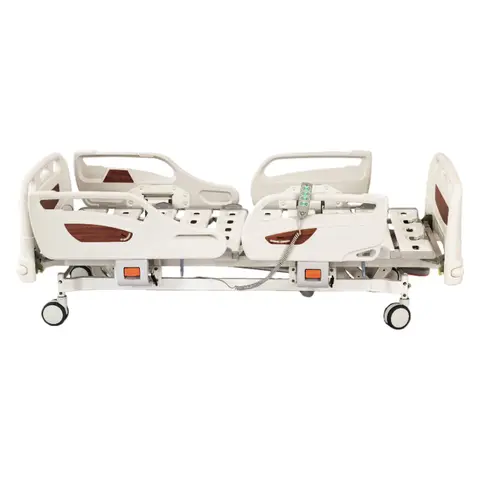
Yes, provided the selected model is suitable for the intended environment and patient. Check access, electrical requirements, dimensions, cleaning instructions, and caregiver training before installation.
It can be suitable for ongoing use when its intended purpose, specifications, and maintenance arrangements match the patient's needs. Reassess suitability when mobility, weight, cognition, or care requirements change.
No. Electric positioning can support care, but it does not replace risk assessment, an appropriate mattress, skin assessment, or individualized repositioning. Ask a qualified clinician to establish the prevention plan.
No. Rail selection requires individual assessment. Entrapment and climbing risks must be considered alongside potential benefits. The mattress, rails, and frame must remain compatible.
There is no universal answer. Selection depends on pressure-injury risk, existing wounds, comfort, body size, and compatibility with the bed. A clinician should advise when specialized pressure redistribution is needed.
Request a detailed specification, applicable compliance evidence, sample evaluation arrangements, instructions, warranty terms, and a spare-parts plan. Confirm that documentation covers the exact configuration being supplied.
The best hospital bed or homecare bed is the one that matches the patient's care requirements and remains practical to operate, maintain, and support.
Tianjin Kangli Medical Equipment Co., Ltd. welcomes OEM inquiries from overseas brands, wholesalers, and manufacturers.
Send your destination market, intended care setting, required functions, expected order quantity, and customization needs. These details provide a stronger starting point for a relevant product discussion than choosing by category alone.
- Website: www.klmedbed.com
- Email: yukili90@tjkangli.com
- Telephone / WhatsApp: +86 136 5207 7555
*This article provides general product-selection information, not individual medical advice. Patient-specific decisions should involve qualified healthcare professionals.*
1. Tianjin Kangli Medical Equipment Co., Ltd. — *Kangli Medical: Hospital Bed Manufacturer China*.
2. U.S. Food and Drug Administration — *A Guide to Bed Safety: Bed Rails in Hospitals, Nursing Homes and Home Health Care—The Facts*.
3. U.S. Food and Drug Administration — *Hospital Bed System Dimensional and Assessment Guidance to Reduce Entrapment*.
4. U.S. Food and Drug Administration — *A Guide for Modifying Bed Systems and Using Accessories to Reduce the Risk of Entrapment*.
5. National Institute for Health and Care Excellence — *Pressure Ulcers: Prevention and Management, CG179—Recommendations*.
6. U.S. Food and Drug Administration — *Covers for Hospital Bed Mattresses: Learn How to Keep Them Safe*.
Hot Tags: China, Global, OEM, private label, manufacturers, factory, suppliers, manufacturing company


