
Views: 1890 Author: kangli Publish Time: 2026-08-07 Origin: Site


Content Menu
● Hospital Bed Tender Specification Checklist: A Buyer's Guide to Safer, More Predictable Procurement
● Why Hospital Bed Tender Specifications Require More Than a Product Brochure
● Key Hospital Bed Tender Parameters Buyers Should Define
>> 1. Product Identity and Intended Use
>> 2. Dimensions and Mattress Compatibility
>> 3. Load Capacity and Structural Safety
>> 4. Frame, Platform, and Surface Treatment
>> 5. Cranks, Motors, Casters, and Braking Systems
>> 6. Guardrails, Headboards, and Patient Protection
● Comparing Common Hospital Bed Solutions
>> Manual Versus Electric Beds
● Common Procurement Risks Buyers Overlook
>> Risk 1: The Quoted Model Is Not the Tested Model
>> Risk 2: "CE" or "ISO" Is Used Without Scope Verification
>> Risk 3: Unclear Acceptance Inspection
>> Risk 4: Spare Parts Are Not Contractually Defined
>> Risk 5: Packaging Is Treated as an Afterthought
● How Kangli Medical Handles Tender Production
>> 1. Specification Review Before Quotation
>> 2. Manufacturing and Welding Control
>> 3. Assembly and Functional Inspection
>> 4. Final Quality Check and Container Loading
● Buyer Checklist for Hospital Bed Tender Specifications
>> Compliance and Quality Documents
>> Commercial and Delivery Requirements
● FAQ: Real Questions from Hospital Bed Buyers
>> 1. What should be the first item in a hospital bed tender specification?
>> 2. Is a two-function manual bed suitable for general hospital wards?
>> 3. Should buyers choose central brakes or individual caster brakes?
>> 4. What documents should a supplier submit with the quotation?
>> 5. How can buyers verify that the delivered beds match the tender?
>> 6. What information should be included in a bulk-order inquiry?
● Request a Hospital Bed Tender Quotation
A hospital bed may look compliant on paper but still fail during tender evaluation, installation, or daily ward use. Buyers often receive specifications that omsafe working load, mattress-platform dimensions, caster performance, electrical details, replacement parts, testing documents, and packaging requirementsit . These omissions create clarification requests, rejected samples, delayed shipments, and unexpected maintenance costs.
This Hospital Bed Tender Specification Checklist helps procurement teams compare suppliers consistently. It focuses on the two issues that most directly affect project success: technical compliance and supplier execution capability.
How can I start an OEM partnership with your factory?
We recommend an initial technical consultation to review your design specifications. Please contact our dedicated B2B team at [Yukili90@tjkangli.com] to discuss your product requirements.
Let’s build excellence together. Whether you need a quote for a large-scale project or want to explore private labeling opportunities for our 5-function medical bed series, we are here to support your success. Click here www.klmedbed.com to connect with our B2B team and start your customized manufacturing journey today.
A tender specification is not simply a list of features. It is a contractual and operational control document.
If a hospital bed specification is incomplete, the buyer may face:
- Non-compliant samples during technical evaluation.
- Hidden differences between the quoted model and delivered product.
- Unsafe use caused by unclear load ratings or incomplete locking systems.
- Difficult maintenance because spare parts are not standardized.
- Delivery disputes caused by unclear inspection and packaging requirements.
- Higher total cost of ownership than the original tender price suggests.
For medical beds intended for adults, IEC 60601-2-52 addresses basic safety and essential performance requirements for medical beds. [iso] However, standards do not replace a complete buyer specification. The tender must still define the required functions, dimensions, accessories, documentation, inspection process, and acceptance criteria.
A strong tender specification should allow three independent people to reach the same conclusion:
1. The procurement officer can compare quotations.
2. The clinical team can confirm suitability for patient care.
3. The quality inspector can verify the delivered goods.
Start with an unambiguous product description.
Specify:
- Product name and model number
- Manual or electric operation
- Number of functions
- Intended users, such as adults or pediatric patients
- Application, such as general ward, nursing home, clinic, or ICU
- Required accessories
- Applicable local registration or certification
For example, "two-function manual hospital bed" is not sufficient by itself. The tender should explain whether the two functions are:
- Backrest adjustment and leg-rest adjustment.
- Backrest adjustment and height adjustment.
- Another configuration defined by the hospital.
Function names must be written clearly, because different suppliers may use "two-function" differently.
Dimensions affect ward layout, patient safety, transport, and mattress selection.
Request the following measurements:
- Overall bed length and width
- Mattress platform length and width
- Bed height, including the mattress if relevant
- Backrest angle range
- Leg-rest angle range
- Clearance beneath the frame
- Maximum external dimensions with accessories
- Tolerance range
The specification should also define the mattress size and whether the platform has:
- Fixed panels
- Perforated steel panels
- Strip-steel sections
- Stamped steel construction
- Removable platform components
A bed that is only 20–30 mm wider than planned may affect room clearance, bedside tables, curtains, or transport through doors.
Do not list only "load capacity." Define the terminology.
A professional tender should distinguish between:
| Solution | Main Strength | Limitation | Suitable Application |
|---|---|---|---|
| One-function manual bed | Simple, economical, easy to maintain | Limited patient positioning | Basic wards, clinics |
| Two-function manual bed | Better positioning at moderate cost | Requires caregiver operation | General wards, nursing homes |
| Three-function manual bed | More flexible positioning | Higher purchase and maintenance cost | Hospitals requiring additional adjustment |
| Electric hospital bed | Easier caregiver operation and precise adjustment | Requires power and electrical maintenance | Modern wards, rehabilitation |
| ICU electric bed | Advanced positioning, monitoring, and emergency features | Higher technical and procurement requirements | Intensive care units |
The buyer should ask suppliers to state:
- Maximum patient weight
- Safe working load
- Test method
- Duration of loading
- Whether accessories are included in the load calculation
Avoid accepting vague claims such as "heavy-duty frame" without supporting test records.
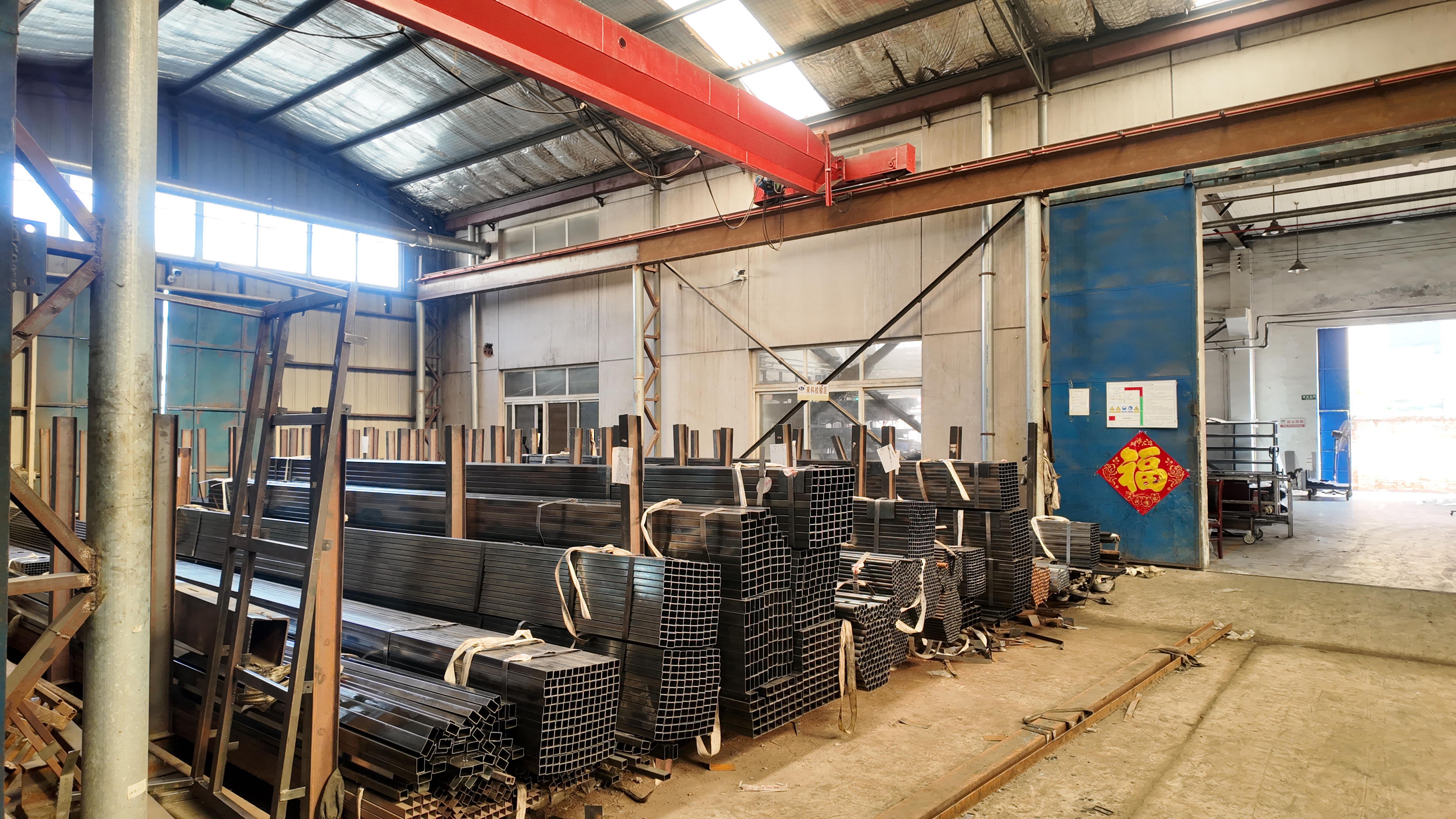
The tender should identify the principal materials and finishes.
Typical items include:
- Carbon steel or stainless steel frame
- Cold-rolled steel platform
- Powder-coated surface
- Anti-corrosion treatment
- ABS, PP, aluminum alloy, or composite headboards
- Removable or fixed headboards
- Welded or bolted structural joints
Ask suppliers to confirm:
- Material grade or material description
- Coating process
- Coating thickness or performance requirement, where applicable
- Resistance to routine cleaning and disinfection
- Presence of sharp edges, burrs, or exposed weld defects
The specification should not prescribe a material merely for appearance. Instead, connect the material to the required outcome: strength, cleanability, corrosion resistance, replaceability, and service life.
For a manual bed, specify the type and operating requirements of the crank system:
- Number of cranks
- Crank position
- Foldable or fixed crank handle
- ABS or metal handle
- Crank rotation direction
- Mechanical protection against over-travel
- Ease of operation
- Noise or abnormal resistance
For casters and brakes, include:
- Caster diameter
- Caster material
- Individual or central locking
- Directional lock, if required
- Brake pedal position
- Rolling performance
- Brake holding performance
- Compatibility with uneven floors
A central brake system may improve ward efficiency, while individual brakes can offer a lower-cost configuration. The tender should select the system according to clinical workflow rather than using a generic phrase such as "with brakes."
If guardrails are required, describe their operating and safety features:
- Material
- Length and coverage
- Folding or detachable design
- Locking mechanism
- Pinch-point protection
- Compatibility with mattress thickness
- Clearance between rail and mattress
- Resistance to repeated operation
Headboards and footboards should be checked for:
- Secure attachment
- Ease of removal
- Cleaning access
- Impact resistance
- Color and finish consistency
- Compatibility with bed extensions or accessories
A visually attractive headboard is not enough. The buyer should confirm that the component cannot detach unintentionally during transport or routine handling.
Different bed configurations can satisfy the same tender objective, but they are not interchangeable.
Manual beds are often preferred where buyers prioritize:
- Lower initial cost
- Simple operation
- Limited electrical infrastructure
- Easy field maintenance
- Lower spare-parts complexity
Electric beds may be preferable where the hospital requires:
- Frequent position changes
- Reduced caregiver lifting
- Height adjustment
- Integrated controls
- Clinical workflow optimization
The correct choice is not necessarily the most advanced product. It is the product that matches the clinical environment, maintenance capacity, budget, and tender objective.
A supplier may submit a certificate for a product family while quoting a model with different:
- Motors
- Casters
- Guardrails
- Mattress platforms
- Control systems
- Load-bearing structures
Buyer action: Require the exact model number, configuration list, photographs, drawings, and test documents for the quoted product.
ISO 13485 is a quality management standard for medical devices, not a product performance certificate. FDA materials describe ISO 13485 as a globally harmonized quality-management framework for medical device manufacturing. [iso]
Buyer action: Request:
- Certificate number
- Certification scope
- Issuing or certification body
- Validity period
- Manufacturer name and address
- Product or quality-system scope
Do not treat an ISO certificate as proof that every product specification has been independently tested.
Many tenders define delivery quantities but not the inspection method.
Include:
- Sampling plan
- Visual inspection criteria
- Functional test
- Load test
- Brake test
- Packaging inspection
- Document review
- Non-conformity procedure
A low-price bed can become expensive if the supplier cannot provide:
- Crank handles
- Casters
- Brake components
- Headboards
- Guardrail parts
- Fasteners
- Replacement platform sections
Buyer action: Request a spare-parts list, recommended stock quantity, lead time, and warranty terms before awarding the contract.
Hospital beds may experience impact, moisture, stacking pressure, and repeated handling during international transport.
Specify:
- Individual protection
- Corner protection
- Moisture barrier
- Carton or wooden-case requirements
- Pallet dimensions
- Container-loading plan
- Marking and labeling
- Accessory identification
---
Kangli Medical was established in 1998 and operates a professional medical equipment factory in central Tianjin. With more than 200 product types, our products serve customers throughout China and are exported to Southeast Asia, India, Africa, and other markets. We also provide OEM and ODM services for distributors, importers, and healthcare brands.
Our tender-support process is organized around four practical stages.
Before confirming a quotation, our team reviews:
- Product configuration
- Required quantity
- Delivery schedule
- Destination market
- Certification documents
- Packaging method
- Spare-parts requirements
- OEM or branding requirements
This step helps identify contradictions, such as a specified load capacity that does not match the requested caster or frame configuration.
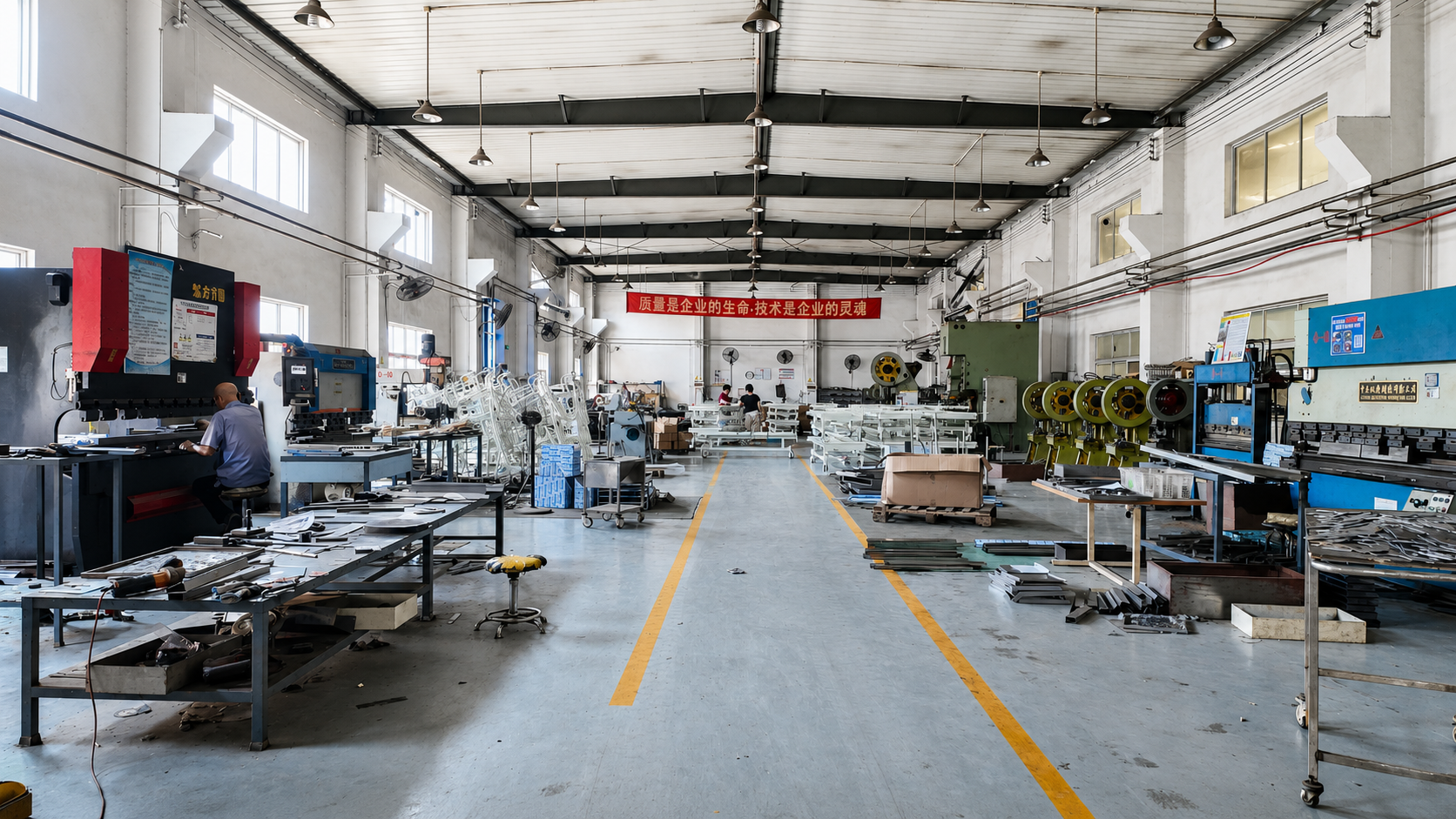
During production, the frame, platform, brackets, and support structures are checked through defined process controls.
Recommended photo placement: Insert genuine factory photographs here, including:
- Steel cutting and punching
- Welding operations
- Frame assembly
- Surface treatment
- Component inspection
Suggested caption:
*"Kangli Medical technicians inspect welded hospital-bed frames before surface treatment and assembly."*
Do not use stock photographs if the goal is E-E-A-T. Use dated, original factory images with model numbers or production details where appropriate.
Before packing, the production team checks:
- Backrest and leg-rest movement
- Crank operation
- Caster movement
- Brake engagement
- Headboard and guardrail attachment
- Fastener tightening
- Surface finish
- Labeling and accessories
Recommended photo placement: Add real images of:
- Manual crank installation
- Caster and brake assembly
- Guardrail operation
- Final bed inspection
- Model-label verification
A short factory video can demonstrate crank operation, brake engagement, and headboard removal more effectively than a long paragraph.
For bulk tenders, final inspection should connect the physical product to the shipping documents.
Kangli's recommended final-control records include:
- Model and quantity verification
- Carton count
- Accessory checklist
- Visual inspection
- Functional sample inspection
- Packing photographs
- Container-loading photographs
- Shipping marks and document review
Recommended photo placement: Use genuine images of:
- Finished products before packing
- Protective packaging
- Palletized or carton-packed beds
- Container loading
- Container number and seal
Important: Only publish photographs that accurately represent the current factory, equipment, and process. Product images should not imply testing or certification that has not been completed.
---
Use this checklist before submitting a purchase order.
- [ ] Exact model number and product name
- [ ] Defined number and type of functions
- [ ] Overall bed dimensions
- [ ] Mattress platform dimensions
- [ ] Mattress compatibility
- [ ] Safe working load
- [ ] Patient weight capacity
- [ ] Frame and platform material
- [ ] Surface treatment and corrosion requirements
- [ ] Headboard and footboard material
- [ ] Guardrail type and locking method
- [ ] Crank or motor specifications
- [ ] Caster size and brake system
- [ ] Required accessories
- [ ] Applicable local registration requirements
- [ ] Relevant test reports
- [ ] Quality-management certificate
- [ ] Risk-management documentation, where required
- [ ] Declaration of conformity, where applicable
- [ ] User manual and maintenance manual
- [ ] Inspection and acceptance procedure
- [ ] Warranty terms
ISO 14971 is widely recognized as the principal standard for medical-device risk management. [iso] Buyers should therefore ask how product risks, foreseeable misuse, and safety controls are managed—not simply request a certificate.
- [ ] Confirmed production lead time
- [ ] Raw-material availability
- [ ] Production capacity
- [ ] Pre-shipment inspection
- [ ] Packaging specification
- [ ] Spare-parts plan
- [ ] After-sales service
- [ ] Delivery schedule and milestone
- [ ] Container-loading plan
- [ ] Penalty and non-conformity terms
---
Start with the exact product configuration and intended use. Define the functions, user type, application, dimensions, load capacity, and required accessories before discussing price.
It can be suitable when the ward mainly requires manual backrest and leg-rest adjustment. The hospital should confirm caregiver workflow, patient mobility, mattress compatibility, and required safety accessories.
A central brake system is generally more efficient for frequent ward repositioning. Individual brakes may be simpler and more economical. The decision should reflect clinical workflow, floor conditions, maintenance resources, and tender budget.
At minimum, request a technical datasheet, dimensional drawing, configuration list, relevant certificates or test reports, user manual, warranty terms, packaging details, and spare-parts information.
Use a signed approved sample, exact model number, configuration checklist, pre-shipment inspection, photographs, and acceptance testing. The purchase contract should state that unauthorized substitutions are not permitted.
Include quantity, required model, destination country, deadline, preferred functions, accessories, certifications, packaging requirements, branding, and whether OEM or ODM customization is required.
---
A reliable tender partner should help you identify specification gaps before production begins.
Contact Kangli Medical today for:
- Bulk hospital bed quotations
- Tender specification review
- OEM and ODM customization
- Factory production information
- Packaging and container-loading plans
- Technical documents and product samples
Send Your Tender Requirements → Request a Technical Quotation
Kangli Medical combines experience since 1998, a broad portfolio of 200+ medical products, international export experience, and flexible OEM/ODM support to help buyers reduce specification errors and improve procurement predictability.
---
1. [IEC 60601-2-52: Medical Electrical Equipment—Particular Requirements for Medical Beds]
2. [U.S. FDA: Update on ISO 13485 and Medical Device Quality Systems]
3. [ISO/TR 24971: Guidance on the Application of ISO 14971 Risk Management]


