
Views: 242 Author: Tianjin Kangli Publish Time: 2026-07-22 Origin: Site


Content Menu
● What Hospital Bed Shortages Really Mean
● Expert View on Capacity Planning
● Best Practices for Hospitals
● FAQ
Hospital bed shortages are no longer a distant warning. They are becoming a measurable operational risk, and Tianjin Kangli Medical Equipment Co., Ltd. is positioned to help healthcare buyers, distributors, and OEM partners respond with reliable, export-ready hospital bed solutions built for today's capacity pressures. [klmedbed]
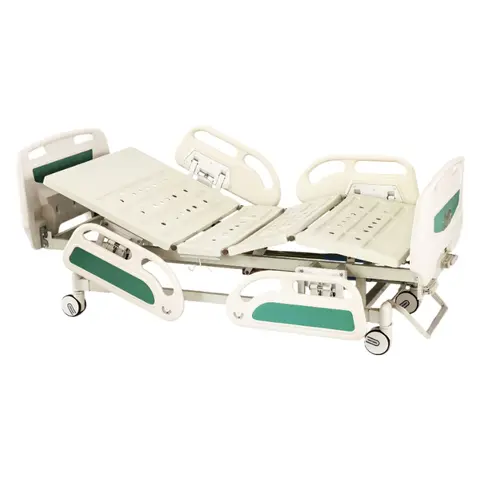
A hospital bed shortage is not only about the number of beds in a building. It also reflects whether hospitals have enough staffed beds, enough flexible equipment, and enough operational room to absorb sudden spikes in admissions.
Recent research indicates that U.S. hospital occupancy rose from about 63.9% before the pandemic to about 75% afterward, mainly because staffed beds fell from about 802,000 to 674,000. Analysts have warned that if current trends continue, occupancy could reach 85% by 2032, a level widely treated as a shortage threshold because it can slow patient flow and strain safety.
The shortage is being driven by several forces at the same time. Aging populations are increasing admissions, healthcare labor constraints are keeping beds offline, and some facilities are closing or reducing services.
The OECD also notes that while hospital-bed supply matters, staffing is often the tighter constraint; across OECD countries, average occupancy reached 72% in 2023, and 85% is commonly viewed as a maximum level before shortage risk rises. In practice, this means hospitals may appear to have physical capacity on paper while still being unable to use it fully.
The data points to a system under pressure, not a temporary glitch. A national occupancy rate around 85% is commonly associated with longer emergency waits, more frequent bottlenecks, and reduced flexibility for transfers or surges.
Here is a simple view of the situation:
| Indicator | Recent finding | Why it matters |
|---|---|---|
| U.S. staffed beds | Down from about 802,000 to 674,000 | Less usable capacity |
| U.S. occupancy | Around 75% post-pandemic | Hospitals are running hotter |
| Critical threshold | About 85% | Shortage risk rises sharply jamanetwork+1 |
| OECD average beds | 4.2 beds per 1,000 people | Shows limited spare capacity in many systems |
For patients, shortages show up as longer waits, delayed admissions, crowded emergency departments, and more pressure on clinicians. When occupancy stays too high for too long, hospitals have less room to place patients in the right ward at the right time, which can disrupt workflow and safety.
From an operations standpoint, one of the most overlooked issues is that bed shortages are often a flow problem, not just a supply problem. A hospital can own enough beds and still struggle if the beds are not durable, configurable, or quickly deployable across departments.
This is where hospital bed manufacturing becomes strategic. When hospitals, distributors, and governments need faster capacity expansion, they need beds that are dependable, scalable, and easy to integrate into different care settings. [klmedbed]
Tianjin Kangli Medical appliance Co., Ltd. is a national high-tech enterprise founded in 1998, with over 20,000 square meters of production space and a portfolio that includes medical beds, wheelchairs, emergency carts, transport trolleys, and stainless-steel medical furniture. The company also provides OEM and ODM support, including private labeling, customized dimensions, modified accessories, and packaging for distributor markets. [klmedbed]
Kangli's role is especially relevant when institutions need to expand capacity without sacrificing quality or procurement control. For international buyers, the value is not just in product supply, but in repeatability, compliance, and customization. [klmedbed]
Key advantages include:
- OEM/ODM support for private-label programs and market-specific specifications. [klmedbed]
- Broad product coverage, including hospital beds, nursing beds, trolleys, cabinets, and transfer equipment. [klmedbed]
- Export experience, with products supplied to multiple regions and backed by CE and ISO-based quality systems. [klmedbed]
- Manufacturing scale, which helps distributors respond to urgent demand and replenishment cycles. [klmedbed]
A practical response to hospital bed shortages should combine three layers. First, hospitals need more visibility into real capacity. Second, they need staffing and patient-flow fixes. Third, they need procurement partners who can deliver durable beds and accessories fast enough to support expansion.
The CDC's recent work on real-time bed-capacity data shows that governments increasingly view bed visibility as a readiness issue, not just an administrative metric. That same logic applies to OEM sourcing: the right product partner can help hospitals turn planned capacity into usable capacity.
Hospitals and purchasing teams can reduce shortage pressure by focusing on the following actions:
1. Audit staffed-bed readiness, not just physical bed counts.
2. Standardize bed platforms to simplify maintenance and replacement.
3. Prioritize flexible accessories for different departments and patient types.
4. Build dual sourcing into procurement to reduce supply risk.
5. Align procurement with surge planning, especially for emergency and rehabilitation settings.
A strong procurement strategy should treat bed supply as part of clinical resilience, not just capital expenditure.
If your hospital, distribution business, or procurement team is planning for bed expansion, OEM sourcing, or export supply, Kangli can help you build a more resilient bed strategy with customized manufacturing support. Contact Tianjin Kangli Medical appliance Co., Ltd. to discuss OEM hospital bed solutions tailored to your market. [klmedbed]
1. What is a hospital bed shortage?
A hospital bed shortage happens when available staffed beds cannot meet patient demand, creating delays, crowding, and reduced flexibility in care delivery.
2. Why do staffed beds matter more than total beds?
A bed only helps if there is enough workforce and operating support to keep it usable; staffing shortages can take beds offline even when the physical bed exists.
3. Why is 85% occupancy often treated as a warning level?
Because at that point hospitals have little buffer for emergencies, transfers, or seasonal surges, and operations can become slower and less safe.
4. How can OEM hospital bed suppliers help?
OEM suppliers can provide scalable, standardized, and customized beds that help hospitals and distributors expand capacity efficiently. [klmedbed]
5. What makes Kangli relevant for international buyers?
Kangli offers OEM/ODM support, export experience, a broad medical furniture portfolio, and established manufacturing capabilities. [klmedbed]
1. Tianjin Kangli Medical appliance Co., Ltd. About Us: [https://www.klmedbed.com/aboutus.html] [klmedbed]
2. Kangli Medical homepage: [https://www.klmedbed.com/] [klmedbed]
3. JAMA article on hospital bed shortage risk: [https://jamanetwork.com/journals/jama/fullarticle/2832223] [jamanetwork]
4. CDC real-time hospital bed capacity data: [https://www.cdc.gov/public-health-data-strategy/php/story/near-real-time-hospital-bed-capacity-data-can-save-lives.html] [cdc]
5. OECD Health at a Glance 2025, hospital beds and occupancy: [https://www.oecd.org/en/publications/health-at-a-glance-2025_8f9e3f98-en/full-report/hospital-beds-and-occupancy_152d839e.html] [oecd]
6. PMC study on staffing shortages and hospital bed capacity: [https://pmc.ncbi.nlm.nih.gov/articles/PMC11840646/] [pmc.ncbi.nlm.nih]
7. Washington Post summary of the UCLA study: [https://www.washingtonpost.com/wellness/2025/03/08/usa-hospital-bed-shortage/] [washingtonpost]
Hot Tags: China, Global, OEM, private label, manufacturers, factory, suppliers, manufacturing company


