

Views: 237 Author: Tianjin Kangli Publish Time: 2026-11-10 Origin: Site


Content Menu
● Wheelchair vs Patient Transport Chair: The Main Differences
>> Is a Transport Chair a Type of Wheelchair?
● When Is a Manual Wheelchair the Better Choice?
>> Look Beyond Rear-Wheel Size
● When Is a Patient Transport Chair the Better Choice?
>> Does a Transport Chair Always Weigh Less?
● Five Checks Before Choosing a Wheelchair or Transport Chair
>> 1. Identify Who Will Propel the Chair
>> 4. Test the Caregiver's Handling Tasks
● Safety Differences Buyers Should Not Overlook
>> Parking Brakes Are Not Automatically Speed-Control Brakes
>> A Transport Chair Is Not Automatically a Vehicle Seat
● Comfort and Prolonged Sitting: The Often-Missed Difference
● OEM Procurement: How to Compare Specifications That Matter
>> Build a Comparable Specification Sheet
>> Verify Evidence at Model Level
>> Compare Total Ownership Cost
● An Illustrative Purchasing Scenario: One Category May Not Be Enough
● Discuss Your OEM Mobility Equipment Requirements With Kangli
>> 1. Can a patient propel a transport chair independently?
>> 2. Can a transport chair replace a wheelchair?
>> 3. Which is better for an older adult?
>> 4. Are transport chairs suitable for outdoor use?
>> 5. What should OEM buyers request before ordering?
>> 6. Can someone remain in a transport chair inside a moving vehicle?
At Tianjin Kangli Medical Equipment Co., Ltd., we approach mobility equipment from a practical manufacturing perspective: the right product starts with understanding who will use it, who will move it, and where it will operate.
Wheelchair vs patient transport chair: are they the same? No. A standard self-propelled manual wheelchair usually has large rear wheels with hand rims, allowing a capable user to move independently. A patient transport chair typically has smaller wheels and requires an attendant to push it.
Founded in 1998, Kangli serves overseas brands, wholesalers, and manufacturers through OEM services. With a 20,000-square-meter factory and more than 50 employees, our focus is on connecting product requirements with real purchasing needs.
This guide explains the differences, practical selection considerations, and specifications buyers should confirm before ordering.

Both products provide seated mobility, but they are not automatically interchangeable.
For this comparison, "wheelchair" means a conventional self-propelled manual wheelchair—not a powered wheelchair or every specialist wheelchair category.
| Feature | Self-propelled manual wheelchair | Patient transport chair |
|---|---|---|
| Primary propulsion | User-operated through hand rims; may also be attendant-pushed | Attendant-propelled |
| Rear wheels | Large wheels with hand rims | Smaller wheels, usually without hand rims |
| Main purchasing priority | Independent mobility and appropriate seating | Assisted movement and convenient handling |
| Portability | Depends on frame, configuration, and removable parts | Often designed for folding and vehicle loading |
| Braking | Usually parking wheel locks; other systems vary | Parking brakes and, on some models, attendant hand brakes |
| Typical applications | Daily mobility when appropriately selected | Appointments, assisted outings, and facility transport |
| Seating suitability | Depends on fit, cushion, and support configuration | Must be assessed; basic models may not meet prolonged seating needs |
The most important distinction is independent mobility. A chair that is convenient for a caregiver may still be unsuitable for someone who wants to move without assistance.
In broad commercial language, transport chairs may appear within a wheelchair category. Functionally, however, they represent a different mobility solution.
Product names alone are not enough. Buyers should check the intended use, propulsion method, seating configuration, and instructions for the exact model.
"Patient transport chair" also should not be confused with a stair-climbing evacuation chair or another specialized patient-handling device.
A self-propelled manual wheelchair may be appropriate when the user wants independent movement and has the physical ability and skills to operate it.
Examples include moving between rooms, navigating a workplace, or participating in community activities.
However, large rear wheels do not guarantee independence. Shoulder function, hand strength, endurance, posture, and the surrounding environment all affect usability.
A suitable wheelchair must match more than the user's body weight.
Important considerations include:
- Seat width and depth.
- Footrest adjustment and lower-limb support.
- Back support and seated posture.
- Access to the hand rims.
- Cushion requirements.
- Doorway clearance and turning space.
- The user's ability to transfer safely.
For ongoing mobility needs, assessment by trained wheelchair service personnel helps connect the product with the person rather than relying on a catalog description.
A patient transport chair can be useful when an attendant will provide propulsion and convenient handling is a priority.
Common situations include:
- Accompanied medical appointments.
- Assisted movement within a healthcare facility.
- Family outings involving frequent vehicle loading.
- Occasional mobility support when walking the full distance is difficult.
A transport chair may also complement an existing wheelchair. One product can support everyday mobility, while another addresses specific assisted journeys.
No. Many transport chairs emphasize low weight, but the category name does not establish the actual lifting burden.
Frame material, seat width, wheel design, accessories, and load rating all influence weight.
Compare the complete product weight and the weight of the heaviest part that must be lifted. A folded chair that fits the trunk may still be difficult for the caregiver to load.
A useful selection process follows the person's routine instead of starting with the lowest price.
Will the user move independently, receive occasional help, or depend entirely on an attendant?
If independent movement matters, a standard transport chair will not provide the same function as a self-propelled wheelchair.
Confirm seat dimensions, foot support, posture, and cushion needs.
Do not choose a wider seat simply because it looks more comfortable. Fit should reflect the individual's measurements and support requirements.
Consider thresholds, ramps, surfaces, doors, elevators, and available turning space.
Small wheels and large wheels behave differently around obstacles, but no wheel arrangement makes every outdoor route suitable.
Check the manufacturer's instructions and evaluate the intended environment.
Where possible, evaluate the chair with its intended user and attendant in a safe, supervised setting.
Can the attendant reach the handles comfortably? Operate the brakes? Fold the chair? Lift it without an awkward posture?
Handling convenience should be demonstrated, not assumed.
Ask how brakes, tires, casters, upholstery, and folding mechanisms will be checked and maintained.
A product that cannot be serviced locally may create avoidable downtime, even when its initial purchase price is attractive.
Parking wheel locks help keep a chair stationary. They should not be assumed to provide controlled slowing during movement.
Some transport chairs have attendant-operated braking systems, but designs differ. Confirm whether a lever operates a parking function, a running brake, or both.
Follow the instructions for that specific model.
Before a transfer, position the chair appropriately and apply its parking brakes according to the instructions.
Move removable or swing-away components as directed. Users should not stand on footplates during a transfer.
People who need assistance should receive an individualized transfer plan and appropriate training. A general buying guide cannot replace that instruction.
"Transport" describes the chair's mobility role; it does not establish that someone can remain seated in it during vehicle travel.
Occupied vehicle use requires explicit manufacturer authorization and an appropriate restraint arrangement.
Check whether the exact configuration has relevant vehicle-seat testing, such as ISO 7176-19, where applicable. Otherwise, plan for transfer to a suitable vehicle seat when appropriate and feasible.
A padded seat does not establish suitability for prolonged sitting.
Users with reduced sensation, difficulty changing position, or complex postural needs may require specialist seating assessment.
A basic transport chair should not be treated as a substitute for an appropriately configured daily-use wheelchair simply because both have armrests and footrests.
WHO's wheelchair guidance emphasizes individual assessment, fitting, training, and follow-up. For buyers, this shifts the question from "Which chair has more features?" to "Which configuration meets this person's needs?"
That distinction matters for product descriptions, too. Claims such as "all-day comfort" or "pressure-relieving" should not appear without appropriate supporting evidence.
For overseas brands and distributors, consumer-facing differences must become clear purchasing specifications.
At Kangli, our recommended starting point is an application brief: intended users, operating environments, destination market, and after-sales expectations.
Request the same information from each prospective supplier:
| Specification | What to clarify |
|---|---|
| Intended use | Independent mobility, attendant transport, or another defined application |
| Dimensions | Seat size, overall width, folded dimensions, and footrest adjustment |
| Product weight | Complete weight and removable-component weights |
| Maximum user mass | Rating for the exact model and configuration |
| Brake system | Parking function, attendant controls, and operating instructions |
| Seating | Upholstery, cushion compatibility, and support options |
| Maintenance | Inspection requirements, spare parts, and repair information |
| Documentation | Instructions, labeling, traceability, and applicable test reports |
Avoid comparing a lightweight narrow-seat model with a reinforced wider-seat model as though weight alone measures quality.
A general factory certificate does not establish that every chair configuration meets every relevant requirement.
Ask which standards apply to the intended product and market. Relevant requirements may include parts of the ISO 7176 series or EN 12183, depending on scope and applicability.
Confirm that reports identify the tested model, configuration, laboratory, and results. Changes to components or dimensions may require further evaluation.
A lower unit price can be offset by difficult repairs, unavailable parts, bulky packaging, or unclear instructions.
Compare:
- Purchase and freight costs.
- Spare-part availability.
- Maintenance workload.
- Warranty terms.
- Training and documentation needs.
For wholesalers, these factors influence both after-sales workload and the customer's experience.
Consider a distributor serving both outpatient clinics and homecare customers.
Clinics may prioritize attendant control, cleaning instructions, storage, and frequent use by different people. Homecare customers may place greater emphasis on individual fit, independent movement, and daily seating needs.
Selecting one transport chair for every customer could simplify inventory while creating a mismatch for some users.
A more useful approach is to separate applications first, then select models within each category. This is an illustrative procurement scenario, not a Kangli customer testimonial or a reported clinical outcome.
Tianjin Kangli Medical Equipment Co., Ltd. welcomes inquiries from overseas brands, wholesalers, and manufacturers.
To start a focused OEM discussion, send your destination market, intended application, target dimensions, required load rating, expected order quantity, and documentation requirements.
We can then discuss project scope and confirm which requirements can be supported before a quotation or product claim is finalized.
- Website: [https://www.klmedbed.com]
- Email: yukili90@tjkangli.com
- Phone / WhatsApp: +86 136 5207 7555
The goal is not simply to choose between two product names. It is to define a mobility solution that fits its user, attendant, environment, and purchasing requirements.
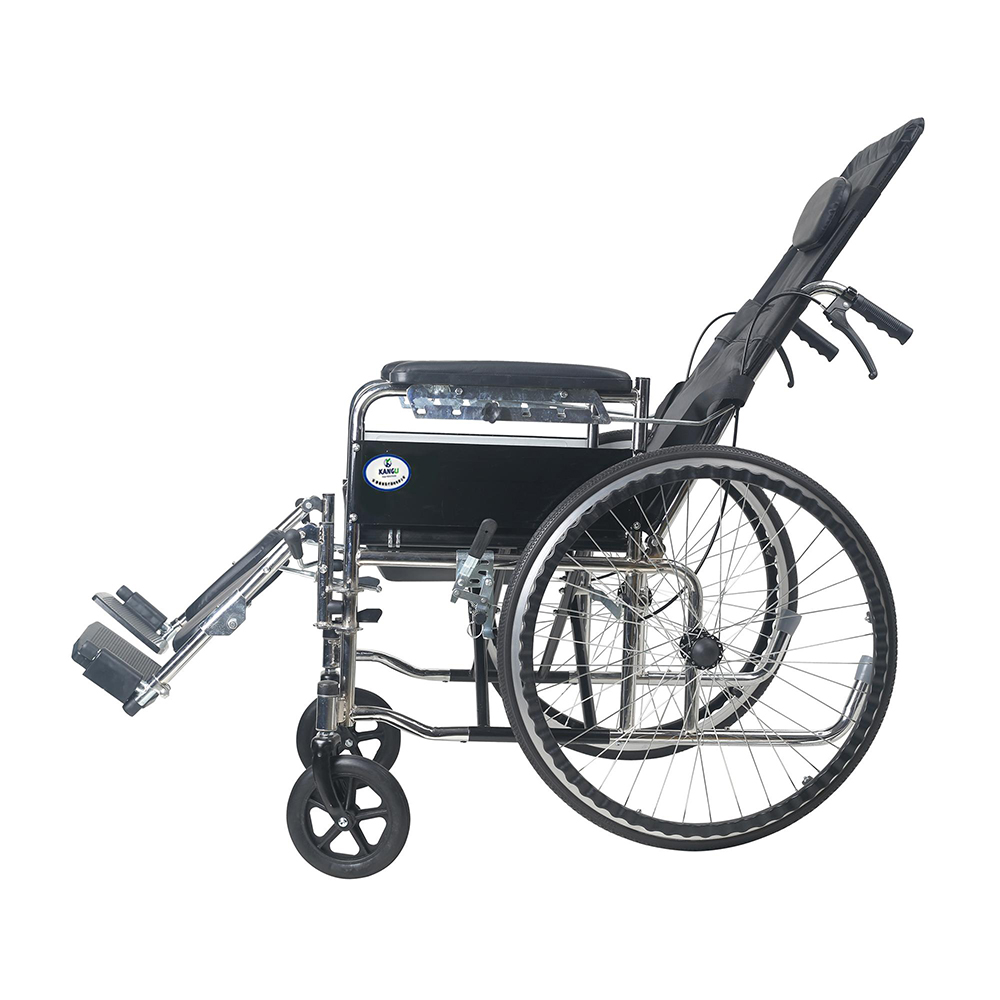
A standard transport chair usually lacks large rear wheels and hand rims, so it generally requires an attendant. Check the exact design rather than assuming independent propulsion is possible.
Sometimes it can meet an assisted-mobility need. It is not an equivalent replacement when the person needs self-propulsion, individualized seating, or support that the transport model cannot provide.
Neither category is automatically better based on age. Walking ability, strength, posture, endurance, environment, and available assistance should guide the decision.
Some models can be used on suitable outdoor surfaces. Check the instructions, wheel configuration, braking system, route conditions, and attendant capability. Do not assume suitability for rough ground or steep slopes.
Request an agreed specification, representative sample, applicable testing evidence, labeling and instructions, packaging details, spare-parts information, and written commercial terms.
Only when the exact product is explicitly intended and appropriately tested for occupied vehicle use, with the required restraint arrangement. The word "transport" alone does not establish that suitability.
1. Tianjin Kangli Medical Equipment Co., Ltd. — Official website. Used as the company's public website reference. The founding date, factory area, employee count, contact details, and OEM positioning in this article were supplied by the company for this draft; they were not independently established by the retrieved homepage. [klmedbed]
2. World Health Organization. *Wheelchair provision guidelines*. Published June 5, 2023. Supports the emphasis on individual assessment, fitting, training, and follow-up by trained personnel. [who]
3. World Health Organization. *Assistive product specification for procurement: Manual wheelchair*. Supports procurement considerations, relevant wheelchair testing categories, documentation, training, and the distinction between general wheelchair use and use as a motor-vehicle seat. Standard editions and market applicability should be checked for the actual project. [who]
4. Medline. *Wheelchairs & Transport Chairs — Mobility*. Supports the basic distinction between large-wheel self-propelled wheelchairs and smaller-wheel attendant-propelled transport chairs. [athome.medline]
5. World Health Organization. *Emergency wheelchair user information leaflet*. Supports practical considerations involving brakes, removable components, folding, and transfer preparation. [cdn.who]
6. World Health Organization. *Wheelchair Service Training Package* training materials. Supports the warning against standing on footrests during transfers. [iris.who]
Hot Tags: China, Global, OEM, private label, manufacturers, factory, suppliers, manufacturing company


