Views: 131 Author: kangli Publish Time: 2026-11-10 Origin: Site


Content Menu
Swing-Away vs Detachable Wheelchair Footrests: A Purchasing Guide for Clinics
● 1. Clinical Biomechanics: Why Footrest Rigging Dictates Transfer Safety
● 2. Swing-Away Footrests: Operational Architecture and Clinical Applications
>> Mechanical Engineering and Operation
>> Primary Clinical Advantages
● 3. Detachable (Removable) Footrests: Modularity, Storage, and Transport
>> Mechanical Engineering and Operation
>> Primary Clinical Advantages
● 4. Head-to-Head Comparative Breakdown for Facility Buyers
>> 1. Patient Transfer Velocity and Efficiency
>> 2. Fleet Asset Retention and Component Loss Rates
>> 3. Cleaning, Disinfection, and Infection Control
>> 4. Long-Term Maintenance and Total Cost of Ownership (TCO)
● 5. Engineering Standards and Regulatory Compliance for OEM Buyers
>> ISO 7176-8: Static, Impact, and Fatigue Testing
>> Biocompatibility and Surface Finishes (ISO 10993)
>> Motor Vehicle Crash Safety (ISO 7176-19)
● 6. OEM/ODM Customization Considerations for Brand Importers
>> 1. Release Latch Ergonomics
>> 2. Height Adjustment Mechanisms
>> 3. Modular Compatibility with Elevating Leg Rests (ELR)
● 7. The Clinical Fleet Buyer's Decision Framework
● Elevate Your Clinical Mobility Portfolio with OEM Excellence
>> Partner with an Established Medical Device Manufacturer
● Frequently Asked Questions (FAQ)
>> Q1: Can a wheelchair with swing-away footrests be converted into a detachable model?
>> Q2: What is the clinical difference between a standard footrest and an Elevating Leg Rest (ELR)?
>> Q3: How do swing-away footrests help prevent patient falls in outpatient clinics?
>> Q4: Which material is best for high-traffic clinical footplates: aluminum or composite plastic?
>> Q5: How often should clinical engineering teams inspect wheelchair footrest assemblies?
In outpatient clinics, acute rehabilitation wards, and specialized surgical centers, wheelchair procurement is rarely just about frame geometry or seat widths. Patient transfers represent one of the highest-risk operational routines in clinical care, both for patient falls and caregiver musculoskeletal injuries. The choice of front rigging—specifically swing-away vs detachable wheelchair footrests—plays a defining role in patient transfer mechanics, fleet durability, room turnover velocity, and equipment retention rates.
For clinical procurement teams, rehabilitation directors, and durable medical equipment (DME) distributors managing facility supply chains, selecting the right rigging configuration impacts patient safety, total cost of ownership (TCO), and regulatory compliance.
This guide provides an engineering and clinical procurement analysis of swing-away and detachable footrest mechanisms, helping healthcare buyers and OEM brand partners make data-driven purchasing decisions.
Looking for a Reliable Medical Equipment Manufacturer?
Kangli Medical provides hospital beds, wheelchairs, and medical furniture with OEM/ODM customization and bulk order support.
Contact us for the latest product catalog, technical specifications, and factory quotations.
WhatsApp: +86 136 5207 7555
Email: Yukili90@tjkangli.com
Website: www.klmedbed.com
Send Us a Message: https://wa.me/8613652077555
Wheelchair footrests are critical posture supports and dynamic barriers during patient movement. During a standard sit-to-stand or slide-board transfer, an unretracted footplate creates severe mechanical obstruction:
Center of Gravity Alignment: To achieve a stable biomechanical rise, a patient must place their feet beneath their center of mass (tucking the heels slightly behind the knee joints). Fixed or poorly retracted footrests force the patient's feet forward, creating poor leveraged push-off angles and increasing fall incidents.
Lower-Extremity Skin Tears: In geriatric and long-term care environments, fragile skin on the shins and calves is vulnerable to friction injuries against aluminum footplates, heel loops, or hanger pins during rushed transfers.
Caregiver Ergonomics: According to clinical ergonomics data, healthcare workers face substantial risks of lumbar strain when manually repositioning non-ambulatory patients around rigid wheelchair rigging. An intuitive, smooth release mechanism directly mitigates awkward lifting postures.
Visual Asset Placement Suggestion:
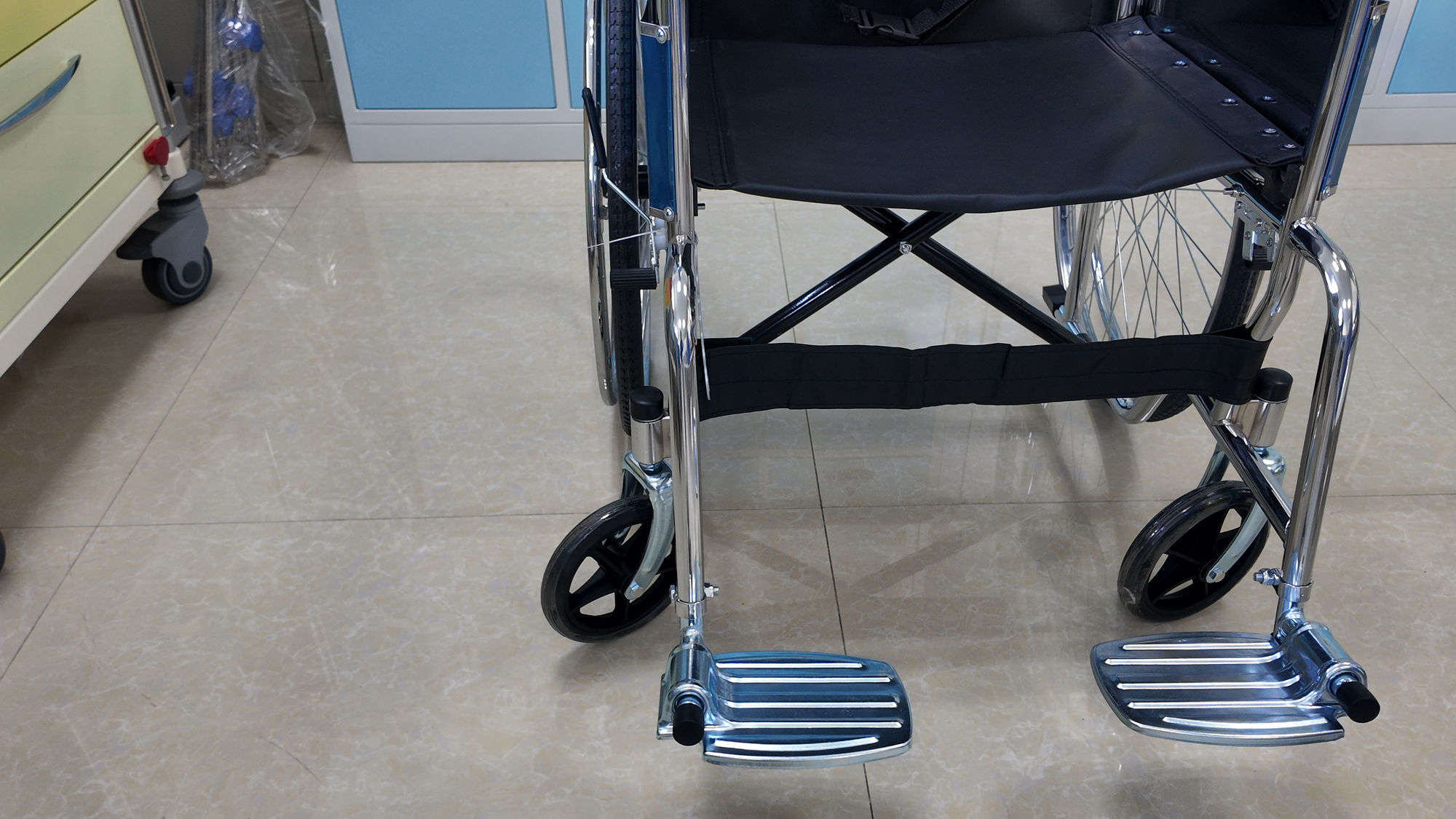
Swing-away footrests (often termed pivot-away rigging) remain anchored to the wheelchair frame via vertical hinge pins while swinging outward or inward on a rotational axis through an ergonomic release latch.
A standard swing-away mechanism utilizes a dual-action latch or an ergonomic lever positioned near the upper receiver tube. When depressed, the locking tooth disengages from the frame receiver, allowing the hanger bracket to swing laterally 90 to 180 degrees. Most modern clinical-grade designs feature a self-guiding taper lock that automatically clicks into place when swung back into the forward locked position.
Zero Component Loss: Because the rigging remains permanently anchored to the wheelchair frame, footrests cannot be detached and separated in high-turnover clinical areas.
Rapid Patient Transfers: Nurses and therapists can clear the transfer path in seconds with a single-handed outward sweep, allowing patients to stand without tripping.
Enhanced Gait Training Support: In physical therapy gyms, therapists can quickly swing footrests outward to let recovering stroke or orthotic patients practice foot-propulsion exercises without disassembling hardware.
Lateral Space Requirements: In small examination rooms, diagnostic booths, or crowded hospital corridors, swinging the leg rest outward 90 to 180 degrees can strike adjacent examination tables, walls, or clinical monitors.
Hinge Wear Under Heavy Cycling: Over thousands of operational cycles, loose pivot pins or latch fatigue can lead to minor hanger play, requiring periodic torque adjustments.
High-volume outpatient registration and waiting lobbies.
Diagnostic imaging, radiography, and MRI preparation suites.
Physical therapy, occupational therapy, and active rehabilitation gyms.
Detachable footrests share the rotational swinging function of swing-away units but incorporate a quick-release lift-off mechanism, allowing the entire leg-rest assembly to be completely removed from the frame.
Most detachable front-rigging assemblies utilize a drop-in dual-pin cam lock. The user depresses the release paddle, swings the hanger outward approximately 45 degrees to align internal cam slots, and lifts the entire assembly upward off the mounting pins.
Barrier-Free Lateral Slide Transfers: When moving a high-acuity spinal cord injury (SCI) or post-operative orthopedic patient using a slide board, removing the footrest and armrest leaves a flush, open transfer pathway.
Maximum Frame Weight Reduction: Removing both footrests lightens a standard steel or aluminum transport wheelchair by 3 to 6 pounds (1.4 to 2.7 kg), significantly easing staff strain when loading units into vehicle trunks or storage racks.
Compact Fleet Stacking: Facilities with limited square footage can stack or fold wheelchairs closer together when front rigging is stored in dedicated transport bins.
The "Lost Footrest" Epidemic: In acute care and patient escort departments, detachable footrests are frequently misplaced during transfers. Lost components lead to out-of-service wheelchairs, delayed patient discharges, and constant spare-part reorders.
Two-Handed Re-engagement: Reattaching a detached footrest requires lining up two vertical pins simultaneously, which can be awkward for busy clinical staff or patients with limited dexterity.
Non-Emergency Medical Transportation (NEMT) services and ambulance transfer vehicles.
Orthopedic surgery discharge lounges (for lateral slide transfers).
Home health equipment loan closets and temporary postoperative loan programs.
When choosing between these two systems for institutional procurement, evaluate four primary operational metrics:
Swing-Away: Best for rapid, repetitive patient movement. The caregiver presses the lever, rotates the hanger outward, and assists the patient. Average transition time is under 3 seconds per side.
Detachable: Takes longer when total removal is needed. Staff must lift, place the hardware on the floor or a counter, and reattach it after transit. This increases total transfer time during routine appointments.
Swing-Away: Highly durable against asset loss. Unless an entire wheelchair is misplaced, the footrests stay with the frame. This reduces inventory shrinkage and administrative reordering overhead.
Detachable: High loss risk in multi-department hospital environments. When transport teams remove footrests for car loading or bed transfers, parts are frequently left behind in rooms or vehicles, leading to mismatched components.
Swing-Away: Has more internal crevices around the spring-loaded latch pin, requiring focused manual wiping during terminal terminal room cleaning.
Detachable: Offers superior infection control access. Disassembly allows staff to soak or thoroughly wipe down both the receiver housing and hinge pins with hospital-grade quaternary or bleach-based disinfectants.
Swing-Away: Lower overall lifecycle cost for general hospital transit fleets due to near-zero component replacement rates.
Detachable: Marginally higher long-term cost profile due to the frequent need for replacement footrest pairs, bracket repair kits, and lost heel-loop straps.
For medical device brand owners and wholesale importers sourcing clinical wheelchairs from contract manufacturers, footrest assemblies must comply with harmonized international engineering standards.
Wheelchair front-rigging assemblies are subjected to rigorous physical stress testing under ISO 7176-8:
Downward Static Footplate Load: Footplates must withstand downward vertical static loads exceeding 1,000 N (approximately 225 lbs) without plastic deformation, ensuring structural integrity when heavy patients step directly onto the plates.
Frontal Impact Resistance: When a moving chair strikes a curb or doorframe, the latching mechanism must not fail or sheer off its retention pins.
Fatigue Cycling: Latches and pivot joints must successfully complete 100,000 continuous locking cycles without jamming or spring failure.
Footplates, calf pads, and release paddles come into frequent direct skin contact:
Anodized aluminum footplates or high-density polypropylene (PP) surfaces must be cytotoxicity-free and non-irritating under ISO 10993-5 / 10993-10.
Metal hinge assemblies require multi-stage powder coating or electroplating capable of withstanding 500-hour neutral salt spray tests (ASTM B117) to resist aggressive hospital surface disinfectants.
If the wheelchair is certified for use as a passenger seat in transit vehicles:
Detachable and swing-away mechanisms must lock securely to prevent loose components from becoming dangerous projectiles under 20g deceleration forces during a crash.
When partnering with a dedicated contract manufacturer like Tianjin Kangli Medical Equipment, OEM brand managers can customize rigging features to target specific clinic needs:
 (已压缩)Certificate +iso & CE.pdf
Standard industrial push-pins can be difficult for arthritic or elderly hands. Modern OEM designs feature broad, contoured paddle levers made from impact-modified nylon. Color-coding the latch paddle in high-contrast red or blue helps clinical staff instantly spot the release trigger during quick transfers.
Tool-Free Spring Detents: Ideal for multi-patient clinics that need quick height adjustments between appointments.
Heavy-Duty Hex-Bolt Clamps: Preferred for long-term care facilities where clinical staff want to set a fixed, tamper-resistant height for a dedicated resident.
A strong selling point for B2B distributors is universal receiver geometry. Ensuring that a wheelchair frame accepts both standard swing-away footrests and modular Elevating Leg Rests (ELR) allows clinical buyers to upgrade frames for patients with edema, knee fractures, or post-surgical casting needs.
Use this structured decision framework when preparing requests for proposals (RFPs) or advising institutional hospital buyers:
Step 1: Audit Departmental Transfer Protocols
If over 80% of transfers are assisted standing pivots: Select Swing-Away Footrests to streamline staff workflow and prevent component loss.
If patients require slide-board or mechanical sling transfers: Specify Detachable Footrests to maintain clear, barrier-free side clearances.
Step 2: Assess Storage and Vehicle Requirements
If the fleet is primarily used for outdoor vehicle loading, patient discharge shuttles, or trunk storage: Prioritize Detachable Footrests to reduce lifted weight and frame size.
If the fleet operates entirely within indoor clinical corridors: Choose Swing-Away Footrests for low maintenance and zero missing parts.
Step 3: Verify Latch Ergonomics and Durability
Look for broad release paddles that can be pressed with a flat palm or wrist, reducing pinch-grip strain for nursing staff.
Ensure the latch mechanism uses reinforced stainless steel pivot hardware to prevent hinge sagging over time.
In the durable medical equipment industry, thoughtful engineering details define product quality. A well-designed, reliable footrest mechanism protects patient safety, reduces caregiver strain, and gives global brand owners a clear competitive edge.
Are you an international DME brand owner, wholesaler, or medical distributor looking for reliable OEM/ODM wheelchair manufacturing?
Tianjin Kangli Medical Equipment Co., Ltd. (KL Medbed) has specialized in medical furniture and clinical mobility manufacturing since 1997. With nearly three decades of engineering expertise, our modern production facilities deliver hospital beds, patient transfer stretchers, stainless steel clinical carts, and complete wheelchair lines built to ISO 13485 and international quality standards.
Contact our OEM mobility engineering team to discuss custom tooling, private label branding, frame configurations, and volume distributor pricing.
In many cases, yes. It depends on whether the front hanger bracket uses a closed hinge-pin or an open drop-in cam receiver. Many modern OEM frames feature modular receiver brackets that can support either full detachment or swing-away configurations by swapping out the retention pin hardware.
A standard footrest supports the foot and lower leg at an approximate 90-degree knee bend. An Elevating Leg Rest (ELR) includes an adjustable, mechanical calf-support arm that raises the leg through a 0-to-80-degree angle. ELRs are clinically required for managing lower-extremity edema, managing post-surgical knee casting, or preventing dependent pooling during long seated periods.
During unassisted or minimally assisted transfers, patients often try to stand while their feet are resting on the footplates. This can cause the wheelchair to tip forward onto its caster wheels or cause the patient's feet to slip. Swing-away footrests clear the transfer zone entirely, allowing the patient to place their feet flat on the floor directly beneath their body weight.
Die-cast aluminum footplates offer superior impact strength, fire resistance, and long-term durability in high-turnover hospital escort fleets. However, high-impact composite polypropylene (PP) footplates are lighter, non-scratching to clinic baseboards, corrosion-proof, and warmer to bare skin in outpatient clinic rooms.
In high-utilization hospital fleets, front rigging should undergo visual and functional inspection quarterly. Bio-medical equipment technicians should verify latch spring tension, inspect pivot pins for metal wear, check footplate angle tightness, and replace worn heel-loop straps to ensure continued patient safety.
Rehabilitation Engineering and Assistive Technology Society of North America (RESNA). RESNA Wheelchair Standards: Method of Test for Static, Impact, and Fatigue Strength of Seating and Footplates. Available at:https://www.resna.org/Standards-Drafts/Wheelchair-Standards
Occupational Safety and Health Administration (OSHA). Safe Patient Handling and Mobility in Healthcare: Preventing Musculoskeletal Disorders in Caregivers. U.S. Department of Labor. Available at:https://www.osha.gov/healthcare/safe-patient-handling
International Organization for Standardization (ISO). ISO 7176-8:2014 Wheelchairs — Part 8: Requirements and test methods for static, impact and fatigue strengths. Available at:https://www.iso.org/standard/57252.html
International Organization for Standardization (ISO). ISO 7176-19:2022 Wheelchairs — Part 19: Wheeled mobility devices for use as seats in motor vehicles. Available at:https://www.iso.org/standard/79517.html
U.S. Food and Drug Administration (FDA). Medical Device Labeling and Design Controls for Mechanical Wheelchairs under 21 CFR Part 890. Available at:https://www.fda.gov/medical-devices