
Views: 220 Author: Tianjin Kangli Medical Appliance Co., Ltd. Publish Time: 2026-06-23 Origin: Tianjin Kangli Medical Appliance Co., Ltd.


Content Menu
● New Trends in Critical Care Beds
● FAQ
>> 1. What is the main difference between an ICU bed and a nursing bed?
>> 2. Is an ICU bed always electric?
>> 3. Can a nursing bed be used in an ICU?
>> 4. Which bed is better for long-term care?
>> 5. Why do buyers prefer OEM ICU and nursing beds from manufacturers like Kangli?
Tianjin Kangli Medical Appliance Co., Ltd. is a national high-tech enterprise specializing in the R&D and manufacturing of medical devices, with deep experience in hospital beds, nursing beds, ICU beds, and OEM/ODM supply for global partners. Founded in 1998, Kangli has built a strong export-oriented manufacturing system with ISO and CE certifications, helping distributors, brand owners, and manufacturers source reliable hospital furniture with predictable quality and lead times. [klmedbed]
# ICU Bed vs Nursing Bed: What's the Difference in Critical Care?
In critical care, the difference between an ICU bed and a nursing bed is not just technical language — it can affect patient safety, workflow efficiency, and the level of monitoring a care team can deliver. An ICU bed is designed for patients with severe or life-threatening conditions, while a nursing bed is built for general patient care, recovery, and caregiver convenience in wards or long-term care settings. [unitedpoly]
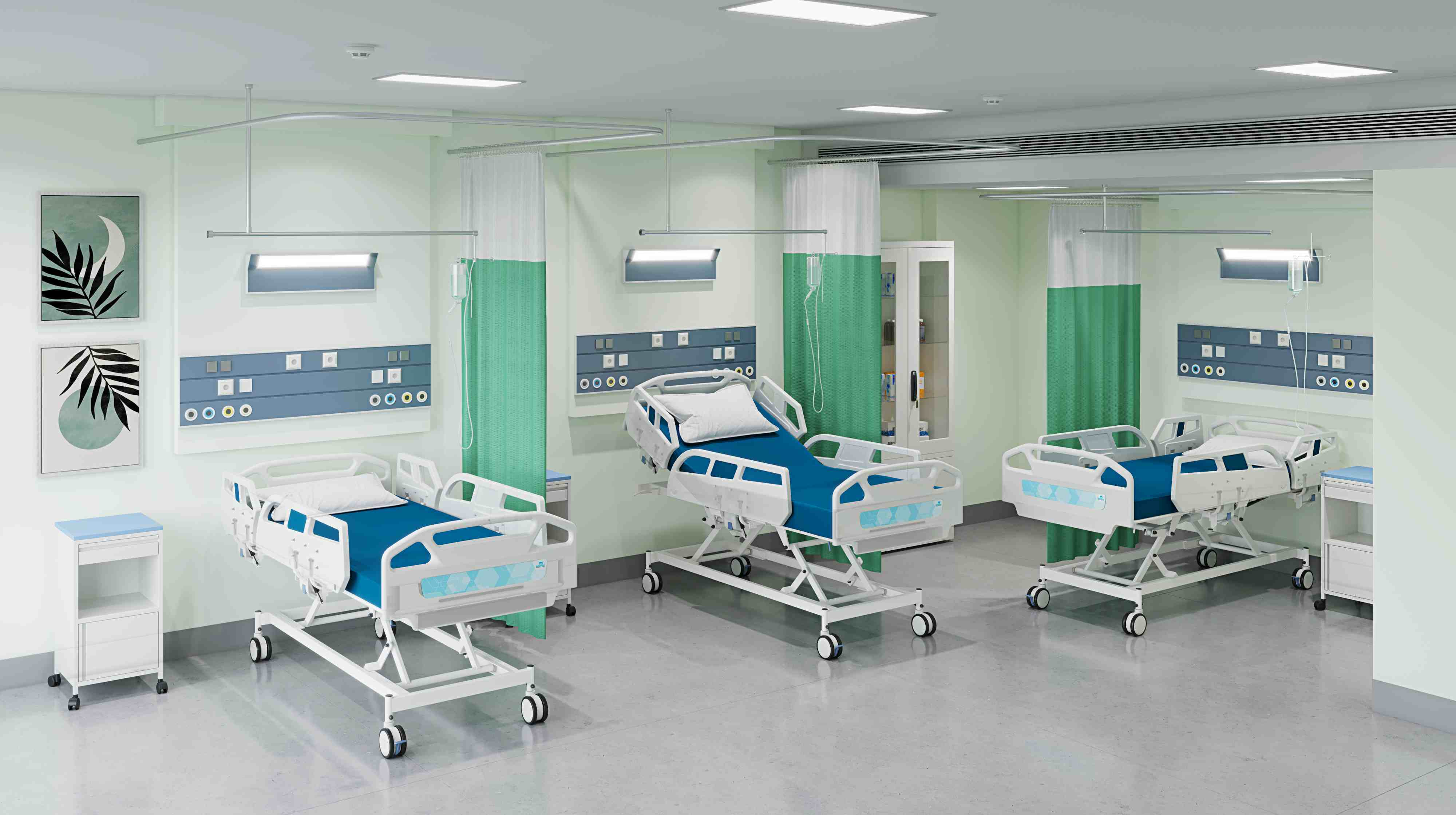
Hospitals often choose beds based on the patient's acuity, the care environment, and the clinical tasks nurses must perform every day. ICU beds support rapid intervention, close monitoring, and life-support-related workflows, while nursing beds focus on comfort, mobility support, and safer routine care. [scholars.mssm]
This distinction matters because the wrong bed choice can create friction in staff movement, reduce positioning precision, or limit access to essential equipment during emergencies. In practice, the bed is part of the care system, not just a place for rest. [jiedemedical]
ICU beds are engineered for critical care and usually include more advanced functions than standard nursing beds. Common features include electric height adjustment, backrest and leg positioning, Trendelenburg and reverse Trendelenburg support, side rails, CPR release, lockable casters, and compatibility with monitoring and support equipment. [pt.slideshare]
From a clinical operations viewpoint, modern ICU beds increasingly function like a connected care platform rather than simple furniture. The ICU bed market is moving toward higher-specification designs that support monitoring integration, workflow efficiency, and safer patient handling. [mordorintelligence]
Typical ICU bed capabilities include:
- Precise electrical positioning for airway care, procedures, and pressure management.
- Integrated weighing systems for fluid balance and treatment tracking.
- Strong safety rails and braking systems for unstable patients.
- Compatibility with oxygen, suction, and monitoring workflows in intensive care spaces. [unitedpoly]
A nursing bed is designed for patients who need assistance with mobility, hygiene, rest, or rehabilitation, but do not require intensive monitoring around the clock. These beds often support adjustable backrest and knee sections, height adjustment, side rails, and easy caregiver access. [wegomedical]
Compared with ICU beds, nursing beds are typically simpler, easier to operate, and more cost-effective for general wards, rehabilitation facilities, and long-term care environments. Their design priority is comfort, safe transfer, and efficient nursing care rather than advanced life-support readiness. [wegomedical]
In many facilities, nursing beds are the best choice when the patient is stable but still needs regular help with repositioning, fall prevention, and day-to-day care. That makes them especially valuable in recovery wards and senior care settings. [jiedemedical]
The easiest way to understand the difference is to compare how each bed supports care delivery.
| Factor | ICU Bed | Nursing Bed |
|---|---|---|
| Primary use | Critical care for unstable patients | General ward, rehabilitation, long-term care |
| Positioning | Highly precise, often fully electric | Basic to moderate adjustability |
| Monitoring support | Designed for intensive monitoring workflows | Usually limited or no advanced monitoring integration |
| Emergency readiness | CPR release, quick access, equipment compatibility | Focused on routine care and comfort |
| Complexity | Higher | Lower |
| Cost | Higher | Lower |
| Best for | ICU, CCU, high-acuity units | Nursing wards, recovery rooms, care homes |
For hospital planners, the right choice depends on clinical acuity, staffing model, and workflow needs. For distributors and OEM buyers, it also depends on target market positioning, certifications, and after-sales service expectations. [klmedbed]
A major shift in 2026 is the move toward ICU beds that support safer care, better visibility, and smarter workflow integration. Recent ICU design guidance emphasizes high-visibility layouts, natural light, infection prevention, and flexible surge capacity, which influences how hospitals specify bed-related infrastructure. [dochitect]
This trend matters to manufacturers because buyers increasingly want beds that fit into a broader clinical environment, not just beds with mechanical movement. In other words, the market is rewarding products that support patient safety, staff efficiency, and compliance together. [mordorintelligence]
For OEM and distributor strategies, the strongest opportunities are usually in:
- Beds with integrated weight systems.
- ICU beds with advanced positioning and CPR functionality.
- Nursing beds with ergonomic controls and durable frames.
- Custom branding, packaging, and export-ready documentation. [klmedbed]
As a manufacturer, Kangli's value is not only in product variety but also in its export support system. The company offers OEM/ODM services, private labeling, customized dimensions, modified accessories, and packaging options for different market needs. [klmedbed]
Kangli also emphasizes quality control, technical documentation, spare-part support, and stable delivery planning, which are especially important for overseas buyers who want to reduce sourcing risk. For B2B customers, this creates a practical bridge between product specification and long-term commercial reliability. [klmedbed]
If you are comparing ICU beds and nursing beds for procurement, Kangli can help you align the product category with the actual care scenario instead of overbuying features your market does not need. That is often the fastest way to improve price competitiveness without sacrificing clinical suitability. [klmedbed]
A good purchasing decision starts with clinical use, not just price. Before selecting an ICU bed or a nursing bed, ask the following questions:
1. What is the patient acuity level?
2. Will the bed be used in ICU, general ward, or long-term care?
3. Do staff need advanced positioning and emergency access features?
4. Is monitoring integration important?
5. Do you need OEM branding or customized dimensions?
If the answer points to unstable, closely monitored patients, choose an ICU bed. If the patients are stable and the goal is comfort and routine nursing support, a nursing bed is usually the better fit. [unitedpoly]
The core difference is simple: ICU beds are built for critical care, while nursing beds are built for routine and supportive care. For hospitals, distributors, and brand owners, choosing correctly improves safety, efficiency, and long-term value. [jiedemedical]
Call to action: If you are sourcing ICU beds or nursing beds for your market, contact Tianjin Kangli Medical Appliance Co., Ltd. for OEM/ODM solutions, technical specifications, and export-ready support. [klmedbed]
An ICU bed supports critical care, advanced positioning, and intensive monitoring workflows, while a nursing bed is designed for general ward care and patient comfort. [unitedpoly]
Most ICU beds are electric or semi-electric because they need fast, precise adjustments for emergency and treatment needs. [jiedemedical]
A nursing bed is usually not the best choice for ICU use because it may lack the advanced positioning, access, and monitoring support required in critical care. [pt.slideshare]
A nursing bed is generally better for long-term care because it is simpler, easier for caregivers to use, and more focused on comfort and routine assistance. [wegomedical]
Buyers often want OEM support, stable quality, customized specifications, and export documentation, all of which help reduce sourcing risk and improve market fit. [klmedbed]
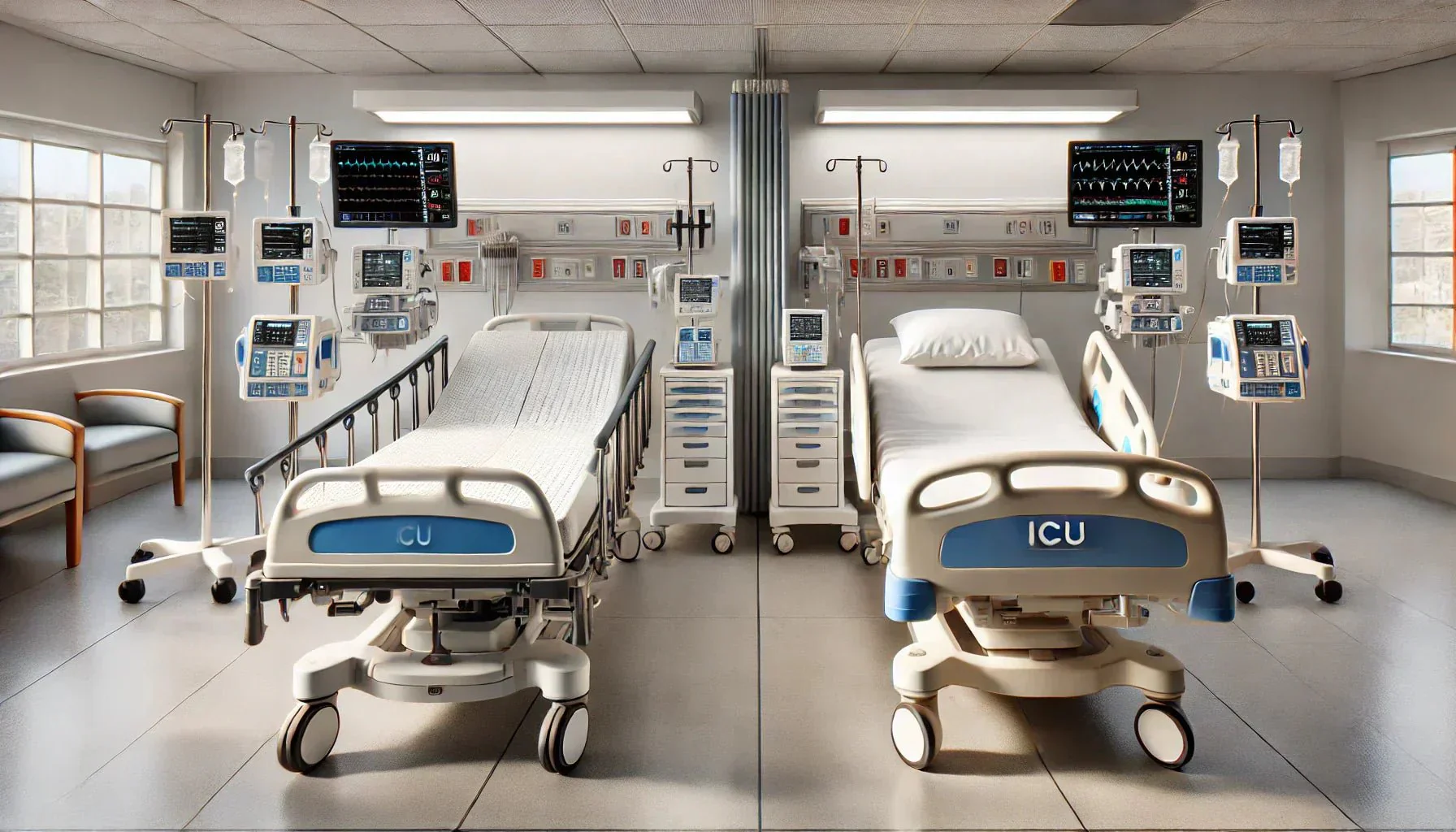
1. Tianjin Kangli Medical Equipment Co., Ltd. – Official website: [https://www.klmedbed.com] [klmedbed]
2. United Poly – "What is the difference between an ICU bed and a regular hospital bed?": [https://www.unitedpoly.com/what-is-the-difference-between-an-icu-bed-and-a-regular-hospital-bed/] [unitedpoly]
3. Kangli Medical product and capability page details: [https://www.klmedbed.com] [klmedbed]
4. Society of Critical Care Medicine guideline listings and 2024 adult ICU design guidance references: [https://www.sccm.org/clinical-resources/guidelines/guidelines] [sccm]
5. SCCM adult ICU design guideline summary and related publication record: [https://scholars.mssm.edu/en/publications/society-of-critical-care-medicine-2024-guidelines-on-adult-icu-de] [scholars.mssm]
6. ICU bed market trend report and industry direction: [https://www.mordorintelligence.com/industry-reports/intensive-care-unit-icu-beds-market] [mordorintelligence]
7. Hospital bed feature overview: [https://www.jiedemedical.com/news/complete-guide-to-hospital-bed-features-and-functions.html] [jiedemedical]
Hot Tags: China, Global, OEM, private label, manufacturers, factory, suppliers, manufacturing company


