

Views: 1231 Author: kangli Publish Time: 2026-10-09 Origin: Site


Content Menu
● How to Compare Hospital Bed Quotations: 12 Details Beyond the Unit Price
>> Before Comparing Prices, Standardize the Specification
● The 12 Details to Compare in Hospital Bed Quotations
>> 1. Product Configuration and Included Functions
>> 2. Mattress and Support Surface
>> 3. Side Rails and Safety-Related Design
>> 4. Motors, Controls, and Electrical Details
>> 5. Materials, Finish, and Manufacturing Quality
>> 6. Accessories and Spare Parts
>> 7. OEM Customization and One-Time Charges
>> 8. Quality Inspection and Acceptance Criteria
>> 9. Regulatory and Technical Documentation
>> 10. Warranty, Service, and Spare-Parts Support
>> 11. Packaging and Shipment Protection
>> 12. Delivery Terms, Lead Time, and Payment Conditions
● Build a Landed-Cost Comparison
● Practical RFQ and Quote-Review Workflow
● Common Hospital Bed Quotation Mistakes
● Suggested Visuals for This Article
>> 1. What is the most important detail in a hospital bed quotation?
>> 2. Should I choose the lowest-priced supplier?
>> 3. What does "all-inclusive" mean in a supplier quotation?
>> 4. Should OEM customization be listed separately?
>> 5. What technical documents should a hospital-bed buyer request?
>> 6. How can I compare freight costs fairly?
>> 7. When should I approve the final specification?
● Request an Itemized OEM Hospital Bed Quotation
>> References
>> Article Word Count and SEO Description
Comparing hospital bed quotations for bulk procurement or OEM production involves more than lining up unit prices. For overseas brands, distributors, wholesalers, and medical-equipment manufacturers, the real comparison includes the complete configuration, customization costs, compliance documentation, quality controls, spare parts, packaging, freight terms, and after-sales support.
A low quote can be expensive if it excludes essential accessories, uses a different specification, or leaves buyers to resolve unclear delivery and service terms. This guide provides a practical framework for comparing hospital bed supplier quotations and estimating the costs and responsibilities behind each offer. Total-cost-of-ownership models likewise include product price, customization, freight, installation, maintenance, and related expenses—not only the factory price. [klmedbed] Research on hospital equipment procurement also highlights the importance of considering user needs, maintenance, training, and consumables in purchasing decisions. [ncbi.nlm.nih]
How can I start an OEM partnership with your factory?
We recommend starting with an initial technical consultation to review your design specifications, target market, required functions, quantity, and customization needs.
Please contact our dedicated B2B team by email at Yukili90@tjkangli.com or chat with us directly on WhatsApp: +86 136 5207 7555.
WhatsApp:
Let’s build excellence together. Whether you need a quotation for a large-scale hospital project, want to develop a private-label product, or are exploring OEM/ODM opportunities for our 5-function medical bed series, our team is ready to support you from product selection and technical confirmation to production and delivery.
Visit www.klmedbed.com or contact us via WhatsApp to start your customized manufacturing project today.
Request quotations against the same written specification. Otherwise, a lower price may simply reflect a different bed, mattress, accessory package, or delivery scope.
Your request for quotation (RFQ) should specify:
- Bed type and model
- Manual, semi-electric, or fully electric functions
- Dimensions and height range
- Safe working load, as defined by the manufacturer
- Mattress type, size, and thickness
- Side-rail configuration
- Casters and braking system
- Motors, controls, and electrical configuration
- Accessories and spare parts
- Branding, labels, and manual language
- Packaging and delivery destination
- Required technical and conformity documents
If some requirements are still open, list them as options or assumptions so each supplier can price them consistently.
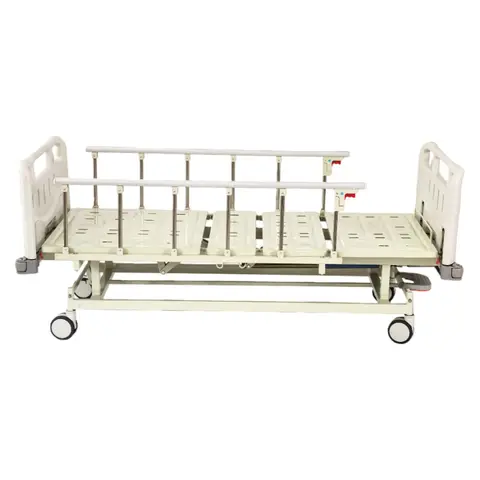
Confirm exactly what the quoted bed includes. "Electric hospital bed" does not identify which functions are powered.
Ask suppliers to specify whether the quotation includes:
- Backrest adjustment
- Knee-rest adjustment
- Bed-height adjustment
- Trendelenburg or reverse Trendelenburg, if applicable
- CPR release or emergency lowering, if specified
- Patient and caregiver controls
- Lockout functions
- Battery backup, if required
Request a function table or product specification sheet. Compare the same configuration across every offer.
Check whether the mattress is included or priced separately. Confirm its dimensions, thickness, type, cover, cleaning instructions, and any project-specific requirements.
The mattress affects the finished bed height and the relationship between the mattress, platform, and side rails. FDA guidance emphasizes considering bed safety as a system, including the mattress and rails, rather than assessing components in isolation. [accessdata.fda]
Compare rail type, length, material, movement, locking, and compatibility with the quoted mattress. Ask whether the price includes one or both sides and whether rails are removable or adjustable.
Do not treat a general statement such as "safety rails included" as enough information. Request drawings or dimensions for the exact configuration and identify any applicable testing or evaluation documents. Medical-bed standards address safety and essential performance within their defined scope; applicability should be checked for the specific product and destination market. [accessdata.fda]
For electric beds, compare the number and specification of motors, control-box details, handset design, cable routing, and service parts. Confirm the electrical configuration for the destination market:
- Rated voltage and frequency
- Plug type
- Power-cord length
- Battery or backup option
- Electrical labels and documentation
Do not assume two quotations are equivalent because both say "electric." Ask each supplier to describe the system and list what is included.
Identify the materials used for the frame, panels, rails, and high-contact parts. Ask about coating or surface treatment and how visible finishes are controlled.
A useful quotation review should distinguish material description from quality evidence. Request a sample, product photographs, drawings, inspection criteria, and relevant production or testing records. For a custom color or logo, confirm whether sample approval or tooling fees are included.
Accessories can materially change the purchase price. Check whether the offer includes items such as:
- IV pole
- Drainage hooks
- Lifting pole
- Mattress
- Overbed table
- Additional controller
- Battery
- Spare casters or motors
Ask for a separate price list for optional accessories and commonly needed spare parts. Confirm compatibility with the exact bed model and whether replacement parts are available for future orders.
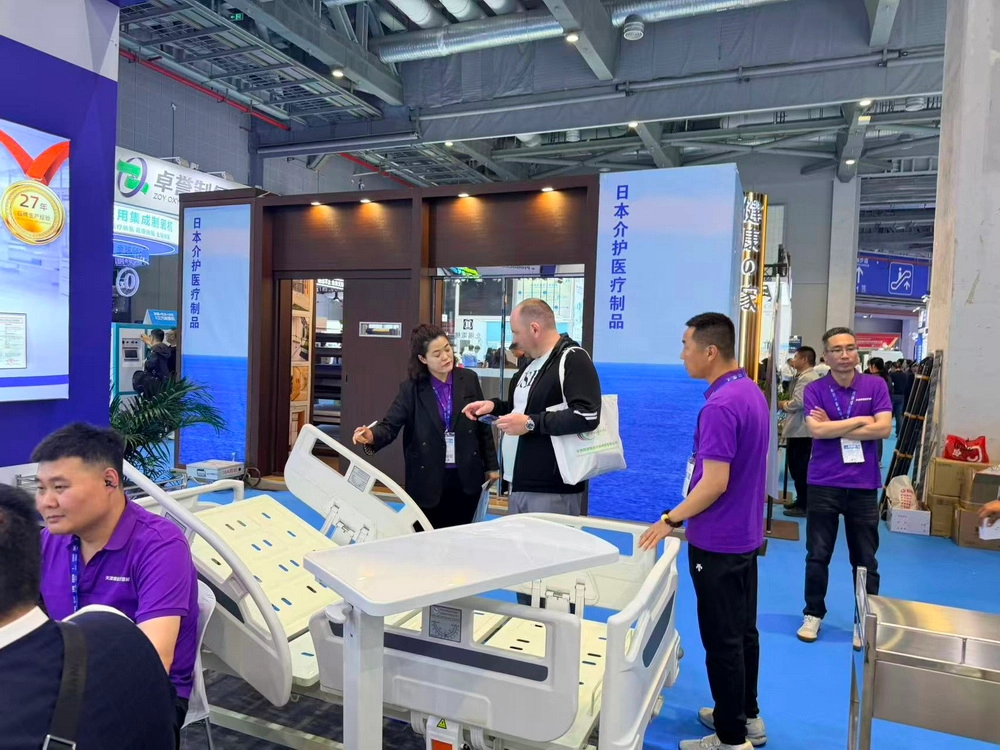
For private-label or OEM projects, identify which customizations are included and which incur additional charges.
| Customization | Questions to ask |
|---|---|
| Logo | Is artwork setup, printing, or a nameplate included? |
| Color | Is a standard color included? Is there a sample or custom-color fee? |
| Labels and manuals | Are translation, artwork, and printing included? |
| Design changes | Do changes require engineering or tooling fees? |
| Packaging | Is branded packaging included, and what is the minimum order? |
| MOQ and repeat orders | Do pricing or setup charges change at different volumes? |
Require written confirmation of approved artwork, colors, model configuration, and packaging before mass production.
Compare what quality checks are included before shipment. A useful inspection plan may cover:
- Quantity and model verification
- Appearance and finish
- Dimensions
- Bed functions and controls
- Brakes and casters
- Side-rail operation
- Accessories and labels
- Packaging condition
- Inspection records
Agree in advance on the inspection method, sampling approach, defect categories, and process for resolving nonconformities. If a third-party inspection is needed, clarify who arranges and pays for it.
Ask for a document list, not simply a general promise of "certification." Depending on the product and destination, relevant documents may include specifications, drawings, instructions for use, electrical information, test reports, declarations, and market-specific conformity records.
The FDA's recognized-standards database lists IEC 60601-2-52:2015 for medical-bed basic safety and essential performance within its stated scope. Buyers should verify current requirements and the appropriate edition or conformity pathway with their regulatory specialists; a standard reference alone does not establish approval for every market. [accessdata.fda] [iso]
Compare warranty duration, coverage, exclusions, and the process for handling defects. Ask:
- Which components are covered?
- Who pays shipping for replacement parts?
- What evidence is required for a claim?
- Are troubleshooting instructions available?
- What is the usual lead time for spare parts?
- Is remote technical support available?
- Can the manufacturer support repeat orders with consistent parts?
For distributors, service readiness can affect reputation and customer retention. Clarify responsibilities in writing rather than relying on informal assurances.
Check whether the quotation includes export cartons, protective materials, pallets, or crates. Request package dimensions, gross weight, loading quantity, and any special handling instructions.
Packaging affects both the risk of transport damage and freight calculations. Clarify whether the packing is designed for the agreed shipment mode and destination. If the quote excludes packaging upgrades, compare the cost of those upgrades before choosing a supplier.
Compare the promised production lead time, shipment window, payment schedule, and quotation validity. Make sure the supplier states the delivery term and named place or port clearly, rather than using an ambiguous phrase such as "shipping included."
For international orders, confirm:
- Production lead time after deposit and specification approval
- Whether lead time begins after sample or artwork approval
- Named delivery point or port
- Who arranges freight and insurance
- Export documentation responsibilities
- Payment milestones
- Quote validity and currency
- Consequences of late changes or delayed approvals
These details can substantially change the buyer's landed cost and project schedule.
To compare offers fairly, estimate the landed cost per usable bed, not just the quoted unit price.
Illustrative formula:
> Landed cost per bed = product price + customization + accessories + inspection + packaging + freight and insurance + import-related charges + expected setup and service costs
The exact cost categories depend on the buyer's contract and destination. Create a comparison sheet with one column per supplier and separate rows for each cost item. Mark missing values as "not quoted" rather than assuming they are included.
A weighted evaluation can also prevent price from dominating the decision:
| Evaluation area | Example weighting |
|---|---|
| Specification match | 25% |
| Quality and inspection plan | 20% |
| Total landed cost | 20% |
| Documentation and market fit | 15% |
| Delivery and production capacity | 10% |
| Warranty and spare-parts support | 10% |
Adapt the weights to your project. For example, a regulated hospital tender may place greater emphasis on documentation, while a distributor building a long-term product line may prioritize spare-parts and repeat-order support.
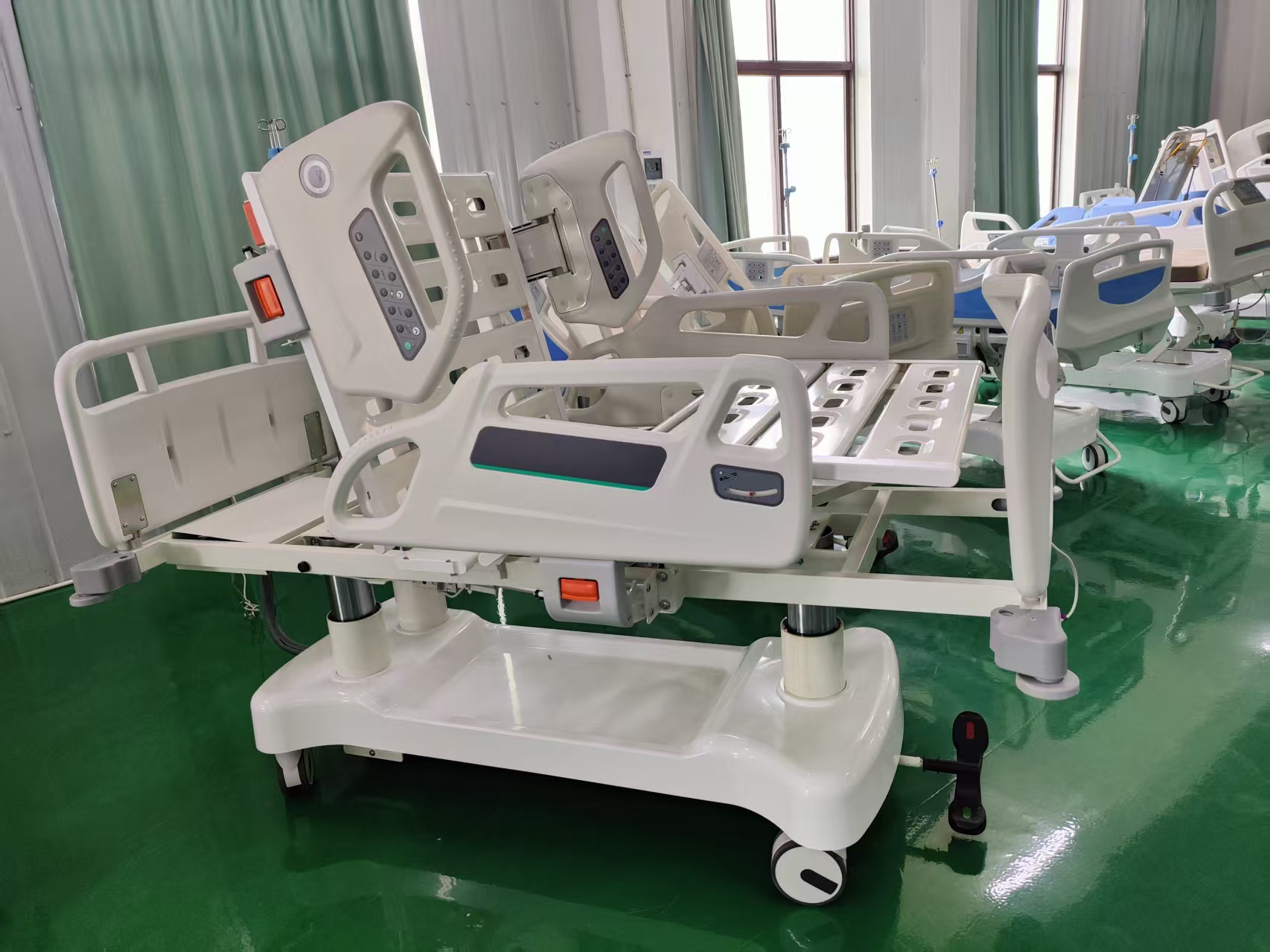
1. Create one master specification for all invited suppliers.
2. Separate required features from optional upgrades.
3. Request itemized pricing for beds, mattresses, accessories, OEM charges, packaging, and freight.
4. Ask suppliers to list exclusions and assumptions.
5. Review technical documents and samples against the same criteria.
6. Calculate landed cost using the same shipment assumptions.
7. Agree on acceptance criteria and service terms before issuing the purchase order.
8. Save the approved configuration as the reference for production and pre-shipment inspection.
This process helps identify whether price differences come from genuine efficiency or from omitted requirements.
- Comparing prices for different bed functions or mattress configurations
- Assuming accessories, branded packaging, or inspection are included
- Overlooking electrical differences between destination markets
- Treating an unspecified "certificate" as proof of market approval
- Comparing freight terms without confirming the named destination
- Ignoring spare parts, warranty exclusions, and service lead times
- Approving production before drawings, samples, and labels are finalized
- Quote comparison spreadsheet graphic: Show unit price beside configuration, accessories, packaging, freight, and warranty.
- Hospital-bed configuration diagram: Label the mattress, rails, motors, controls, and optional accessories.
- Landed-cost flowchart: Illustrate how factory price becomes delivered cost.
- Short video: Demonstrate how to compare two quotations using a standardized RFQ.
Start with configuration match. If bed functions, mattress, rails, and accessories differ, unit prices are not directly comparable.
Not on price alone. Compare total landed cost, documentation, quality controls, delivery, warranty, and spare-parts support.
It can mean different things. Ask the supplier to itemize what is included and excluded, especially accessories, packaging, inspection, freight, insurance, and destination charges.
Yes. Ask for separate prices or clear statements for logo setup, custom color, labels, manuals, tooling, and branded packaging. This makes repeat-order pricing easier to assess.
Request the product specification, drawings, operating instructions, electrical details for powered beds, inspection or test records, and applicable conformity documents for the target market.
Use the same shipment quantity, destination, packaging assumptions, and delivery term for each supplier. Confirm the named destination and which party arranges freight and insurance.
Before mass production. Approve the model, functions, accessories, branding, labels, packaging, and acceptance criteria in writing.
Tianjin Kangli Medical Instrument works with overseas brands, wholesalers, distributors, and manufacturers on OEM hospital-bed projects. To request a comparable quotation, provide your target market, required bed functions, mattress and rail configuration, accessories, OEM requirements, order quantity, and delivery destination. An itemized specification makes it easier to evaluate the product and the true cost beyond the unit price.
- [Hospital Bed Procurement in the USA: Specifications and Total Cost] — overview of total-cost considerations in hospital-bed procurement.
- [Purchasing High-Cost Medical Devices and Equipment in Hospitals: A Systematic Review] — research discussing user needs, maintenance, training, and procurement processes.
- [FDA Recognized Consensus Standards: Medical Devices] — FDA database entry for IEC 60601-2-52 within its stated scope.
- [ISO 60601-2-52 Standard Page] — publication and status information for the listed edition.
Conclusion: The strongest hospital-bed quotation is not necessarily the cheapest; it is the clearest, most comparable offer for the required configuration, landed cost, documentation, quality controls, and ongoing support.


