
Views: 268 Author: Tianjin Kangli Publish Time: 2026-08-03 Origin: Site


Content Menu
● What Is the Standard Hospital Bed Length?
● Why 80 Inches Became the Industry Norm
● How Long Is a Hospital Bed in Different Models?
● When Should You Choose an Extended-Length Bed?
● The Real Meaning of Bed Size in Clinical Use
● How Tianjin Kangli Approaches Hospital Bed Design
● What Buyers Should Check Before Ordering
>> 1. Measure the available room space
>> 2. Confirm mattress compatibility
>> 3. Verify the patient profile
>> 5. Review the shipping and installation plan
● Expert Insight: The Most Common Sizing Mistake
● Why Global Buyers Choose OEM Hospital Beds
● FAQ
>> 1. How long is a hospital bed in inches?
>> 2. How long is a hospital bed in centimeters?
>> 3. Are all hospital beds the same length?
>> 4. What is the most common hospital bed width?
>> 5. How do I choose the right hospital bed length?
>> 6. Does Tianjin Kangli offer OEM hospital bed services?
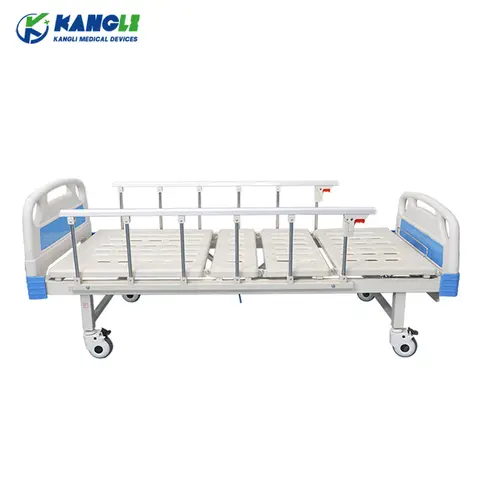
How long is a hospital bed? For most adults, the answer is 80 inches long—about 203 cm. At Tianjin Kangli Medical Equipment Co., Ltd., we have spent years designing and manufacturing hospital beds for global OEM partners, so we know that this simple question is often the starting point for a much bigger decision: choosing the right bed size, the right function, and the right fit for the patient, facility, or home care environment.
If you are sourcing beds for a hospital, distributor network, or private-label brand, understanding hospital bed length, width, height, and category differences is essential. A bed that is too short can reduce comfort and safety. A bed that is too large can create space problems, increase logistics costs, and complicate installation. That is why the best answer is not just a number—it is a sizing framework.

The standard hospital bed length is 80 inches. In metric terms, that is about 203 cm.
This is the most common length used for general adult patients in hospitals, clinics, rehabilitation centers, and home care settings. In many cases, hospital beds are built to match the footprint of a standard mattress system, which makes procurement and replacement easier.
Standard dimensions at a glance:
- Length: 80 inches / 203 cm.
- Width: 36 inches / 91 cm.
- Typical use: General adult care.
- Common mattress match: Twin XL-like footprint in many markets.
For buyers, this standard size is popular because it balances patient comfort, room efficiency, and manufacturing consistency.
The 80-inch length is not arbitrary. It reflects a long-standing industry balance between space-saving design and adult body accommodation.
From an operational perspective, standardization helps:
- Simplify bed frame production.
- Reduce mattress compatibility issues.
- Improve warehouse planning.
- Lower shipping and packaging complexity.
- Support faster purchasing decisions for hospitals and dealers.
In real purchasing scenarios, standardization matters as much as comfort. A hospital may need dozens or hundreds of beds, so even small differences in length can affect room layout, delivery costs, and bedside equipment placement.
Not all hospital beds are the same. The correct length depends on the patient group and the intended setting.
| Bed Type | Typical Length | Typical Width | Best For |
|---|---|---|---|
| Standard hospital bed | 80 inches | 36 inches | General adult patients |
| Bariatric hospital bed | 80–84 inches | 42–54 inches | Larger patients, higher load needs |
| Pediatric hospital bed | 62–72 inches | 30–33 inches | Children and teenagers |
| Extended-length bed | 84–88 inches | 36 inches | Taller adults |
| Home care hospital bed | 76–80 inches | 36 inches | Home recovery and long-term care |
This table is useful for procurement teams, distributors, and OEM buyers because it highlights a key truth: bed length should be matched to the patient profile, not guessed from the product label.
An extended-length hospital bed is typically the better choice when the patient is taller than average or when additional legroom is needed for comfort and safe positioning.
You may want an extended-length option if:
- The patient is well above average height.
- The care team expects frequent repositioning.
- The hospital serves orthopedic or rehabilitation patients.
- The buyer wants a premium model for export markets.
- The facility wants to reduce discomfort complaints from taller users.
At Kangli, we often advise OEM partners to think beyond "standard size" and consider the practical use case. A bed that looks fine on paper may still be the wrong fit if the end user is tall, fragile, or clinically complex.
When people ask, "How long is a hospital bed?", they often mean more than the physical frame. In practice, bed size affects safety, caregiving, patient mobility, and room design.
A proper bed size can help with:
- Easier transfers in and out of bed.
- Better posture support.
- Safer side-rail usage.
- More efficient nurse movement.
- Better compatibility with overbed tables, IV poles, and monitors.
For hospitals and care facilities, the bed is not just a product. It is part of a workflow. That is why choosing the right length is a clinical and operational decision at the same time.
As a national high-tech enterprise founded in 1998, Tianjin Kangli Medical Equipment Co., Ltd. focuses on medical bed development, manufacturing, and OEM service for overseas brands, wholesalers, and manufacturers. With a 20,000-square-meter factory and 50+ employees, we support buyers who need reliable product quality, stable production capacity, and export-ready customization.
Our approach is centered on:
- Practical dimensions for real-world healthcare settings.
- OEM flexibility for brand owners and distributors.
- Durable construction for repeated clinical use.
- User-friendly structure for caregivers and patients.
- Consistent manufacturing standards for international markets.
For B2B buyers, the biggest advantage of working with a specialized manufacturer is that the product can be adapted to your target market without sacrificing core performance.
Before placing an order, it is smart to confirm more than just the bed length.
Make sure the bed fits comfortably with room for walking, caregiving, and accessory placement.
The frame and mattress should match in both length and width.
Adult, pediatric, bariatric, and home care users have different needs.
OEM buyers should check whether length, width, function, and accessories can be adjusted.
The final packed size may matter as much as the assembled size.
This checklist reduces costly surprises and helps buyers make faster, more confident decisions.
One of the most common mistakes buyers make is focusing only on the visible bed frame and ignoring the total care environment. A bed may be 80 inches long, but the real footprint becomes larger once you include side rails, headboard clearance, accessories, and mobility space.
In practice, the best bed is not always the biggest or most feature-rich model. The best bed is the one that fits:
- The patient's body size.
- The caregiver's workflow.
- The room layout.
- The target market's expectations.
- The brand's pricing strategy.
That is why an experienced manufacturer can add value beyond production alone. The right partner helps buyers turn technical details into a product that sells.
For international buyers, OEM sourcing is about more than price. It is about quality consistency, market adaptation, and supplier reliability.
Tianjin Kangli supports overseas clients who need:
- Custom branding.
- Product variation for local regulations.
- Scalable manufacturing.
- Export-oriented packaging.
- Professional communication and after-sales support.
If you are building or expanding a medical furniture brand, choosing the right hospital bed size is part of building customer trust. Products that fit the market well are easier to sell, easier to install, and easier to support.
If you are looking for a dependable OEM partner for hospital beds and related medical furniture, Tianjin Kangli Medical Equipment Co., Ltd. is ready to support your next project.
Company: Tianjin Kangli Medical Equipment Co., Ltd.
Website: https://www.klmedbed.com
Email: yukili90@tjkangli.com
Phone / WhatsApp: +86 136 5207 7555
CTA: Contact us today to discuss custom hospital bed sizes, OEM solutions, and export-ready manufacturing for your market.
A standard hospital bed is usually 80 inches long.
A standard hospital bed is about 203 cm long.
No. Standard, bariatric, pediatric, and extended-length beds can differ in size.
The most common width is 36 inches.
Choose based on the patient's height, the care setting, room size, and whether the bed is for standard or specialized use.
Yes. Tianjin Kangli provides OEM services for overseas brands, wholesalers, and manufacturers.
1. Standard hospital bed dimensions and common sizing guidance: [How to Measure Hospital Bed Dimensions for Home Use]
2. Standard size overview and width/length guidance: [Choose the Right Hospital Bed and Mattress Size for Home Care]
3. Hospital bed size chart and extended-length/bariatric examples: [What Sizes Do Hospital Beds Come In?]
4. Typical hospital bed size and mattress compatibility: [Guide to Hospital Beds for Home Care]
5. Standard 36-inch by 80-inch sizing reference: [Hospital Bed Dimensions: Your Guide to Choosing the Right Size at Home]
6. Tianjin Kangli company and product context: [Tianjin Kangli Medical Instrument: Furniture, Logistics]
Hot Tags: China, Global, OEM, private label, manufacturers, factory, suppliers, manufacturing company


