
Views: 267 Author: Tianjin Kangli Publish Time: 2026-07-09 Origin: Site


Content Menu
● Electric ICU Bed vs. Standard Manual Bed for Ventilator-Dependent Patients
● Why the Bed Choice Matters in Ventilator Care
● Electric ICU Bed vs. Standard Manual Bed
● Main Advantages of Electric ICU Beds
● Where Standard Manual Beds Still Make Sense
● What Hospitals Should Evaluate Before Buying
● OEM Insight From a Critical Care Manufacturer
● Practical Procurement Checklist
● Why Choose Tianjin Kangli Medical Appliance Co., Ltd.
● FAQs
When hospitals compare an Electric ICU Bed vs. Standard Manual Bed for Ventilator-Dependent Patients, the real question is not just cost. It is whether the bed can support airway management, safe repositioning, fast emergency response, and the daily workload of critical care teams. As a manufacturer focused on OEM/ODM medical furniture, Tianjin Kangli Medical Appliance Co., Ltd. understands that the right bed can improve both patient safety and staff efficiency. [klmedbed]
Ventilator-dependent patients need more than a place to rest. They require stable positioning, rapid access for caregivers, compatibility with ICU workflows, and a structure that reduces handling risk during long stays. That is why the difference between electric ICU beds and standard manual beds matters in real-world critical care procurement. [trust-medi]
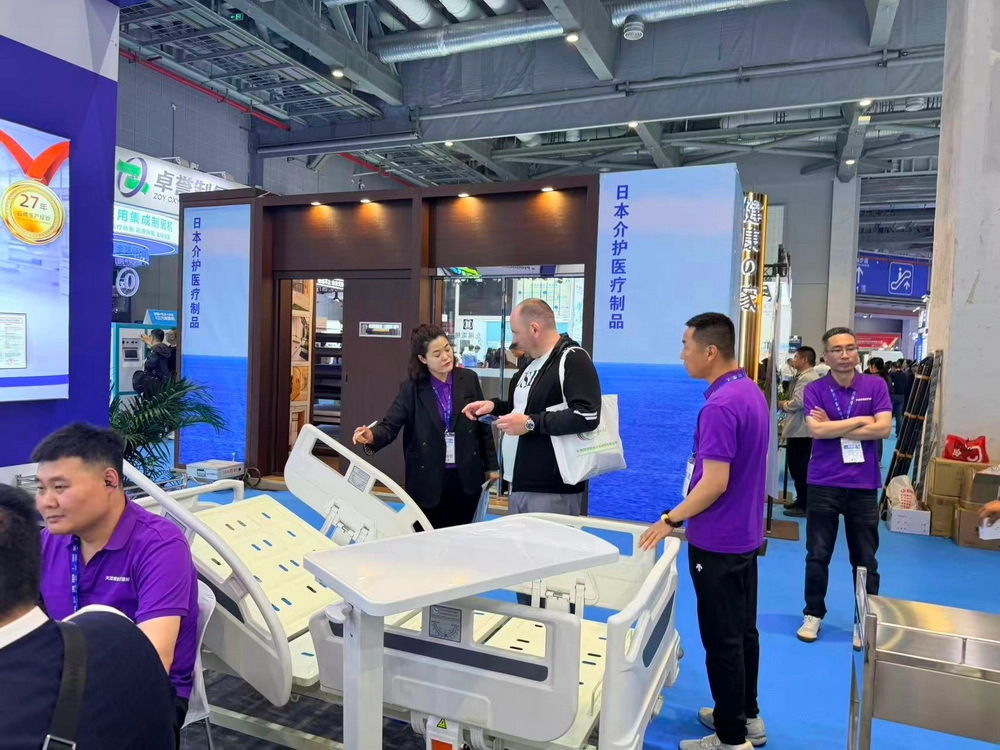
Ventilator-dependent patients are often clinically fragile, immobile, and exposed to complications from prolonged bed rest. In this setting, the bed becomes part of the treatment environment, not just furniture. ICU beds are designed for continuous monitoring, emergency access, and advanced positioning, while standard manual beds are generally built for simpler care needs and lower adjustment frequency. [stellarmedico]
For procurement teams, this means the decision should be based on clinical use case, not only purchase price. A low-cost bed may look attractive upfront, but if it slows caregiver response or increases manual handling, the hidden cost can be higher over time. [vitalmobility]
| Feature | Electric ICU Bed | Standard Manual Bed |
|---|---|---|
| Position adjustment | Motorized and precise | Hand-crank or mechanical |
| Staff workload | Lower | Higher |
| Emergency response | Faster | Slower |
| Patient comfort | Better for long ICU stays | Limited |
| Ventilator care suitability | Strong fit | Limited fit |
| Procurement cost | Higher upfront | Lower upfront |
| Long-term efficiency | Usually stronger | Usually weaker |
An electric ICU bed is designed to support critical care tasks such as raising the backrest, adjusting height, and improving access during procedures. A standard manual bed can still be useful in lower-acuity settings, but it is not the best match for patients who need frequent repositioning or continuous ventilator support. [meyosis]
Electric ICU beds offer several practical advantages in ventilator-dependent care. First, they help caregivers adjust the bed quickly and with less physical strain. Second, they support more precise positioning, which matters when patients need airway management, suctioning, or postural changes. Third, they improve workflow efficiency in busy ICUs where seconds matter. [stellarmedico]
For patients, the experience is also better. Smooth motorized adjustments reduce discomfort and avoid the repeated manual effort associated with crank beds. For hospitals, that can translate into fewer handling risks, better nursing efficiency, and a more modern standard of care. [vitalmobility]
Standard manual beds are not obsolete. They remain a practical option in settings where advanced positioning is not required, budgets are limited, or patients are relatively stable. They also appeal to buyers who prioritize simple mechanical structure and lower maintenance demands. [medshopdirect]
However, when the patient is ventilator-dependent, the limitations become more obvious. Manual adjustment takes more time and more staff effort, which is not ideal in environments where the care team must respond quickly and repeatedly throughout the day. [dahaomedical]
Before choosing between an electric ICU bed and a standard manual bed, hospitals should evaluate the following points:
1. Patient acuity level. The more complex the patient, the more valuable electric adjustment becomes.
2. Staffing pressure. If nurses need to save steps and reduce physical strain, electric beds are often the better option.
3. Emergency workflow. ICU beds should allow fast, controlled positioning during interventions.
4. Long-term value. The best decision should consider durability, maintenance, and operational efficiency, not just purchase price.
5. Compliance and export readiness. International buyers should verify quality systems, certification, documentation, and after-sales support. [m.made-in-china]
At Tianjin Kangli Medical Appliance Co., Ltd., the procurement process is built around customization, product validation, inspection, documentation, and global export support. That makes it easier for overseas brands, distributors, and manufacturers to source beds that match both clinical needs and market requirements. [klmedbed]
From a manufacturer's perspective, the biggest mistake is treating all hospital beds as interchangeable. ICU products must work as part of a broader care ecosystem that includes ventilators, monitors, suction systems, infection-control protocols, and caregiver access patterns. A well-engineered electric ICU bed supports that ecosystem; a basic manual bed often does not. [trust-medi]
This is where OEM/ODM capability matters. Buyers may need customized dimensions, motor configurations, side-rail designs, load capacities, or documentation packages for different regions. Kangli Medical's structured development and mass-production workflow is designed to support that kind of customization while maintaining consistency and export standards. [m.made-in-china]
Recent industry content points to a clear direction: ICU beds are becoming more advanced, with stronger focus on safety, adjustability, workflow efficiency, and compatibility with critical care procedures. Electric models are increasingly preferred where patient handling risk and nursing workload are major concerns. [meyosis]
This trend matters for ventilator-dependent patients because their needs are rarely static. Their position, support level, and monitoring requirements may change quickly, so the bed must respond just as quickly. That is why hospitals upgrading critical care areas are often moving from manual solutions toward electric ICU platforms. [stellarmedico]

Use this checklist when evaluating suppliers:
- Confirm whether the bed is intended for ICU or general ward use.
- Ask for motor configuration, load capacity, and adjustment functions.
- Review quality certifications and export documentation.
- Check after-sales support, spare parts, and technical guidance.
- Verify customization options for OEM or private-label projects.
- Assess whether the supplier understands critical care workflows, not only manufacturing. [klmedbed]
For global buyers, this step is especially important because the lowest quote is not always the best value. In ventilator-dependent care, reliability and response speed matter more than superficial savings. [vitalmobility]
Tianjin Kangli Medical Appliance Co., Ltd. is positioned to support overseas customers who need reliable OEM/ODM hospital bed solutions. The company states that it offers customized development, mass production, inspection and testing, export-standard packaging, and after-sales support, backed by established quality systems and medical-industry certifications. [m.made-in-china]
For brand owners, wholesalers, and manufacturers, that means a practical partner for critical care bed sourcing. For hospitals and distributors, it means access to beds that can be tailored to clinical needs, commercial goals, and international market requirements. [klmedbed]
If your project involves ventilator care, ICU expansion, or private-label medical bed sourcing, Tianjin Kangli Medical Appliance Co., Ltd. can help you develop a safer and more market-ready solution. Contact the team for OEM/ODM customization, technical discussion, or export project support. [m.made-in-china]
1. Is an electric ICU bed better than a standard manual bed for ventilator-dependent patients?
Yes. For ventilator-dependent patients, an electric ICU bed is usually better because it supports faster positioning, lower staff workload, and safer critical-care handling. [meyosis]
2. Can a standard manual bed be used in an ICU?
It can be used in limited situations, but it is generally less suitable for high-acuity ICU care because manual adjustment is slower and more labor-intensive. [dahaomedical]
3. Why do hospitals prefer electric beds for critical care?
Hospitals often prefer them because they improve caregiver efficiency, help reduce physical strain, and allow more precise adjustments during treatment. [vitalmobility]
4. What should buyers ask a hospital bed supplier?
Buyers should ask about certifications, load capacity, motor functions, customization options, export documentation, spare parts, and after-sales service. [meyosis]
5. Does Tianjin Kangli Medical Appliance Co., Ltd. provide OEM/ODM services?
Yes. The company publicly states that it provides OEM/ODM customization, mass production, inspection, packaging, export services, and after-sales support. [m.made-in-china]
1. Tianjin Kangli Medical Appliance Co., Ltd. — OEM/ODM & After-Sales Service.
[https://www.klmedbed.com/service.html] [klmedbed]
2. Tianjin Kangli Medical Appliance Co., Ltd. profile.
[https://m.made-in-china.com/company-23f52a8eceec566c/info.html] [m.made-in-china]
3. Electric vs Manual Hospital Beds: Which Should You Choose?
[https://www.vitalmobility.ca/blog/hospital-beds/electric-vs-manual-hospital-beds-which-should-you-choose] [vitalmobility]
4. Hospital Bed Types Explained: Manual vs Electric vs ICU Beds.
[https://www.trust-medi.com/hospital-bed-types-explained/] [trust-medi]
5. Understanding ICU Beds, their types and applications.
[https://stellarmedico.com/understanding-icu-beds-types-and-applications/] [stellarmedico]
6. Hospital Beds for Healthcare Facilities: Types, Technical Features and Selection Guide.
[https://www.meyosis.com/en/hospital-beds-for-healthcare-facilities-types-technical-features-and-selection-guide/] [meyosis]
7. What's the difference between an ICU hospital bed and a regular nursing bed.
[https://www.dahaomedical.com/newsinfo-whats-the-difference-between-an-icu-hospital-bed-and-a-regular-nursing-bed.html] [dahaomedical]
8. Manual vs Electric Hospital Beds: Which Is Right for You?
[https://medshopdirect.com/blogs/hospital-beds/manual-vs-electric-hospital-beds-which-is-right-for-you] [medshopdirect]
Hot Tags: China, Global, OEM, private label, manufacturers, factory, suppliers, manufacturing company


