
Views: 220 Author: klmedbed Publish Time: 2026-04-16 Origin: Site


In modern healthcare procurement, the choice between an electric hospital bed vs manual hospital bed affects patient comfort, caregiver workload, safety, and long-term operating efficiency. For hospitals, distributors, and OEM buyers, the right decision is not just about price; it is about clinical workflow, durability, compliance, and total value.
As a national high-tech enterprise focused on medical device R&D and manufacturing, Tianjin Kangli Medical Appliance Co., Ltd. helps global brand owners, wholesalers, and manufacturers source reliable OEM hospital bed solutions designed for real-world healthcare environments. With that perspective, this article compares electric and manual hospital beds from both a practical and industry viewpoint.

The core difference is simple: electric beds use motorized controls, while manual beds depend on hand cranks or mechanical adjustment systems. This difference shapes everything from ease of use to staffing efficiency and patient experience.
In an electric hospital bed, height, backrest, and leg sections can usually be adjusted by remote control or integrated buttons. In a manual hospital bed, staff must physically operate cranks to change the bed position. That means electric beds are faster and easier to use, while manual beds are often lower cost and simpler in design.
| Feature | Electric Hospital Bed | Manual Hospital Bed |
|---|---|---|
| Adjustment Method | Motorized, button-controlled | Hand-crank or mechanical |
| Ease of Use | Very high | Moderate to low |
| Caregiver Effort | Reduced | Higher |
| Patient Independence | Better | Limited |
| Initial Cost | Higher | Lower |
| Maintenance | Requires electrical inspection | Simpler mechanical maintenance |
| Best For | Long-term care, ICU support, high-dependency patients | Budget-sensitive facilities, low-tech environments |
For buyers evaluating electric hospital bed vs manual hospital bed, the best choice depends on patient volume, care level, and total ownership cost, not only purchase price.
Electric hospital beds are often the preferred choice in modern hospitals and long-term care facilities because they improve usability and workflow efficiency. They allow caregivers to make fast adjustments without heavy physical effort, which can reduce fatigue and save time during patient care.
Another major advantage is patient independence. Many patients can reposition themselves with minimal help, which supports dignity and comfort. In practice, this can improve the patient experience, especially for elderly users, rehabilitation patients, or those recovering from surgery.
Electric models also tend to support more advanced functions such as:
- Height adjustment for safer transfers.
- Backrest and leg elevation for comfort and circulation support.
- Trendelenburg or reverse Trendelenburg positioning on selected models.
- Emergency and safety features depending on configuration.
- Integrated side rail or control options for usability.
From an OEM and procurement perspective, electric beds are also easier to position as a premium product line in competitive international markets.
Manual hospital beds remain relevant because they are cost-effective, durable, and straightforward. For facilities with tight budgets or lower-acuity care needs, this simplicity can be a real advantage.
They are especially useful in environments where electricity access is unstable, maintenance teams are limited, or procurement priorities emphasize affordability over automation. Manual beds also often have fewer electronic components, which may reduce the need for specialized servicing.
Their strengths include:
- Lower upfront investment.
- Simpler structure.
- Less dependence on electrical power.
- Easier use in basic care settings.
For some buyers, manual beds are not a compromise; they are the right fit for the exact care model being served.
The right answer to electric hospital bed vs manual hospital bed depends on who will use the bed and where it will be used. A high-acuity hospital ward has different needs from a small clinic, rehabilitation center, or home-care environment.
Here is a practical guide:
1. Choose an electric hospital bed if the facility needs frequent repositioning, improved caregiver efficiency, or higher patient comfort.
2. Choose a manual hospital bed if the buyer prioritizes lower cost and simpler maintenance.
3. Choose an electric model with OEM customization if the product will be sold to premium healthcare channels or exported under private label.
4. Choose a manual model if the target market is price-sensitive and infrastructure support is limited.
This decision framework is especially useful for distributors and brand owners who need to match product specification with local market demand.
Many buyers compare only the purchase price, but that creates a weak procurement strategy. The real cost of a hospital bed includes installation, maintenance, caregiver time, patient handling efficiency, and service life.
Another overlooked factor is workflow impact. In busy wards, even small time savings from powered adjustment can add up across dozens of daily patient interactions. Likewise, a manual bed that seems cheaper at first may cost more in staff effort over time.
For OEM buyers, the hidden value is also in product positioning. Electric beds often support stronger brand perception, higher margin potential, and a broader export value proposition. Manual beds, by contrast, may win in high-volume, cost-driven tenders.
In hospital bed manufacturing, product quality is not only about the visible frame or mattress platform. It also depends on welding consistency, motor system reliability, finish quality, structural load capacity, and long-term stability under daily use.
At Tianjin Kangli Medical Appliance Co., Ltd., the OEM process is designed to support foreign brand owners, wholesalers, and manufacturers that need dependable supply and flexible customization. In a market where hospital beds must satisfy both clinical expectations and international buyer standards, manufacturing consistency becomes a competitive advantage.
From an industry perspective, buyers should ask:
- Is the bed structure stable under repeated use?
- Are the motors and mechanical parts tested for durability?
- Is the surface easy to clean and maintain?
- Can the design be customized for different markets?
- Does the product support export and branding requirements?
These questions matter because a hospital bed is a long-cycle product. Buyers do not purchase it for appearance; they buy it for reliability, safety, and serviceability.
Before placing an order, review the following points carefully:
1. Define the use scenario: ICU, ward, home care, rehab, or long-term care.
2. Confirm adjustment needs: height only, backrest only, or multi-position support.
3. Check power requirements: especially for electric beds in export markets.
4. Evaluate after-sales support: spare parts, service guidance, and maintenance access.
5. Verify customization options: size, color, rails, controls, and branding.
6. Assess total cost of ownership: purchase price plus maintenance and labor impact.
This checklist helps procurement teams avoid mismatches between product design and actual end-user demand.
To improve readability and conversion, this article should include visual assets at the following points:
- After the comparison table: add a product comparison infographic.
- In the "Benefits of an Electric Hospital Bed" section: insert a real product photo showing adjustment functions.
- In the "Practical Buying Checklist" section: add a simple decision-flow chart.
- Near the CTA: add a factory or OEM capability image to strengthen trust.
A short embedded video showing bed adjustment, side-rail operation, and control functions would also improve engagement and reduce buyer hesitation.
For overseas customers, supplier choice is often as important as product choice. Tianjin Kangli Medical Appliance Co., Ltd. focuses on OEM medical device manufacturing for foreign brand owners, wholesalers, and manufacturers who need dependable quality and adaptable production support.
Working with an experienced manufacturer can help buyers reduce sourcing risk, improve market fit, and shorten time to launch. For buyers comparing electric hospital bed vs manual hospital bed, supplier capability can determine whether the final product performs well in the market.
If your business needs stable OEM supply, professional customization, and a manufacturing partner with medical device expertise, choosing the right factory partner is a strategic decision, not just a purchasing one.
The best choice in the electric hospital bed vs manual hospital bed comparison depends on the care setting, budget, and long-term usage needs. Electric beds deliver stronger convenience, comfort, and workflow efficiency, while manual beds offer simplicity and lower upfront cost.
For global buyers and private-label brands, the most effective strategy is to align the product type with your target market, then work with a manufacturer that can deliver consistent quality and export-ready OEM support. That is where Tianjin Kangli Medical Appliance Co., Ltd. can add real value.
CTA: Contact Tianjin Kangli Medical Appliance Co., Ltd. to discuss OEM hospital bed solutions, product customization, and export cooperation for your target market.
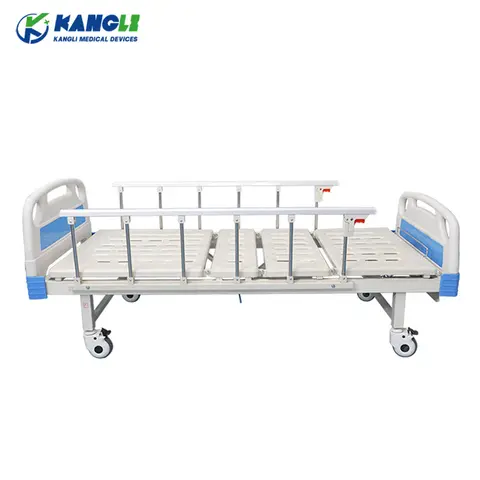
An electric hospital bed is better for comfort, ease of use, and caregiver efficiency, while a manual hospital bed is better for lower budgets and simpler environments.
Yes, in many cases they are worth it because they reduce caregiver labor, improve patient comfort, and support more efficient care workflows.
Yes, manual hospital beds are still widely used in cost-sensitive facilities, lower-acuity care settings, and places where electrical access is limited.
OEM buyers should look for product consistency, customization support, quality control, export experience, and reliable after-sales service.
Yes, many hospital beds can be customized in size, color, control system, side rails, branding, and other specifications to fit different market needs.
Electric hospital beds are usually better for long-term care because they improve patient independence and make repositioning easier for caregivers.
1. Schröder Health Projects, "Manual vs Electric Hospital Bed Guide"
https://www.schroderhealth.com/manual-vs-electric-hospital-bed-guide/
2. The Digital Elevator, "Medical Device SEO Strategies: 2025 Guide"
https://thedigitalelevator.com/blog/medical-device-seo/
3. PatientGain, "E-E-A-T Algorithm For Medical SEO & Dental SEO Websites"
https://www.patientgain.com/e-a-t-algorithm-medical-seo-website
4. iCovy, "Medical Device SEO: Harnessing the Power of Digital Marketing in Healthcare"
https://www.icovy.com/blog/medical-device-seo/harnessing-the-power-of-digital-marketing-in-healthcare
5. BWT Hospital Bed, "A Comparative Analysis of Electric Hospital Beds and Manual Hospital Beds"
https://www.bwtehospitalbed.com/news/a-comparative-analysis-of-electric-hospital-beds-and-manual-hospital-beds/
Hot Tags: China, Global, OEM, private label, manufacturers, factory, suppliers, manufacturing company


