

Views: 123 Author: kangli Publish Time: 2026-09-15 Origin: Site


Content Menu
● What Does "X-Ray-Translucent ICU Hospital Bed" Mean?
● Backrest X-Ray vs. Full-Length X-Ray Platform
● What Is a Backrest X-Ray ICU Bed?
>> Limitations
● What Is a Full-Length X-Ray ICU Bed?
>> Limitations
● The Most Important Question: What Imaging Does the Hospital Perform?
>> Backrest X-Ray May Be the Better Choice When
>> Full-Length X-Ray May Be the Better Choice When
● Radiolucency Is Not the Same as Diagnostic Image Quality
>> Request the Following Evidence
● X-Ray Platform RFQ and Tender Specification Checklist
>> 1. Define the Required Radiolucent Area
>> 2. Specify Mattress Compatibility
>> 3. Specify Detector and Cassette Access
>> 4. Specify PositioningRequirements
>> 5. Specify Cleaning and Infection-Control Requirements
>> 6. Specify Mechanical and Electrical Safety
● How to Test an X-Ray-Translucent ICU Bed Before Mass Production
>> Step 1: Confirm the Configuration
>> Step 2: Check Physical Dimensions
>> Step 3: Perform Functional Testing
>> Step 4: Perform Imaging Testing
>> Step 5: Record and Approve the Results
● How to Compare Suppliers Beyond the Purchase Price
● OEM and Private-Label Considerations for International Buyers
>> Mistake 3: Ignoring the Mattress
>> Mistake 4: Testing Only an Empty Bed
>> Mistake 5: Forgetting Destination-Market Requirements
● Common Purchasing Mistakes to Avoid
>> Mistake 1: Comparing Only the Number of Functions
>> Mistake 7: Failing to Define Acceptance Criteria
● Recommended Decision Framework
● FAQ: X-Ray-Translucent ICU Hospital Beds
>> 1. Is a full-length X-ray platform always better than a backrest X-ray platform?
>> 2. Can a backrest X-ray ICU bed be used for chest radiography?
>> 3. Does "X-ray translucent" guarantee clear diagnostic images?
>> 4. What should be included in an ICU bed X-ray RFQ?
>> 5. What is the difference between radiolucent and radiopaque materials?
>> 6. Can the bed be customized for an overseas brand?
>> 7. What documents should a manufacturer provide?
>> 8. How should buyers test the radiolucent platform?
How can I start an OEM partnership with your factory?
We recommend an initial technical consultation to review your design specifications. Please contact our dedicated B2B team at [Yukili90@tjkangli.com] to discuss your product requirements.
Let’s build excellence together. Whether you need a quote for a large-scale project or want to explore private labeling opportunities for our 5-function medical bed series, we are here to support your success. Click here www.klmedbed.com to connect with our B2B team and start your customized manufacturing journey today.
When selecting an X-ray-translucent ICU hospital bed, the most important question is not simply whether the bed is "X-ray compatible." Buyers must determine which part of the mattress platform is radiolucent, whether imaging can be performed without moving the patient, and how the bed integrates with the hospital's existing X-ray workflow.
The two most common configurations are:
- Backrest X-ray platform: A radiolucent section is available beneath the patient's chest and upper body.
- Full-length X-ray platform: The entire mattress-support surface is designed to permit imaging along the patient's body.
For international medical brands, wholesalers, distributors, and hospital-equipment companies, the correct choice affects clinical workflow, patient handling, imaging flexibility, product cost, maintenance, and tender compliance.
At Tianjin Kangli Medical Device, we provide OEM and private-label ICU hospital bed manufacturing services for overseas brands, distributors, wholesalers, and medical-equipment companies. This guide explains the practical differences between backrest X-ray ICU beds and full-length X-ray ICU beds, including what to include in an RFQ or tender specification.
> Clinical and regulatory note: Radiolucency does not guarantee diagnostic image quality. Final suitability must be verified with the hospital's radiology, intensive-care, biomedical-engineering, and procurement teams.
An X-ray-translucent ICU hospital bed is designed so that X-rays can pass through a specified part of the bed platform with limited radiographic interference.
The objective is to allow imaging while reducing the need to:
- Transfer a critically ill patient
- Move the patient to a separate imaging surface
- Disconnect ventilators or infusion lines
- Remove monitoring equipment
- Increase staff handling and transfer risk
- Interrupt intensive-care treatment
A radiolucent bed platform may use materials such as:
- Carbon-fiber composite
- Radiolucent polymer
- Specialized laminate
- Engineered plastic
- Other materials selected for imaging compatibility
The frame, crossbars, motors, cables, mattress, side rails, and accessories may still affect the image. Therefore, buyers should evaluate the complete imaging system, not only the mattress platform material.
---
| Feature | Backrest X-ray platform | Full-length X-ray platform |
|---|---|---|
| Radiolucent coverage | Primarily upper-body or chest area | Usually covers most or all of the patient platform |
| Typical imaging use | Chest and upper-body radiography | More flexible imaging, depending on system design |
| Initial cost | Generally lower | Generally higher |
| Design complexity | Lower | Higher |
| Weight and durability balance | Often easier to manage | Requires broader material and structural planning |
| Workflow suitability | Good for routine bedside chest imaging | Better for broader imaging requirements |
| Tender value | Suitable for standard ICU specifications | Better for advanced or specialist projects |
| Key limitation | Limited imaging coverage | Higher cost and greater verification needs |
These descriptions are general. Every manufacturer may define the imaging area differently. A buyer should request a drawing showing the exact radiolucent zone.
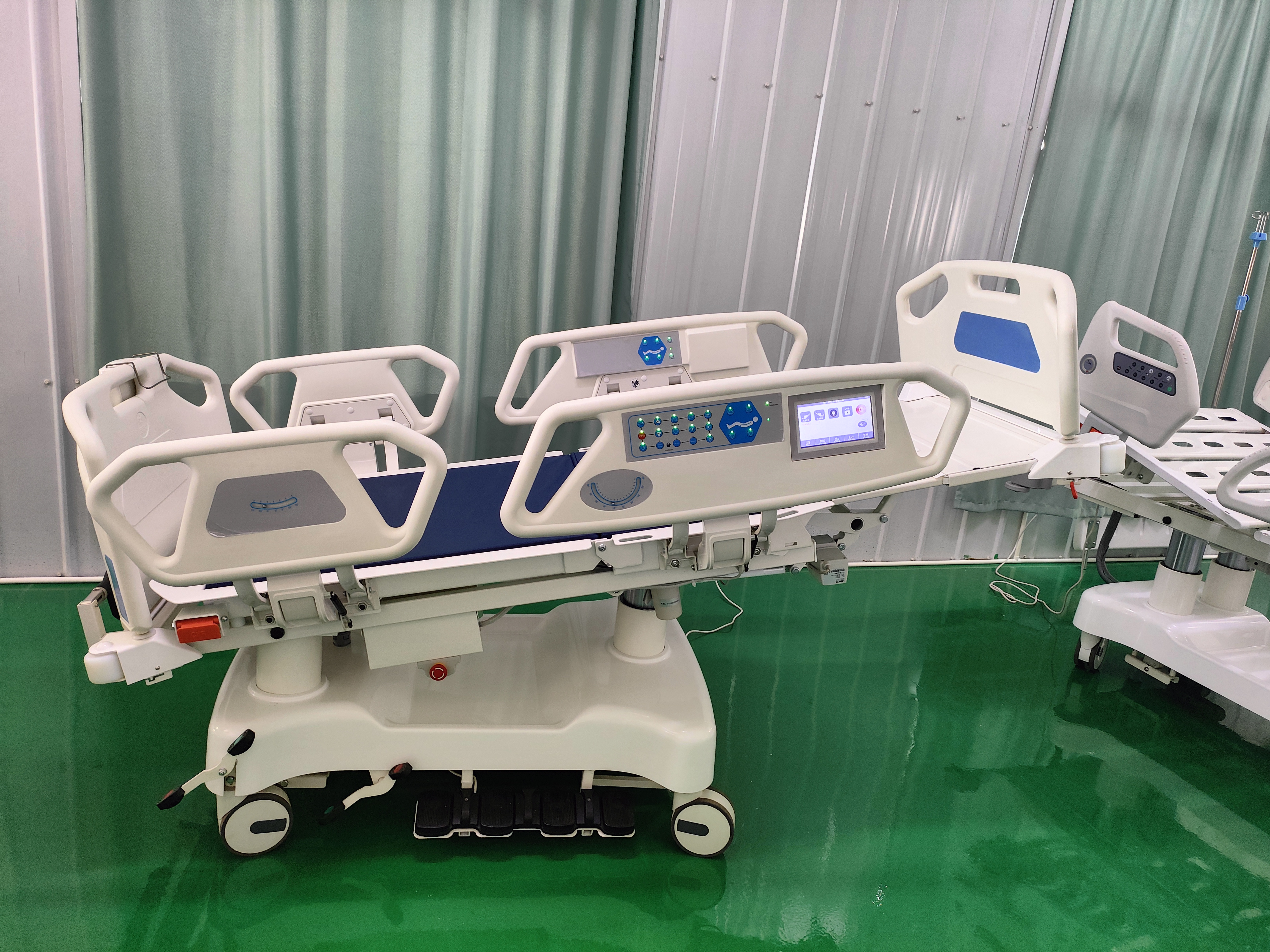
A backrest X-ray ICU bed includes a radiolucent back section, usually positioned under the patient's upper torso. It is commonly designed to support bedside chest radiography.
- Lower purchase cost
- Simpler construction
- Reduced platform weight
- Suitable for routine chest imaging
- Less complex maintenance
- Good fit for general ICU procurement
Chest X-rays are frequently required in critical-care settings. A backrest radiolucent section may allow staff to position an imaging cassette or detector under the upper body without transferring the patient.
A backrest-only platform may not be appropriate when the hospital needs:
- Full-body radiography
- Imaging of the pelvis or lower extremities
- Broad imaging flexibility
- Frequent use of mobile digital radiography
- Specialized trauma or critical-care protocols
- A single bed platform for diverse imaging requirements
The buyer should not assume that "backrest X-ray" means the entire backrest is completely unobstructed. Ask for the exact radiolucent dimensions and identify any structural elements that may appear in the image.
---
A full-length X-ray platform is designed to provide radiolucent coverage across most or all of the mattress platform.
The goal is to support imaging over a larger portion of the patient's body while the patient remains in the ICU bed.
- Broader imaging coverage
- Reduced need for repositioning
- Greater flexibility for complex cases
- Better support for hospitals with advanced bedside imaging
- More suitable for high-acuity or specialist projects
- Stronger fit for detailed technical tenders
A full-length platform may be appropriate for trauma centers, advanced ICUs, teaching hospitals, and projects where imaging requirements are not limited to the chest.
Full-length radiolucency may involve:
- Higher purchase cost
- More complex construction
- Greater material and engineering requirements
- More detailed testing
- Potentially higher repair costs
- More demanding compatibility checks
A full-length platform is only valuable if the hospital's imaging workflow actually requires it. Buying advanced functionality without a defined clinical need can increase project cost without improving operational value.
---
Before choosing a platform, ask the clinical team:
1. Which body regions require bedside X-ray imaging?
2. How often are chest radiographs performed?
3. Are pelvic or lower-body images required?
4. Does the hospital use cassette-based or wireless digital detectors?
5. What are the detector dimensions?
6. Must imaging be performed without changing patient position?
7. What equipment must remain connected during imaging?
8. Are the beds intended for general ICU, trauma, burns, cardiac, or surgical care?
9. Does the hospital have specific tender requirements?
10. Will the same bed be used in multiple departments?
- The principal need is bedside chest radiography.
- The project is budget-sensitive.
- The ICU uses standard mobile X-ray procedures.
- The hospital has separate imaging solutions for other body regions.
- The tender requires only upper-body radiolucency.
- Maintenance simplicity is important.
- The bed will be purchased in large quantities.
- The hospital needs imaging beyond the chest.
- Patients are difficult or unsafe to transfer.
- The ICU treats trauma or complex surgical cases.
- The project specifies broad radiolucent coverage.
- Mobile digital radiography is used extensively.
- The hospital wants one standardized advanced ICU-bed platform.
- Clinical engineering resources can support the more complex design.
---
One of the most important specification gaps in ICU-bed procurement is the difference between radiolucent material and clinically acceptable radiographic performance.
A platform can allow X-rays to pass through while still producing unwanted image effects because of:
- Frame components
- Crossmembers
- Screws and fasteners
- Actuator locations
- Mattress materials
- Side-rail structures
- Cassette-holder design
- Patient-support accessories
- Detector alignment
- Excessive material thickness
For this reason, the tender should request more than the phrase "X-ray translucent."
- Radiolucent-area drawing
- Material information
- Platform thickness
- Compatible detector dimensions
- Recommended imaging position
- Image-quality test method
- Representative radiographic images
- Information about structural obstruction
- Mattress compatibility data
- Accessory limitations
A manufacturer should explain which areas may appear in an image and under what positioning conditions.
> Expert perspective: In real procurement, the most useful question is not "Is the bed radiolucent?" It is "Can our radiology team obtain the required images, with our detector and mattress, without transferring the patient?"

Specify:
- Backrest-only or full-length coverage
- Radiolucent length
- Radiolucent width
- Platform-section location
- Permitted structural obstructions
- Imaging position
- Detector access
- Cassette or wireless-detector compatibility
Ask the supplier to mark the radiolucent area on a dimensional drawing.
> "The ICU bed shall provide a radiolucent backrest section suitable for bedside chest radiography using the hospital's specified detector dimensions. The bidder shall provide a drawing showing the usable imaging area and any structural components within the beam path."
For a full-length model:
> "The ICU bed shall provide radiolucent coverage across the specified mattress platform length and width, subject to the stated detector and imaging conditions."
Use measurable requirements rather than marketing language.
---
The mattress can affect imaging performance. Include:
- Mattress dimensions
- Maximum mattress thickness
- Mattress material
- Fire and safety requirements
- Waterproof cover
- Cleaning compatibility
- Radiographic compatibility
- Pressure-relief features
- Recommended replacement procedure
Ask whether the radiolucent platform is tested with the proposed mattress. The bed and mattress should be considered as a working system.
Ask:
- What detector sizes are supported?
- Can the detector slide beneath the backrest?
- Is a cassette tray included?
- Is the tray removable?
- Does the tray interfere with the bed frame?
- Can imaging be performed with the side rails raised?
- Can a wireless detector be inserted without disconnecting equipment?
- Is the detector protected from impact?
- Does the platform permit imaging at different bed heights?
These questions are particularly important for international buyers because imaging equipment varies between hospitals and countries.
---
The RFQ should state whether imaging must be possible in:
- Flat position
- Semi-Fowler position
- Cardiac-chair position
- Trendelenburg position
- Reverse Trendelenburg position
- Raised or lowered bed position
- Side-rail-up configuration
Also specify whether the bed must remain stable while:
- The patient is connected to ventilators
- Infusion pumps are operating
- Monitoring devices remain attached
- Side rails are raised
- Accessories are installed
---
The radiolucent platform should be easy to clean and disinfect.
Request information about:
- Surface porosity
- Seams and joints
- Water resistance
- Chemical compatibility
- Disinfectant limitations
- Damage inspection
- Repair or replacement procedures
The platform should not create difficult-to-clean recesses that collect fluids or contaminants.
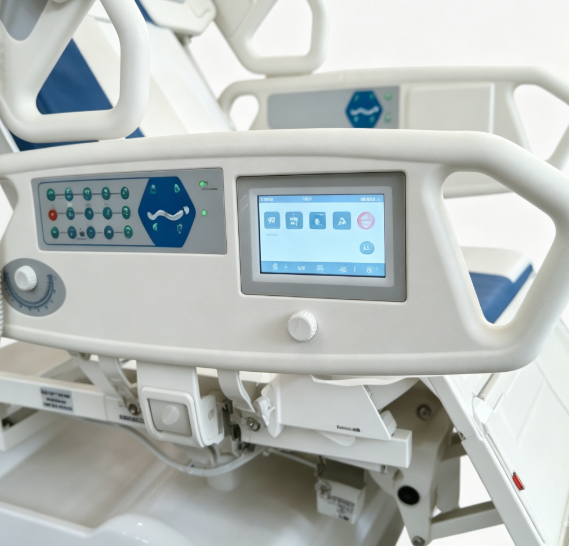
The tender should define:
- Safe working load
- Patient weight rating
- Bed stability
- Side-rail safety
- Brake performance
- Caster specifications
- Manual CPR release
- Emergency lowering
- Anti-pinch protection
- Electrical safety
- Battery backup
- Cable management
- Alarm or lockout functions, if required
International buyers should identify applicable standards in the destination market. Standards may include requirements for medical electrical equipment, medical beds, mechanical safety, electromagnetic compatibility, and risk management.
A supplier should provide a clear compliance statement and identify which tests were performed on the quoted configuration.
---
A sample inspection should include both mechanical testing and imaging evaluation.
Verify that the sample includes the same:
- Radiolucent platform
- Mattress
- Side rails
- Accessories
- Detector tray
- Electrical system
- Control panel
- Software or weighing system, if applicable
Measure:
- Overall bed dimensions
- Mattress platform dimensions
- Radiolucent area
- Detector-access area
- Platform thickness
- Bed-height range
- Side-rail clearance
Test:
- Backrest movement
- Knee-rest movement
- Height adjustment
- Trendelenburg
- Reverse Trendelenburg
- Brakes
- Casters
- CPR release
- Side rails
- Emergency functions
- Battery operation
Use the hospital's intended mobile X-ray system and detector where possible.
Record:
- Patient-simulation setup
- Bed position
- Mattress configuration
- Detector location
- Tube position
- Exposure conditions
- Image quality
- Structural artifacts
- Repeatability
- Any restricted imaging zones
The radiology team should confirm that the image is suitable for the intended clinical workflow.
Keep:
- Test photographs
- Radiographic images
- Measurement records
- Inspection checklist
- Defect reports
- Corrective-action records
- Final approved sample
The approved sample should become the reference standard for future production batches.
> Visual recommendation: Add a step-by-step inspection graphic showing the sample, dimensional measurement, detector placement, X-ray exposure, and image review.

A lower-priced ICU bed may not be the lowest-cost option over its useful life.
Compare:
| Cost factor | Questions to ask |
|---|---|
| Unit price | What exactly is included? |
| Radiolucent platform | Backrest or full-length? |
| Accessories | Standard or optional? |
| Packaging | Export-grade and moisture-resistant? |
| Freight | Which Incoterms and destination? |
| Installation | Included or separate? |
| Warranty | Duration and exclusions? |
| Spare parts | Availability and pricing? |
| Training | Manuals or on-site support? |
| Maintenance | Required tools and skills? |
| Regulatory documents | Complete and destination-specific? |
| Product changes | Is prior notification required? |
The correct metric is usually total cost of ownership, including maintenance, spare parts, staff training, downtime, and replacement risk.
---
Overseas brands may require:
- Custom colors
- Private-label logos
- Brand-specific control-panel labels
- Customized manuals
- Country-specific electrical plugs
- Customized packaging
- Accessory changes
- Product drawings
### Mistake 2: Accepting "X-Ray Compatible" Without a Drawing
Request the exact radiolucent area and identify structural obstructions.
The mattress can influence image quality, cleaning, comfort, and infection-control performance.
Performance should be evaluated with the specified mattress, load, accessories, and detector.
A certificate from one country does not automatically satisfy another country's regulatory requirements.
Mistake 6: Ordering Before Confirming Spare Parts
- Serial-number formats
- Language translations
- Inspection standards
Before production, approve:
1. Technical drawing
2. Bill of materials
3. Control-panel artwork
4. Product label
5. User manual
6. Packaging artwork
7. Inspection checklist
8. Approved sample
Use a formal change-control process. A change to the platform material, mattress, actuator, caster, or detector tray may affect product performance and regulatory documentation.
At Tianjin Kangli Medical Device, OEM projects can be developed around the customer's target market, application, branding, packaging, and procurement specification.

A bed with more features is not always the right bed. Compare clinical value, reliability, maintenance, and operating cost.
Ask about motors, control boxes, handsets, casters, batteries, actuators, side rails, and replacement procedures.
Write the required dimensions, functions, tests, and documentation into the purchase contract.
---
Use the following process:
1. Define the clinical imaging requirement.
2. Identify the detector and mobile X-ray equipment.
3. Choose backrest or full-length radiolucency.
4. Write measurable technical specifications.
5. Request complete supplier documentation.
6. Inspect and test a production sample.
7. Obtain radiology and biomedical-engineering approval.
8. Confirm regulatory and import requirements.
9. Approve the OEM configuration and artwork.
10. Place the order with clear acceptance criteria.
This process reduces the risk of purchasing a bed that is technically radiolucent but unsuitable for the hospital's actual imaging workflow.
---
No. A full-length platform provides broader imaging coverage, but it may cost more and require additional maintenance. If the hospital mainly performs bedside chest radiography, a backrest X-ray platform may offer better value.
Generally, it is designed for upper-body or chest imaging. However, buyers should confirm the radiolucent dimensions, detector access, mattress compatibility, and imaging test results with the manufacturer and radiology team.
No. Image quality depends on the complete system, including the platform, frame, mattress, detector, accessories, and positioning. A supplier should provide an imaging test method and representative results.
The RFQ should include radiolucent coverage, dimensions, detector compatibility, mattress requirements, imaging positions, safe working load, mechanical functions, electrical specifications, safety features, testing, documentation, warranty, and spare parts.
Radiolucent materials allow more X-rays to pass through and generally create less interference. Radiopaque materials block or absorb more X-rays and may appear more strongly in radiographic images.
Yes. OEM customization may include logos, colors, labels, packaging, manuals, accessories, electrical plugs, and selected technical features. The final configuration should be documented and approved before mass production.
Common documents include a technical datasheet, dimensional drawing, user manual, declaration of conformity, test reports, quality certificates, inspection records, packaging specification, warranty terms, and spare-parts list.
Use the intended mattress and mobile X-ray detector, measure the usable radiolucent area, test required bed positions, review image quality, identify structural artifacts, and obtain approval from the hospital's radiology and biomedical-engineering teams.
---
U.S. Food and Drug Administration — Medical Device Standards and Conformity Assessment
https://www.fda.gov/medical-devices/medical-device-regulatory-science-research-programs-conducted-oc/medical-device-standards-and-conformity-assessment
U.S. Food and Drug Administration — Hospital Bed System Dimensional and Assessment Guidance
https://www.fda.gov/medical-devices/medical-device-safety/hospital-bed-system-dimensional-and-assessment-guidance
International Organization for Standardization — ISO 13485:2016 Medical Devices Quality Management Systems
https://www.iso.org/standard/59752.html
International Electrotechnical Commission — IEC 60601-2-52: Medical Electrical Equipment, Particular Requirements for the Basic Safety and Essential Performance of Medical Beds
https://webstore.iec.ch/en/publication/2614
International Chamber of Commerce — Incoterms® Rules
https://iccwbo.org/business-solutions/incoterms-rules/
World Health Organization — Medical Devices and Health Technology
https://www.who.int/teams/health-product-policy-and-standards/assistive-and-medical-technology/medical-devices
Tianjin Kangli Medical Device — OEM and Private-Label Medical Device Manufacturing Information
Company product specifications, factory quality records, approved drawings, inspection documents, and customer-approved OEM documentation should be provided for the specific project and product configuration.


